Mysteries of the Ancient Funerary Avenues in Saudi Arabia
A Window into Arabia’s Ancient Past
In the vast deserts of Saudi Arabia, archaeologists have uncovered one of the most fascinating and mysterious discoveries of recent decades: the funerary avenues. Dating back nearly 4,500 years, these extensive networks of tomb-lined pathways stretch for hundreds of kilometers across the Arabian Peninsula.
Using cutting-edge satellite imagery and aerial surveys, researchers have revealed the extraordinary scale of this Bronze Age phenomenon. The funerary avenues are lined with thousands of carefully constructed tombs, ranging from simple stone circles to elaborate pendant-shaped designs. Together, they form a monumental landscape that reshapes our understanding of ancient Arabian societies and their relationship to death, memory, and community.
Discovery of the Funerary Avenues
From Desert Sands to Satellite Screens
Although the tombs themselves were known to local communities, it wasn’t until the 21st century that archaeologists, aided by satellite imagery and drones, fully grasped the scope of the funerary avenues.
These networks stretch across regions such as AlUla and Khiybar, linking oases, settlements, and pastures. Their sheer scale and density suggest that they were part of an organized cultural system rather than random burial placements.
An Archaeological Breakthrough
The work of the Royal Commission for AlUla (RCU) and international teams has revealed that the funerary avenues represent one of the largest concentrations of ancient funerary monuments in the world. Their preservation in the arid desert environment provides archaeologists with a unique opportunity to study life in Arabia’s Bronze Age.
Structure and Design of the Tombs
Ring Cairns
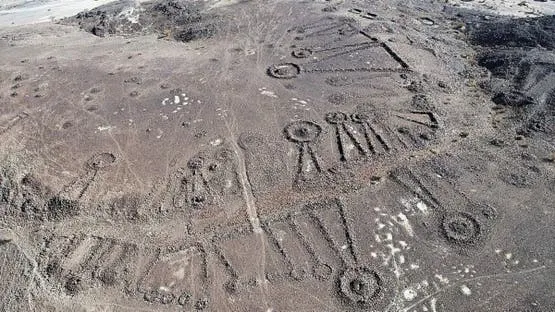
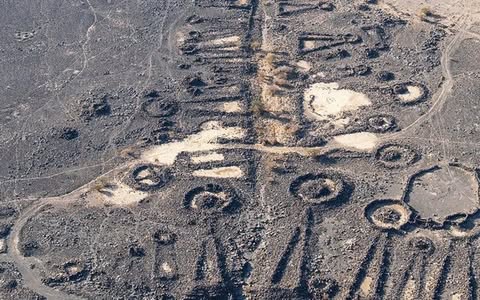
One of the most common tomb types found along the funerary avenues is the ring cairn, a circular mound of stones marking a burial. These simple yet durable structures reflect communal effort and the importance of honoring the dead.
Pendant-Shaped Tombs
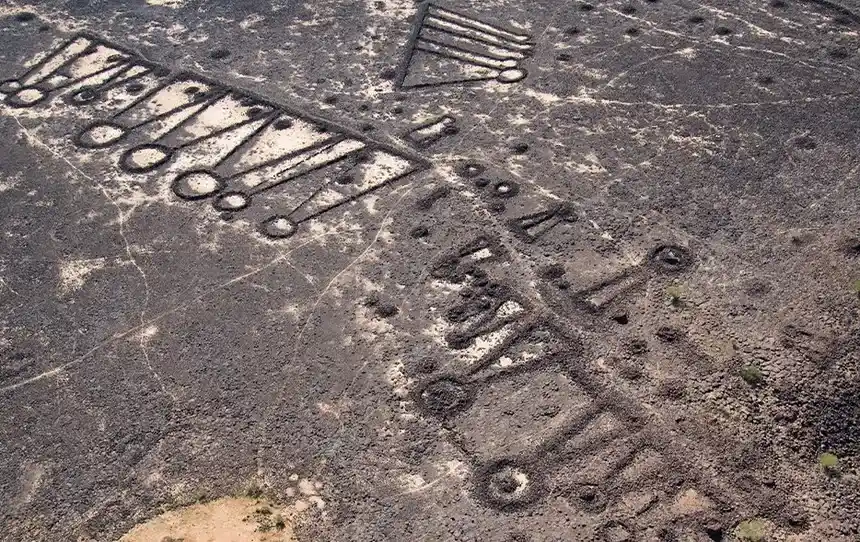
Even more striking are the pendant-shaped tombs, named for their resemblance to jewelry pendants. These consist of a circular cairn with a long “tail” of stones extending outward, sometimes stretching for dozens of meters. Their symbolic meaning remains debated but may have represented directional guides, spiritual pathways, or territorial markers.
Monumental Craftsmanship
The variety and intricacy of the tombs highlight the sophistication of Bronze Age Arabian builders. Constructed with stone tools and communal labor, they required not just engineering skill but also social organization and shared belief systems.
Purpose of the Funerary Avenues
Ceremonial and Spiritual Pathways
Some archaeologists suggest that the avenues functioned as ceremonial or processional routes, guiding the spirits of the dead or acting as ritual pathways for the living. The alignment of tombs along these routes suggests a symbolic connection between movement, memory, and the afterlife.
Territorial Markers
Another interpretation views the funerary avenues as markers of territorial boundaries, visually defining areas controlled by specific groups or clans. The concentration of tombs along routes linking oases and pastures may have reinforced community claims to these essential resources.
Social Threads of Community
Beyond their spiritual or territorial role, the avenues may have served as social connectors, binding together disparate settlements across the desert. Like a web of stone threads, they symbolized the shared cultural identity of Bronze Age Arabian societies.
Dating the Funerary Avenues
A Bronze Age Timeline
Radiocarbon dating and analysis of artifacts suggest that most of the tombs date from 2600 to 2000 BCE, placing them firmly in the Bronze Age. This makes them roughly contemporary with the construction of the pyramids in Egypt and the ziggurats of Mesopotamia.
A Long Legacy
Though primarily Bronze Age in origin, evidence indicates that some tombs were reused or modified in later centuries, showing the enduring importance of these landscapes across generations.
The Cultural Significance of the Tombs
Memory and Ancestors
By situating tombs along well-traveled routes, communities ensured that the memory of the dead remained present in daily life. Each journey along the avenues would have been a reminder of ancestors and traditions.
Connection to Landscape
The tombs also reveal a profound connection between people and the desert environment. Far from being empty wastelands, these landscapes were cultural canvases where memory, ritual, and geography intertwined.
Sophistication of Early Societies
The sheer planning required for the funerary avenues reflects a society capable of large-scale coordination, spiritual complexity, and architectural innovation—challenging outdated stereotypes of ancient Arabia as culturally isolated.
Comparisons with Other Ancient Pathways
Egypt’s Causeways
The funerary avenues bear comparison to the causeways leading to Egyptian pyramids, which also linked the living with the dead through monumental pathways.
Britain’s Stone Circles
The ring cairns recall the stone circles of Britain, where ritual and burial practices also combined with symbolic landscape design during the same era.
A Global Bronze Age Phenomenon
These parallels highlight how communities across the ancient world used monumental pathways and tombs to embody belief systems, even in regions with very different geographies.
Preservation and Modern Importance
Archaeological Protection
Saudi Arabia is increasingly committed to preserving its archaeological treasures. The Royal Commission for AlUla has made the funerary avenues a focus of international research and heritage management.
Tourism and Cultural Heritage
As Saudi Arabia expands its cultural tourism, the funerary avenues are poised to become a world-class heritage attraction, offering visitors a chance to explore landscapes that few have seen but many will find awe-inspiring.
Fun Facts About Saudi Arabia’s Funerary Avenues
-
The funerary avenues stretch for hundreds of kilometers, some linking oases over 150 km apart.
-
Archaeologists have documented thousands of tombs, making the region one of the richest prehistoric landscapes in the world.
-
Pendant-shaped tombs can measure up to 30 meters in length, with long stone tails visible even from space.
-
The tombs predate Islamic civilization by more than 3,000 years, highlighting the deep antiquity of Arabian cultural traditions.
-
Some avenues may have been reused or revered for centuries after their original construction, keeping ancestral connections alive.
Why the Funerary Avenues Matter
The funerary avenues of Saudi Arabia are not just ancient tombs scattered across a desert—they are a monumental network of memory, identity, and ritual. They demonstrate that Bronze Age Arabia was a place of innovation, social organization, and deep spirituality.
For archaeologists, they represent a breakthrough in understanding how early Arabian societies lived, organized themselves, and viewed death. For the modern world, they are a reminder of the shared human impulse to honor ancestors, mark landscapes, and create meaning in stone.
Conclusion: Pathways of Eternity
The funerary avenues of Saudi Arabia stand as one of the most intriguing and mysterious legacies of the Bronze Age. Stretching across deserts and linking oases, these tomb-lined pathways tell stories of ritual, identity, and community that resonate even after 4,500 years.
Whether as spiritual highways, territorial markers, or symbolic threads of community, they remain a powerful testament to the creativity and resilience of ancient Arabian cultures. As research continues, the funerary avenues promise to shed even more light on the enduring mysteries of humanity’s earliest civilizations.