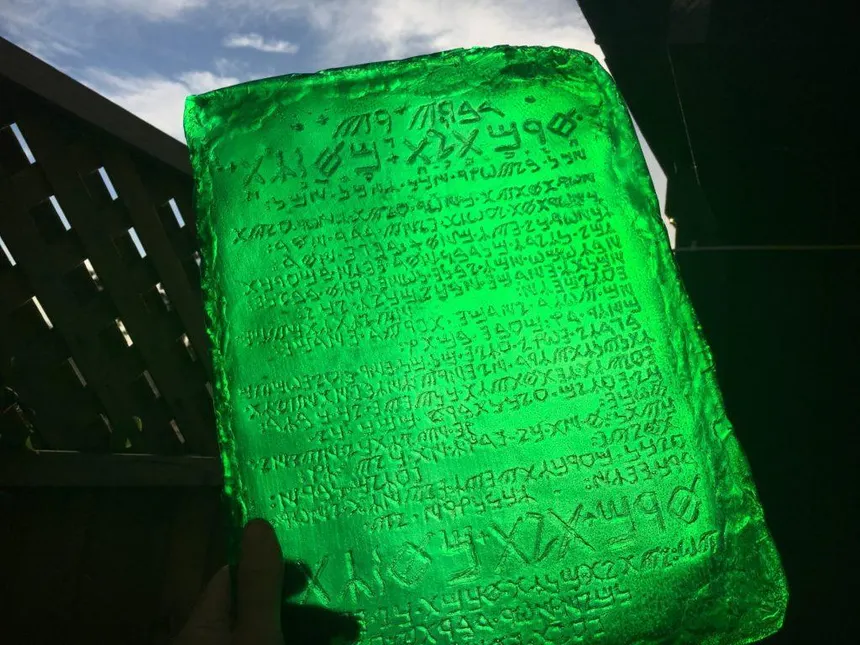
The Emerald Tablet: Mystical Origins and the Secrets of the Universe
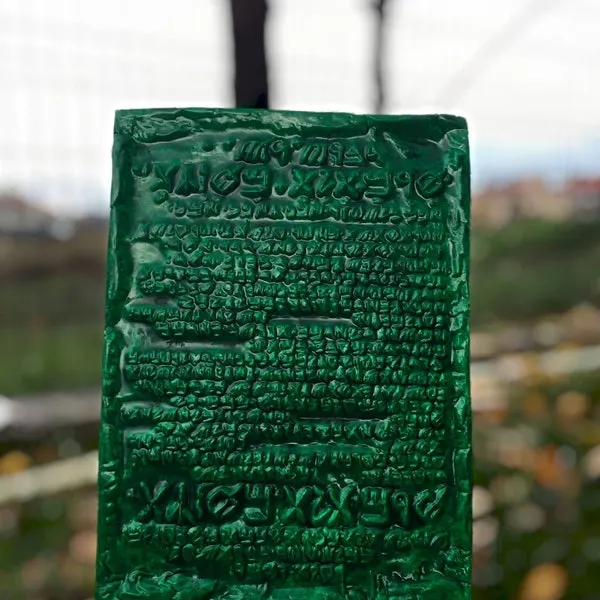
Throughout history, a single artifact has captured the imagination of scholars, mystics, and seekers of hidden wisdom: the Emerald Tablet. Believed to be inscribed with the secrets of the cosmos, this mysterious tablet is surrounded by legends and myths. Some say it was crafted from pure emerald or a green crystalline stone, while others suggest it was symbolic rather than physical. Its cryptic inscriptions gave birth to Hermetic philosophy and influenced countless traditions in alchemy, mysticism, and esoteric thought.
The origins of the Emerald Tablet remain uncertain, but the myths that surround it continue to inspire curiosity. Whether attributed to Hermes Trismegistus, the Egyptian god Thoth, or hidden beneath sacred statues, the tablet has become a symbol of timeless wisdom.
The Mythical Discovery of the Emerald Tablet
One of the most popular legends traces the discovery of the Emerald Tablet to Tyana, an ancient city in Asia Minor. According to this tale, it was found hidden in a tomb beneath a statue of Hermes, clutched in the hands of Hermes Trismegistus himself — a mystical figure who blended elements of the Greek Hermes and the Egyptian god Thoth.
Other stories claim that the Egyptian priests preserved the tablet for centuries, keeping it hidden from the unworthy. The essence of these myths emphasizes that the Emerald Tablet was not an ordinary artifact but rather a vessel of divine knowledge meant for humanity’s spiritual evolution.
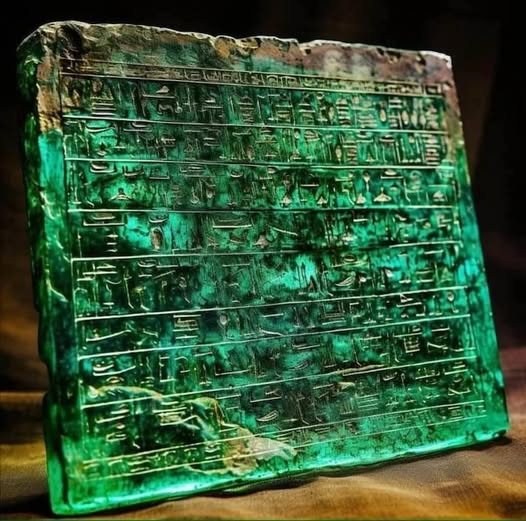
Thoth: The Divine Author of Cosmic Knowledge
According to Egyptian mythology, the god Thoth was the scribe of the gods, the keeper of divine wisdom, and the inventor of writing. He was said to have divided his vast knowledge into 42 sacred books or “plates of emerald,” encoding the universal laws that govern existence.
As esoteric writer Armando Mei explains, Thoth’s teachings were designed to preserve the scientific and spiritual principles of the universe. After the gods departed Earth, these Hermetic tablets were hidden away to prevent misuse by humankind. Only Thoth himself, upon returning to Earth, could reveal their knowledge once more.
This association with Thoth highlights the Emerald Tablet’s role not just as an artifact, but as a bridge between the mortal world and the divine.
Hermes Trismegistus: The Philosopher Behind the Tablet
In Greek and Hermetic traditions, the Emerald Tablet is attributed to Hermes Trismegistus, a legendary sage whose name means “Thrice-Great Hermes.” This figure is believed to be a fusion of the Greek god Hermes and the Egyptian Thoth, embodying wisdom, alchemy, and esoteric knowledge.
Hermes Trismegistus became the symbolic author of a body of texts known as the Hermetica, which shaped the spiritual and philosophical thought of late antiquity, the Renaissance, and beyond. Within these teachings, the Emerald Tablet is regarded as one of the most concise yet profound expressions of Hermetic philosophy.
The Teachings of the Emerald Tablet
While the exact wording of the Emerald Tablet has varied through translations over centuries, its central theme is the principle of correspondence — often summarized as:
“As above, so below; as within, so without.”
This maxim implies that the microcosm (the individual human or Earth) reflects the macrocosm (the universe or divine reality). It suggests a deep interconnectedness between all levels of existence.
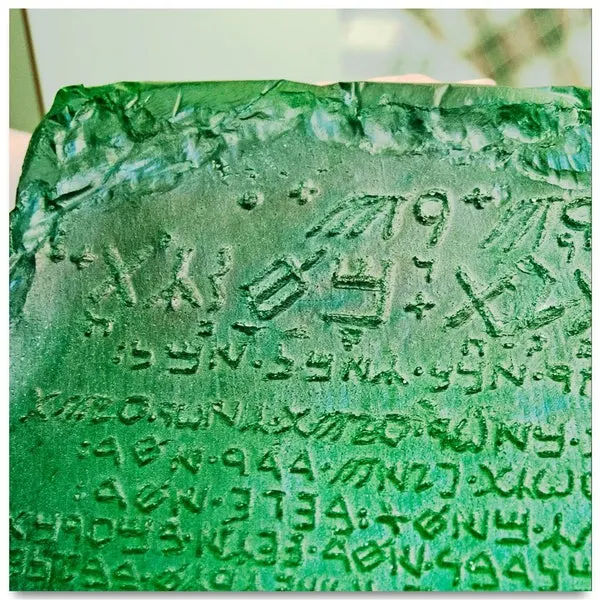
Other key teachings of the tablet include:
-
Unity of all things: Everything in the universe originates from a single source.
-
Transformation and alchemy: Just as base metals can be transformed into gold, the human spirit can undergo purification and enlightenment.
-
Balance of opposites: Dualities such as light and dark, masculine and feminine, or spirit and matter are complementary forces that sustain creation.
These teachings became the foundation of alchemy and later influenced Western esotericism, spiritual practices, and even modern psychology.
The Tablet and the Rise of Alchemy
The Emerald Tablet is often credited as the cornerstone of alchemy, both in the East and West. Medieval alchemists such as Albertus Magnus, Roger Bacon, and later Isaac Newton studied translations of the tablet, interpreting its wisdom as a guide to both material and spiritual transformation.
Alchemy, in this sense, was not merely the attempt to transmute base metals into gold. It was also a symbolic journey of inner transformation, where the alchemist sought to refine the soul and achieve unity with the divine. The Emerald Tablet served as both a manual and a mystery, providing cryptic instructions that blended chemistry, philosophy, and mysticism.
The Mystery of Its Physical Existence
A question often asked is: Did the Emerald Tablet ever physically exist?
Some traditions maintain that the tablet was a literal emerald slab engraved with sacred text. Others argue it was purely symbolic, representing eternal wisdom rather than a physical object.
No verified artifact has ever been found, but numerous translations and commentaries exist, dating back as early as the 6th century AD in Arabic texts. These writings ensured that the essence of the Emerald Tablet survived. Even if the original artifact has remained hidden — or perhaps was never physical to begin with.
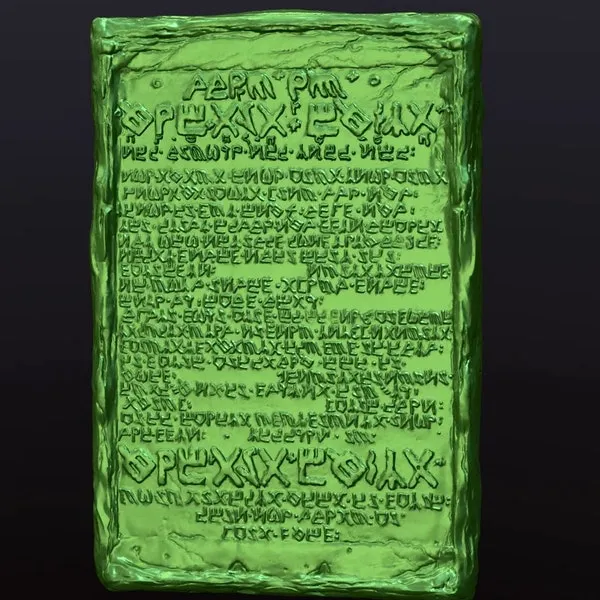
Influence on Philosophy and Spirituality
The Emerald Tablet’s teachings echoed throughout history, influencing not only alchemy but also:
-
Hermeticism – A school of thought emphasizing divine unity, self-knowledge, and cosmic harmony.
-
Gnosticism – Early Christian mystical movements that stressed hidden knowledge.
-
Renaissance philosophy – Thinkers like Marsilio Ficino and Giordano Bruno embraced Hermetic wisdom.
-
Modern esotericism – New Age movements, occult practices, and spiritual philosophies often draw on Hermetic principles.
Even modern science has found symbolic resonance with the idea of universal correspondence, as physics increasingly uncovers interconnected patterns in the cosmos.
The Enduring Mystery and Legacy
The allure of the Emerald Tablet lies not in its certainty but in its mystery. It embodies humanity’s eternal quest for truth, transformation, and cosmic understanding. Whether hidden beneath a statue, authored by a god, or simply a timeless metaphor. The tablet continues to inspire seekers of knowledge.
Its simple yet profound aphorisms remind us that the universe is interconnected, that transformation is possible. And that divine wisdom is reflected in all aspects of creation.
Conclusion: A Cosmic Key to Universal Secrets
The Emerald Tablet is more than just an ancient legend — it is a beacon of timeless wisdom. From its mythical authorship by Thoth or Hermes Trismegistus to its influence on alchemy, philosophy, and spirituality. The tablet has left an indelible mark on human thought.
Even if its physical existence remains unproven. Its message endures: the universe is one, and through understanding its laws, humanity can achieve harmony with the cosmos.
For seekers of hidden knowledge, the Emerald Tablet is not just an artifact of the past. It is a guide to inner transformation and a key to unlocking the secrets of the universe.