Spectacular Ancient Underground ‘Stonehenge’ – The Secrets of Dolmen de Soto in Spain
In the heart of Andalucía, near the quiet town of Trigueros, lies one of Europe’s most extraordinary prehistoric structures — the Dolmen de Soto. Often referred to as the “Spanish Stonehenge”, this ancient subterranean tomb dates back between 2500 and 3000 BC, placing it among the most significant Neolithic monuments on the Iberian Peninsula.
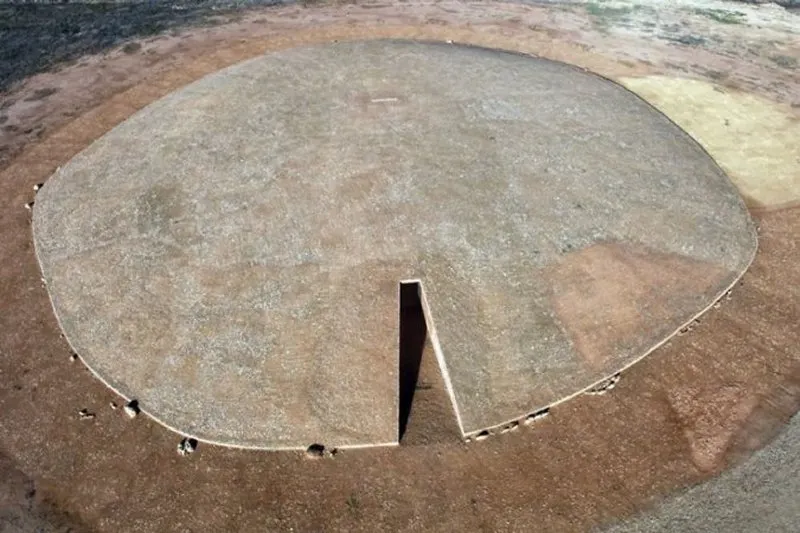
Although it may not rise majestically above ground like its British counterpart, the Dolmen de Soto conceals a spectacular architectural achievement beneath the earth. Its carefully aligned stones, symbolic engravings, and astronomical orientation reveal a culture deeply attuned to the cycles of life, death, and the cosmos.
A Neolithic Marvel: Discovery and Excavation
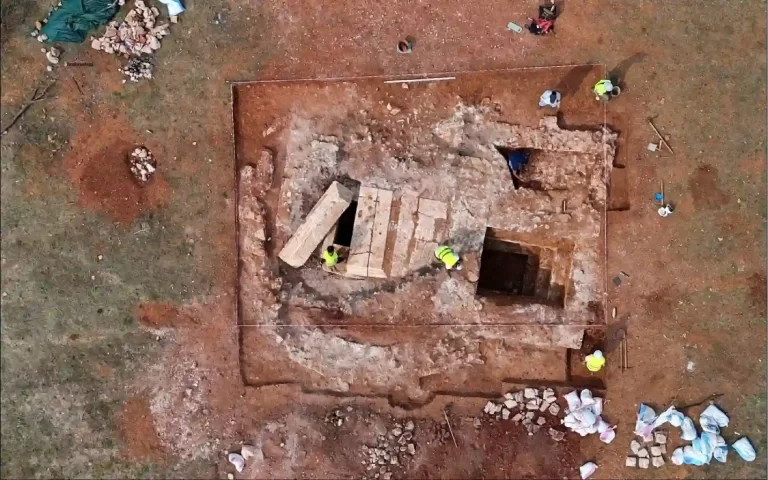
The Dolmen de Soto was rediscovered in 1923 by Armando de Soto Morillas, a local landowner whose curiosity about the strange mound on his property led to one of Spain’s most important archaeological finds. Excavations revealed a long underground passage leading to a central burial chamber, constructed from massive stone slabs.
Archaeologists determined that this dolmen functioned as a collective burial site used for centuries by Neolithic communities. Within the chamber and passage, they found human remains, ceramic vessels, flint tools, and ornaments — all testaments to the spiritual and ritual life of its builders.
Architecture of the Dolmen de Soto
Design and Structure
The monument is a megalithic corridor tomb, stretching about 21 meters long, with a central chamber at its deepest end. The corridor is lined with 33 upright stones (orthostats), each supporting a series of horizontal capstones that form the roof, creating a tunnel-like space leading into the earth.
At the end of this corridor lies a circular burial chamber, large enough to accommodate multiple burials over time. The structure was then covered by a large earthen mound (tumulus), giving it the appearance of a natural hill — concealing its monumental complexity within.
Engineering Mastery
Constructing such a massive structure over 4,500 years ago would have required extraordinary effort and organization. The builders had to quarry, transport, and position stones weighing several tons without modern tools. This feat reveals not only technical skill but also a sophisticated social system capable of mobilizing and coordinating large groups of workers.
Symbolism and Artistic Expression
The Dolmen de Soto is not only an engineering marvel but also a symbolic space. Many of its stones are carved with engravings, including axes, daggers, suns, and serpentine patterns, motifs commonly associated with fertility, power, and protection in prehistoric art.
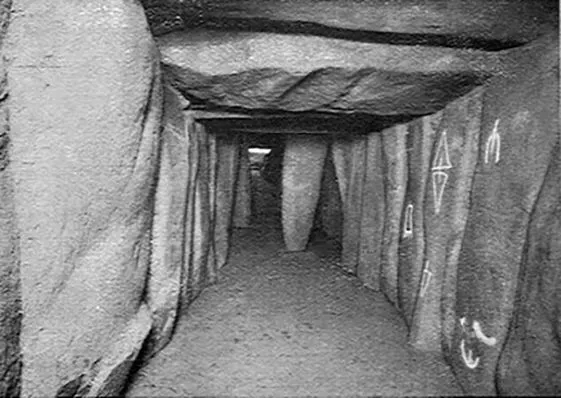
These engravings were likely more than mere decoration — they were ritual symbols, perhaps representing the journey of the soul or invoking deities connected to the natural world. Archaeologists also believe that the repeated use of the dolmen for burials over centuries reinforced communal identity and ancestry among the people of the region.
The Astronomical Alignment
One of the Dolmen de Soto’s most fascinating features is its precise alignment with the sunrise during the spring and autumn equinoxes. On these days, sunlight penetrates the entrance and travels down the corridor to illuminate the inner chamber — a breathtaking spectacle linking the tomb to celestial cycles.
This alignment shows that Neolithic builders possessed advanced knowledge of astronomy, using the movement of the sun to design sacred spaces. Such solar symbolism connects the Dolmen de Soto to other prehistoric monuments across Europe — from Stonehenge in England to Newgrange in Ireland — that also merge architecture with cosmic observation.
The People Behind the Stones
Who were the people who built the Dolmen de Soto? Archaeological evidence suggests they were part of Neolithic farming communities that flourished across southern Iberia around 3000 BC. These groups practiced mixed agriculture, cultivated cereals, raised livestock, and developed strong social hierarchies.
The construction of such a monument implies a collective belief in the afterlife, as well as communal cooperation. The act of burying ancestors within monumental structures reinforced ties between the living and the dead, ensuring continuity and protection for future generations.
Artifacts found inside — such as flint arrowheads, ceramic vessels, and personal ornaments — suggest that these people honored their dead with offerings meant to accompany them into the next world.
Dolmen de Soto and Its Relationship to Other Megalithic Sites
A Broader Megalithic Network
The Dolmen de Soto belongs to a vast network of megalithic monuments that stretch across Europe — from Portugal’s Anta Grande do Zambujeiro to Brittany’s Carnac stones and the British Isles’ Stonehenge. These sites share architectural and symbolic similarities, hinting at widespread cultural exchanges during the Neolithic period.
While the exact nature of these connections remains debated, it’s clear that ideas about death, rebirth, and cosmic alignment transcended regional boundaries. The Dolmen de Soto stands as the southernmost major megalithic monument in Western Europe, a bridge between the Atlantic and Mediterranean Neolithic worlds.
“The Spanish Stonehenge”
Because of its underground passage and celestial orientation, the Dolmen de Soto is often dubbed the “Spanish Stonehenge.” Yet, unlike Stonehenge’s open circular design, this monument conceals its splendor beneath the ground — symbolizing a journey inward, into both the earth and the spiritual realm.
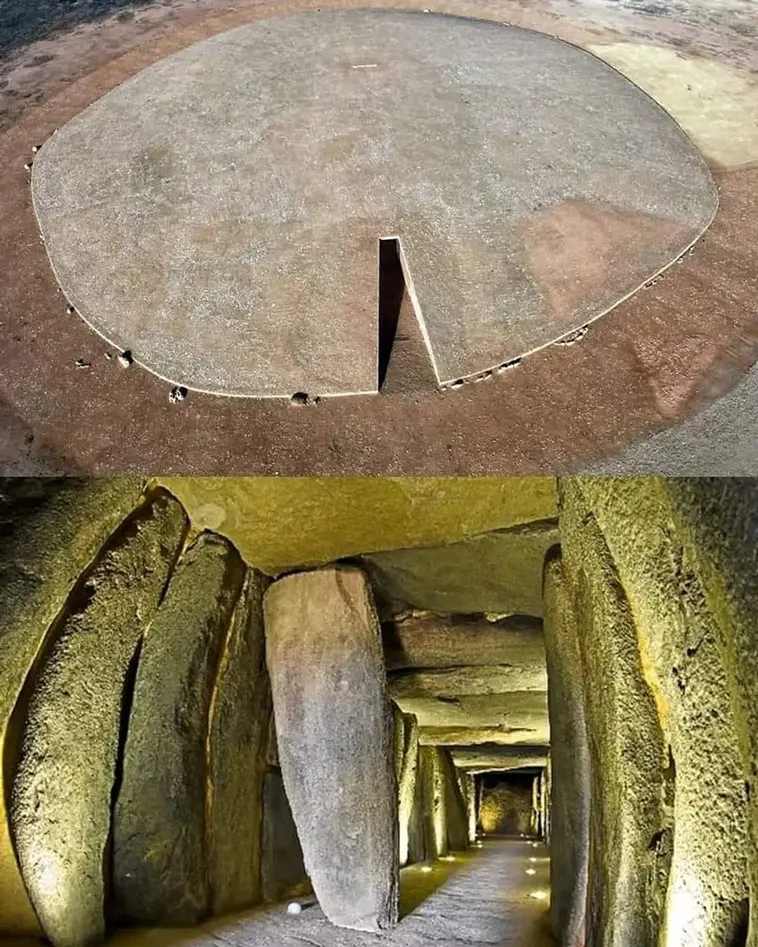
Visitors who enter the dolmen experience a descent into shadow, culminating in the illuminated chamber — a vivid metaphor for death and rebirth.
Rediscovery and Preservation
Since its rediscovery in 1923, the Dolmen de Soto has undergone several phases of excavation, study, and restoration. Archaeologists have stabilized its structure and installed subtle lighting to recreate the effect of the sun’s illumination during equinoxes.
Today, the site is managed by Andalusia’s regional heritage authority and remains open to visitors year-round. Its preservation ensures that future generations can continue to witness this rare intersection of art, architecture, and astronomy.
In 2016, the Dolmen de Soto Visitor Center opened nearby, offering interactive exhibits, reconstructions, and guided tours that explain the monument’s cultural context and scientific significance.
A Portal to the Neolithic World
Walking through the Dolmen de Soto is like stepping back 5,000 years into the Neolithic imagination. Each stone, engraving, and beam of light tells a story — of ancestors, cosmic cycles, and humanity’s enduring quest to understand existence.
The monument reminds us that long before written history, people already expressed deep spirituality through architecture and alignment with the natural world. The Dolmen de Soto embodies that union between earth and sky, life and death, humanity and cosmos.
Conclusion: The Legacy of the Dolmen de Soto
The Dolmen de Soto stands as one of Europe’s most remarkable prehistoric monuments — a subterranean temple to both memory and celestial rhythm. Its construction required genius, devotion, and community cooperation, while its orientation reflects profound astronomical knowledge.
More than a tomb, it is a message from the distant past — carved in stone, hidden beneath earth, and illuminated by the same sun that guided its builders thousands of years ago.
As modern science continues to explore its mysteries, the Dolmen de Soto reminds us that ancient architecture was never merely functional — it was a form of cosmic dialogue. And through that dialogue, the voices of the Neolithic still whisper beneath the soil of Andalucía.
ALSO READ: Ancient Roman Temple-Theater Complex in Caserta: Rediscovery of a 2nd-Century BC Site