Derinkuyu Underground City: The Astonishing Ancient Metropolis Beneath Cappadocia
In the early 1960s, a man in Cappadocia, Turkey, stumbled upon one of the most extraordinary archaeological discoveries of the century — and it all began with a basement renovation. While tearing down a wall in his home, he revealed a hidden passage that led to the entrance of a sprawling subterranean city. This discovery would later be identified as Derinkuyu Underground City, one of the largest and most intricate underground settlements ever found.
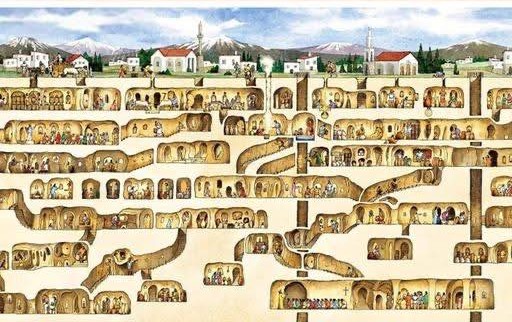
Stretching 18 stories deep into the earth and large enough to house up to 20,000 people, Derinkuyu is a breathtaking example of ancient ingenuity. Complete with living quarters, schools, stables, chapels, and defensive structures, this underground metropolis showcases the resilience of civilizations that sought safety and survival beneath the earth’s surface.
The Discovery of Derinkuyu
The initial discovery was almost accidental. The local homeowner had no idea that beneath his property lay a hidden entrance to an ancient city. What began as a modest construction project quickly turned into a global sensation. News spread rapidly, and archaeologists arrived to investigate what lay beneath Cappadocia’s volcanic rock formations.
What they uncovered was nothing short of astonishing: a multi-level underground city that revealed a sophisticated design, advanced planning, and remarkable engineering skills.
Architecture and Depth: 18 Stories Underground
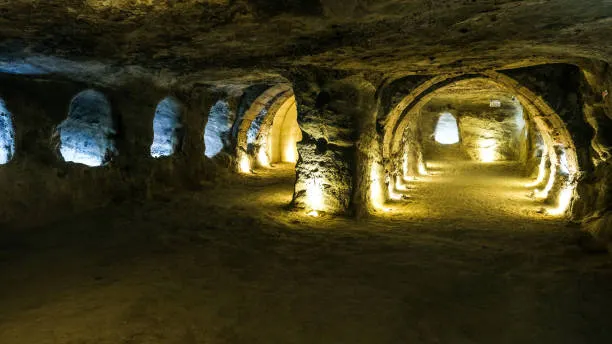
Derinkuyu is more than just a series of tunnels. It is a fully functional subterranean city that plunges approximately 85 meters (279 feet) into the ground. Archaeologists have mapped 18 distinct levels, though not all are open to the public today.
The design includes:
-
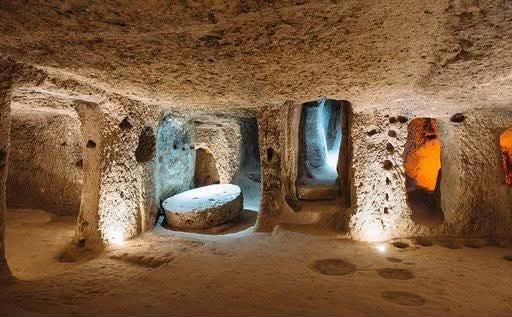
Living quarters with carved stone benches and alcoves.
-
Ventilation shafts to provide fresh air throughout the city.
-
Underground wells to supply water.
-
Kitchens with soot-covered chimneys.
-
Chapels and schools for spiritual and educational needs.
-
Stables to house livestock.
This layout demonstrates not only architectural genius but also a profound understanding of community survival needs during crises.
The Stone Doors: A Unique Defensive System
Among Derinkuyu’s most fascinating features are its massive circular stone doors. These rolling stones, resembling giant millstones, were designed to block passageways. Weighing up to half a ton, they could only be moved from the inside, ensuring that the city’s residents remained safe from intruders.
This clever system allowed different sections of the city to be sealed off independently, giving the inhabitants the ability to compartmentalize and defend their home in case of invasion.
How Many People Lived in Derinkuyu?
Archaeologists estimate that Derinkuyu could accommodate up to 20,000 residents, along with their livestock. The underground city contained enough food storage areas, wells, and ventilation shafts to support life for extended periods.
During times of peace, people may have lived above ground, using the subterranean levels primarily as storage or refuge. However, during invasions and conflicts, entire populations could retreat underground, sometimes for months.
Origins: When Was Derinkuyu Built?
The origins of Derinkuyu are still debated. Some evidence suggests construction may date back to the 8th century BCE, possibly by the Phrygians, an Indo-European people of Anatolia. Over centuries, the city was expanded and adapted by successive civilizations.
During the Byzantine era, Derinkuyu served as a refuge for Christians escaping persecution and later became a safe haven during Arab-Byzantine wars. Its long history of use demonstrates its enduring importance as a defensive and communal stronghold.
Life Underground: Daily Existence in Derinkuyu
Life beneath the earth was not only about survival but also about creating a functional society. Derinkuyu had:
-
Communal kitchens where food was prepared.
-
Living quarters divided into family sections.
-
Wine and oil presses, suggesting that production continued underground.
-
Educational spaces, including rooms believed to be schools for children.
-
Religious spaces, with chapels carved into the rock.
This infrastructure reveals that underground life was not primitive — it was highly organized, reflecting the adaptability of ancient people.
Why Was Derinkuyu Built?
The primary purpose of Derinkuyu was protection. Cappadocia’s strategic location made it a crossroads for trade but also a target for invasions. Retreating underground allowed inhabitants to survive attacks and avoid enslavement or massacre.
Other possible reasons include:
-
Climate protection, as underground life offered consistent temperatures year-round.
-
Agricultural storage, keeping food supplies safe and cool.
-
Religious refuge, especially during the spread of Christianity when believers faced persecution.
Derinkuyu in the Byzantine Period
Derinkuyu’s prominence peaked during the Byzantine period. As Christianity spread, Cappadocia became a hub of monastic life, and Derinkuyu provided both a refuge and a place of worship. Frescoes and chapels carved into the stone suggest religious activities flourished underground.
By the time of the Arab invasions (7th–10th centuries), Derinkuyu and neighboring underground cities became critical hideouts, protecting local populations during sieges and raids.
Modern Exploration and Tourism
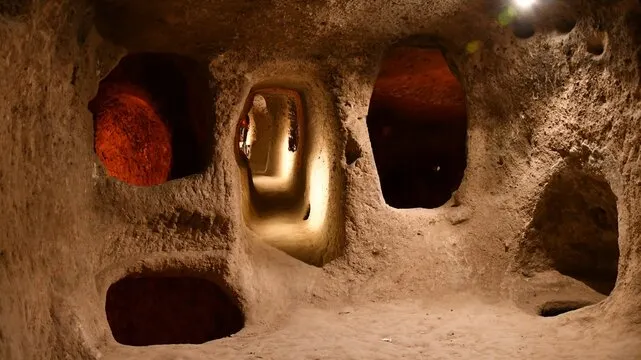
Derinkuyu was officially opened to the public in 1969, and today, it is one of Cappadocia’s most visited attractions. Tourists can descend through narrow tunnels and explore multiple levels, gaining a firsthand experience of ancient underground life.
The site has also become a subject of fascination for historians, archaeologists, and even theorists speculating about advanced ancient civilizations. Its enduring mystery only adds to its allure.
A Testament to Human Ingenuity
Derinkuyu stands as a powerful symbol of human perseverance and adaptability. In a world full of uncertainties, ancient civilizations used their environment in ingenious ways to ensure survival.
The underground city of Derinkuyu remains not only an archaeological wonder but also a reminder of humanity’s resilience in the face of adversity.
Conclusion: The Legacy of Derinkuyu
The story of Derinkuyu Underground City is as astonishing today as it was at the moment of discovery in the 1960s. What began as a simple home renovation revealed an 18-story subterranean metropolis, hidden beneath Cappadocia for thousands of years.
With its ventilation shafts, wells, chapels, schools, and massive stone doors, Derinkuyu illustrates the extraordinary engineering and foresight of ancient civilizations. It served as a refuge, a community hub, and a fortress against the challenges of its time.
Today, Derinkuyu stands as one of Turkey’s most fascinating historical sites, inviting us to step back in time and experience the ingenuity of those who thrived beneath the earth.
ALSO READ: Frozen in Time: The Remarkable Discovery of Nun cho ga, a 30,000-Year-Old Woolly Mammoth Calf