The Dancing Plague of 1518: A Historical Mystery of Uncontrollable Dance
In the summer of 1518, the bustling city of Strasbourg in Alsace, then part of the Holy Roman Empire, witnessed one of the strangest medical and social phenomena in recorded history. Known as the Dancing Plague of 1518, this mysterious event saw hundreds of residents dancing uncontrollably in the streets, unable to stop until they collapsed from exhaustion or death. For centuries, historians and scientists have struggled to understand what could have caused such mass, seemingly involuntary behavior.
This article explores the origins, events, reactions, and theories surrounding the Dancing Plague and its enduring legacy as one of the most perplexing episodes in European history.
The Outbreak in Strasbourg
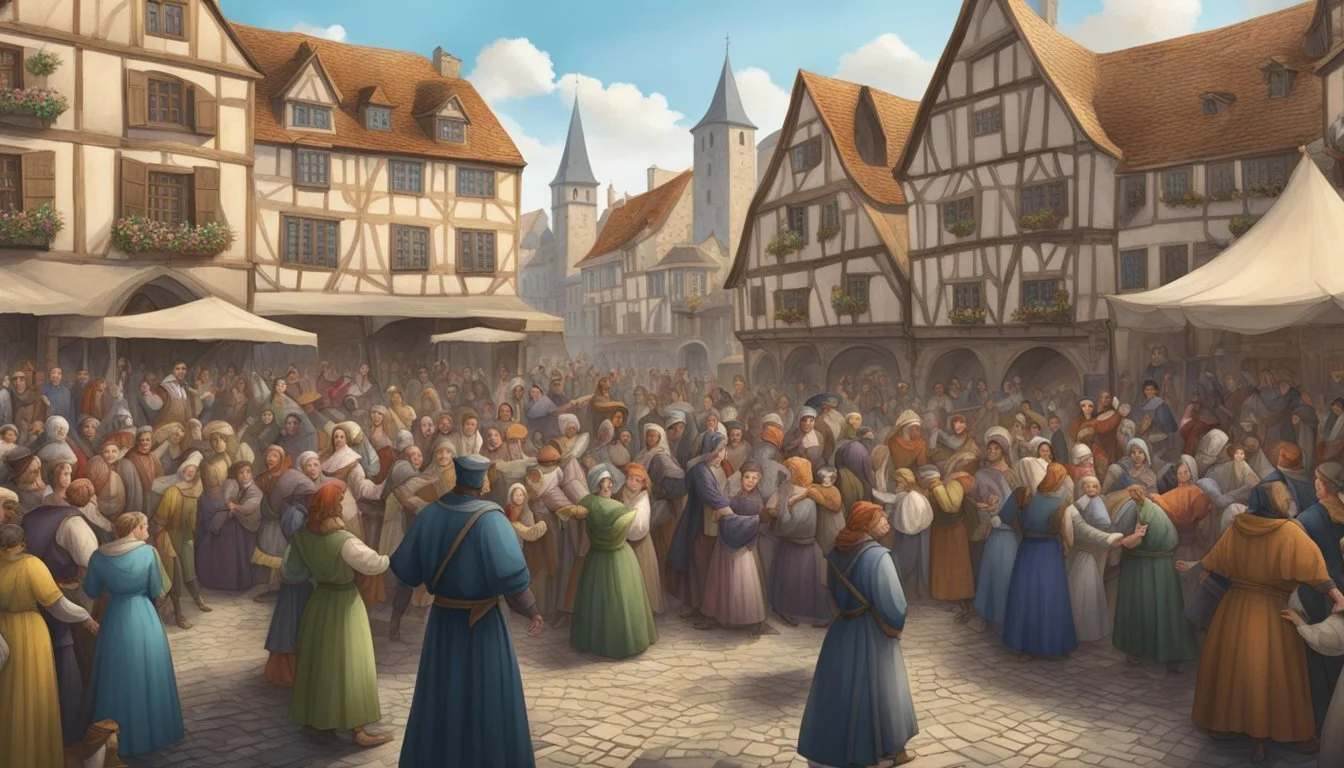
The ordeal began in July 1518, when a woman named Frau Troffea stepped into a Strasbourg street and began to dance without reason or rest. Neighbors initially thought it was a strange outburst—perhaps madness, perhaps divine ecstasy. Yet as the days passed, she continued to dance, unable to stop. Soon, others joined her. Within a week, dozens of residents were consumed by the same compulsion.
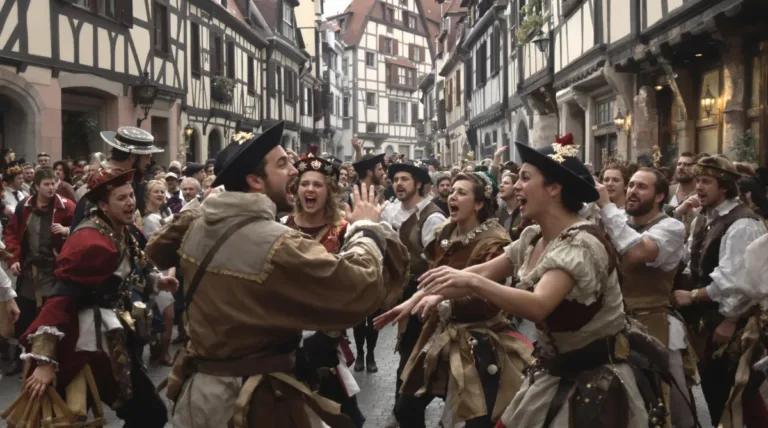
As the movement spread, hundreds of people—reports suggest as many as 400 dancers—filled Strasbourg’s streets. Witnesses described scenes of people shaking, convulsing, spinning, and leaping in a kind of trance. The dancers seemed both conscious and trapped, aware of the insanity yet powerless to resist.
The Authorities’ Response
As panic grew, the city council and local physicians scrambled to find explanations. At first, doctors declared it a case of “hot blood,” a condition they believed could be cured through more dancing. Rather than restraining the afflicted, officials built wooden stages and opened guildhalls to give them space. To make matters worse, local musicians were hired to play, intensifying the frenzy.
However, instead of easing symptoms, this public encouragement worsened the plague. The relentless dancing continued for days and weeks, and participants began collapsing from exhaustion, strokes, and heart failure. Some historical accounts claim that as many as 15 people died each day, though precise figures are impossible to confirm.
By August, the authorities realized that dancing was no cure. The city banned all public music and dancing, closed the open-air halls, and decided to transfer the remaining dancers to religious sanctuaries for healing.
Saint Vitus and Religious Treatment
The survivors and afflicted were transported to the shrine of Saint Vitus, patron saint of dancers, epileptics, and those suffering from nervous disorders. Priests believed that invoking the saint’s protection could expel the supposed curse or demonic influence. The pilgrims arrived barefoot, sometimes supported by family members, and participated in rituals of penance and prayer.
As the religious ceremonies progressed, reports suggest that the condition gradually subsided. The feverish energy faded, and Strasbourg slowly returned to normality. Yet the incident left a lasting scar on the city’s collective memory and reverberated throughout Europe.
Theories Behind the Dancing Plague
The true cause of the Dancing Plague remains unresolved, and several major theories have emerged over the centuries.
1. Ergot Poisoning
One popular explanation involves ergot fungus, a mold that can grow on damp rye and produce toxic alkaloids similar to lysergic acid diethylamide (LSD). Consumption of ergot-contaminated bread could cause hallucinations, muscle spasms, and convulsions—symptoms consistent with what observers described in 1518.
However, critics of this theory argue that ergot poisoning typically leads to incoherent behavior, severe physical agony, and gangrene, not rhythmic dancing over extended periods. Moreover, coordinated dancing across dozens of people for days seems unlikely as a byproduct of poisoning alone.
2. Mass Psychogenic Illness (Mass Hysteria)
Another credible theory identifies the event as a case of mass psychogenic illness (MPI), commonly known as mass hysteria. Under conditions of extreme psychological stress—caused by famine, disease, and religious anxiety—large groups can experience contagious behaviors or physical symptoms without organic causes.
In early 16th-century Strasbourg, the people faced severe hardships. Harvest failures led to food shortages, smallpox and dysentery spread in the region, and widespread superstition bred fear of divine punishment. The intense emotional atmosphere, combined with strong religious beliefs, may have led people to unconsciously manifest their distress through movement and dance.
Once a few individuals began dancing, others may have followed in a kind of collective trance, reinforced by shared belief and imitation. The authorities’ initial decision to promote the dancing further amplified this social contagion.
3. Religious and Spiritual Explanations
In the religious worldview of medieval Europe, strange behavior was often linked to divine or demonic intervention. Many people believed that Saint Vitus had cursed Strasbourg as retribution for sins or impiety. The resulting frenzied movement was seen as a form of “Vitus Dance,” an affliction that required prayer and penitence.
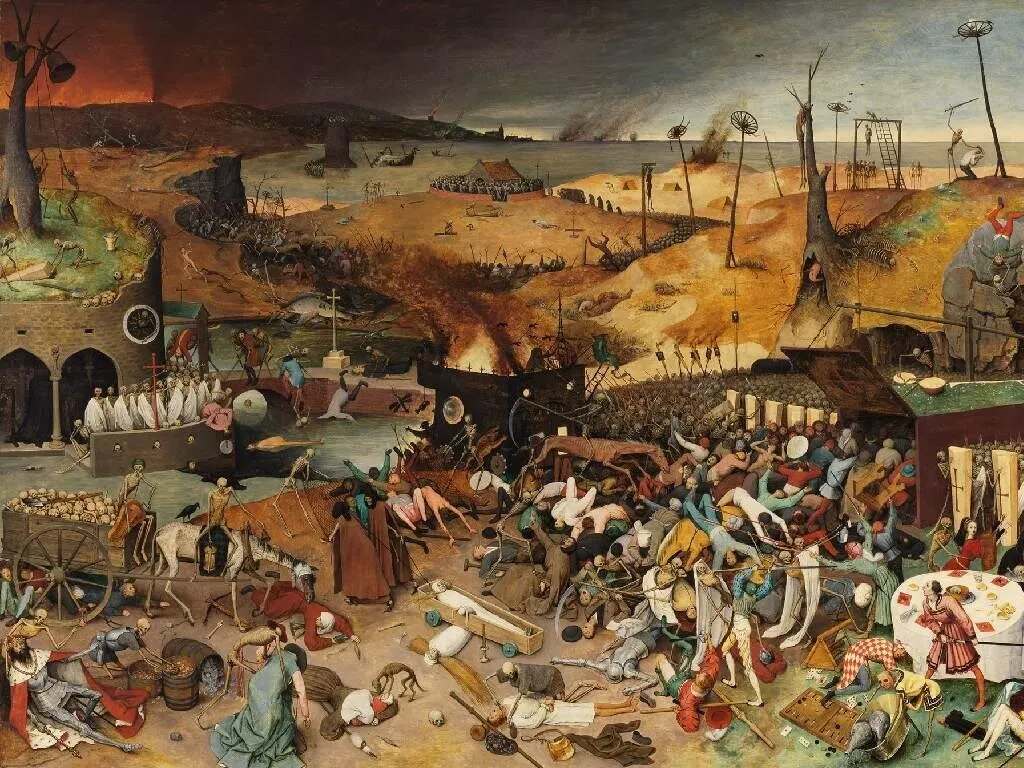
Although modern science views this explanation symbolically, it captures the profound role religion played in shaping perceptions of illness and morality. The Church’s ultimate involvement through ritual treatment arguably provided the psychological relief needed to end the episode.
4. Social and Cultural Influences
Beyond biological or psychological causes, cultural habits may have played a part. Dancing processions and ecstatic movements were common elements in medieval European religious festivals. Over time, these rituals could blend with beliefs in curses and miracles, blurring the line between faith and physical expression. In that context, the “plague” might have been an extreme, uncontrolled variation of an established tradition rather than a wholly alien phenomenon.
Historical Significance and Interpretation
The Dancing Plague of 1518 stands as a stark reminder of the human mind’s complexity and vulnerability under collective stress. It highlights how powerful cultural and psychological forces can manifest as physical symptoms affecting entire communities. The event also underscores the limited medical understanding of early modern Europe, when treatments often worsened rather than alleviated mysterious ailments.
Modern scholars often view the outbreak as a case study in how anxiety, deprivation, and belief systems intersect to produce extraordinary behaviors. Similar collective phenomena—though less fatal—have reappeared across history, from laughter epidemics to panic-induced fainting in schools.
Today, the Strasbourg incident continues to fascinate historians, psychologists, and artists alike. It has inspired literature, performances, and even psychological research into crowd behavior, trance states, and cultural contagion.
Legacy of the Dancing Plague
The legacy of the Dancing Plague extends beyond medical mystery into cultural mythology. It remains an enduring symbol of collective emotion, religious fervor, and misunderstood humanity. While modern medicine can explain parts of the phenomenon, no single theory clarifies it completely.
For many, the Dancing Plague represents a historical moment where body, faith, and fear merged uncontrollably—a warning of what can happen when social and spiritual stress reaches its breaking point. The story continues to echo, reminding future generations that history is often shaped as much by human psychology as by material reality.
ALSO READ: The Byzantine Icon of Emperor Andronikos III Palaiologos: Restoration, Symbolism, and Legacy