Dance of Death: A 15th-Century Masterpiece at the National Gallery of Slovenia
The Eternal Waltz Between Life and Death
In the quiet halls of the National Gallery of Slovenia, a haunting yet mesmerizing image greets visitors — the Dance of Death, a replica of a 15th-century fresco that once adorned the walls of a medieval church.
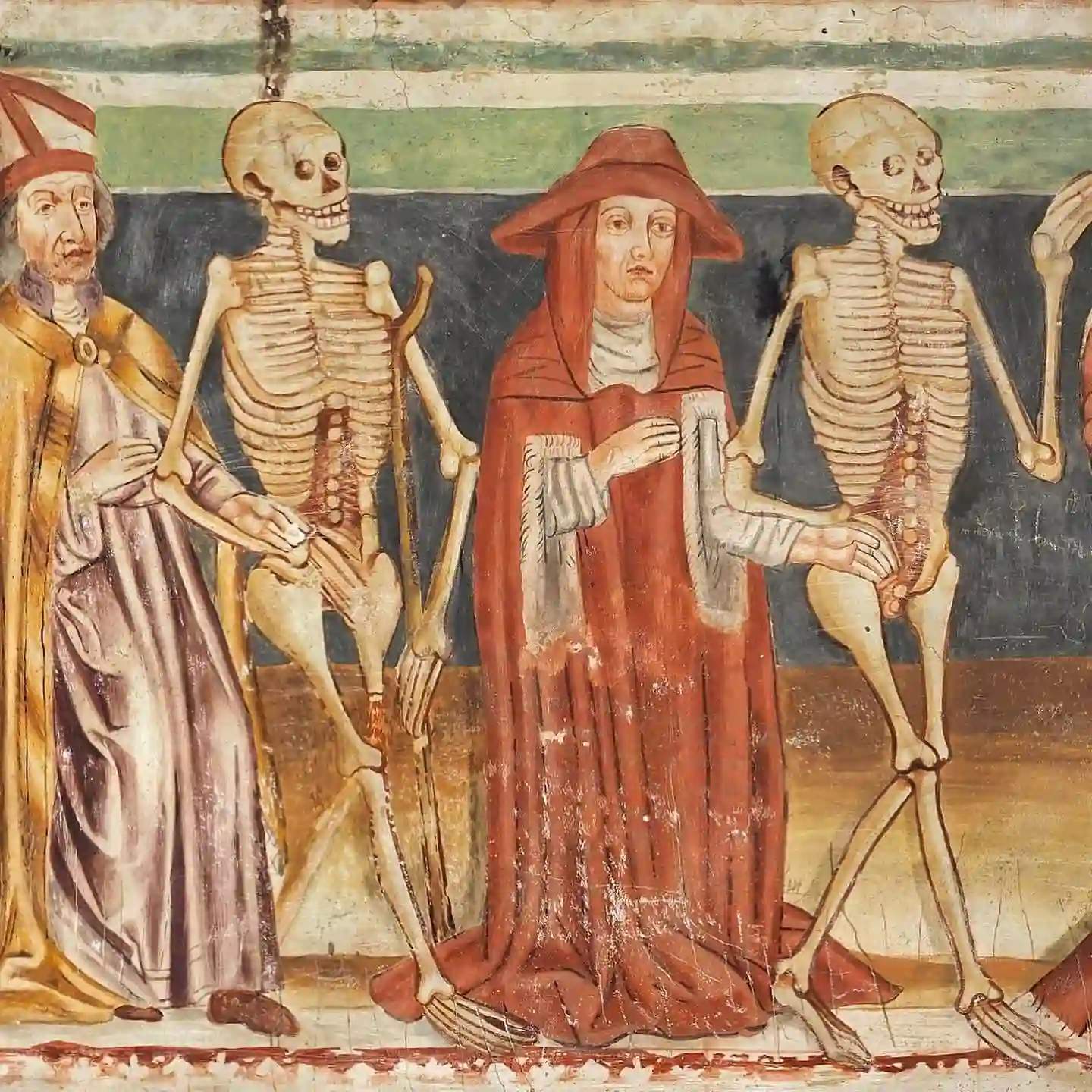
With skeletal figures leading nobles, clergy, and peasants alike in a somber procession, the artwork captures one of the most powerful themes in European medieval art: the Danse Macabre — a symbolic reminder that death spares no one.
This painting, at once grim and poetic, offers a mirror into the fears, faith, and philosophy of late medieval Europe, when plague and war shadowed daily life but also inspired profound spiritual reflection.
The Origins of the “Dance of Death” Theme
The Dance of Death, or Danse Macabre, emerged in Western Europe during the 14th and 15th centuries, a period ravaged by the Black Death, famine, and social upheaval. The theme became a widespread allegory of mortality, emphasizing the universality of death and the futility of earthly status.
Originating in France or Germany, it soon spread across Europe, appearing in frescoes, manuscripts, prints, and church murals. Each version shared a common motif: a line or circle of dancing skeletons leading people from all walks of life — kings, popes, merchants, soldiers, and peasants — into the grave.
The message was stark yet democratic: death unites all. No crown or coin could bribe the inevitable.
The 15th-Century Fresco: A Slovenian Connection
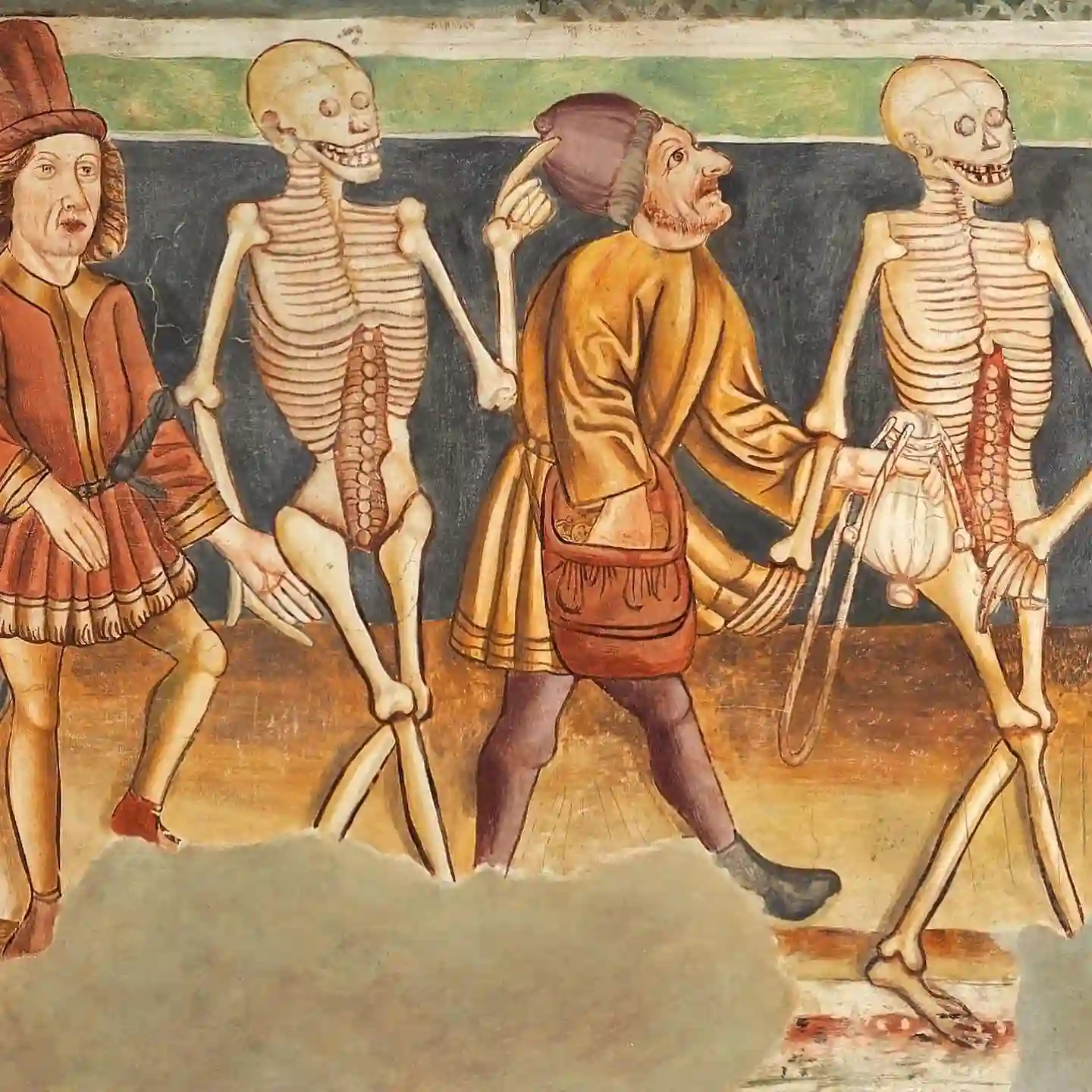
The Dance of Death fresco displayed at the National Gallery of Slovenia is a replica of a 15th-century original found in Hrastovlje, a small village in southwestern Slovenia. The original mural, located inside the Church of the Holy Trinity (Sveta Trojica), is one of the most famous examples of medieval art in the region.
Painted around 1490, the Hrastovlje fresco is attributed to Janez of Kastav, a local master painter whose work reflects both Gothic style and folk sensibility. It was uncovered only in 1949, after being hidden beneath layers of plaster for centuries — a remarkable rediscovery that revealed one of Slovenia’s greatest cultural treasures.
The National Gallery’s replica allows visitors in Ljubljana to admire the details of this extraordinary artwork without traveling to the original site, preserving both its artistic beauty and historical context.
The Imagery: When Skeletons Lead the Living
The Dance of Death fresco unfolds as a horizontal frieze, about seven meters long, painted across the lower wall of the church nave.
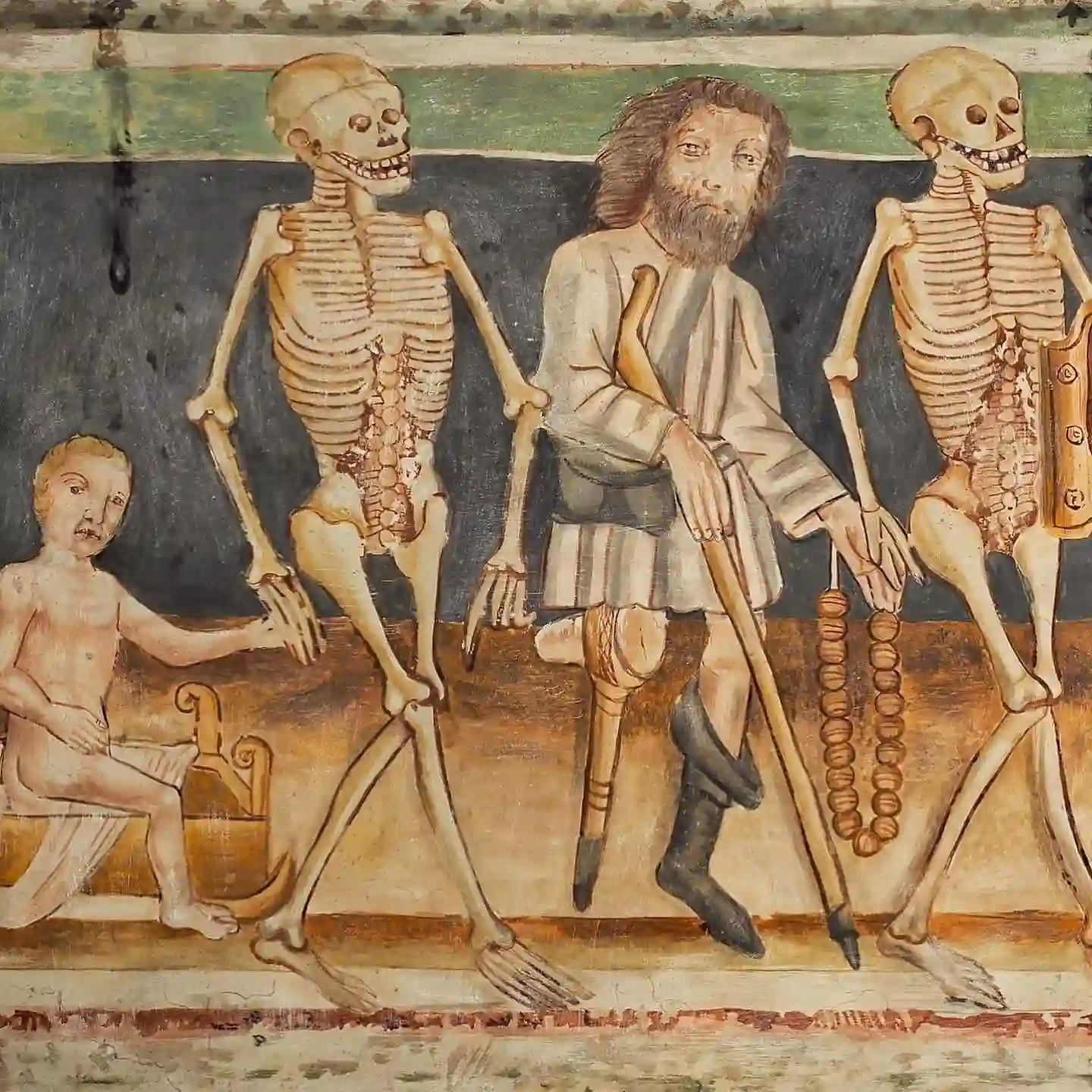
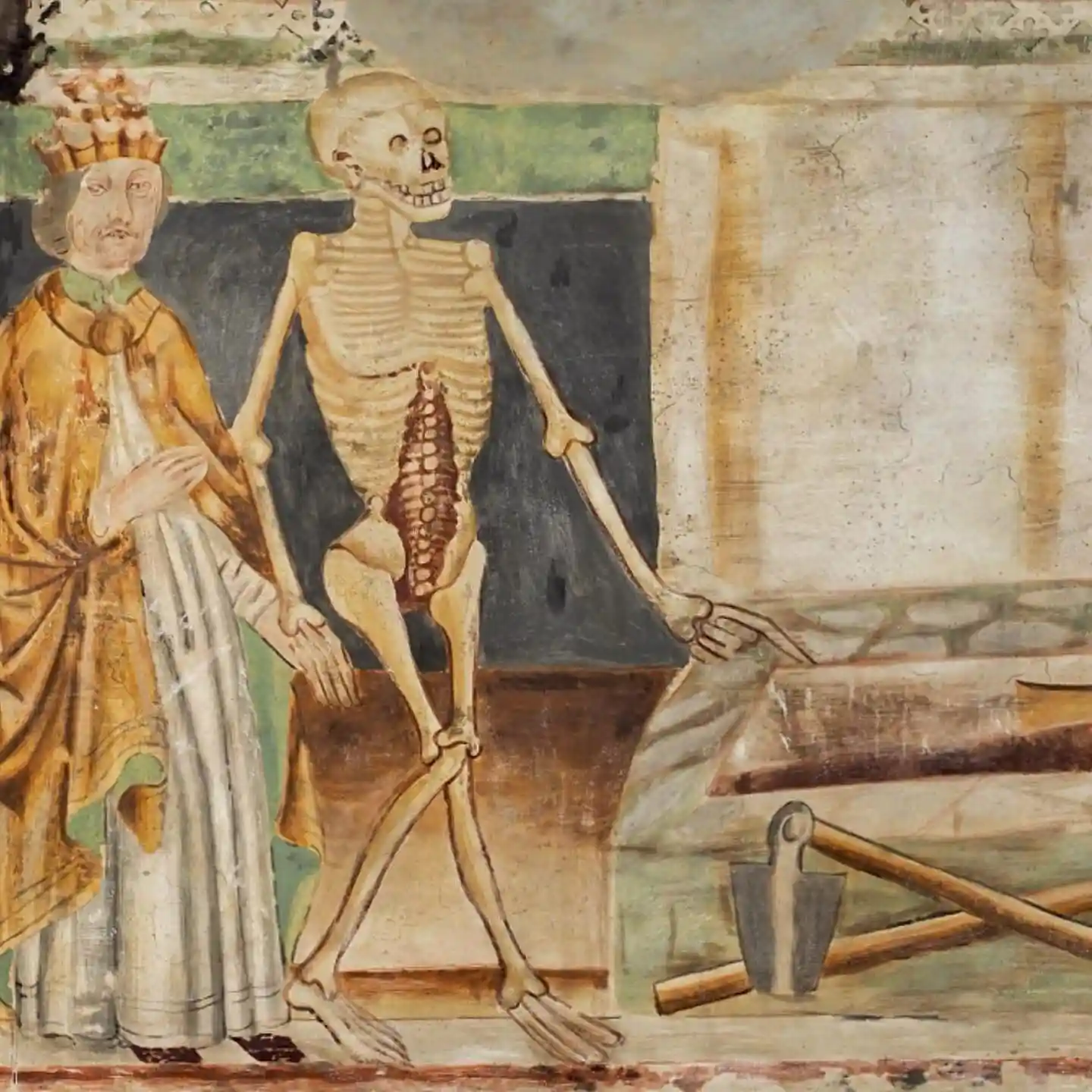
It portrays a long procession of human figures — from the Pope and Emperor to the peasant, child, and beggar — all hand-in-hand with skeletons that lead them toward the grave. The line ends at a freshly dug pit, symbolizing the inevitable end awaiting all mortals.
Each pair of figures — the living and the dead — tells its own story:
-
The Pope, richly robed, follows his skeletal companion, his authority rendered powerless before death.
-
The Knight carries his sword, but his armor offers no protection against mortality.
-
The Merchant still clutches his purse, but gold has no value in the afterlife.
-
Even the child, innocent and uncorrupted, joins the somber dance.
Despite its morbid theme, the fresco is not nihilistic. It’s a moral and spiritual reflection — a call for humility, repentance, and faith.
Artistic Style: Between Gothic Tradition and Human Emotion
The fresco’s composition blends Late Gothic stylization with emerging Renaissance realism. Janez of Kastav’s figures, though somewhat rigid and simplified, convey profound emotional expression.
Each face — serene, fearful, or resigned — reveals the inner state of the participants as they face their mortality. The skeletal dancers, with grinning skulls and exaggerated gestures, contrast sharply with the richly dressed living, creating both irony and visual rhythm.
The fresco’s limited palette of earthy reds, ochres, and blacks enhances its spiritual intensity. The figures stand against a neutral background, emphasizing their movement and equality in death. The rhythmic repetition of paired figures — living and dead — creates a hypnotic flow, evoking the eternal dance that binds all life.
Symbolism and Meaning: Lessons from the Grave
To modern eyes, the Dance of Death might appear macabre, but to medieval viewers it was a didactic and deeply spiritual message.
In an age when plague and war were common, the fresco reminded believers that:
-
Life is transient, and no one escapes death.
-
Worldly power and wealth are meaningless in the face of mortality.
-
All souls are equal before divine judgment.
The artwork also reflects a transition in medieval thought — from collective religious fear to personal moral responsibility. As Europe approached the Renaissance, artists and theologians began exploring individual salvation and human frailty in new, introspective ways.
Rediscovery and Restoration
The original Hrastovlje Dance of Death fresco was rediscovered in 1949, hidden beneath centuries of plaster that had protected it from decay. When conservators carefully removed the covering, they were astonished by how vivid and intact the colors remained.
The restoration process revealed not just a painting, but a window into medieval consciousness. Since then, the fresco has been meticulously documented, photographed, and replicated. The National Gallery of Slovenia now displays a faithful reproduction, allowing thousands of visitors to admire the work in a controlled museum environment.
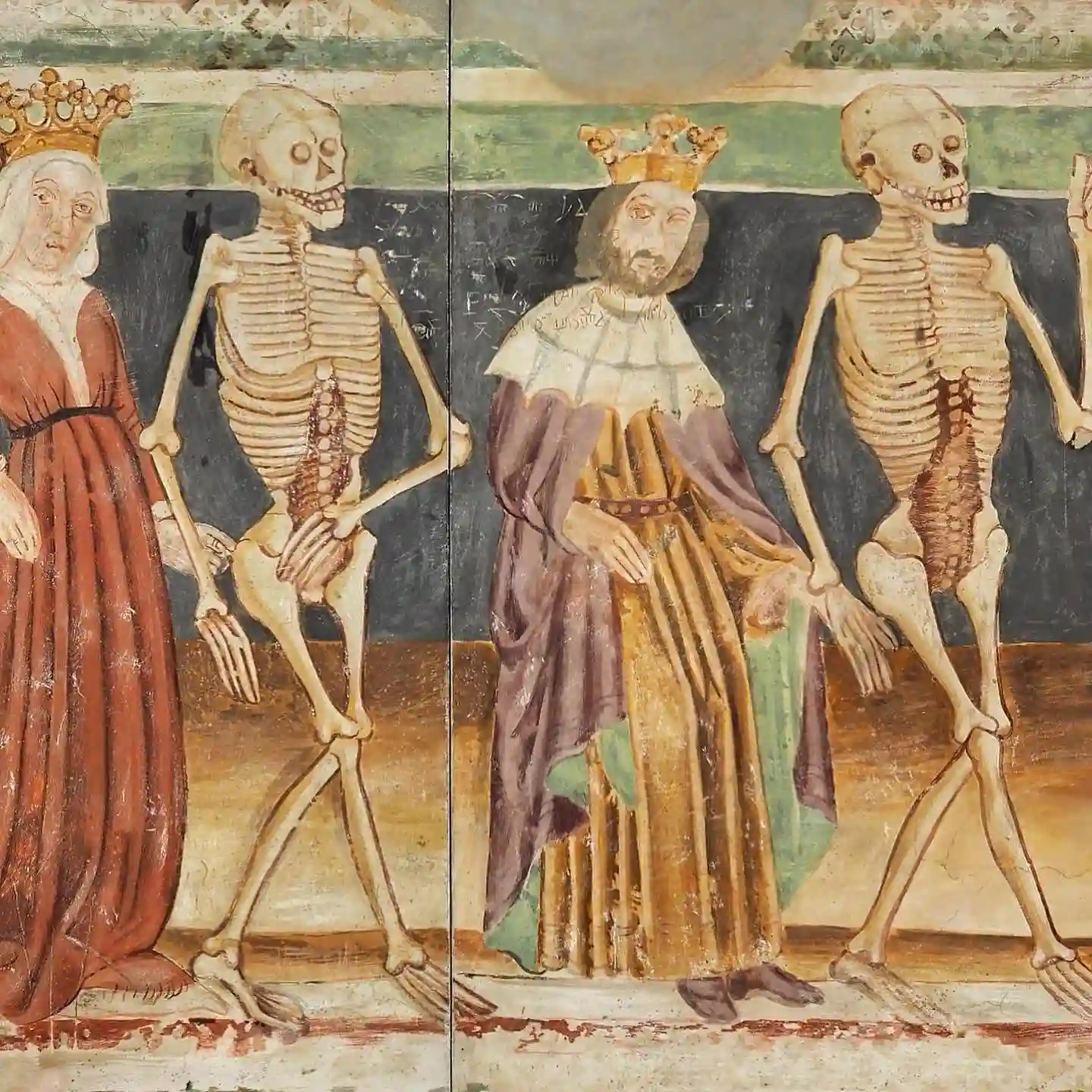
This replica ensures that the message of the Dance of Death continues to resonate — a timeless reminder of life’s fragility and the enduring power of art to confront existential truth.
The Dance of Death in European Art
The Dance of Death motif became one of the most influential artistic traditions of late medieval Europe. Similar frescoes and paintings appeared in:
-
Basel (Switzerland) – The Basel Dance of Death (1440s)
-
Lübeck (Germany) – A monumental wall painting destroyed during WWII
-
Paris (France) – The “Danse Macabre” at the Cemetery of the Innocents
-
Tallinn (Estonia) – Bernt Notke’s famous Danse Macabre (1493)
Each version adapted the theme to local culture, but all carried the same moral refrain: memento mori — remember that you must die.
The Slovenian example stands out for its folk simplicity and regional uniqueness, blending Central European Gothic traditions with the rustic charm of Istrian art.
Cultural Legacy and Modern Relevance
Today, the Dance of Death fresco in Slovenia continues to fascinate historians, artists, and visitors alike. Beyond its medieval symbolism, it speaks to timeless human concerns — mortality, equality, and the search for meaning.
In a world still confronting disease, uncertainty, and change, the artwork feels eerily contemporary. It reminds us that art can transcend centuries, transforming fear into reflection and despair into understanding.
Visitors to the National Gallery of Slovenia often describe the fresco as both unsettling and beautiful — a paradox that lies at the heart of all great art.
Conclusion: The Eternal Message of the Dance of Death
The Dance of Death fresco at the National Gallery of Slovenia stands as one of Europe’s most haunting yet humanistic artistic legacies. Its skeletons do not merely mock life; they celebrate its brevity and value.
Through rhythm, repetition, and symbolism, the fresco whispers the same truth that moved medieval hearts: all must dance when death calls the tune.
Centuries later, the figures of the Dance of Death still invite us to join their eternal waltz — not in fear, but in acceptance, humility, and awe before the mystery of existence.
ALSO READ: Unearthed Splendor: The Ancient Roman Mosaic Discovered Beneath Northern Italy