Cleopatra Pools: Ancient Thermal Springs of Hierapolis in Turkey
Cleopatra Pools
The Cleopatra Pools, also known as the Pamukkale Antique Pool, remain one of the most enchanting natural and historical wonders of Turkey. Believed by some to have once hosted Cleopatra VII, the last queen of Egypt, the pools are a mix of natural beauty, healing waters, and fascinating history. Nestled within the ruins of Hierapolis, an ancient Greco-Roman city in the modern-day Denizli Province of Turkey, this site attracts thousands of visitors every year.
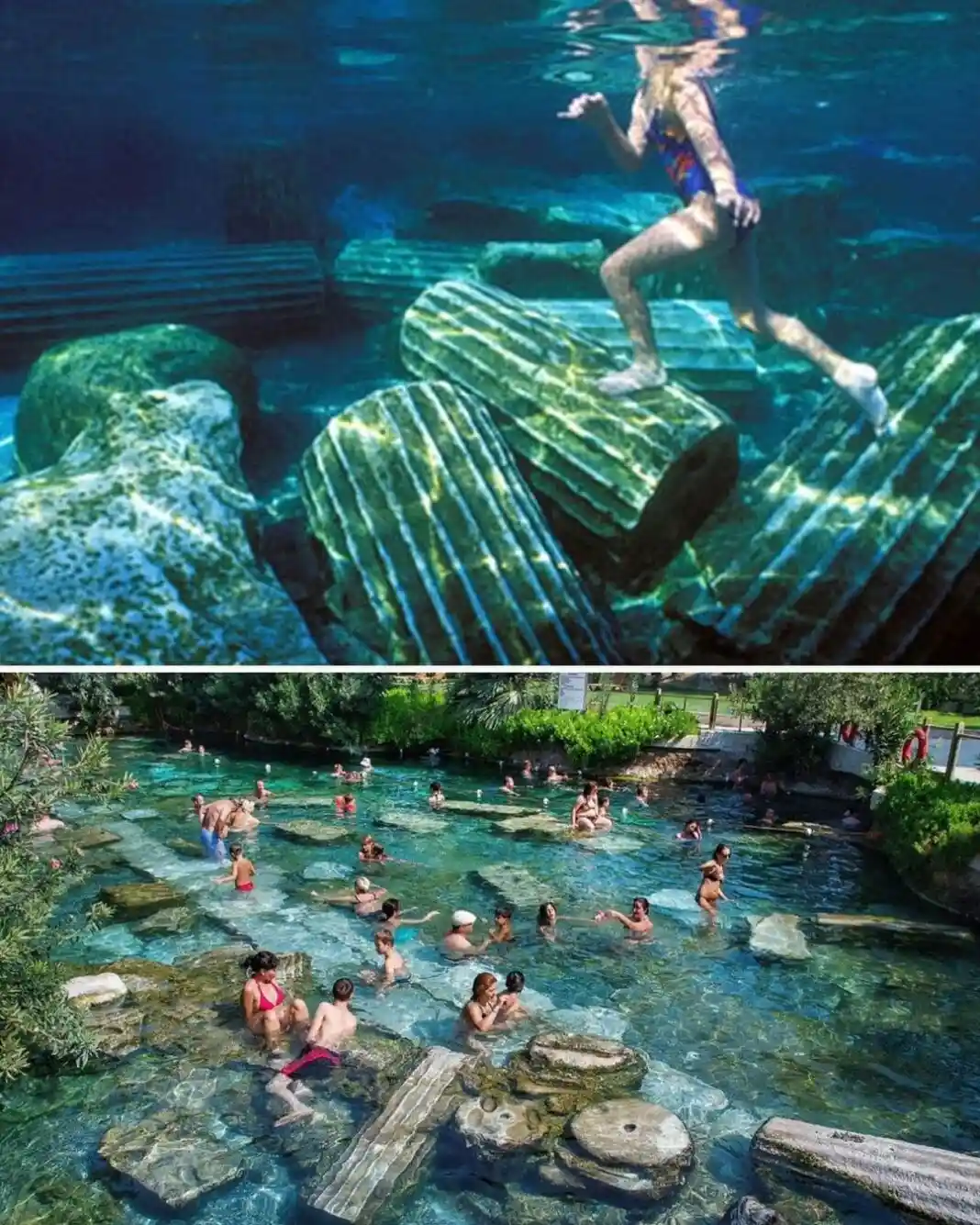
With its warm mineral waters, submerged marble columns, and palm-shaded surroundings, the Cleopatra Pools offer a rare chance to swim in the same waters that ancient Greeks, Romans, and possibly even Cleopatra herself once enjoyed.
Ancient Origins of Hierapolis
Phrygian Beginnings
The settlement around Pamukkale’s hot springs began as early as the 7th century BCE, when the Phrygians constructed a temple dedicated to the goddess Cybele. The location’s unique geology—hot springs releasing mineral-rich waters—made it a sacred place of healing and ritual.
Greek Influence
When Greek colonists later settled in the area, they merged local traditions with their own religious beliefs. Because of the cave that released toxic gases nearby, they linked the site to Hades and the underworld, further reinforcing its spiritual and mystical aura.
Hierapolis under Hellenistic and Roman Rule
During the 2nd century BCE, the city of Hierapolis flourished under the Seleucid Empire. After the Battle of Magnesia in 190 BCE, it passed into the hands of the Kingdom of Pergamon, and eventually, in 133 BCE, it became part of the Roman Empire.
The Romans were particularly fond of Hierapolis for its thermal springs. They constructed elaborate bath complexes and pools, integrating leisure, medicine, and spirituality. It is during this period that the pool, now called the Cleopatra Pools, became a central attraction.
Cleopatra and the Pools
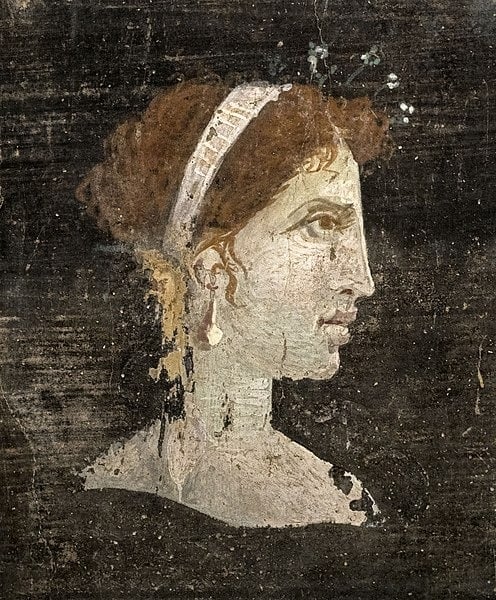
While historical records do not definitively confirm Cleopatra’s presence at the Pamukkale Pools, legend holds that she swam in these very waters. During the Roman period, Mark Antony gifted the region, including Hierapolis, to Cleopatra. Given her known fondness for bathing rituals and luxury, it is entirely possible she visited or bathed in the thermal springs.
Whether myth or fact, the association with Cleopatra VII Philopator—Egypt’s most famous queen—has immortalized the pools as a place of royal indulgence and beauty.
The Cleopatra Pools Today
Unique Features
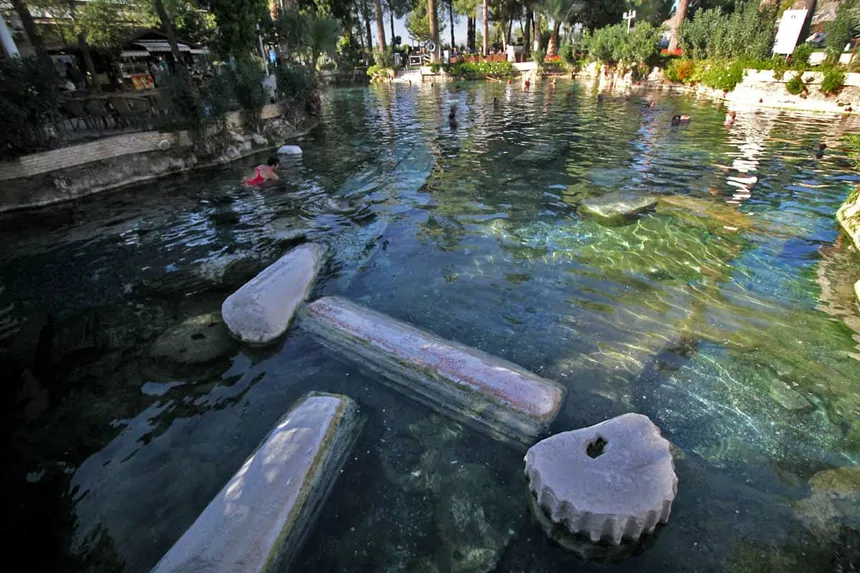
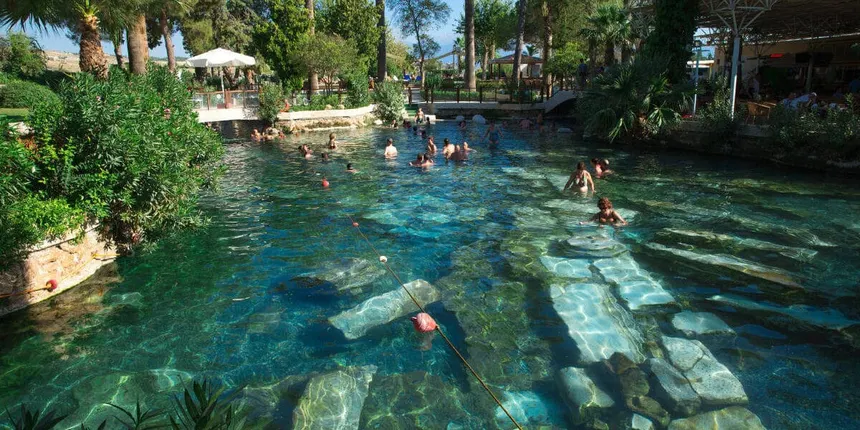
The Cleopatra Pools stand out as one of Turkey’s most unique natural and archaeological attractions. Visitors can swim among the submerged ruins of Roman columns, many of which toppled into the waters after an ancient earthquake. These ruins give the pools an otherworldly atmosphere, combining natural wonder with living history.
-
Temperature: About 36°C to 38°C (97°F–100°F), perfect for relaxation.
-
Mineral-rich water: Believed to aid in joint health, skin rejuvenation, and circulation.
-
Visual appeal: Crystal-clear waters, framed by palm trees, ancient stones, and travertine terraces of Pamukkale nearby.
Tourist Experience
Today, visitors from around the globe flock to swim in the same mineral waters enjoyed for over 2,000 years. According to TripAdvisor, travelers describe the water as “champagne-like” due to its natural carbonation. The site is managed to preserve both its heritage and natural ecosystem, ensuring the balance between tourism and conservation.
Therapeutic and Spiritual Importance
Since antiquity, the thermal waters of Hierapolis have been considered healing and sacred. Ancient civilizations believed the springs could cure ailments, restore vitality, and purify the spirit.
Even in modern times, locals and tourists alike continue to praise the therapeutic qualities of the water. Doctors in antiquity prescribed thermal baths for various conditions, and contemporary visitors echo the same belief in the health benefits of hydrotherapy.
Cleopatra VII: The Last Pharaoh of Egypt
Rise to Power
Cleopatra VII Philopator, born in 69 BCE, was one of history’s most remarkable women. At just 18 years old, she ascended the throne alongside her younger brother, Ptolemy XIII, but tensions quickly escalated into civil war.
Alliance with Julius Caesar
In 48 BCE, Julius Caesar became entangled in Egyptian politics, siding with Cleopatra. Their alliance—both political and romantic—secured Cleopatra’s rule after Ptolemy XIII’s defeat at the Battle of the Nile.
Later Years and Mark Antony
Cleopatra later formed a legendary partnership with Mark Antony, one of Rome’s most powerful figures. This relationship brought her temporary security but eventually led to conflict with Octavian (later Augustus), culminating in the Battle of Actium (31 BCE) and Cleopatra’s tragic death in 30 BCE.
Her enduring legacy as a queen of intelligence, beauty, and ambition has fueled countless legends—one of which is her connection to the Pamukkale Pools.
The Rediscovery of Hierapolis and Cleopatra Pools
Hierapolis was abandoned in the 13th century following a series of earthquakes. For centuries, its ruins lay hidden until archaeological excavations began in the 19th century, revealing temples, theaters, necropolises, and the antique pool itself.
Today, Hierapolis and Pamukkale together form a UNESCO World Heritage Site (since 1988), protecting both the cultural ruins and the natural travertine terraces that cascade down the hillside.
Why Visit Cleopatra Pools?
-
Historical immersion – Swim where ancient Greeks, Romans, and perhaps Cleopatra herself once did.
-
Natural wellness – Experience the healing mineral waters that have drawn people for millennia.
-
Unique setting – Float among 2,000-year-old marble ruins, an experience unmatched anywhere else in the world.
-
UNESCO heritage – Explore the wider ancient city of Hierapolis, including its theaters, tombs, and temples.
-
Proximity to Pamukkale – Witness the famous white travertine terraces that sit just next door.
Conclusion
The Cleopatra Pools of Pamukkale represent a rare fusion of natural wonder, historical legend, and cultural heritage. Whether or not Cleopatra herself swam in these waters, the pools remain a testament to the enduring allure of thermal springs, revered across civilizations.
Today, visitors who immerse themselves in the mineral-rich waters are not only indulging in relaxation but also connecting with a history that stretches back over two millennia. For travelers to Turkey, the Cleopatra Pools are more than just a tourist stop—they are an invitation to experience the timeless beauty and healing power of the ancient world.
ALSO READ: Native American Armor and Shields: Protection, Symbolism, and Craftsmanship