The Clacton Spear: Oldest Known Worked Wooden Implement
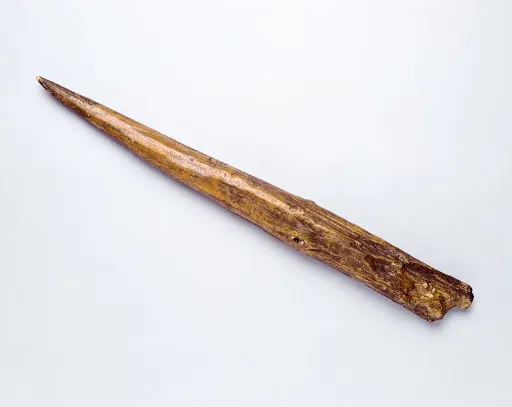
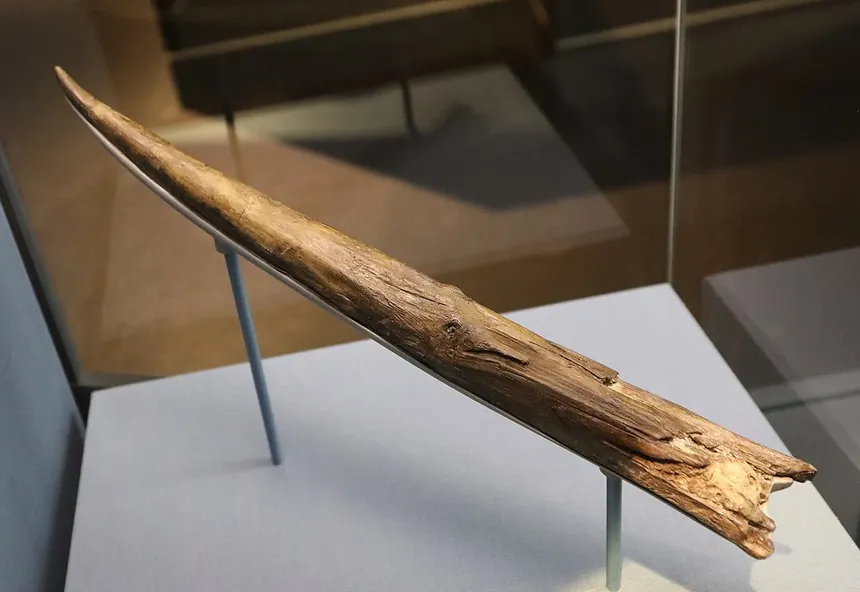
The Clacton Spear, discovered in 1911 at Clacton-on-Sea, Essex, is the world’s oldest known worked wooden implement, dating back approximately 400,000 years. Made from yew wood and shaped into a spear tip, it is a groundbreaking archaeological find that offers priceless insights into early hominid tool-making skills, hunting practices, and cognitive abilities. Today, the spear is preserved and exhibited at the Natural History Museum in London, where its remarkable age and historical importance continue to awe researchers and the public alike.
Historical Context and Discovery
The Clacton Spear was uncovered by Samuel Hazzledine Warren, an amateur prehistorian searching for stone tools in Paleolithic sediment. Initially mistaking it for an antler, Warren soon realized its significance and presented it to the Geological Society of London as a spear tip. Despite some early skepticism among academics, who doubted early hominids’ capability for such complex tool-making, the spear’s authenticity and significance have since been confirmed through comparisons with other ancient spears, such as the Schöningen Spears discovered in Germany.
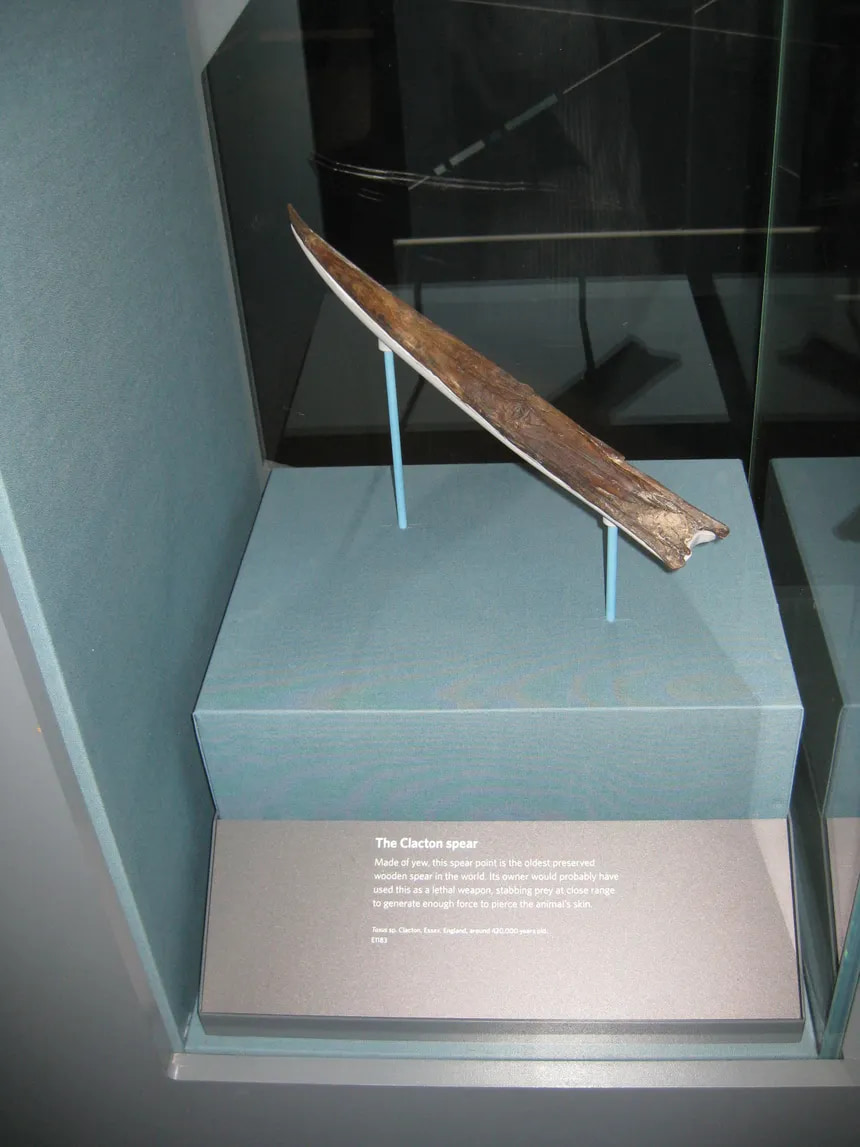
Dating from roughly 400,000 to 420,000 years ago, the Clacton Spear predates modern humans and is likely linked to Homo heidelbergensis or other archaic human species. The spear’s discovery revolutionized ideas about early human cognition and technological development during the Lower Paleolithic period, underlining the ingenuity and adaptability of early humans living in challenging environments.
Physical Characteristics and Craftsmanship
The spear point is crafted from yew wood, selected for its strength, flexibility, and durability—qualities that make it ideal for hunting tools. Originally 387 mm (15.2 in) long and 39 mm (1.5 in) in diameter, it dried and warped slightly after its excavation, shriveling to 367 by 37 mm (14.4 by 1.5 in). A curved flint tool, consistent with stone tools found at the same site, expertly shaped the wooden point.
This craftsmanship demonstrates remarkable planning and skill. The spear tip was carefully carved and sharpened. Implying knowledge of materials and tool-making techniques, as well as coordinated hand-eye skills. The fact that such a raw material as wood has survived for hundreds of thousands of years is extraordinary. Conservators used the waterlogged sediment and subsequent wax-impregnation treatments to preserve it.
Cultural and Functional Significance
The Clacton Spear is much more than just an ancient artifact; it represents a pivotal moment in human technological evolution. Early hominids used spears for hunting, allowing them to tackle large prey from a safer distance. This tool would have enabled better protection from dangerous animals and increased hunting efficiency, which was crucial for survival.
While initially there was debate whether the spear was a hunting weapon or a simpler digging stick. Discoveries like the Schöningen Spears, dated to around 300,000 years ago and displaying similar craftsmanship. Helped solidify the interpretation of the Clacton spear as a hunting weapon. Its design suited thrusting as well as possibly throwing, highlighting early human adaptability.
The Evolution of Spear Use in Human History
The Clacton Spear is part of a broader archaeological narrative tracing the evolution of hunting weapons over millennia. Spear technology laid the foundation for increasingly sophisticated hunting tools and weapons, which later influenced warfare and human settlement patterns.
Throughout prehistoric and historic periods, people refined and adapted wooden spear shafts. Exemplified by the bronze-tipped spears of the Bronze Age and specialized spears like the medieval boar spear with lugs to prevent over-penetration of prey. The basic principles of spear-making observable in the Clacton Spear. Resonate in countless forms of weaponry up to the present day.
Preservation and Display
The Clacton Spear’s journey from discovery to exhibition traces advancements in archaeological conservation. Initially waterlogged and fragile, the spear underwent several treatments including impregnation with wax to stabilize it. Despite shrinkage and warping, conservators have preserved this unique piece for more than a century.
Currently housed at the Natural History Museum in London, the spear is a centerpiece exhibit for understanding early prehistoric life. It connects visitors to a distant past when the ingenuity of early humans. Marked the dawn of technology that has shaped human existence ever since.
Conclusion
The Clacton Spear is a testament to early human cognition, skill, and survival strategies. As the oldest known worked wooden implement. It illuminates the technological advances that began hundreds of thousands of years ago and laid essential groundwork for later human development. Its discovery challenged previous assumptions about early hominid capabilities and enriches the archaeological narrative of prehistoric tool use and hunting.
For anyone fascinated by the deep history of human innovation. The Clacton Spear remains a vital symbol of endurance, ingenuity, and the prehistoric origins of human technology.
ALSO READ: Yakhchāl: Ancient Persian Ice Houses That Defied the Desert