Unveiling the Chimu Mummy: A Glimpse into Peru’s Overlooked Legacy
Rediscovering the Forgotten Civilization of the Chimu
Long before the rise of the Incan Empire, northern Peru was home to one of the most innovative and artistically gifted cultures in South America—the Chimu civilization. Flourishing between 1200 and 1400 AD along the arid coast of northern Peru, the Chimu people built a vast domain centered on their magnificent capital, Chan Chan. They mastered irrigation, metalwork, and textile production, leaving behind an enduring legacy that still captivates archaeologists today.
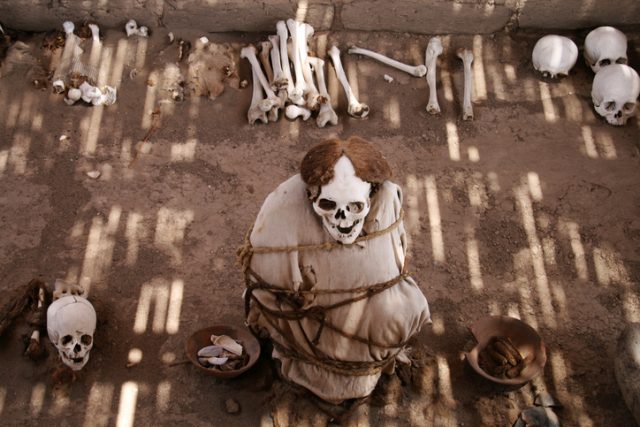
In a remarkable discovery, archaeologists have unearthed an exceptionally well-preserved male mummy that offers an intimate glimpse into the Chimu worldview. Found in a tightly bound fetal position within a coastal burial site, this ancient individual provides a rare and moving link to Peru’s pre-Incan heritage.
The Stunning Discovery: A Window into the Chimu Afterlife
Discovered amid the sun-bleached sands of northern Peru, the Chimu mummy astonishes researchers with its state of preservation. Owing to the region’s intensely dry climate, natural mummification occurred without the need for artificial embalming. The desert conditions effectively halted decomposition, transforming this discovery into an unparalleled archaeological treasure.
The mummy was found wrapped in multiple layers of cotton and wool textiles—fabrics that not only reflect the Chimu’s extraordinary weaving techniques but also serve as a ceremonial cocoon for the deceased. Alongside the remains, archaeologists uncovered ritual items and offerings, possibly meant to guide or protect the deceased in the afterlife. Each element of the burial carries symbolic meaning, shedding light on the Chimu’s profound reverence for the cycle of life, death, and rebirth.
Understanding the Burial Posture and Symbolism
The Chimu mummy was arranged in a fetal position with its limbs bound—a feature that has intrigued experts across the world. This posture may symbolize rebirth, a common motif in many ancient cultures, suggesting a belief that death marked the beginning of a new, spiritual journey. Some scholars interpret this pose as a conscious return to the womb of Mother Earth, reflecting the Chimu’s connection with nature and their conviction in the cyclical essence of existence.
Artifacts surrounding the mummy, including small offerings of shells, ceramics, and woven cords, indicate that burial was an act of devotion. These remnants hint at rituals performed to ensure safe passage to the afterlife—a belief that death was merely a threshold rather than an end.
Chimu Funerary Traditions: Reverence and Ritual
The discovery of this mummy broadens our understanding of Chimu funerary customs, which were deeply intertwined with social status and spiritual cosmology. The Chimu elite were often buried in elaborate chambers within pyramid-like structures, accompanied by offerings of jewelry, clothing, and precious metals. Commoners, while interred with fewer goods, still received careful preparation for the afterlife, underscoring a shared cultural emphasis on reverence for the dead.
The use of textiles in burial was not merely practical but symbolic. Wrapping the deceased in multiple layers may have signified protection or purity, while the intricate designs woven into these fabrics likely conveyed messages of identity, status, and spiritual belief. In many Andean cultures, textiles were acts of storytelling—threaded expressions of devotion that accompanied the soul beyond the mortal world.
The Chimu Civilization: Masters of the Andean Coast
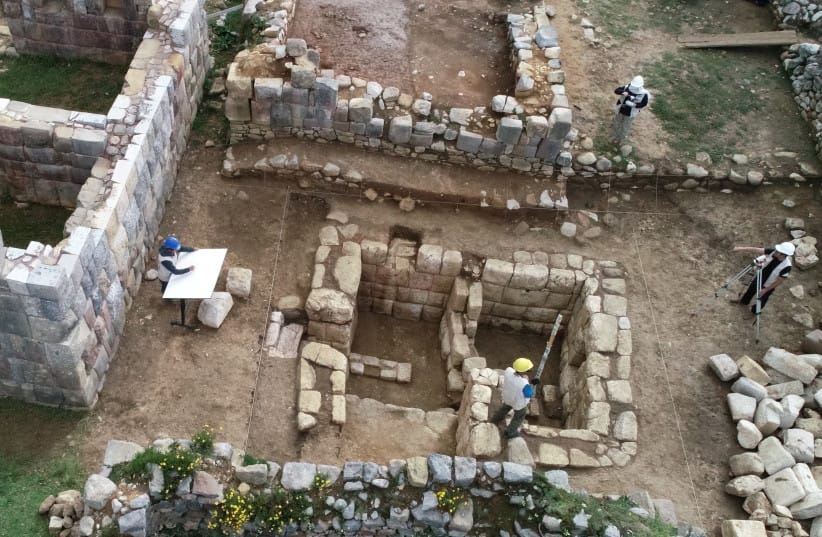
To fully appreciate the mummy’s significance, we must understand the Chimu civilization’s place in history. Centered in the Moche Valley, their capital, Chan Chan, was the largest adobe city ever built in pre-Columbian America. This sprawling metropolis, crafted entirely from sun-dried mud bricks, showcased elaborate palaces, ceremonial plazas, and storage complexes.
The Chimu were renowned for their:
-
Ingenious irrigation systems that transformed Peru’s deserts into thriving agricultural zones.
-
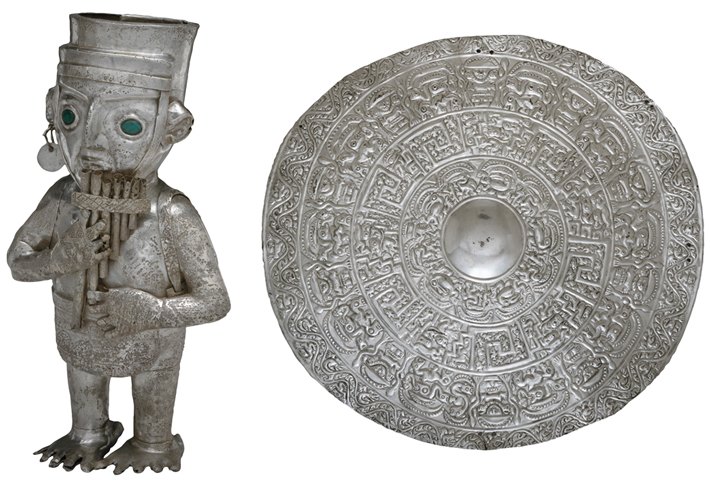
Metallurgical expertise, especially in gold, silver, and copper alloys.
-
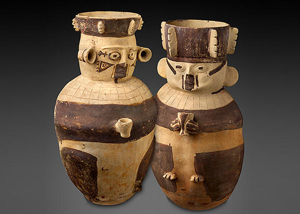
Artistry in ceramics and textiles, which reflected profound spiritual themes and aesthetic precision.
Their empire eventually fell to the Incas around 1470 AD, yet their cultural and artistic influence lived on—carried forward into the larger Andean world that emerged afterward
A Contrast of Worlds: Chimu vs. Egyptian Mummification
Though comparisons between Egyptian and Chimu mummies often arise, their preservation processes differ dramatically. Egyptian rulers underwent deliberate embalming, involving the removal of internal organs and the application of resins and spices. In contrast, the Chimu relied on natural preservation—their desert environment offered the perfect conditions for organic mummification.
Yet despite their differences, both traditions reflected a shared human impulse: to preserve the body as a vessel for eternity and honor the deceased through ritual and craftsmanship.
The Broader Legacy: What the Chimu Mummy Reveals About Andean Life
This mummy offers more than a glimpse into ancient death rituals—it opens a window into daily life, social structure, and cosmology. Hair, skin, and textile fibers preserved alongside the body allow scientists to analyze diet, health, and trade connections through isotopic and genetic studies. Evidence suggests that the Chimu thrived on agriculture and coastal fishing. Integrating both mountain and marine resources into a complex economy.
Moreover, this discovery contributes to anthropological understanding of how Andean societies viewed ancestry. The Chimu, like the Incas, venerated their dead, sometimes preserving mummies as intermediaries between the living and the divine. The ancestors were not forgotten relics; they were active participants in the spiritual life of the community.
Archaeology Meets Technology: Modern Insights from Ancient Remains
Contemporary archaeological methods now shed new light on such ancient finds. Researchers use CT scanning, 3D imaging, and radiocarbon dating to uncover insights without disturbing the remains. These non-invasive technologies reveal age, cause of death, and even previously hidden artifacts within the burial wrappings.
For instance, early scans of the Chimu mummy suggest that textile layering was more sophisticated than previously assumed. Possibly a reflection of ritual rank or social hierarchy. Such findings underscore how ancient craftsmanship combined artistry and spirituality into a single timeless narrative.
Preserving Peru’s Hidden Heritage
The discovery of the Chimu mummy serves as a compelling reminder of how many of Peru’s pre-Incan treasures remain underexplored. While Machu Picchu and Incan temples dominate the spotlight, civilizations like the Chimu laid crucial foundations for later Andean innovations. Each uncovered artifact rekindles the story of a people whose creativity and faith flourished amid some of Earth’s harshest landscapes.
Efforts are now underway to conserve both the mummy. And its burial textiles through climate-controlled preservation labs and digital archiving projects. Protecting these remnants is essential—not merely for scientific study but to honor the cultural heritage they embody.
Conclusion: Breathing Life into the Past
The unearthing of the Chimu mummy reintroduces the world to a civilization that time had almost forgotten. Its bound limbs, intricate wrappings, and quiet dignity echo a society steeped in artistry, spirituality, and reverence for the eternal cycle of life. This discovery not only strengthens Peru’s archaeological record. But also deepens our shared understanding of what it means to remember—and revere—our ancestors.
Every grain of sand that concealed the Chimu mummy held history in waiting. As archaeologists continue to peel back time’s layers, they bring us closer to the heart of ancient Peru. A place where death was not an end, but a sacred continuation of life itself.
ALSO READ: Megaraptor vs. Crocodile: Fossil Discovery Reveals Prehistoric Predation Frozen in Time