Cave of Crystals: Home to the World’s Largest Selenite Crystals in Mexico 💎🌡️
A Hidden Subterranean Marvel
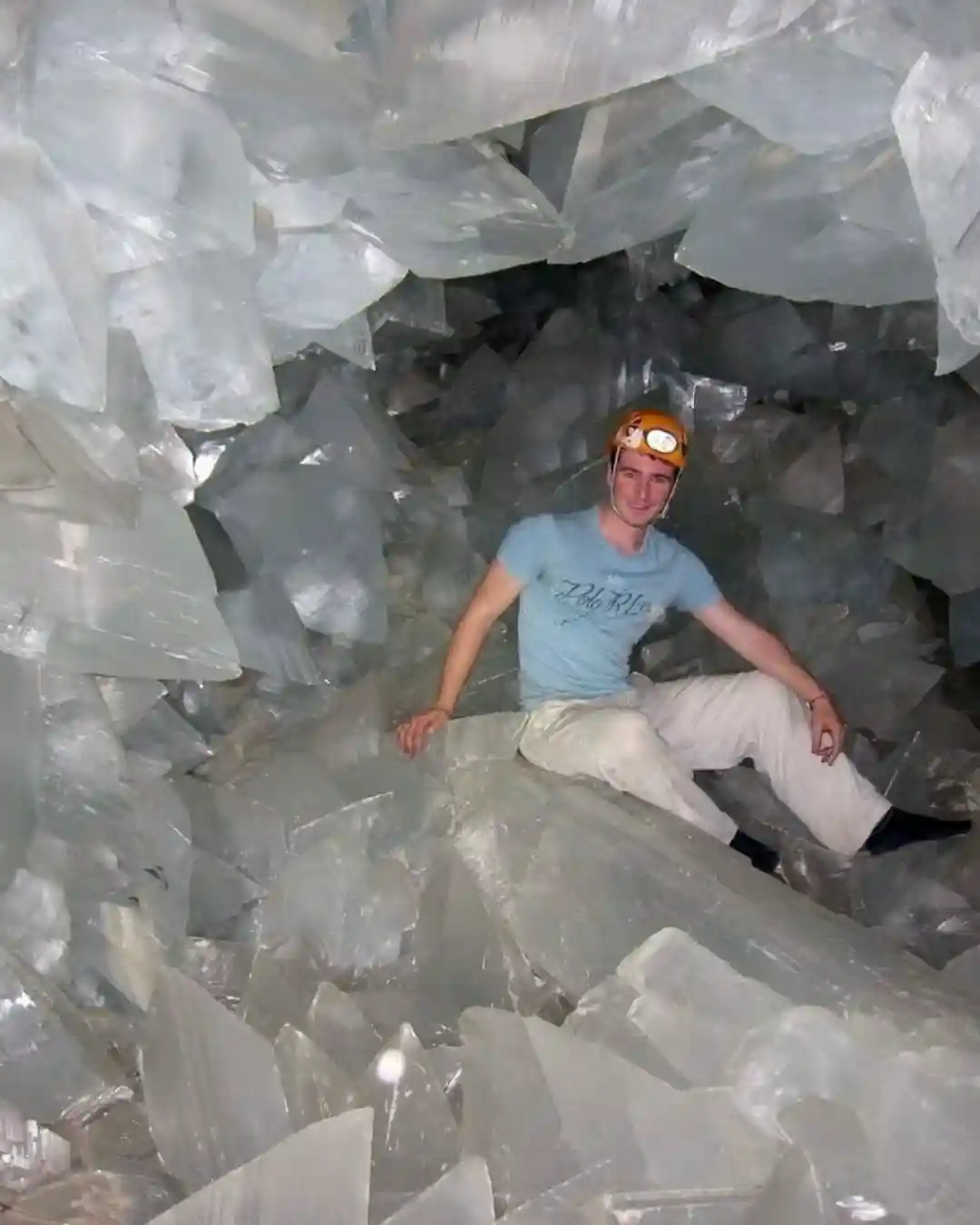
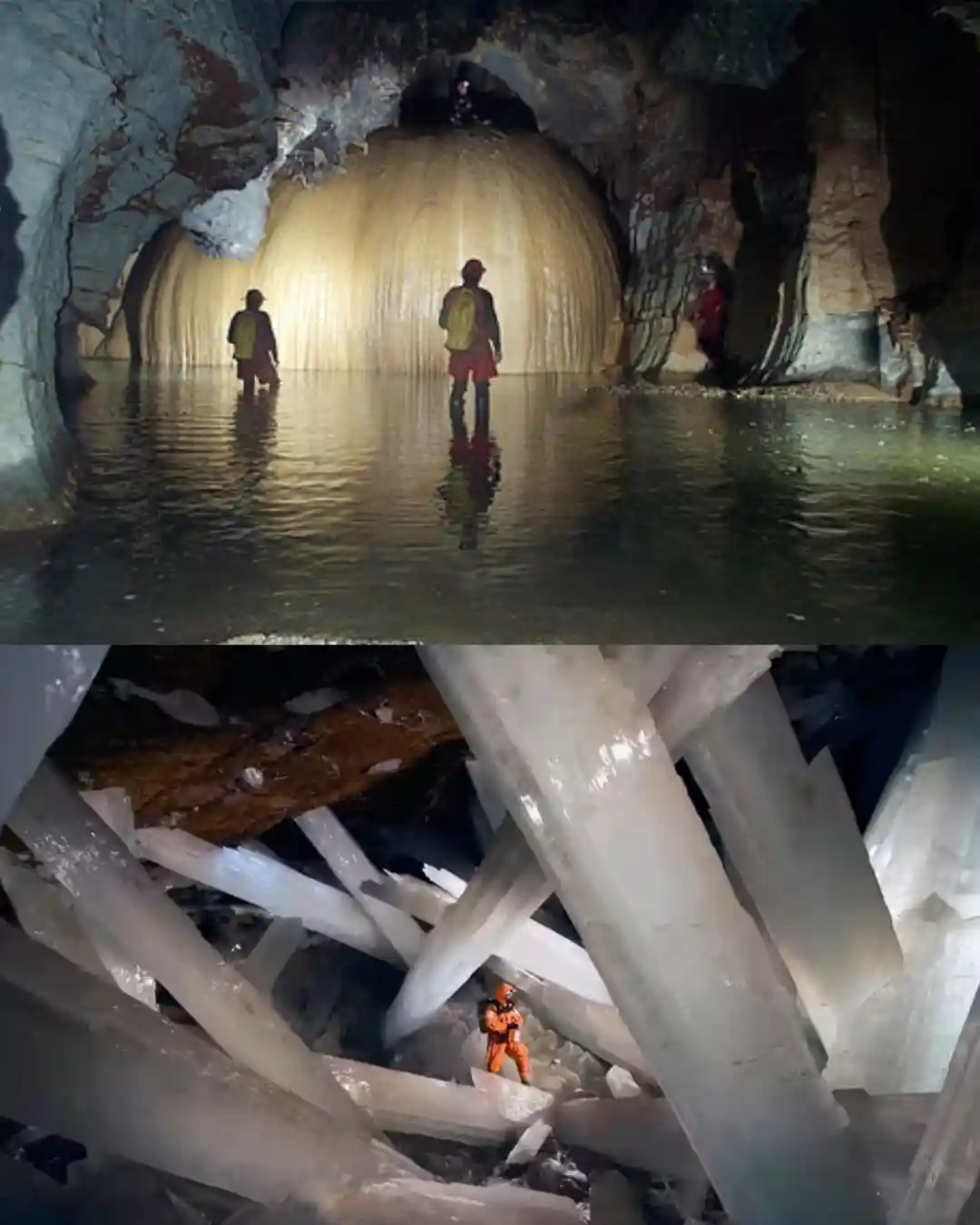
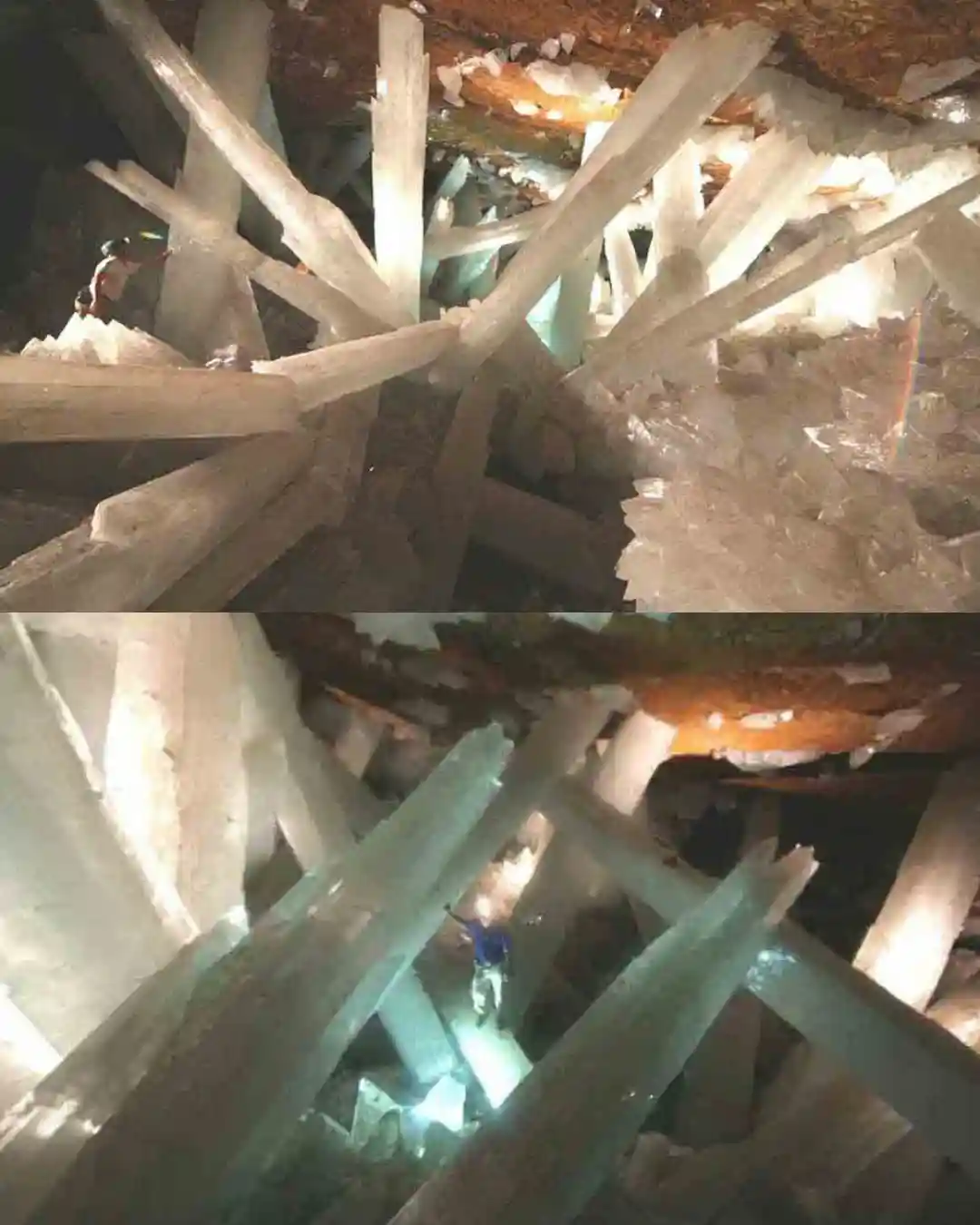
In the Chihuahua desert of Mexico, beneath the surface of an abandoned mine in Naica, lies one of the most extraordinary geological wonders on Earth: the Cave of Crystals. Accidental discovery by two brothers in 2000 revealed a hidden chamber filled with immense selenite crystals, some of which tower up to 50 feet (15 meters) in length.
This subterranean gem is not only breathtaking visually but also scientifically invaluable, providing insight into crystal growth, mineral formation, and extreme subterranean environments.
Discovery of the Cave
The Accidental Find
The Cave of Crystals was uncovered when miners Mario and Vicente Murillo were drilling for lead and silver in the Naica mine. What they stumbled upon was unexpected and otherworldly: an enormous chamber glittering with enormous, transparent crystals unlike anything previously documented.
Immediate Reactions
Upon discovery, scientists quickly realized the significance of the find. The cave’s extreme conditions, including temperatures reaching 58°C (136°F) and 90–99% humidity, made it incredibly dangerous but uniquely preserved the massive crystals for millions of years.
Geological Formation of the Crystals
How Selenite Crystals Form
The selenite crystals in Naica are gypsum-based. Their formation required a rare combination of temperature, mineral-rich water, and long periods of stability underground. Key factors include:
-
Hydrothermal fluids saturated with calcium and sulfate.
-
Slow cooling and evaporation, allowing crystals to grow steadily over hundreds of thousands of years.
-
Protected, sealed environment beneath impermeable rock layers that prevented disturbance.
Uniqueness of the Cave
Few places on Earth provide the ideal conditions for such massive crystal growth. The size, clarity, and density of the crystals at Naica make it a one-of-a-kind geological phenomenon.
Extreme Environmental Conditions
Heat and Humidity
The cave’s interior is extremely inhospitable. High temperatures combined with humidity create a “sauna effect,” making even short visits hazardous. Scientists can only enter with special suits, cooling systems, and limited exposure time.
Preservation Necessity
Due to the fragility of the crystals and the cave’s unstable conditions, the chamber has been sealed to protect it from environmental change and human interference. Water pumps that once kept the mine dry were stopped, ensuring that the cave remains preserved in its natural state.
Scientific Significance
Insights into Crystal Growth
Studying the Cave of Crystals has allowed scientists to understand the physics and chemistry of extreme mineral growth. The clarity and perfection of the selenite blocks provide evidence of slow, uninterrupted crystal formation over tens of thousands of years.
Microbial Life
Research in the cave has also explored microbial life adapted to extreme conditions. Some bacteria survive within crystal structures, offering clues about life in extreme environments on Earth and possibly other planets.
Geological and Mineralogical Research
The Naica crystals serve as a natural laboratory for understanding:
-
Gypsum mineralization.
-
Crystal lattice formation.
-
Hydrothermal processes in subterranean environments.
The Crystals: Size, Shape, and Beauty
Record-Breaking Dimensions
The Cave of Crystals is home to some of the largest natural crystals ever discovered:
-
Some crystals reach 50 feet (15 meters) in length.
-
Widths can extend over 3 feet (1 meter).
-
Each crystal is nearly perfect in clarity, making them visually striking and scientifically valuable.

Formation Patterns
The crystals are primarily prismatic, with sharp edges and smooth surfaces. Many grew in clusters, creating crystal forests that reflect light in dazzling ways, giving the cave an almost ethereal glow.
Color and Transparency
While most crystals are transparent or milky white, some exhibit subtle shades caused by trace minerals, adding to the cave’s visual and scientific allure.
Human Interaction and Challenges
Hazards of Exploration
Entering the Cave of Crystals is extremely risky. High heat can lead to hyperthermia, while humidity makes breathing difficult. Scientists must wear cooling suits and oxygen tanks and limit their time inside to a few minutes at a stretch.
Mining and Environmental Threats
Before its discovery, the cave was at risk of damage due to mining operations. The extraction of lead, silver, and zinc created conditions that could have destabilized the chamber, highlighting the delicate balance between human activity and natural preservation.
Conservation Efforts
The cave has since been sealed and protected, ensuring that these millennia-old crystals remain intact. Future research will likely depend on remote sensing, robotic technology, or careful controlled access to continue studying this natural wonder.
Comparison to Other Crystal Formations
Uniqueness of Naica
While large crystals exist elsewhere, Naica’s selenite crystals surpass all others in size and purity. Other caves may have gypsum or quartz formations, but none combine scale, clarity, and uniformity like the Cave of Crystals.
Geological Implications
Naica provides insight into rare hydrothermal environments and serves as a model for crystal formation under extreme heat and mineral saturation, relevant to both geology and planetary science.
Tourism and Public Awareness
Limited Access
Due to safety concerns, the cave is not open to the public. However, its discovery has sparked global fascination, inspiring documentaries, photographs, and virtual tours.
Educational Value
The Cave of Crystals has become an iconic subject for geologists, mineralogists, and educators, illustrating how rare and delicate natural processes can produce extraordinary results.
Cultural Impact
The cave has also influenced popular culture, appearing in films, books, and scientific literature, emphasizing humanity’s awe of nature’s extremes.
Future Research and Preservation
Scientific Goals
Future studies aim to explore:
-
Microbial ecosystems within the crystals.
-
Precise dating and formation processes.
-
Applications of crystal growth knowledge to materials science.
Technological Innovations
Researchers are developing robots and remote sensors to safely navigate the cave and gather data without endangering human life or damaging the crystals.
Conservation Strategies
Protecting the cave from climate change, mining, and human interference remains a priority. Sealing the cave ensures long-term preservation of one of the world’s most remarkable natural laboratories.
Conclusion: Nature’s Hidden Masterpiece
The Cave of Crystals in Naica, Mexico, is more than a geological curiosity—it is a monument to the power of nature and time. Discovered accidentally, it showcases the largest selenite crystals ever found, offering insight into crystal formation, extreme environments, and ancient mineralization processes.
Though inaccessible to most humans due to its extreme heat and humidity, the cave continues to inspire scientists, photographers, and enthusiasts worldwide. Its sealed chambers protect millennia of geological history, reminding us of Earth’s hidden wonders and the delicate balance required to preserve them.
The Cave of Crystals stands as a testament to patience, time, and natural artistry, a subterranean cathedral where science and beauty converge in a realm few have the privilege to witness firsthand.
ALSO READ: Ollantaytambo: The Majestic Inca Fortress in Peru 🏯⛰️