The Cave of Agia Sophia in Kythira: A Sacred Blend of Legend, Faith, and History
Where Faith Meets Stone — The Sacred Cave of Agia Sophia
On the serene island of Kythira, nestled between the Peloponnese and Crete, lies one of Greece’s most spiritually captivating sites — the Cave of Agia Sophia. This natural wonder, adorned with stalactites and steeped in centuries of devotion, houses a small chapel dedicated to Saint Sophia, a revered figure in Christian tradition.
According to local legend, Saint Sophia’s body was discovered within this cave, prompting the construction of the chapel in 1875. Yet, the site’s sacred aura dates much further back, as archaeological evidence suggests it served as a place of Christian worship since the early Byzantine era.
The cave stands as a living testament to faith, artistry, and history — a place where nature and spirituality intertwine in breathtaking harmony.
The Legend of Saint Sophia: Mother of Faith, Hope, and Love
The story of Saint Sophia is one of devotion and endurance. According to Christian tradition, she was the mother of three daughters — Faith, Hope, and Love (Agape) — who became martyrs during the reign of Emperor Hadrian in the 2nd century AD.
When the emperor demanded they renounce Christianity, the sisters refused, embracing death rather than abandoning their beliefs. Sophia, though not executed herself, endured immense grief as she witnessed their martyrdom. Overcome with sorrow, she later died beside their graves, and the Church honored her name — “Sophia,” meaning Wisdom in Greek — as a symbol of steadfast faith and divine understanding.
This moving story gave rise to devotion across the Christian world, and in Kythira, it took a physical form within the Cave of Agia Sophia, where legend claims her relics were found centuries later.
The Discovery and Construction of the Chapel
Local oral traditions tell that in the 19th century, villagers discovered a sacred relic believed to be associated with Saint Sophia inside the cave. The miraculous event inspired the construction of a small stone chapel within the cavern in 1875.
Built with humility and devotion, the chapel reflects traditional Greek Orthodox architecture — a compact sanctuary adorned with icons, oil lamps, and a modest altar. Despite its size, the atmosphere radiates spiritual energy. The cave’s natural formations act as a cathedral ceiling, creating an awe-inspiring setting for prayer and reflection.
A Glimpse into the Past: Early Christian Worship
Archaeological evidence indicates that the Cave of Agia Sophia was used as a Christian worship site as early as the 13th century, and possibly earlier. Researchers have uncovered traces of frescoes, crosses, and other religious symbols that point to the cave’s long-standing spiritual role.
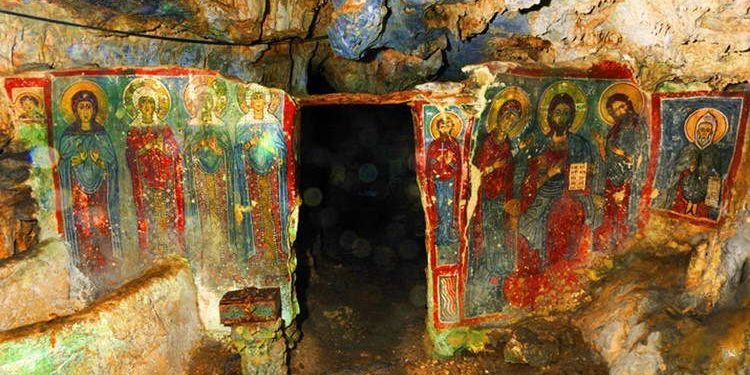
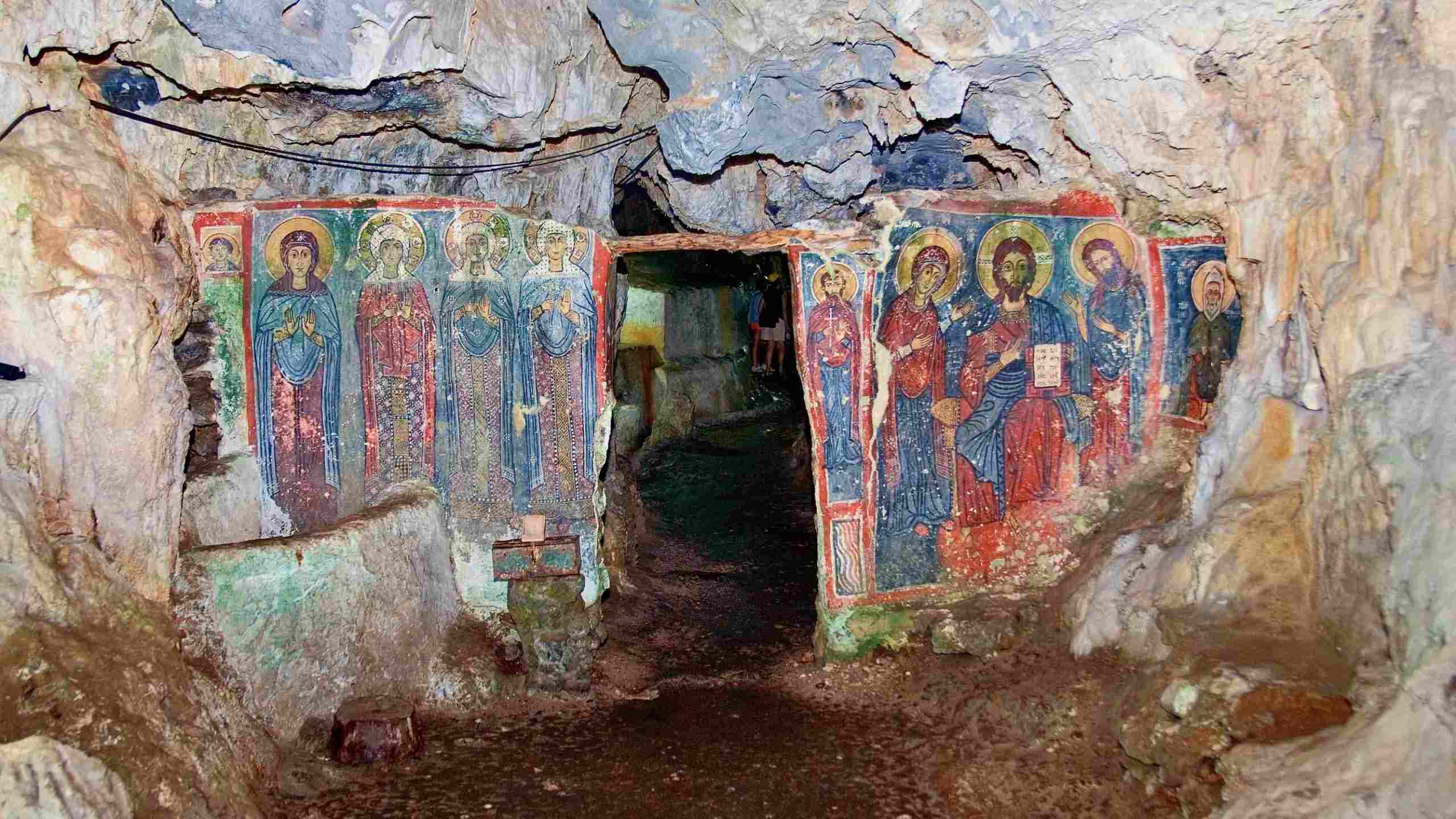
The 13th-century Byzantine frescoes are among its most treasured features. These murals depict Saint Sophia and her three daughters, alongside other saints, angels, and biblical scenes. Despite centuries of humidity and erosion, portions of the paintings remain visible — offering a glimpse into medieval religious artistry and devotion.
These frescoes are invaluable not only for their artistic merit but also for their cultural significance, connecting modern visitors with the faith and craftsmanship of Kythira’s early Christian community.
The Setting: Nature’s Sanctuary
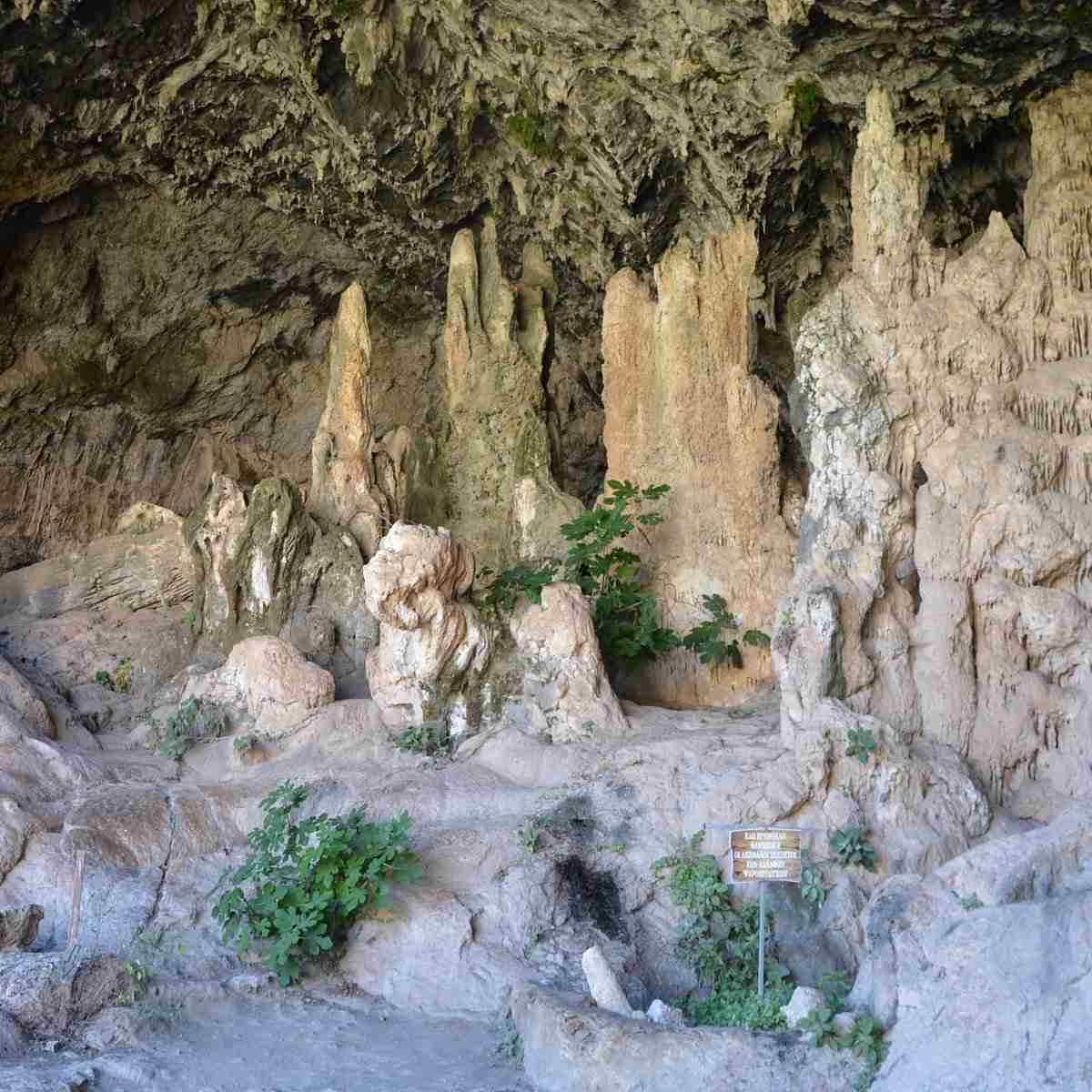
The Cave of Agia Sophia lies near the village of Mylopotamos, one of Kythira’s most picturesque areas known for its waterfalls and Venetian heritage. To reach the cave, visitors follow a winding path that descends through lush greenery, opening into a breathtaking natural chamber.
Inside, the cave stretches about 20 meters deep, filled with stalactites and stalagmites that shimmer in the dim light of candles and oil lamps. The natural rock formations blend seamlessly with the spiritual atmosphere — it feels as though earth itself has shaped a temple.
At the heart of this sacred space stands the chapel of Saint Sophia, its whitewashed walls contrasting beautifully with the surrounding rock. The air is cool and serene, often filled with the faint scent of incense and the soft echo of prayers.
Pilgrimage and Celebration
Each year, the Feast of Saint Sophia is celebrated on September 17, attracting pilgrims and locals who gather to honor the saint and her martyred daughters. The day is marked with liturgies, processions, and traditional hymns, creating a moving experience that bridges centuries of devotion.
Many visitors light candles and leave offerings, seeking blessings of faith, wisdom, and protection for their families. For some, the journey to the Cave of Agia Sophia is not merely a cultural visit — it is a spiritual pilgrimage, an act of connection to something eternal.
The Art and Symbolism of the Frescoes
The Byzantine frescoes inside the Cave of Agia Sophia are rich in symbolism. The depictions of Saint Sophia and her daughters are more than portraits — they are visual expressions of Christian virtues.
-
Faith (Pistis) symbolizes unwavering belief.
-
Hope (Elpis) represents spiritual endurance.
-
Love (Agape) embodies divine compassion.
Together, these figures form the heart of Sophia’s legacy — the moral pillars upon which early Christian faith was built. The frescoes’ delicate lines, muted colors, and serene expressions convey both artistic mastery and deep theological meaning.
Although time and moisture have eroded parts of the paintings, conservation efforts aim to preserve what remains, ensuring that future generations can witness this medieval masterpiece of devotion.
Historical and Spiritual Significance
Beyond its religious importance, the Cave of Agia Sophia holds a crucial place in Greek cultural heritage. It represents the intersection of myth, history, and nature — a site where spiritual belief meets geological beauty.
For historians, it offers insight into Byzantine religious practices and local traditions on the island of Kythira. For believers, it is a tangible symbol of endurance. The same endurance shown by Saint Sophia and her daughters in the face of persecution.
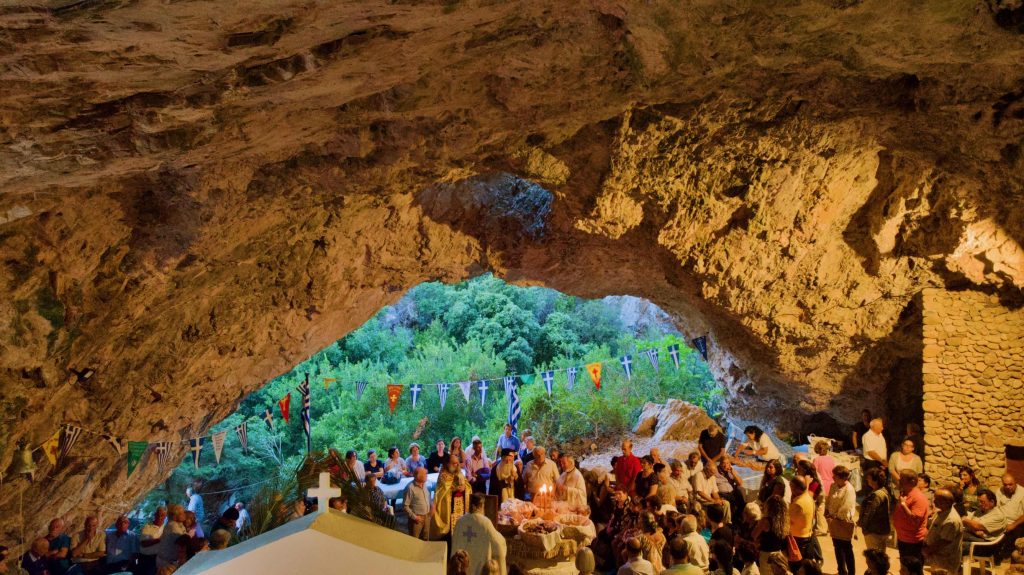
Today, the cave stands not only as a religious monument. But also as a reminder of how faith can be woven into the very fabric of the earth.
Visiting the Cave of Agia Sophia
Travelers visiting Kythira can easily reach the Cave of Agia Sophia near Mylopotamos. About 25 kilometers from Chora, the island’s capital. The entrance is marked by a small stone path leading to the cave opening. Inside, dim lighting guides visitors through the cool interior, revealing both natural wonders and spiritual treasures.
Practical tips for visitors:
-
Wear comfortable shoes, as the path may be uneven.
-
Bring a flashlight or rely on phone lighting for deeper sections.
-
Maintain silence and respect, as it remains an active place of worship.
-
Avoid touching frescoes or stalactites to preserve them for future generations.
A visit to this cave is not just sightseeing. It is a journey into the heart of faith, art, and nature.
Conclusion: The Enduring Spirit of Saint Sophia
The Cave of Agia Sophia in Kythira stands as a timeless symbol of faith and resilience. Within its rocky walls, centuries of prayer, legend, and art coexist in harmony. The story of Saint Sophia and her daughters — Faith, Hope, and Love — continues to inspire pilgrims and travelers from around the world.
Whether one visits for its spiritual aura, historical richness, or natural beauty. The cave offers an unforgettable experience. A reminder that true sanctity often lies not in grand cathedrals but in the quiet depths of devotion. Carved into the heart of the earth itself.
ALSO READ: The Mystery of the Ancient Granite Drill Core at Giza