The Morbid Obsession of Carl Tanzler and Maria Elena de Hoyos: A Love Beyond the Grave
A Love That Defied Death — and Sanity
Few stories in modern history blur the boundaries between love, obsession, and insanity as disturbingly as that of Carl Tanzler and Maria Elena Milagro de Hoyos. What began as a tragic romance in 1930s Florida evolved into one of the most grotesque and unsettling tales ever recorded — a story where affection turned into obsession, and devotion spiraled into delusion.
Carl Tanzler, a German-born radiology technician, met Maria Elena when she was a young Cuban-American woman battling tuberculosis, a disease often fatal at the time. Tanzler became infatuated not only with her beauty but with the idea that she was his destined love, a woman he claimed to have seen in visions years before.
What followed was a chilling saga that would see him steal her corpse, attempt to preserve it, and live with it for years — believing their love transcended death itself.
1. The Meeting: A Vision Fulfilled
Born Georg Karl Tänzler in Dresden, Germany, in 1877, Carl Tanzler later moved to Florida and took a position as a radiologic technologist at the U.S. Marine Hospital in Key West. He was known as eccentric and intelligent, often claiming to have mystical experiences and visions.
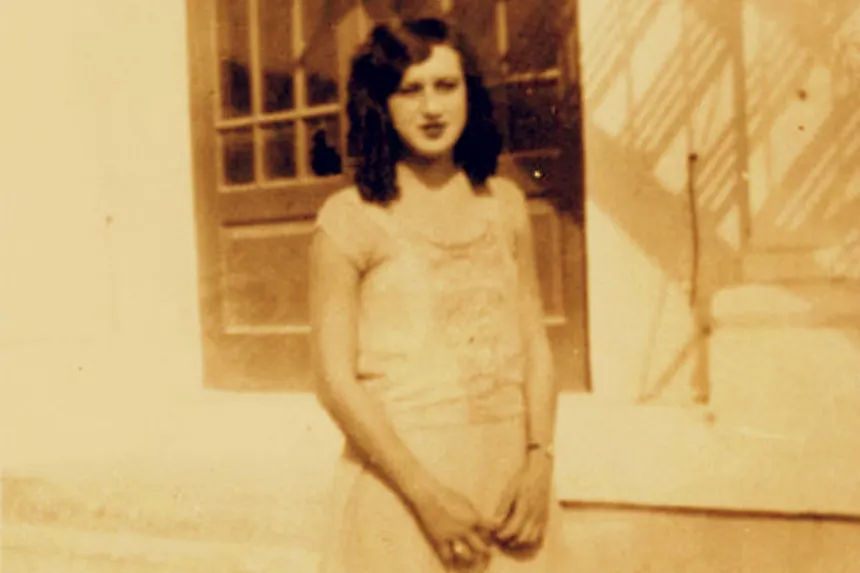
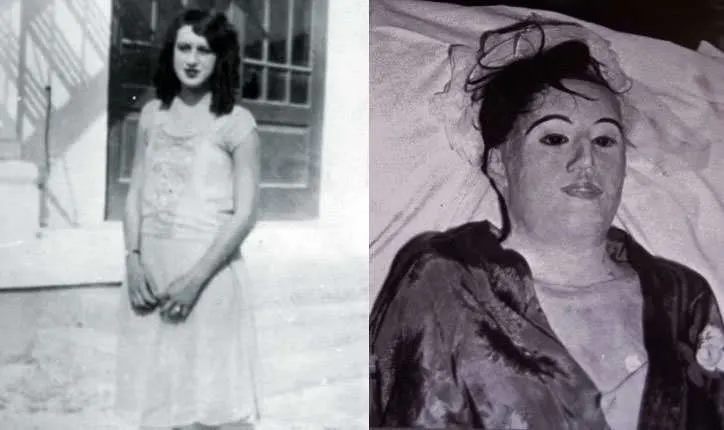
In 1930, he met Maria Elena Milagro de Hoyos, a 21-year-old woman from a respected Cuban family. Described as radiant, with dark hair and a warm smile, Elena captivated Tanzler instantly. He later claimed she was the very woman he had seen in recurring visions — an ethereal figure he believed to be his soulmate, sent to him by destiny.
Elena, however, was gravely ill. Tuberculosis had spread through her lungs, and despite medical treatment, her health declined rapidly. Tanzler, who was twice her age and married (though estranged), became fixated on saving her.
2. The Treatment: Science and Superstition Collide
Tanzler dedicated himself to curing Elena, using both medical science and unconventional methods. He brought specialized equipment to her family home and administered homemade elixirs, radiation treatments, and tonics that he claimed could restore her health.
He also showered her with gifts — jewelry, clothing, and flowers — often professing his love despite her illness. Elena reportedly remained polite but distant; there is no evidence she reciprocated his romantic feelings.
Despite his efforts, Maria Elena de Hoyos died on October 25, 1931, at just 22 years old. Her death devastated Tanzler. But for him, love had not ended — it had only changed form.
3. The Mausoleum: A Shrine of Devotion
After Elena’s death, Tanzler paid for her funeral and mausoleum at the Key West Cemetery. He obtained permission from her family to build it and visit regularly. However, they were unaware of one crucial detail — Tanzler kept the only key to the tomb.
For two years, he visited nightly, speaking to her spirit and playing her favorite songs. He later claimed that Elena’s spirit began to speak to him, urging him to remove her from the tomb and care for her body. What he did next would shock the world.
4. The Theft: Love Becomes Obsession
In 1933, under the cover of darkness, Carl Tanzler entered the mausoleum, removed Elena’s decaying body, and transported it to his home in a makeshift toy wagon. There, he began his ghastly project of preservation.
He used wire and glass eyes to reconstruct her face, plaster of Paris to rebuild her skin, and silk and wax to fill in decomposed areas. To mask the odor of decay, he stuffed her body with rags and used perfumes and disinfectants. He even dressed her in fine clothes and a wedding veil.
For the next seven years, Tanzler lived with the corpse — sleeping beside it, speaking to it, and maintaining it as though Elena were still alive. His delusion had fully consumed him; he believed their union was divinely ordained.
5. The Discovery: A Town in Shock
In 1940, rumors began to spread in Key West about Tanzler’s strange behavior. Neighbors noticed him purchasing women’s clothing and perfume, and children reported seeing him dancing with a large “doll” through his window.
Eventually, Elena’s sister, Florinda, became suspicious and confronted Tanzler. What she found was horrifying beyond imagination. Authorities were called, and Elena’s body was recovered and examined — revealing the extent of Tanzler’s tampering.
The case immediately became front-page news, both in Florida and across the United States. Newspapers sensationalized the story, calling Tanzler a “mad romantic” and dubbing the incident “The Key West Love Story of Death.”
6. The Trial: Sympathy and Scandal
Carl Tanzler was arrested and charged with “maliciously destroying a grave and removing a body without authorization.” However, due to statute of limitations, the charges were ultimately dropped.
Public opinion was startlingly divided. Some saw him as a delusional necrophile; others, remarkably, viewed him as a tragic romantic — a man so deeply in love that he could not let go.
During interviews, Tanzler spoke calmly about his actions, insisting that Elena’s spirit guided him and that he had done everything out of love, not lust or madness.
Elena’s body was reburied in an unmarked grave to prevent further tampering, and Tanzler was ordered to stay away from the Hoyos family.
7. The Later Years: Obsession Unto Death
After his release, Tanzler moved to Zephyrhills, Florida, where he lived in isolation. He wrote an autobiography, “The Secret of Elena’s Tomb,” in which he described his love as pure and eternal.
When Tanzler died in 1952, officials reportedly found a life-sized effigy of Elena in his home — built from a death mask of her face. Even in death, he had recreated her image, unable to relinquish his obsession.
8. Legacy: Love, Madness, or Morbid Fantasy?
The story of Carl Tanzler and Maria Elena de Hoyos continues to haunt popular imagination. It has inspired books, songs, documentaries, and even horror films exploring the thin line between romance and madness.
Historians and psychologists view the case as an extreme example of erotomania — a delusional disorder where one believes another person reciprocates their love, even posthumously. Others interpret Tanzler’s behavior as a reflection of grief-induced psychosis, his mind breaking under the weight of unfulfilled love and loss.
Yet, what makes this story endure is not merely its horror, but its disturbing humanity. Tanzler was not a monster in his own eyes; he believed he was preserving love itself. That delusion — the conviction that love can conquer even death — remains both the tragedy and the terror of his tale.
Conclusion: When Love Crosses the Line
The haunting case of Carl Tanzler and Maria Elena de Hoyos reminds us that love, when unrestrained by reality, can twist into something dark and unrecognizable. What Tanzler called devotion was, in truth, a denial of death — and of Elena’s humanity.
In the end, his story forces us to confront uncomfortable questions:
Where does love end and obsession begin? Can affection justify the unimaginable?
The answers may lie buried — like Elena herself — beneath layers of devotion, delusion, and the eternal human fear of letting go.
ALSO READ: The “Melted” Stairs and Eternal Beauty of Ancient Egypt