Carbonised Bread from Pompeii: A 2,000-Year-Old Loaf Preserved in Ash
A Loaf Frozen in Time
In 79 AD, Mount Vesuvius erupted with catastrophic force, burying the Roman cities of Pompeii and Herculaneum under a suffocating blanket of volcanic ash and pumice. Thousands perished, and entire towns were frozen in time, preserved beneath layers of volcanic material. Among the most extraordinary discoveries unearthed centuries later was a carbonised loaf of bread, complete with the stamp of its baker.
This humble loaf, transformed into charcoal by the intense heat of the eruption, offers an intimate and tangible connection to daily life in ancient Rome. Beyond its scientific value, the bread is a poignant reminder of ordinary moments interrupted by tragedy, reminding us that even the simplest food carries stories of history, culture, and humanity.
The Discovery of Carbonised Bread in Pompeii
Archaeological Context
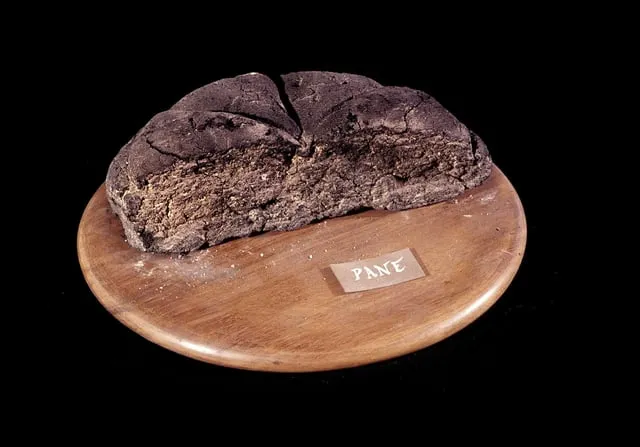
Excavations in Pompeii have uncovered multiple loaves of bread, each carbonised but remarkably intact. These loaves were found in ovens and kitchens, abandoned as their owners fled the volcanic disaster.
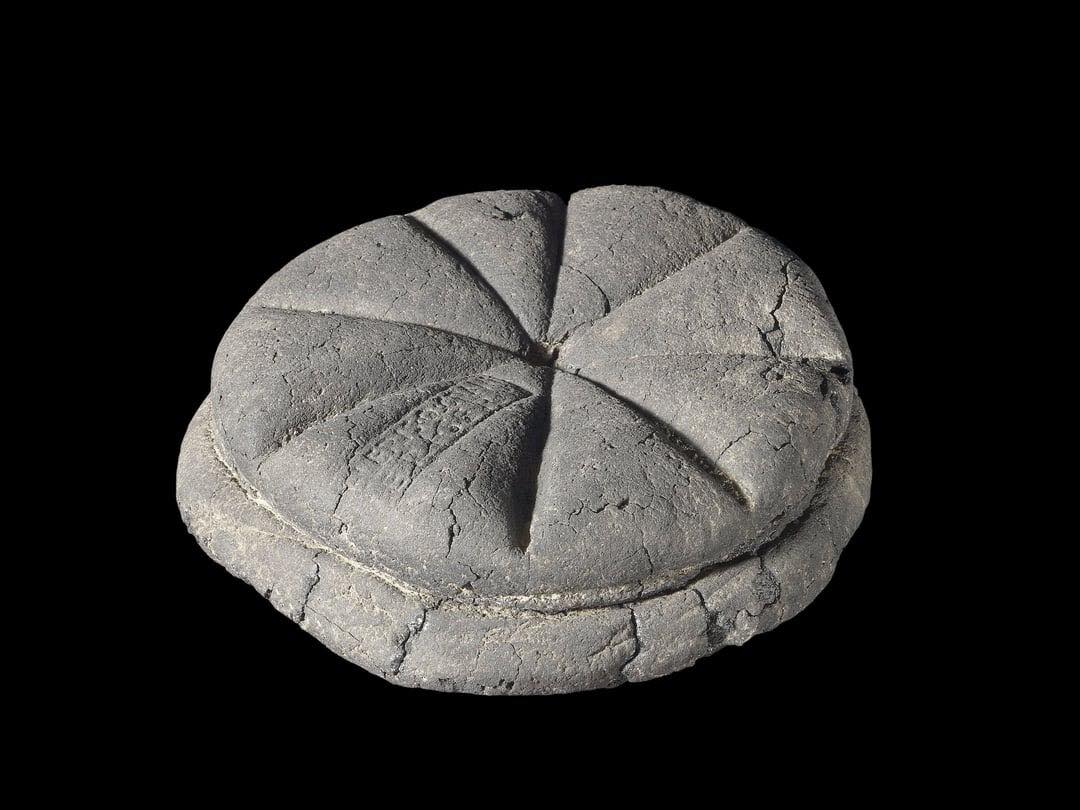
One particularly well-preserved example, found in a Pompeian bakery, stunned archaeologists because it retained not only its shape but also a clearly visible baker’s stamp pressed into the crust.
Why the Bread Survived
-
The intense heat of the eruption (over 300°C / 572°F) carbonised the bread rather than turning it to ash.
-
The rapid burial under volcanic debris sealed and preserved the carbonised loaf for nearly two millennia.
-
This natural process left behind a perfectly recognizable Roman bread—darkened, hardened, but intact.
The Baker’s Stamp: A Roman Signature
Perhaps the most fascinating aspect of the carbonised bread is the baker’s stamp found on its surface.
-
Purpose of the Stamp: Roman bakers marked their bread with stamps to identify ownership and prevent theft, especially in communal bakeries.
-
Social Insight: Bread was often baked in shared ovens, making a stamp essential to distinguish between loaves.
-
Names Preserved: Some stamps bear names of bakers or bakeries, providing archaeologists with unique insights into the commercial and social networks of ancient Pompeii.
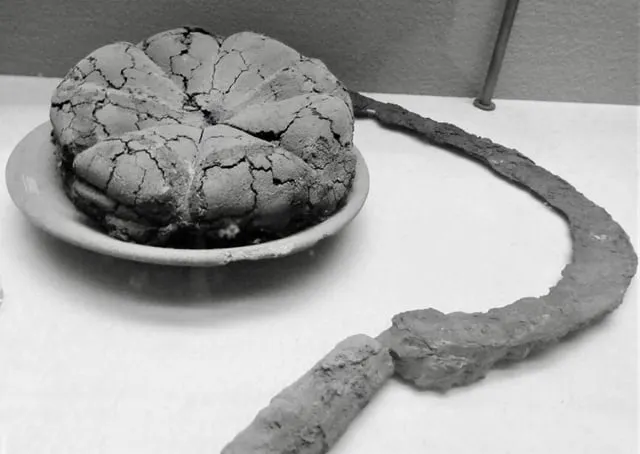
The stamped loaf bridges the gap between archaeology and personal history, preserving the identity of a baker who lived nearly 2,000 years ago.
What Roman Bread Looked Like
The carbonised loaf from Pompeii provides rare physical evidence of Roman bread-making traditions.
Shape and Size
-
Round, disk-like loaf divided into eight wedges, resembling a modern focaccia or rustic flatbread.
-
The scored divisions suggest bread was intended to be shared or portioned.
Ingredients
While the Pompeii loaf cannot be chemically analyzed without destruction, historical texts and comparative finds suggest common Roman ingredients included:
-
Wheat flour (the primary staple).
-
Water and yeast for fermentation.
-
Occasionally honey, milk, or spices for flavor.
Baking Techniques
-
Bread was baked in communal wood-fired ovens (fornax).
-
Bakers used large stone mills powered by donkeys or slaves to grind grain.
-
Stamped loaves were distributed across Pompeii’s bustling neighborhoods, feeding citizens from all walks of life.
Bread in Roman Society
Bread was more than food in ancient Rome—it was a symbol of life, power, and politics.
-
Staple Diet: Bread, along with olives and wine, formed the “Mediterranean triad” of Roman nutrition.
-
Social Status: Wealthier citizens could afford finer, whiter bread, while the poor ate darker, coarser loaves.
-
Politics: The famous phrase “bread and circuses” (panem et circenses) highlights how Roman leaders used free grain and entertainment to maintain public favor.
-
Religion: Bread also held spiritual significance in various Roman rituals.
Thus, the carbonised loaf from Pompeii is not just a kitchen relic—it embodies the centrality of bread in Roman civilization.
Daily Life in Pompeii: The Human Story
The carbonised bread connects us directly to the lives of Pompeians in 79 AD.
-
A Day Interrupted: The bread was already baked and cooling when Vesuvius erupted. Its owner likely planned to share it at a meal that never happened.
-
Family and Community: The divided loaf suggests communal eating, a cornerstone of Roman social life.
-
Tragedy Preserved: The loaf serves as silent testimony to lives cut short, with its charred surface echoing the violence of the eruption.
This simple object thus carries a profound human story, merging archaeology with empathy.
The Science of Carbonisation
How It Worked
-
At extreme heat, organic material undergoes carbonisation, where moisture evaporates and volatile compounds are driven off.
-
What remains is a hardened, blackened carbon shell that resists decay.
Why It Matters
Carbonisation allowed archaeologists to recover foods, wooden furniture, and textiles that would normally rot away.
In the case of Pompeii, this process preserved not just structures and frescoes but even the menu of daily life.
The Loaf in Museums Today
One of the most famous examples of Pompeii’s carbonised bread is displayed in the National Archaeological Museum of Naples, where visitors can view it alongside other artifacts from the eruption.
The bread’s display has become a highlight for many tourists, not because of grandeur, but because of its relatability. A loaf of bread is something familiar—yet here it becomes a powerful relic, connecting modern visitors to the ordinary meals of an ancient world.
Lessons from Pompeii’s Bread
The carbonised bread teaches us more than just culinary history:
-
The Universality of Food: Across centuries, bread remains a symbol of nourishment and community.
-
Cultural Continuity: Modern breads like focaccia and ciabatta echo ancient Roman baking traditions.
-
Fragility of Daily Life: The preserved loaf is a reminder that ordinary routines can be swept away in moments of disaster.
-
Value of Archaeology: Without excavation, this simple but powerful object—and its story—would have remained buried forever.
Conclusion: A Loaf That Speaks Across Time
The carbonised bread from Pompeii, stamped with a baker’s mark and preserved by volcanic ash, is one of the most extraordinary yet humble finds of Roman archaeology. Dating to 79 AD, it is more than an ancient loaf—it is a symbol of life interrupted, a reminder of the universality of food, and a tangible connection between past and present.
In its charred crust and stamped identity, we see not only the skill of Roman bakers but also the lives of ordinary people whose meals, conversations, and communities were silenced by Vesuvius. Today, this 2,000-year-old loaf continues to nourish us—not with food, but with memory, empathy, and insight into the shared human experience.
ALSO READ: Fingal’s Cave: Scotland’s Majestic Natural Symphony