The Byzantine Icon of Emperor Andronikos III Palaiologos: Restoration, Symbolism, and Legacy
The Byzantine icon of Emperor Andronikos III Palaiologos stands as an extraordinary artifact of late medieval artistry and devotion. Dating to the 14th century, this painted panel likely originated from Constantinople (modern-day Istanbul), the glittering heart of the Byzantine Empire. Its recent restoration has reawakened the brilliance of its original colors, revealing intricate details that illuminate the emperor’s divine aura and political power.
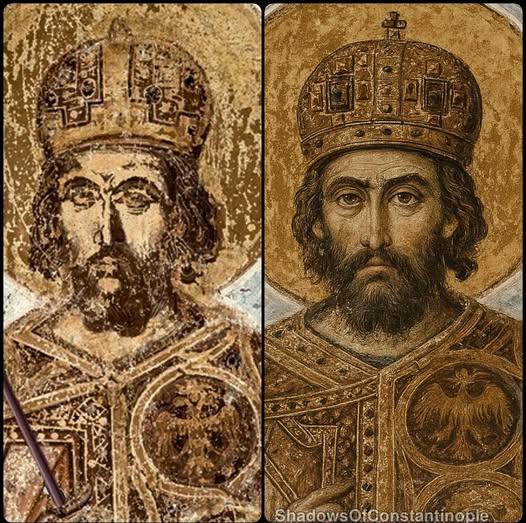
The dual image—comparing the ravaged original and the revived restoration—serves as both a historical record and an emotional journey through time. It reminds us that art, like empire, survives through endurance, faith, and the human desire to reclaim beauty from decay.
The Historical Context: Byzantium in the 14th Century
By the time Andronikos III Palaiologos reigned (1328–1341), the Byzantine Empire had weathered centuries of political upheaval, invasions, and civil war. The Palaiologan dynasty, which restored the empire after the Latin occupation of Constantinople in 1261, sought to reaffirm imperial prestige through religious art, architecture, and ceremonial imagery.
Icons played a vital role in this cultural revival. They were not merely devotional objects but potent symbols of authority, linking the emperor with God’s mandate to rule. As Orthodoxy placed heavy emphasis on visual theology, icons of emperors served both political and spiritual purposes. The emperor’s likeness, rendered with gold leaf and symbolic regalia, mirrored the image of Christ Pantokrator, suggesting divine legitimacy and eternal rulership.
The Icon’s Artistic Composition
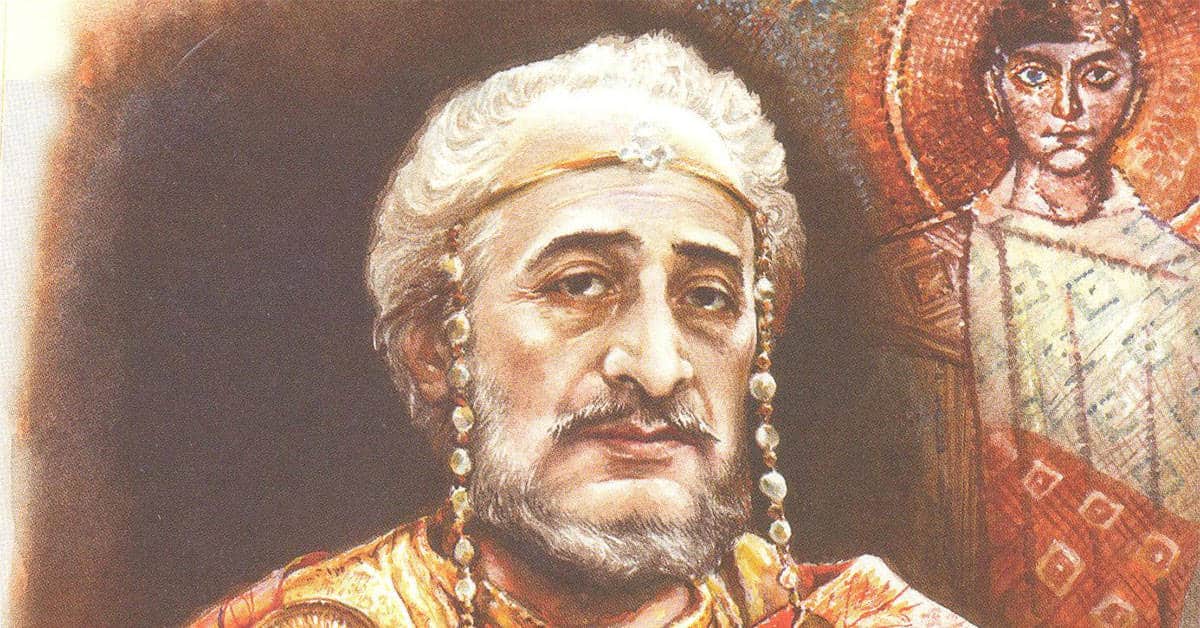
The icon of Emperor Andronikos III exemplifies the sophisticated style of late Byzantine painting. The emperor is depicted frontally, wearing imperial regalia that includes:
-
A richly jeweled crown symbolizing divine right.
-
A loros, the ceremonial scarf traditionally worn by Byzantine emperors.
-
Ornate robes adorned with geometric patterns and pearls.
In the original, centuries of exposure dulled the palette—earth pigments faded, and gilded backgrounds lost their luster. The emperor’s face appeared ethereal yet ghostly, his expression muted by layers of sediment and age-related wear.
The restoration, however, revitalized the painting’s luminosity. The gold once again gleams; the reds and blues regain their vivid saturation, and the emperor’s face reveals the meticulous brushwork characteristic of Byzantine master artists. The delicate stylization of the eyes, nose, and lips follows the canon of iconographic restraint—neither portrait nor ideal, but transcendent.
The Restoration Process: Science Meets Devotion
The restoration process of the icon combined art historical research with modern conservation science. Experts carefully analyzed pigment composition using noninvasive techniques such as X-ray fluorescence and infrared reflectography. Microscopic cleaning revealed the underpainting layers and original gilding methods.
Key stages of the restoration included:
-
Surface cleaning: Removal of oxidized varnish and soot accumulated over the centuries.
-
Stabilization: Consolidation of flaking paint without altering the original texture.
-
Pigment revival: Light chemical treatments restored color balance while preserving authenticity.
-
Reconstruction: Minimal inpainting to fill losses, guided by digital imaging and archival sources.
Through this delicate process, conservators respected the passage of time while revealing hidden beauty. The result is not a complete “renewal,” but a rebirth—bridging the original artist’s vision with today’s appreciation for historical integrity.
Iconography and Symbolism: The Emperor as Eternal Ruler
Every detail in the icon serves symbolic meaning. In Byzantine tradition, imperial imagery blended theology with statecraft. The emperor was seen as the earthly counterpart of Christ the King, responsible for maintaining divine order within his realm.
-
Crown and halo: The crown represents human kingship; the halo indicates participation in divine grace.
-
Regal attire: The loros and jeweled robes echo the garments Christ wears in heavenly depictions, reinforcing the emperor’s sacred status.
-
Gesture and posture: The frontal stance reflects timeless authority, while the emperor’s gaze meets the viewer’s directly, asserting spiritual presence and intercession.
This fusion of sacred and secular imagery underscores the Byzantine worldview, where art was a visual theology—each line, pigment, and gesture translating eternal truths into earthly form.
The Paradox of Preservation
The comparison between the deteriorated and restored versions of the icon evokes a profound meditation on time. The weathered surface bears the scars of devotion, war, and neglect—testimonies of an empire’s decline and endurance. The restoration, meanwhile, resurrects the original grandeur, offering a glimpse of what Byzantine worshippers once beheld in candlelight.
This tension between decay and rebirth mirrors the paradox at the heart of preservation. To conserve is to accept imperfection, acknowledging that art’s fragility is part of its story. To restore, however, is to pursue immortality through human hands, reclaiming a vision once thought lost. In this duality lies the timeless dialogue between past and present—between what remains and what returns.
The Artist’s Vision and Techniques
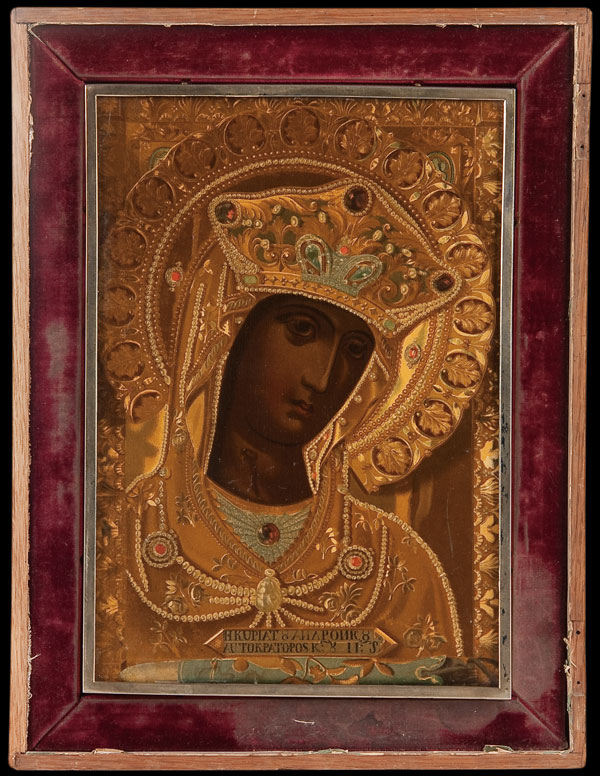
Though the artist’s identity is lost, stylistic analysis suggests a Constantinopolitan workshop, where painters followed strict iconographic conventions rooted in centuries of theological discourse. The use of tempera on wooden panel, gilding with gold leaf, and fine brush delineation aligns with late Palaiologan practices.
Pigment analysis reveals a palette rich in lapis lazuli, cinnabar, and malachite—expensive materials reflecting imperial patronage. The artist’s precision suggests both technical mastery and spiritual purpose, as each stroke was an act of prayer, transforming pigment into revelation.
The Icon in the Modern Imagination
Today, the Byzantine icon of Andronikos III Palaiologos embodies more than theological art; it stands as cultural memory. Art historians study it for insights into portraiture conventions and Palaiologan court ideology. Conservators admire it as a benchmark for Byzantine restoration ethics. For the public, it represents a bridge between the sacred world of Byzantium and the secular world of modern heritage preservation.
Museums and exhibitions that feature Byzantine icons often spotlight such restored pieces to illustrate the continuity of faith and craftsmanship. Digital reproductions allow scholars to examine details unseen for centuries, expanding global appreciation of Byzantine artistry.
The Enduring Legacy of Byzantine Imperial Art
Byzantine art, especially imperial iconography, transcends millennia. It inspired Orthodox Christian traditions across Eastern Europe and Russia, influencing everything from religious mural programs to royal portraiture. The icon of Andronikos III Palaiologos is a culmination of this legacy—a declaration that art can embody power, faith, and eternity all at once.
Even as Byzantine emperors faded into history, their icons continued to radiate timeless authority. Through restoration, these images regain their voice, preserving not just the memory of emperors but the enduring pulse of human devotion to the divine and eternal.
Conclusion: Art as a Bridge Across Time
The restored icon of Emperor Andronikos III Palaiologos is more than an artifact; it is a dialogue between centuries. Its cracked wood, faded pigments, and renewed splendor chart the cycle of decay and resurrection that defines both art and civilization. As restoration reveals the layers of human craftsmanship and faith, it affirms the power of art to resist oblivion.
In every glint of gold and every careful brushstroke resurrected from dust, the icon speaks of humanity’s relentless quest for immortality—not in stone or empire, but in beauty and spirit preserved through art.
ALSO READ: Gilded European Earrings: Echoes of 18th and 19th Century Artistry