Butler Wash Petroglyph Panel: Ancient Stories in Stone
Whispered Histories Along Butler Wash
Hidden amidst the dramatic sandstone and winding canyons of southeastern Utah, the Butler Wash Petroglyph Panel stands as one of North America’s great archaeological treasures. Etched onto stone some 800 years ago by the Ancestral Puebloans (long known as the Anasazi), these petroglyphs are not merely ancient art—they are vital cultural messages, spiritual expressions, and chronicles of survival that endure in silence beneath the desert sun.
The Ancestral Puebloans and Their High Desert Legacy
The creators of the Butler Wash Panel belonged to the Ancestral Puebloan culture, a civilization that flourished across the Colorado Plateau from roughly 500 BCE to 1300 CE. With cliff dwellings, ceremonial kivas, and granaries, these people demonstrated profound local adaptation and social organization. The Butler Wash site itself is believed to have been a farming settlement and ceremonial hub, built and occupied in the 1200s.
Artistry Carved in Stone: What Is on the Panel?
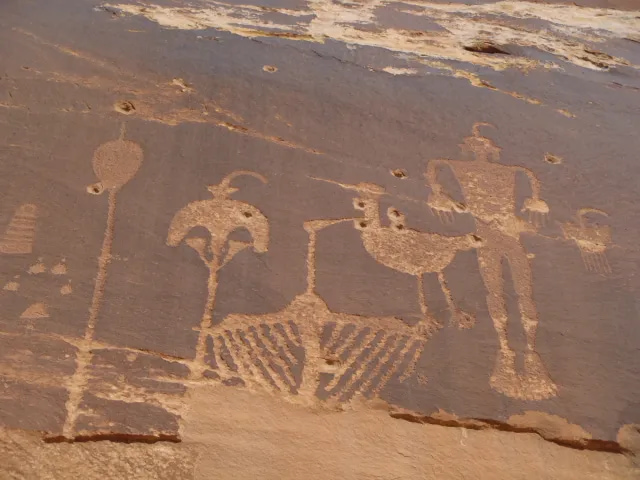
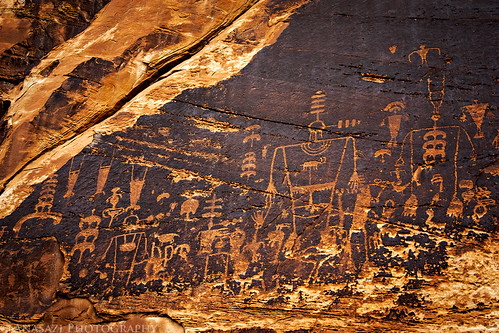
Butler Wash captivates with its striking visual language. The panel stretches over 100 feet in length, hosting hundreds of meticulously pecked designs:
-
Spirals: Frequently associated with water, cycles, or spiritual journeys.
-
Animals: Depictions of sheep, deer, serpents, and other fauna reference hunting, clan symbols, and mythic guardians.
-
Human Figures: Anthropomorphs, sometimes wearing elaborate headdresses, are thought to represent leaders, shamans, or spiritual beings.
-
Abstract Patterns: Geometric shapes, interconnected lines, and enigmatic forms evoke ceremonial motifs or environmental features.
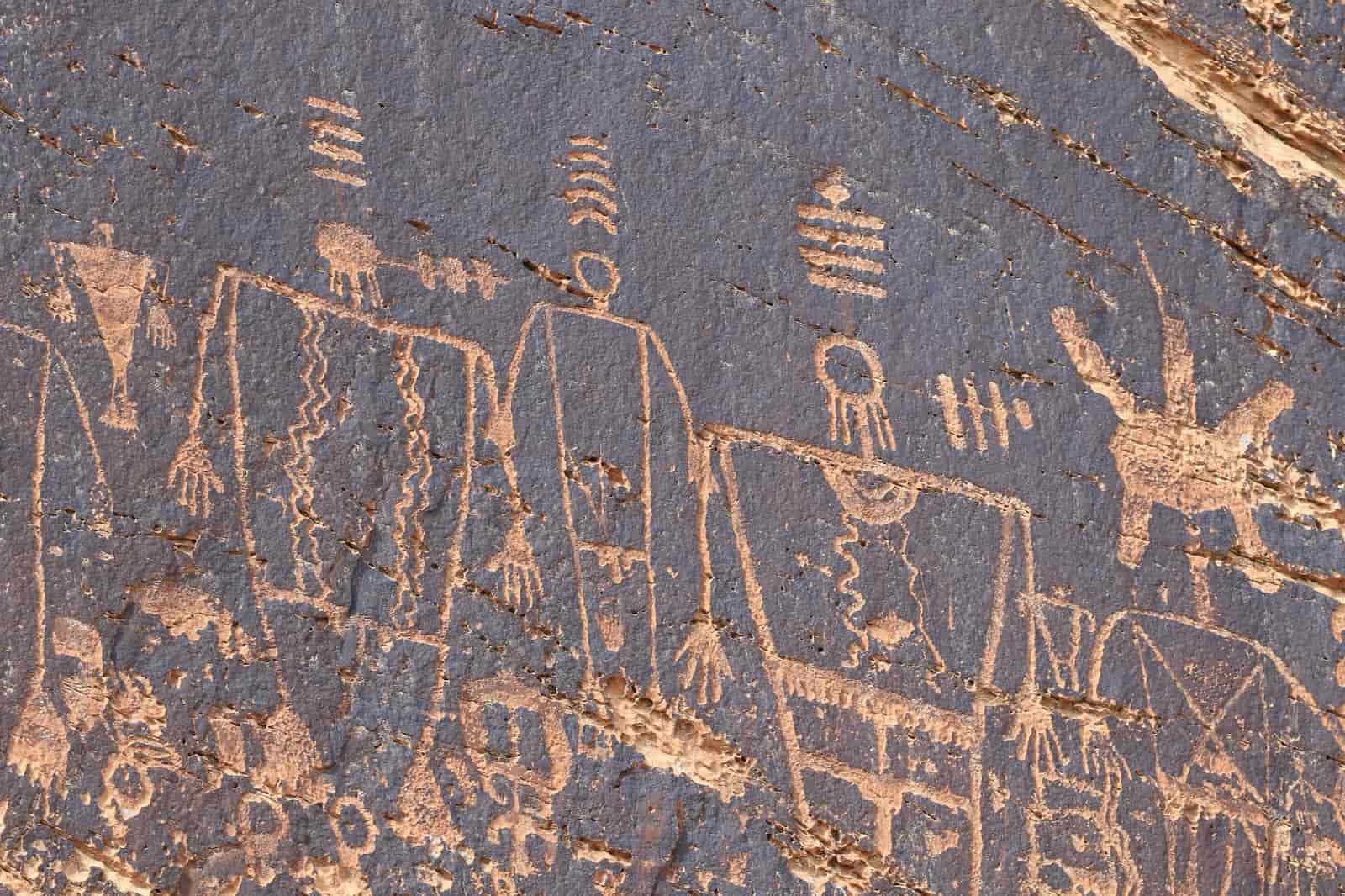
Many figures are exaggerated or non-human, likely symbolizing deities or supernatural entities important to Ancestral Puebloan religion, particularly the kachinas—ancestral spirits central to Pueblo cosmology and ritual practice.
Symbolic Meanings: Decoding the Messages
While much remains mysterious, archaeologists interpret the Butler Wash petroglyphs using ethnography, oral tradition, and cross-cultural symbolism. Here are key insights:
-
Spirituality and Cosmos: The abundance of kachina-like figures underscores the deep spiritual ties of the Puebloans, whose ceremonial life bridged sky, earth, and ancestral realms.
-
Social Identity: Unique patterns and animal motifs may record clan affiliations, migrations, or alliances within Ancestral Puebloan society.
-
Environmental Observations: Naturalistic images, such as the flowing serpent, likely represent both landscape features (e.g., the San Juan River) and mythological beliefs about the land’s origins.
-
Ceremonial Gatherings: Panels like the Procession Panel nearby show lines of people converging, perhaps for ritual observances, trade, or seasonal celebrations.
The Act of Creation: Techniques and Cultural Connection
Creating petroglyphs was a laborious, skillful process. Using stone tools, the Puebloan artists chipped away the desert patina, exposing lighter rock beneath. The carving itself was an act of devotion, connecting individuals to sacred landscapes and ancestral memory.
Some images are now darkened by desert patina, indicating greater age, while lighter carvings may be more recent additions. Both bear witness to the persistence and renewal of the site’s meaning across generations.
Archaeological Significance and Interpretation
For archaeologists, Butler Wash is a key to understanding Ancestral Puebloan lifeways:
-
Chronicle of Survival: The panel’s themes reflect food procurement, environmental adaptation, and the shared values of a community deeply attuned to its surroundings.
-
Legacy of Communication: Every line, shape, and figure is a text—messages about cultural identity, religious beliefs, and social organization.
-
Connections Across Centuries: The petroglyphs offer rare continuity in documenting transitions between older Basketmaker traditions and later Pueblo III construction styles, showing resilience and transformation in the face of environmental changes and migration.
Modern Meaning and Preservation
Butler Wash remains an active site of cultural significance for modern Native American communities. Descendant groups, such as the Hopi and Zuni, continue to interpret and honor these petroglyphs as connections to their ancestors.
Today, visitors are encouraged to approach with respect. Recognizing Butler Wash as a spiritual landscape—and safeguarding its integrity against erosion and vandalism. Its remote location has helped preserve the panel, but responsible visitation is essential to ensure its survival for future generations.
Frequently Asked Questions
How old are the Butler Wash Petroglyphs?
Most carvings date to approximately 800 years ago, though some may be older, reflecting continuous or repeated use by Ancestral Puebloan groups.
Can you visit Butler Wash?
Yes. The site is accessible via dirt road off the San Juan River near Bluff, Utah. Four-wheel drive is recommended due to rough terrain. Visitors should never touch or deface the carvings, preserving them for study and appreciation.
What is a kachina?
A kachina (sometimes spelled katsina) is an ancestral spirit being in Pueblo cosmology, linked with nature, rain, and life forces. The Butler Wash Panel’s nickname—the Kachina Panel—reflects its large concentration of such spirit figures.
Conclusion: Butler Wash—Stone Storyteller of the Desert
Standing before the Butler Wash Petroglyph Panel, the modern visitor is invited to glimpse a vanished world, feeling the echoes of hands that shaped stone with intention and artistry. In this quiet canyon, stone is both canvas and chronicle, preserving the stories, ceremonies, and values of a culture that shaped both landscape and legacy.
Butler Wash is more than historic wonder—it is an enduring testament to human ingenuity, spirituality, and the timeless urge to communicate across the ages. The panel’s petroglyphs do not simply reflect the past; they continue to inspire new understandings and respectful visitation. Whispering the legacy of the Ancestral Puebloans to anyone willing to stop and listen.
ALSO READ: The Shaman of Bad Dürrenberg: A Mesolithic Mystery from Ancient Germany