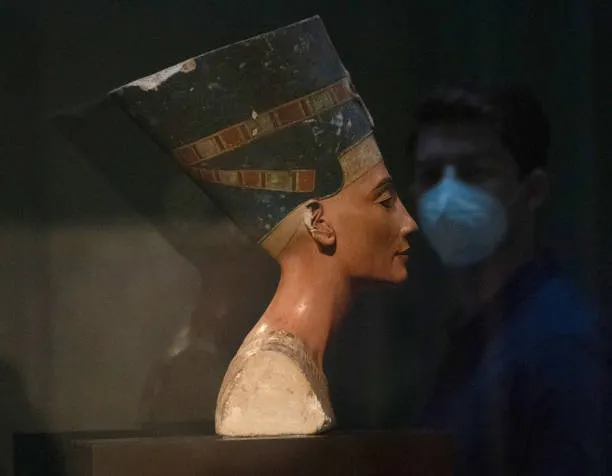
The Bust of Nefertiti: Egypt’s Eternal Symbol of Beauty
A Masterpiece of Ancient Egypt
Few artifacts have captured the world’s imagination as powerfully as the Bust of Queen Nefertiti. Discovered in 1912 at Amarna, Egypt, and dating to around 1345 BCE, this limestone and stucco sculpture remains one of the most celebrated works of ancient art. Today, it resides in the Neues Museum in Berlin, where it draws millions of visitors each year, serving as a symbol of both timeless beauty and cultural artistry.
The bust not only reveals the exquisite craftsmanship of the Amarna period but also preserves the serene elegance of one of history’s most enigmatic queens. More than three millennia later, Nefertiti’s image continues to embody grace, power, and the enduring legacy of Egyptian civilization.
Historical Context: Nefertiti and the Amarna Period
Nefertiti was the Great Royal Wife of Pharaoh Akhenaten, who reigned during the 14th century BCE. Together, they presided over one of Egypt’s most radical eras—the Amarna period, marked by a revolutionary shift in religion, art, and culture.
-
Religious Reform: Akhenaten introduced worship of the sun disk, Aten, as Egypt’s supreme deity, challenging centuries of traditional polytheism.
-
Artistic Transformation: Artistic conventions shifted toward naturalism and fluidity, replacing the rigid, idealized forms of earlier dynasties.
-
Royal Power: As queen, Nefertiti was more than a consort. Reliefs and statues depict her performing religious rites and ruling alongside her husband, suggesting she held significant political and spiritual authority.
The bust discovered in Amarna reflects this extraordinary era—a fusion of innovation, elegance, and symbolism.
Discovery of the Bust
The bust was unearthed in December 1912 by a team of German archaeologists led by Ludwig Borchardt, during excavations at the workshop of Thutmose, the royal sculptor. Hidden for over 3,000 years, the bust was remarkably well-preserved, revealing vibrant colors and fine details.
From the moment of its discovery, it was hailed as a masterpiece. Borchardt himself described it as “too beautiful to be true.” After being transported to Germany, it became one of the most famous artifacts in the world and remains a centerpiece of Berlin’s Neues Museum.
Artistic Details: A Study in Perfection
The bust is carved from limestone and coated with layers of painted stucco, showcasing both sculptural precision and painterly skill. Its details embody the artistic brilliance of the Amarna style.
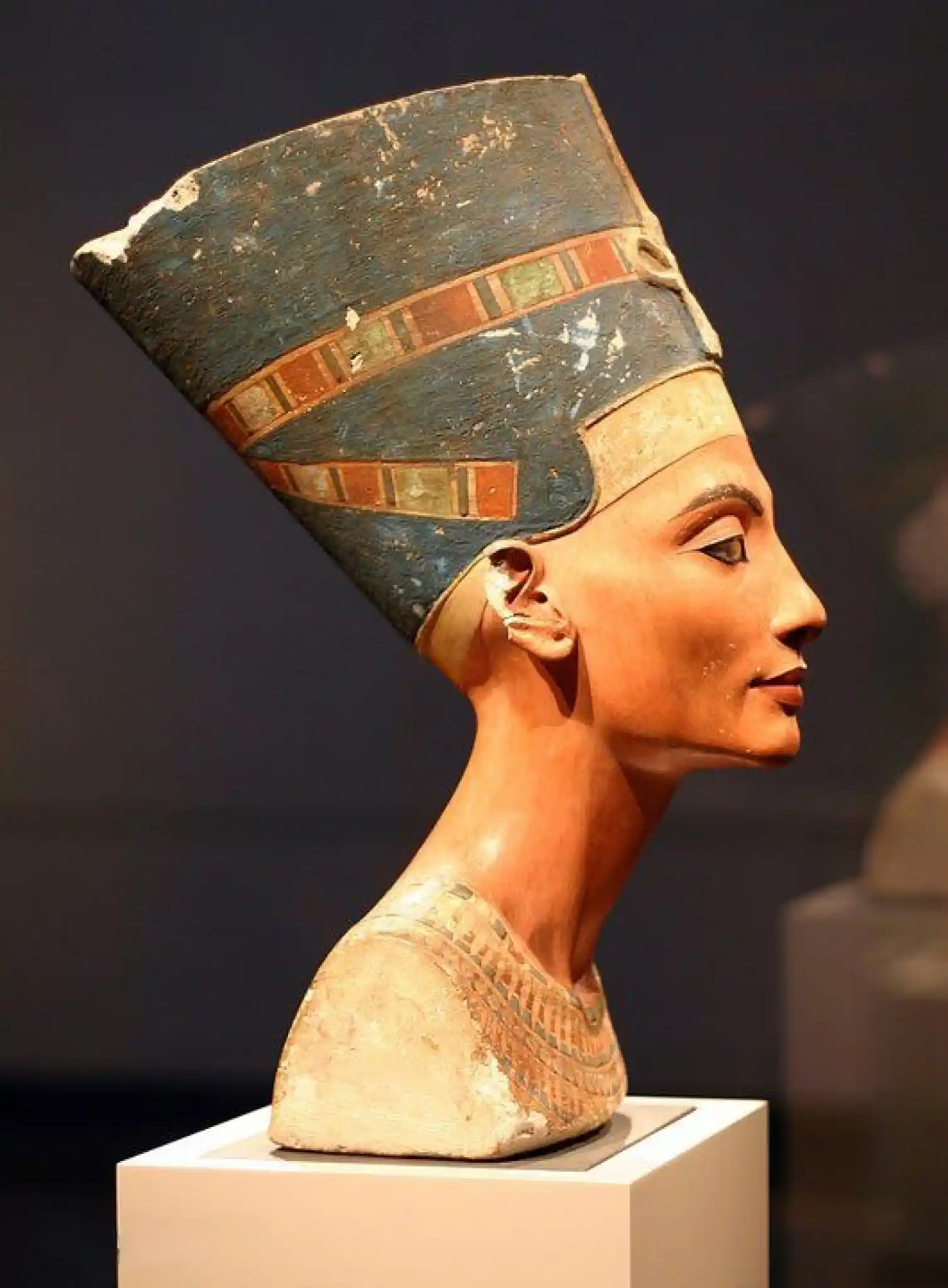
Key Features:
-
The Blue Crown (Nemes): Nefertiti wears a tall, flat-topped blue crown decorated with a patterned band—an iconic element that adds majesty and distinction.
-
Facial Features: High cheekbones, almond-shaped eyes, and a long, graceful neck contribute to her refined beauty.
-
Eyes: One eye is inlaid with quartz and painted, while the other is left unfinished, a detail that has sparked debate among scholars.
-
Color and Stucco: Traces of vibrant paint highlight the queen’s lips, eyebrows, and headdress, bringing her visage to life despite millennia of aging.
This combination of naturalism and idealization captures both human fragility and divine grace, a hallmark of Amarna art.
Symbolism of the Bust
The Bust of Nefertiti is more than a portrait; it is a symbolic representation of beauty, power, and cultural transformation.
-
Beauty as Authority: In Egyptian culture, physical beauty was often tied to divine favor. Nefertiti’s flawless features symbolized not just attractiveness, but legitimacy and power.
-
Religious Significance: As queen, Nefertiti was associated with Aten, the sun deity. Her serene expression may reflect her role as an intermediary between the people and the divine.
-
Timeless Ideal: By embodying both human and divine qualities, the bust became a universal symbol of elegance that transcends time.
Controversies and Debates
Like many great artifacts, the Bust of Nefertiti has been surrounded by debate.
-
Authenticity Questions: Some scholars in the early 20th century speculated it might be a modern forgery due to its pristine condition. However, scientific analyses confirmed its authenticity.
-
Unfinished Nature: The missing inlay in one eye raises questions: Was the bust a practice model? Was it intentionally left incomplete? Scholars remain divided.
-
Cultural Ownership: Egypt has long requested the bust’s return, arguing it was removed under questionable circumstances. Germany, however, maintains it was legally acquired and continues to display it as part of its cultural heritage.
These debates only add layers of intrigue to an already fascinating artifact.
The Bust in Modern Culture
Beyond its archaeological importance, the Bust of Nefertiti has become a global cultural icon. It has appeared in fashion, film, art, and even political discourse. Artists and designers continue to draw inspiration from her elegance, while feminists and historians often cite Nefertiti as a figure of female strength and authority.
For visitors to Berlin, the bust is often a pilgrimage piece, symbolizing not only Egypt’s enduring legacy but also the power of beauty to transcend time and geography.
Preservation and Display
Today, the bust is housed in the Neues Museum on Berlin’s Museum Island, displayed under carefully controlled conditions to prevent deterioration. Its presentation emphasizes both its fragility and its timeless appeal, allowing visitors to stand face-to-face with one of history’s most extraordinary portraits.
The museum has banned photography to protect the artifact, underscoring its status as a priceless treasure of world heritage.
Legacy of the Bust of Nefertiti
The Bust of Nefertiti stands as a testament to the artistry of the Amarna period and the enduring influence of Egyptian civilization. It embodies:
-
The innovation of ancient Egyptian artisans.
-
The authority and charisma of Queen Nefertiti herself.
-
The timeless human pursuit of beauty and cultural expression.
Over 3,300 years later, her gaze still captivates us, bridging the gap between antiquity and the modern world.
Conclusion: The Eternal Gaze of a Queen
The Bust of Nefertiti is more than just an artifact. It is a cultural icon that has outlasted empires, revolutions, and centuries of change. Carved from limestone and painted with exquisite detail, it captures the queen’s elegance, serenity, and divine aura.
As sunlight once illuminated her features in Amarna, today museum lights cast the same glow. Allowing us to see what ancient Egyptians once saw: the face of a queen who embodied both human beauty and divine power.
Her gaze, unchanged across 3,300 years, continues to remind us that art is not bound by time—it is eternal.
ALSO READ: The Arch of Septimius Severus: Rome’s Triumph Carved in Stone