The Brick Minaret of Kutlug Timur: A Towering Symbol of Kunya-Urgench
A Tower into the Sky
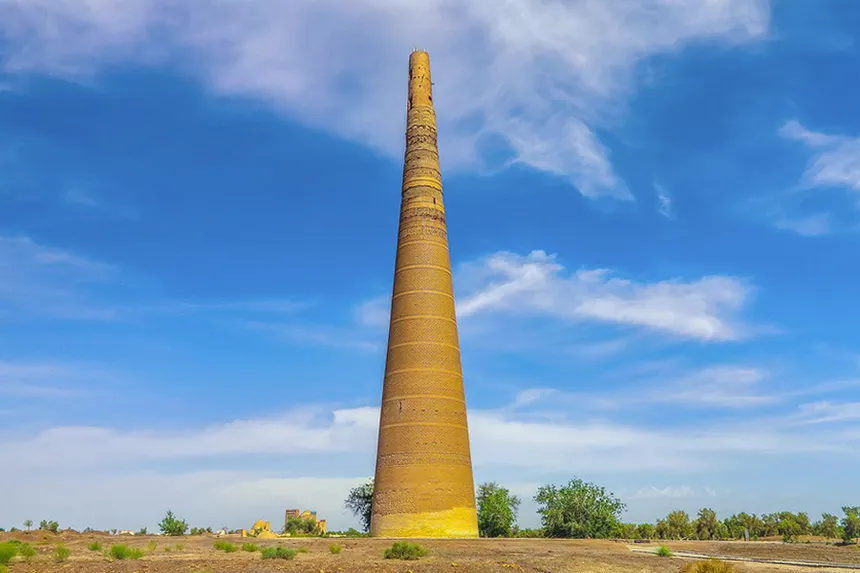
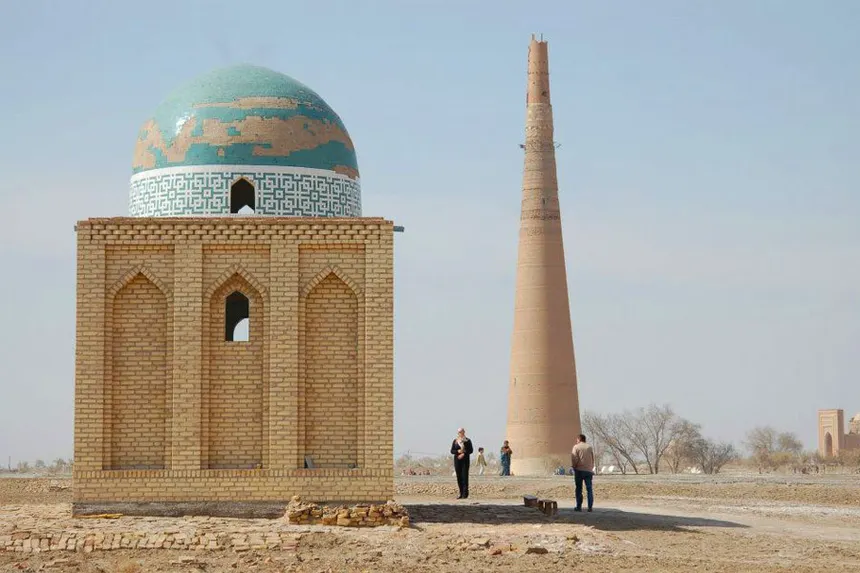
In the ancient city of Kunya-Urgench, located in modern-day Turkmenistan, one monument rises above all others—the Brick Minaret of Kutlug Timur. Dating back to the 11th century, this towering masterpiece stands at an impressive 60 meters (197 feet), making it one of the tallest minarets in Central Asia. Its simple yet striking design reflects the architectural brilliance of the Islamic Golden Age and the significance of Kunya-Urgench as a major cultural and religious center.
Kunya-Urgench: A Historic City of the Silk Road
To understand the majesty of the minaret, one must first appreciate the importance of Kunya-Urgench. Situated on the Silk Road, this city was a hub of trade, scholarship, and spiritual life from the 10th to the 14th centuries. It served as the capital of the Khwarezmian Empire, playing a crucial role in linking East and West.
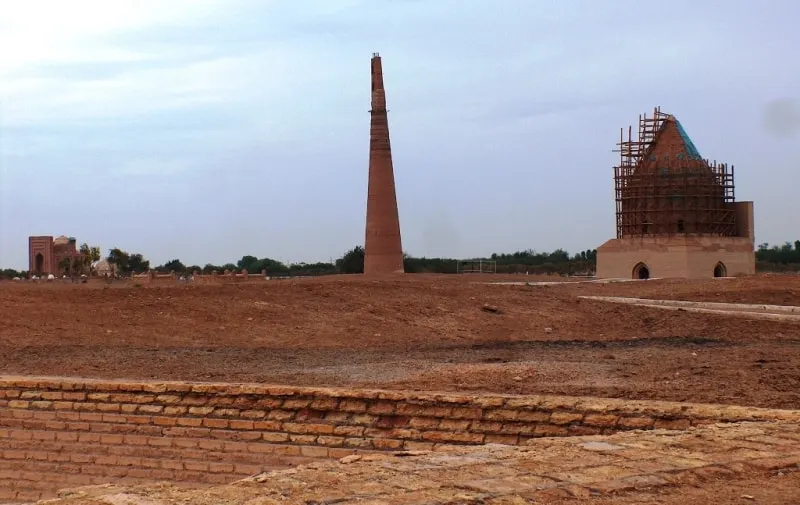
The city was famed for its monumental architecture—mosques, mausoleums, caravanserais, and minarets—many of which survive as ruins. Despite devastation from invasions, especially by Mongol forces under Genghis Khan in the 13th century, Kunya-Urgench retains its aura as a UNESCO World Heritage Site.
The Minaret’s Architectural Design
The Brick Minaret of Kutlug Timur exemplifies the elegance of Islamic architecture in Central Asia.
Dimensions and Structure
-
Height: 60 meters, the tallest structure in the region.
-
Base Diameter: Approximately 12 meters, tapering as it rises to create stability and visual harmony.
-
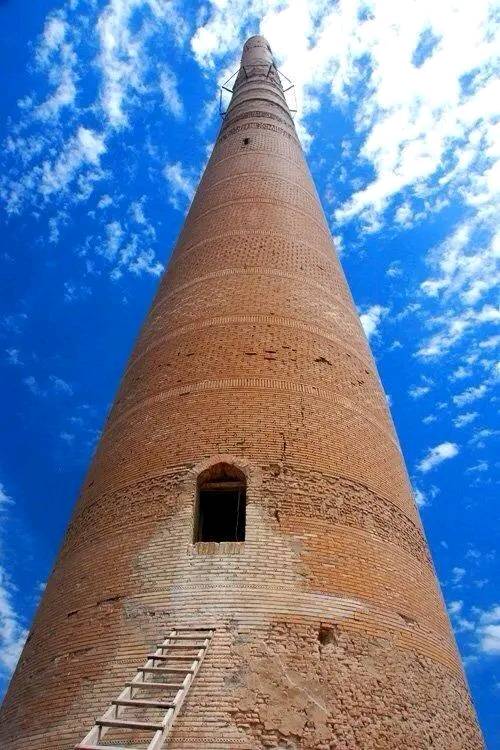
Material: Constructed entirely of baked brick, a hallmark of Central Asian architecture.
Decorative Elements
While the design is relatively austere compared to later Islamic minarets, it features subtle brick patterns and geometric motifs, reflecting both artistic and mathematical sophistication. The simplicity of decoration emphasizes the monument’s vertical grandeur.
Purpose of the Minaret
Like other minarets, the Brick Minaret of Kutlug Timur served both religious and symbolic functions:
-
Call to Prayer: Traditionally, a muezzin would ascend the minaret to call the faithful to prayer, though in a structure of this height, it also projected the spiritual authority of Islam across the city.
-
Landmark for Travelers: Rising far above the city walls and desert horizon, the minaret served as a beacon for caravans navigating the Silk Road.
-
Symbol of Power: Its scale and prominence underlined the influence of the Khwarezmian rulers, including Kutlug Timur, who restored and maintained the monument.
Kutlug Timur and His Legacy
The minaret takes its name from Kutlug Timur, a regional governor who oversaw its restoration in the 14th century. While its original construction dates to the 11th century, it was Kutlug Timur’s efforts that ensured its preservation after centuries of political upheaval.
His association with the monument underscores how rulers often invested in maintaining sacred architecture as both an expression of piety and legitimacy.
Surviving the Test of Time
The Brick Minaret of Kutlug Timur is remarkable not only for its height but also for its endurance. Despite invasions, earthquakes, and centuries of neglect, it remains standing.
Several factors contribute to its survival:
-
The tapered cylindrical design distributes weight efficiently.
-
High-quality fired brickwork provided resilience.
-
Strategic restoration efforts across centuries, including during Kutlug Timur’s rule.
Its survival contrasts with many other monuments of Kunya-Urgench, which lie in ruins, making the minaret a poignant symbol of endurance.
A Masterpiece of Central Asian Islamic Architecture
The Brick Minaret of Kutlug Timur is part of a broader architectural tradition in Central Asia, where minarets became both functional and symbolic landmarks. Comparable examples include:
-
The Kalyan Minaret of Bukhara (Uzbekistan), built in the 12th century.
-
The Minaret of Jam in Afghanistan, another UNESCO site, also from the 12th century.
Together, these structures illustrate the spread of Islamic architectural innovation across the Silk Road, blending artistry with engineering excellence.
The Minaret Today: A UNESCO World Heritage Site
In 2005, UNESCO designated Kunya-Urgench a World Heritage Site, recognizing the universal significance of its monuments. The Brick Minaret of Kutlug Timur is among the city’s most prominent surviving structures and remains a highlight for visitors.
Tourists and scholars alike are drawn to the minaret not only for its impressive scale but also for the sense of continuity it represents—a direct link to the spiritual and cultural life of Central Asia a thousand years ago.
Cultural Significance and Symbolism
The minaret represents more than brick and mortar—it symbolizes:
-
Faith: A call to prayer and devotion.
-
Knowledge: A reminder of the intellectual vibrancy of Kunya-Urgench.
-
Resilience: A monument that has withstood centuries of conflict and decay.
For the people of Turkmenistan, it is also a source of national pride, anchoring their identity in a heritage that predates modern borders and states.
Visiting the Minaret
For travelers to Turkmenistan, the Brick Minaret of Kutlug Timur is a must-see destination. Set amid the ruins of Kunya-Urgench, the minaret dominates the landscape, offering a dramatic perspective on the city’s past grandeur.
Visitors often remark on the striking contrast between the desert surroundings and the towering minaret, a contrast that heightens its majesty. While climbing the structure is not permitted, standing at its base conveys a powerful sense of history.
Conclusion: A Towering Legacy
The Brick Minaret of Kutlug Timur is not only one of the tallest minarets in Central Asia but also one of the most enduring. Rising 60 meters into the sky, it stands as a silent witness to the grandeur of Kunya-Urgench, the power of its rulers, and the spiritual devotion of its people.
As part of a UNESCO World Heritage Site, it continues to inspire awe in all who visit, bridging past and present through its monumental presence. In its brickwork lies a legacy of faith, resilience, and architectural genius—a legacy that still towers proudly over the Turkmen desert.
ALSO READ: Grave of Tiddles the Church Cat: A Beloved Guardian of St. Mary’s, Fairford