The Battle of Marathon and the Soros Burial Mound: A Legacy of Courage and Democracy
The Battle of Marathon
In 490 BCE, the plains of Marathon in Greece witnessed one of the most important battles in ancient history: the Battle of Marathon. This confrontation between the vastly outnumbered Athenian army and the invading Persian forces shaped the future of Western civilization.
The Athenian victory not only safeguarded their homeland but also strengthened the foundations of democracy, which was still in its early stages. The outcome of this battle became a symbol of courage, unity, and the determination of free citizens to defend their way of life against tyranny.
Historical Background
The Persian Threat
The Persian Empire, under King Darius I, had expanded across the Near East and sought to dominate Greece as part of its western frontier. The Ionian Revolt (499–493 BCE), supported by Athens, had angered Darius, prompting him to send a punitive expedition to subjugate Athens and its allies.
Why Marathon?
The Persians chose the plains of Marathon, about 40 km northeast of Athens, as their landing point. This location provided ample space for cavalry maneuvers and was strategically close to Athens.
The Athenian Army and Strategy
Outnumbered but Determined
The Athenians fielded around 10,000 hoplites (heavily armed infantry), joined by about 1,000 Plataeans, their allies from the nearby city of Plataea. The Persian army, by contrast, may have numbered between 20,000 and 25,000 troops, including cavalry and archers.
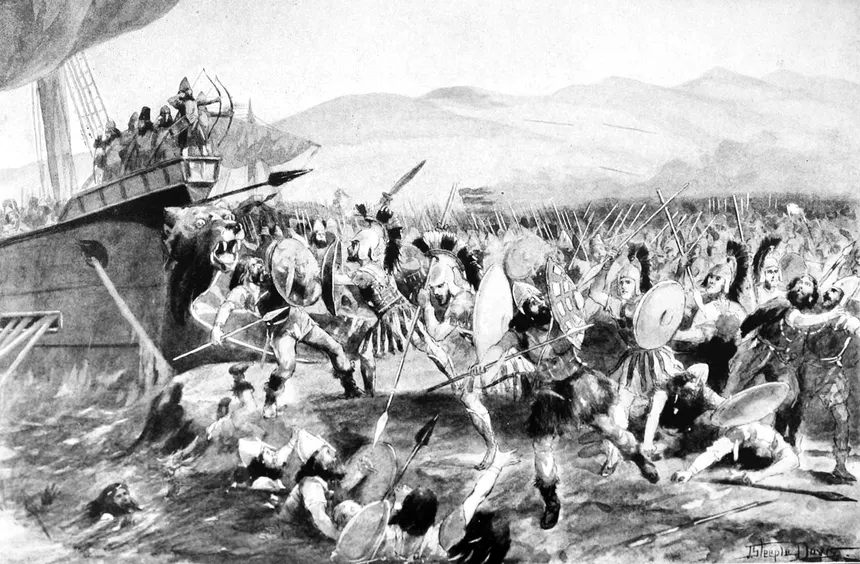
The Hoplite Phalanx
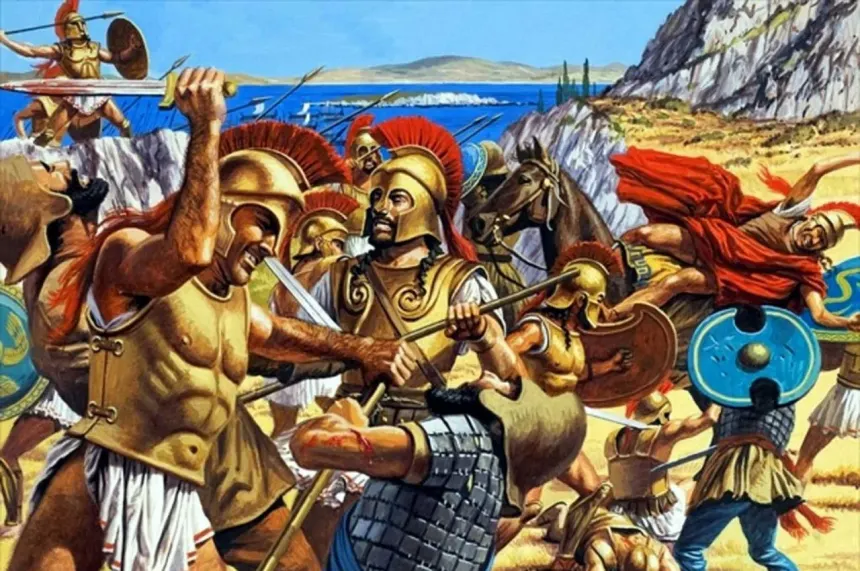
The Athenians relied on the phalanx formation, a tightly packed line of soldiers with overlapping shields and long spears. This strategy provided both defense and striking power, essential in confronting the larger Persian force.
Miltiades’ Bold Plan
Athenian general Miltiades devised a daring tactic: he strengthened the wings of the army while thinning the center. When the Persians advanced, the center gave way, but the stronger wings encircled the enemy, leading to their defeat.
The Battle of Marathon Unfolds
On the day of battle, the Athenians charged across the plain, covering nearly a mile at speed to avoid Persian archery fire. This rapid assault shocked the Persians, who were unaccustomed to such aggressive tactics.
The flanks of the Athenian army quickly overwhelmed the Persian sides, while the weakened center regrouped to close the encirclement. The result was a crushing defeat for the Persians, who fled to their ships.
The Outcome
-
Persian losses: approximately 6,400 dead
-
Athenian and Plataean losses: 192 Athenians and 11 Plataeans
Despite their numerical disadvantage, the Athenians emerged victorious, a triumph that resonated far beyond the battlefield.
Significance of the Battle of Marathon
Preserving Early Democracy
Athens in 490 BCE had only recently established its democratic system, where citizens participated directly in governance. A Persian victory would likely have crushed this fragile experiment, replacing it with foreign rule. The Athenian defense of democracy at Marathon ensured its survival and future growth.
A Turning Point in the Persian Wars
The battle marked the first major Greek victory against Persia, boosting morale and setting the stage for later triumphs, such as the battles of Salamis and Plataea.
Inspiration for Generations
The heroism at Marathon became legendary in Greek culture and beyond. Centuries later, the “Marathon run” would immortalize the memory of a messenger’s fabled journey to announce the victory in Athens.
The Soros Burial Mound: Honoring the Fallen
An Unusual Burial Practice
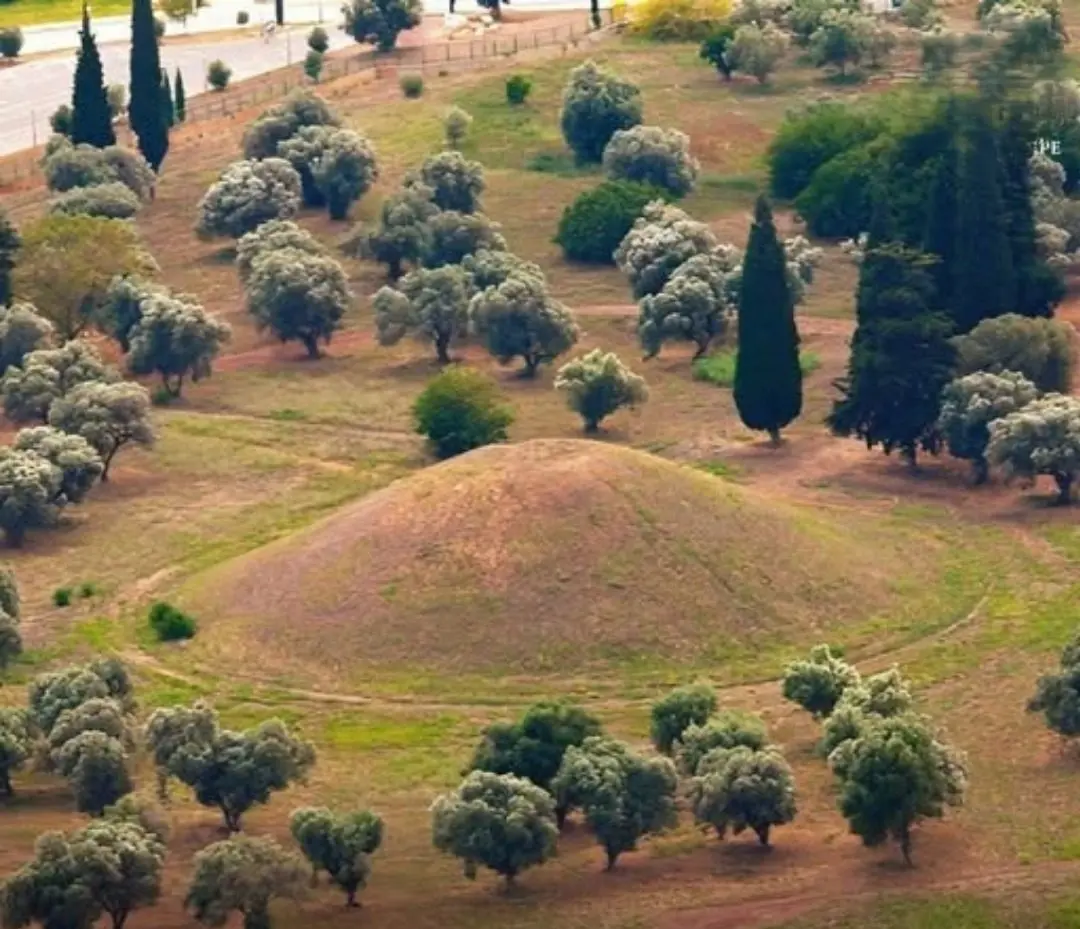
To commemorate the fallen, the Athenians constructed a monumental earthen mound known as the Soros of Marathon. Unlike traditional burials in Athens’ Kerameikos cemetery, the soldiers of Marathon were interred together on the battlefield.
This unusual decision underscored the symbolic significance of their sacrifice, elevating them as eternal guardians of freedom and unity.
The Structure of the Mound
The Soros stands about 9 meters high and 50 meters in diameter. Excavations revealed the cremated remains of 192 Athenian soldiers, placed in urns within the mound. Artifacts such as pottery and weapon fragments were also discovered, linking the site directly to the battle.
The Plataean Burial Site
Nearby, a separate burial site honors the 11 Plataeans who fought alongside the Athenians, highlighting the solidarity of the two city-states in resisting Persia.
The Soros Today: A Site of Memory and Archaeology
A Symbol of Unity and Valor
Today, the Soros remains a powerful reminder of the courage shown by the Athenians and Plataeans. It is not merely a burial mound but a monument to the collective spirit that defended democracy at its dawn.
Archaeological Significance
Excavations in the 19th and 20th centuries provided valuable insights into burial customs, warfare, and the material culture of classical Athens. The mound has been carefully preserved as an archaeological landmark.
Visiting the Soros
The site of Marathon, located in Attica, is open to visitors. A museum nearby houses artifacts from the battlefield and the burial mound, offering a deeper understanding of the events of 490 BCE.
Legacy of the Battle of Marathon
In Literature and Culture
The victory at Marathon inspired countless works of poetry, art, and history. Ancient writers like Herodotus preserved its memory, while later generations used it as a symbol of democratic resilience.
The Marathon Race
The modern marathon race, introduced in the 1896 Athens Olympics, commemorates the legendary run of Pheidippides, who is said to have carried news of the victory to Athens before collapsing from exhaustion.
Enduring Symbolism
The Battle of Marathon continues to symbolize the defense of freedom against overwhelming odds, a theme that resonates throughout history and across cultures.
Fun Facts About the Battle of Marathon
-
The word “marathon” today is synonymous with endurance, derived from the legend of Pheidippides.
-
The mound of the Soros is one of the few battlefield burials preserved from antiquity.
-
The victory at Marathon was so significant that Athenians often dated events relative to it.
Why the Soros and Marathon Still Matter
The Battle of Marathon and the Soros burial mound are not just historical events and monuments—they are enduring lessons. They remind us that unity, courage, and democratic ideals can prevail even in the face of overwhelming odds.
As both a memorial and archaeological site, the Soros stands as a bridge between past and present, inviting reflection on the values that shaped Western civilization.
Conclusion
The Battle of Marathon was more than a military victory; it was a defining moment in the defense of democracy and the shaping of Western history. The Soros burial mound honors the Athenians who gave their lives, immortalizing their sacrifice in the landscape of Marathon.
Today, standing before the Soros, visitors can feel the weight of history and the enduring power of courage, unity, and freedom. The story of Marathon continues to inspire, reminding us of the timeless struggle to preserve the ideals that define human civilization.
ALSO READ: Sneferu: The Pharaoh Who Revolutionized Egyptian Architecture