Ashurbanipal: The Scholar-King Who Conquered Lions and Built the World’s First Library
The Power and Wisdom of Ashurbanipal
More than 2,600 years ago, in the great city of Nineveh (modern-day Mosul, Iraq), the Assyrian Empire reached its peak under King Ashurbanipal. He was no ordinary ruler — not only a fearless warrior but also one of the most educated kings of the ancient world. His reign (668–627 BCE) symbolized the fusion of military might and intellectual brilliance, qualities immortalized in the famous Ashurbanipal lion hunt reliefs discovered in the ruins of his royal palace.
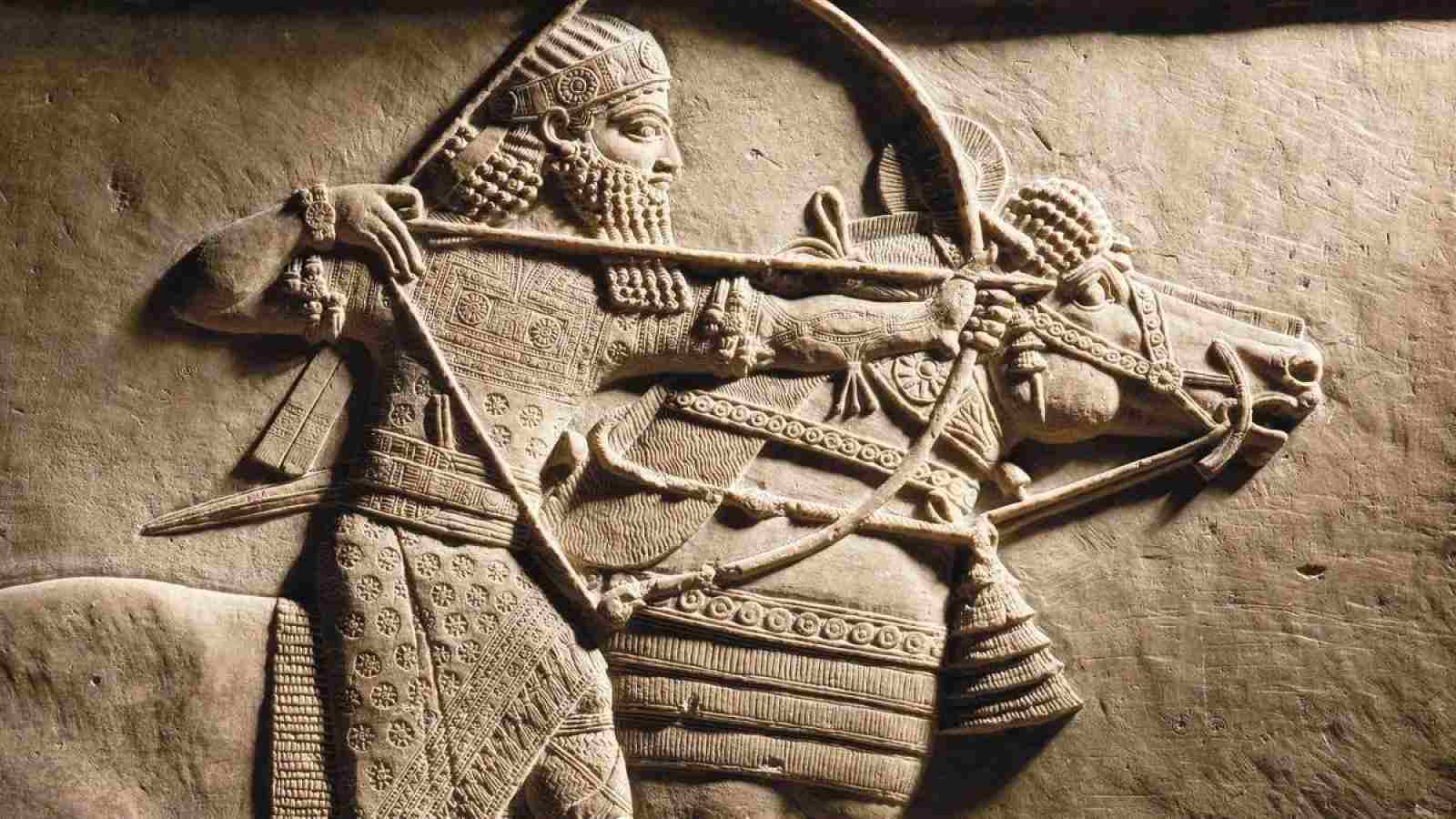
These intricate stone carvings do more than depict royal sport — they are visual propaganda of strength, divinely sanctioned kingship, and the Assyrian worldview. Yet, behind the scenes of battle and bloodshed, Ashurbanipal was a man of letters, responsible for assembling the Library of Ashurbanipal, considered by historians to be the world’s first systematically organized library.
The Discovery of the Lion Hunt Reliefs
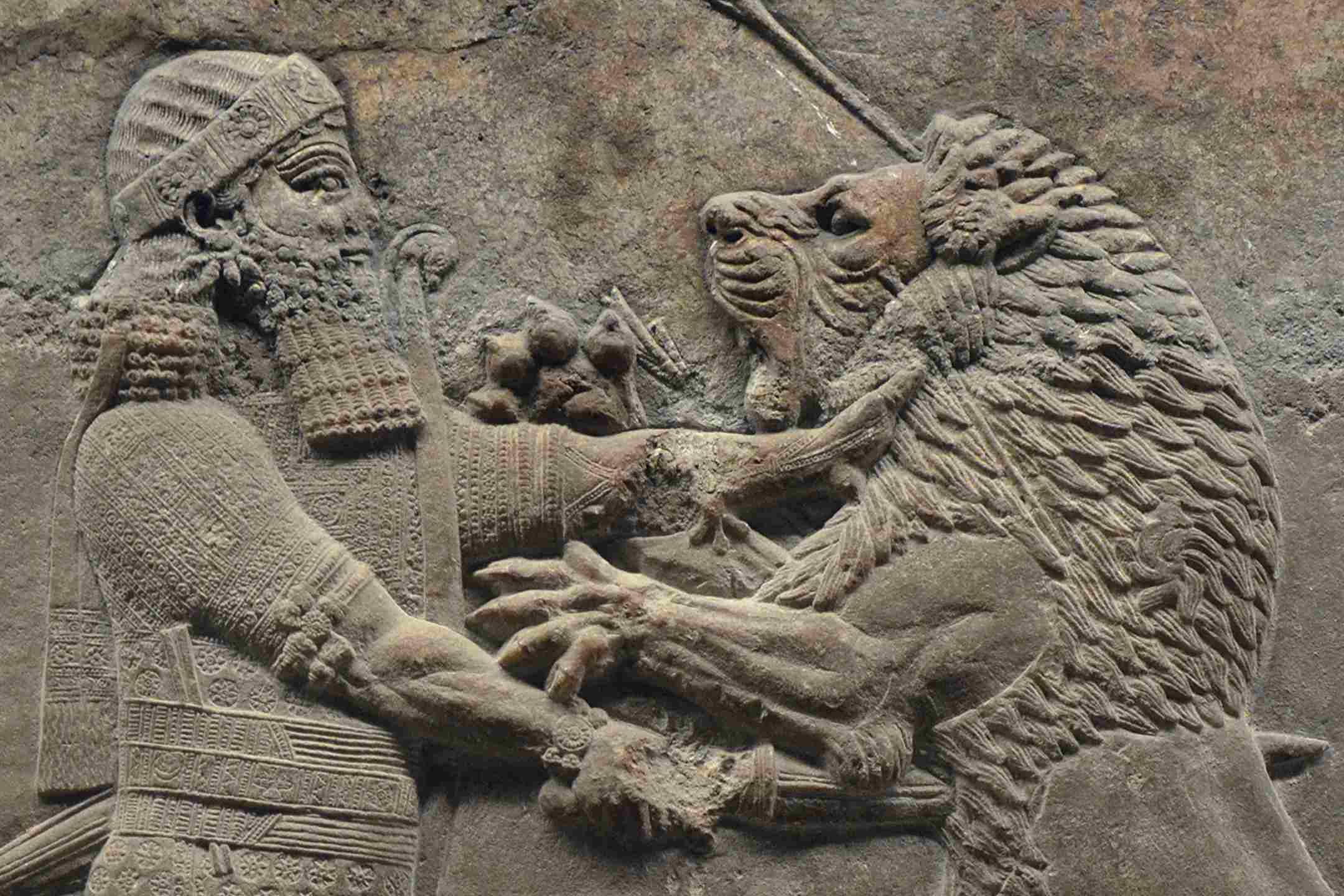
The Ashurbanipal lion hunt reliefs were unearthed in the mid-19th century by British archaeologist Austen Henry Layard, who excavated the ruins of the North Palace of Nineveh. Today, these masterpieces of Assyrian art are displayed in the British Museum, where they continue to mesmerize visitors with their realism and emotional intensity.
Each panel captures a dramatic sequence — the king facing fierce lions released from cages to demonstrate his valor. These lions were not mere animals; they represented chaos and evil, forces that the king, chosen by the gods, was destined to subdue.
The Symbolism of the Lion Hunt
In Assyrian culture, lions symbolized untamed nature, destruction, and danger. By conquering them, Ashurbanipal affirmed his divine right to rule and maintain order in the world. The lion hunt reliefs were carefully designed as royal propaganda, reinforcing the idea that the king was the protector of his people, capable of controlling even the most ferocious beasts.
The reliefs show meticulous artistic detail — every muscle of the lions is carved with precision, their agony and defiance vividly rendered. Ashurbanipal stands tall, calm, and commanding, his bow drawn or spear raised in a scene of absolute control. Yet, there is also an underlying humanity: the depiction of dying lions writhing in pain reveals a deep empathy and emotional depth uncommon in royal art of that period.
A Writing Stylus at His Belt: The Scholar-King
One striking detail often noticed in these reliefs is the writing stylus fastened to Ashurbanipal’s belt. This subtle feature symbolizes something extraordinary — a king who not only fought battles but also pursued knowledge.
Ashurbanipal proudly declared himself as one who could read and write Akkadian and Sumerian, the scholarly languages of Mesopotamia. He was deeply engaged with learning, collecting ancient texts, and preserving knowledge for future generations. His intellectual curiosity set him apart from most rulers of his time.
The Library of Ashurbanipal: The World’s First Knowledge Repository
Perhaps Ashurbanipal’s greatest legacy is the Library of Ashurbanipal, discovered in the ruins of Nineveh in the 19th century. This collection of over 30,000 clay tablets contained texts on literature, medicine, astronomy, law, and religion, written in cuneiform script.
Among the most famous works preserved in this library is the Epic of Gilgamesh, one of the earliest known literary masterpieces. Without Ashurbanipal’s library, much of Mesopotamian knowledge might have been lost forever.
The king’s intent was clear — to gather all wisdom under his rule. As he wrote in one of the inscriptions:
“I have read the cunning tablets of Sumer and the dark Akkadian language, which is difficult to master.”
This library not only served as a center of scholarship but also as a political tool — a symbol of the Assyrian Empire’s cultural dominance and the king’s role as guardian of knowledge.
The Dual Image of a King: Warrior and Scholar
Ashurbanipal’s reign represents a remarkable duality — a ruler both feared and admired. On the battlefield, he crushed enemies from Egypt to Elam with ruthless efficiency. Within his palace walls, he surrounded himself with scribes, scholars, and artists.
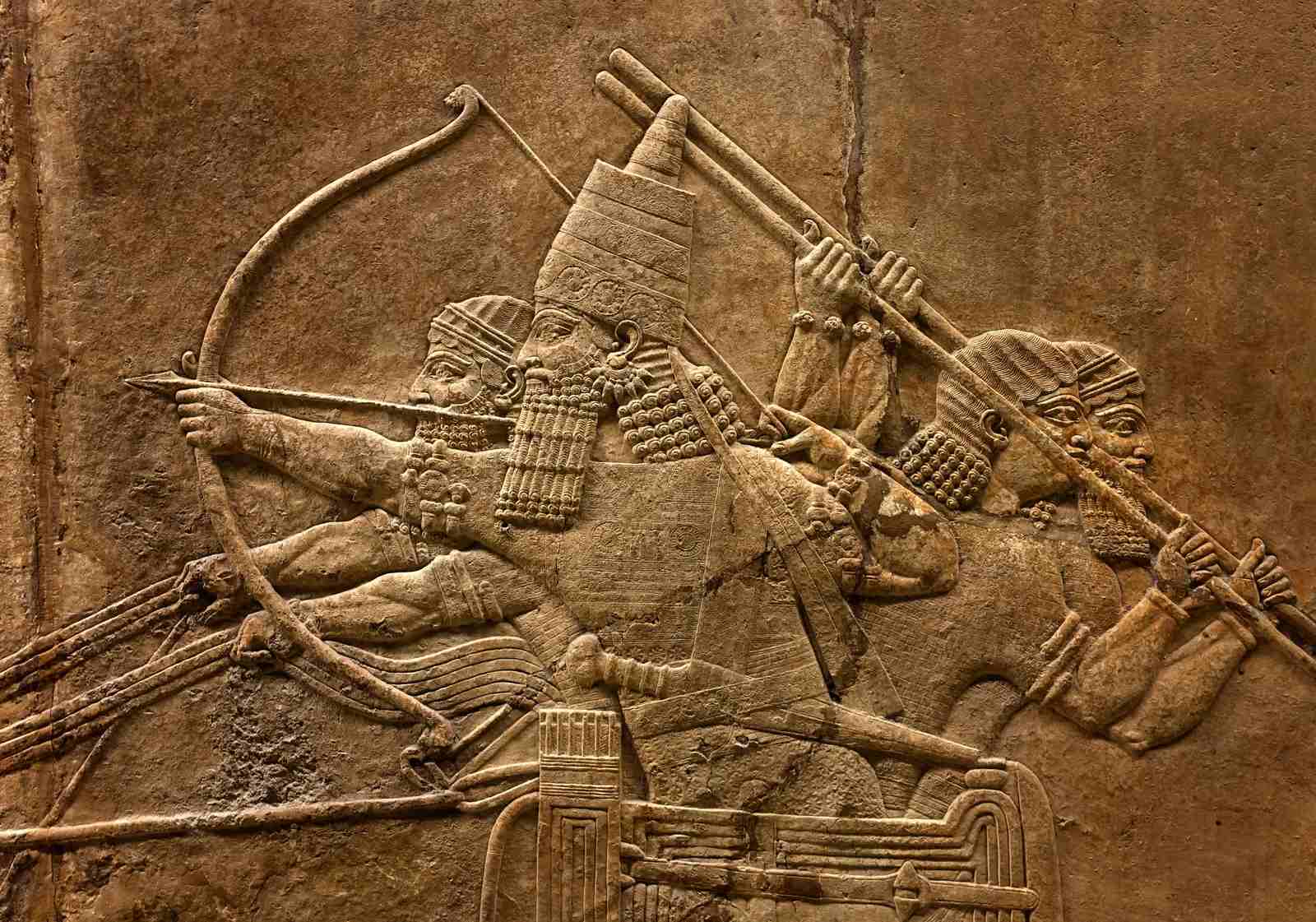
This dual nature was revolutionary for its time. While other rulers were remembered mainly for conquest, Ashurbanipal’s legacy lies in his intellectual achievements. The writing stylus at his waist became as significant as his bow and spear — tools of power in different realms, one in war and the other in wisdom.
The Fall of Nineveh and the Legacy That Endured
Despite Ashurbanipal’s greatness, the Assyrian Empire collapsed shortly after his death. Around 612 BCE, a coalition of Babylonians and Medes destroyed Nineveh. Bringing an end to one of the most powerful empires of the ancient Near East.
Yet, even in ruin, the legacy of Ashurbanipal endured. The flames spared his library’s clay tablets, which remained buried beneath layers of ash and rubble until archaeologists rediscovered them millennia later.
They offered historians invaluable insight into Mesopotamian science, religion, and literature, helping shape our understanding of early human civilization.
Artistry Beyond Time: The Mastery of the Reliefs
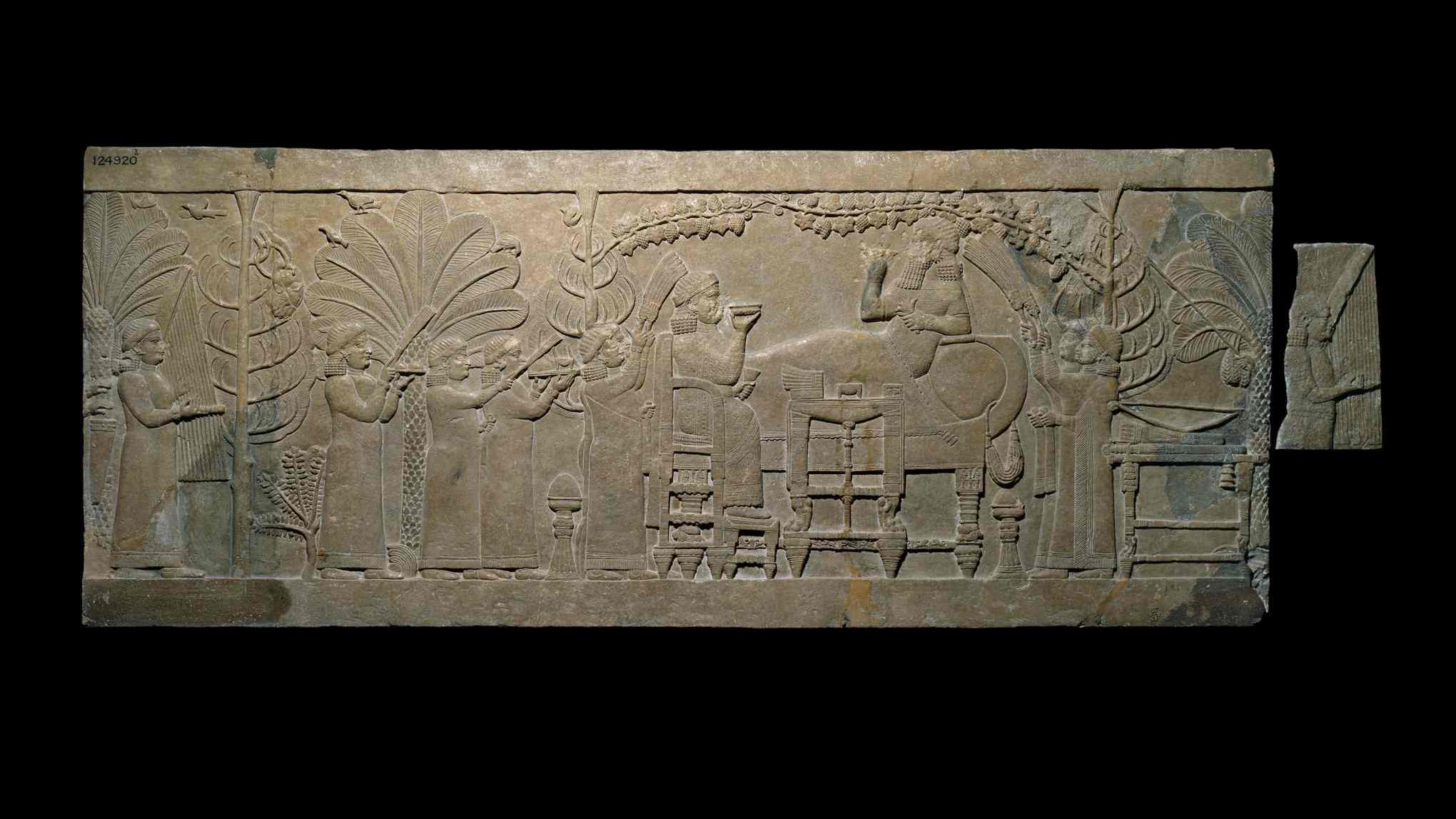
The craftsmanship of the lion hunt reliefs stands as a testament to the skill of Assyrian artisans. Carved from gypsum alabaster, the panels demonstrate a profound understanding of anatomy, motion, and emotion. The artists captured each muscle, claw, and facial expression. With such precision that their work reveals an artistic sophistication far ahead of its time.
These reliefs were not intended for public display but adorned the royal palace walls. Visible only to the elite — courtiers, priests, and ambassadors. Their purpose was to awe and inspire, reinforcing the divine authority of the Assyrian king.
Why the Ashurbanipal Lion Hunt Relief Still Matters
In modern times, the Ashurbanipal reliefs have transcended their original political function. To become symbols of human creativity, resilience, and the eternal quest for balance between power and wisdom.
They remind us that leadership is not just about conquest. It is about preserving knowledge, promoting art, and understanding one’s duty toward civilization. The combination of brute strength and intellectual curiosity embodied by Ashurbanipal offers timeless lessons about governance and human ambition.
Conclusion: The Enduring Legacy of a Mesopotamian Visionary
King Ashurbanipal was more than an Assyrian monarch; he was a visionary of civilization. The lion hunt reliefs immortalize his courage, while his library preserves his intellect. Together, they define a ruler who understood that true greatness lies not only in conquering enemies but also in conquering ignorance.
From the roaring lions of Nineveh to the silent tablets of his library. Ashurbanipal’s story continues to inspire historians, artists, and thinkers alike. A timeless reminder that power and wisdom, when united, can shape the destiny of an empire.
ALSO READ: Menhir de Champ-Dolent: Brittany’s Majestic Neolithic Monument