Ashfall Fossil Beds: The Tragic Tale of Nebraska’s Prehistoric Rhinos Frozen in Time
Catastrophe Written in Ash
About 12 million years ago, during the Miocene epoch, the plains of what is now Nebraska were alive with herds of Teleoceras major — prehistoric rhinos that looked more like modern hippos than their horned descendants. These barrel-bodied giants roamed the open savannas, wading through wetlands and grazing on soft grasses that blanketed the region.
But their thriving world met a sudden, catastrophic end.
A massive eruption from the Yellowstone supervolcano, hundreds of miles away, blanketed the area with fine volcanic ash. As the dust settled, it poisoned the water, choked the vegetation, and filled the air with deadly silica particles.
Caught in the chaos, an entire herd of rhinos sought refuge near a watering hole — the site that would become the Ashfall Fossil Beds.
Over time, their remains were buried in layers of ash, preserved in astonishing detail. Today, Ashfall stands as one of the most extraordinary fossil sites in the world — a snapshot of life and death frozen in time.
The World of the Miocene: Nebraska’s Ancient Plains
Twelve million years ago, Nebraska’s landscape was vastly different from the farmland we know today.
The region was part of a sprawling Miocene savanna, teeming with wildlife. It was home not just to rhinos, but also to three-toed horses, camels, turtles, birds, and small carnivores. Rivers and lakes dotted the grasslands, supporting a rich and diverse ecosystem.
The climate was warmer and wetter, resembling modern East African plains. Vast herds of grazing animals like Teleoceras major shaped the landscape — their feeding patterns influenced plant growth, soil structure, and even the habitats of smaller creatures.
This was an age of giants — and the Miocene of North America was one of the richest periods in mammalian evolution.
Teleoceras Major: The Hippo-Like Rhino of Nebraska
The star of the Ashfall Fossil Beds is Teleoceras major, a species of short-limbed, barrel-bodied rhinoceros that thrived across North America during the Miocene epoch.
Unlike today’s horned rhinos, Teleoceras had a stocky build, broad mouth, and short legs — features that made it resemble a hippopotamus. Paleontologists believe it spent much of its time in or near water, wallowing in mud to escape heat and biting insects.
Key Characteristics of Teleoceras major:
-
Length: Around 13 feet (4 meters)
-
Weight: Up to 3,000 pounds (1,360 kg)
-
Diet: Grasses and soft vegetation
-
Behavior: Social, herd-living mammals similar to modern elephants or hippos
Evidence from Ashfall suggests that these rhinos lived in large family groups, possibly with strong maternal bonds. Fossils of adults and calves found side-by-side support the theory that Teleoceras cared for its young — much like today’s herd animals.
The Yellowstone Eruption: Death from the Sky
The cataclysm that doomed the Ashfall herd began far to the west, where the Yellowstone supervolcano erupted with unimaginable force. The explosion sent clouds of volcanic ash thousands of miles across the continent.
In eastern Nebraska, up to 12 inches (30 centimeters) of ash fell to the ground.
At first, the animals continued their normal routines, but as the ash thickened, breathing became difficult, eyes burned, and food sources vanished under the grey blanket.
Teleoceras and other animals sought shelter around watering holes, where they could drink and cool off — but this only prolonged their suffering. The water turned toxic, and the fine ash infiltrated their lungs.
Over days or weeks, the herd succumbed one by one. Their bodies were soon buried by more ash, sealing them in a natural time capsule that would endure for millions of years.
The Discovery of Ashfall Fossil Beds
Fast forward to 1971, when a paleontologist named Michael Voorhies from the University of Nebraska made an incredible discovery near Royal, Nebraska. While exploring eroded gullies on a farm, Voorhies noticed the skull of a baby rhino protruding from volcanic ash.
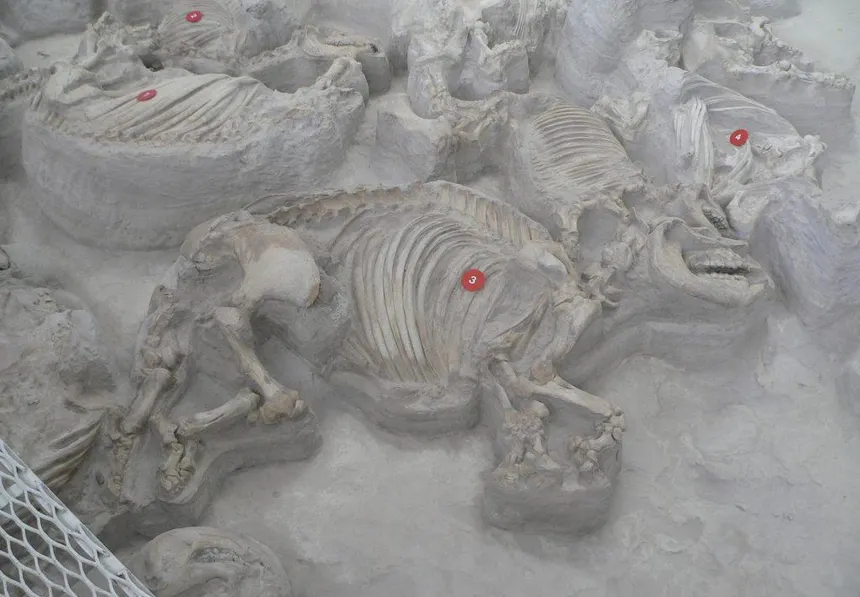
As excavations began, scientists uncovered an entire layer of fossils — not just bones, but fully articulated skeletons, many lying exactly as they had died. Some rhinos were found curled beside their calves, while others appeared to be walking or standing when they perished.
Soon, it became clear that this was not a random collection of bones, but a snapshot of a prehistoric catastrophe — a moment frozen in time, with extraordinary preservation.
Today, the site is protected as the Ashfall Fossil Beds State Historical Park, one of the most significant fossil localities in North America.
Life Frozen in Motion: What the Fossils Reveal
What makes Ashfall unique among fossil sites is the sheer level of preservation.
Unlike typical fossils, which are often scattered and incomplete, the Ashfall specimens are found exactly as they were in life. Many even have microfossil traces of soft tissue, stomach contents, and tiny bones intact.
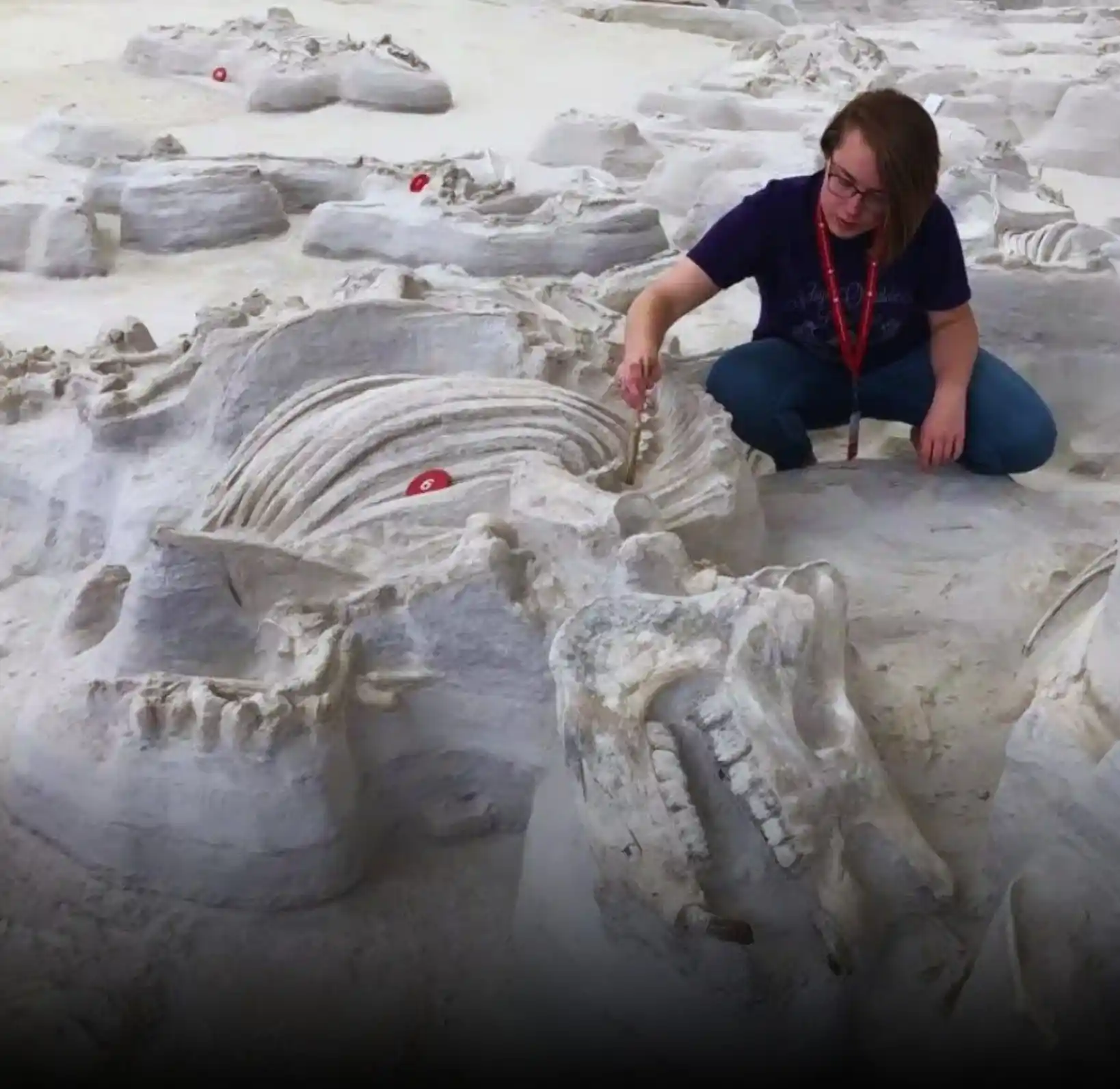
Researchers have studied these remains to learn about:
-
Diet: Plant material in the rhinos’ teeth reveals seasonal feeding patterns.
-
Social behavior: The arrangement of adults and juveniles indicates herd structure and care for young.
-
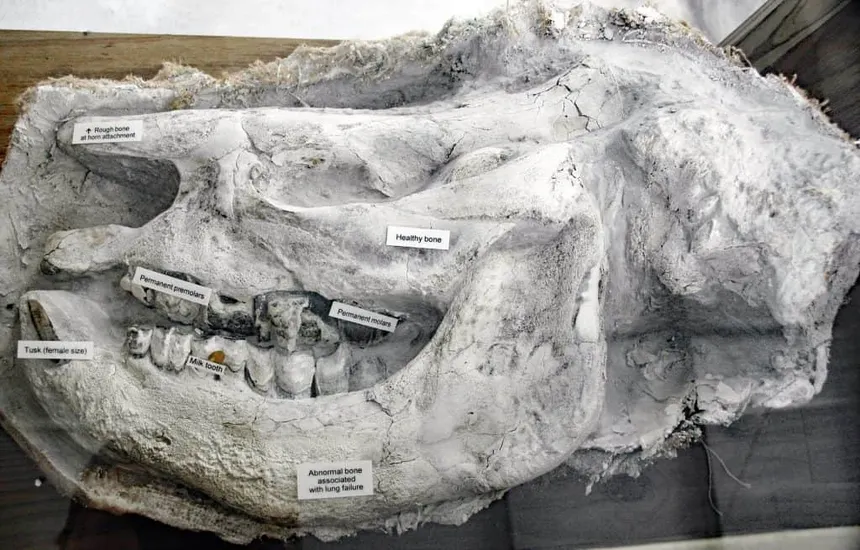
Health: Bone lesions and stress marks reveal diseases and environmental stress before death.
-
Paleoecology: The diversity of species at the site helps reconstruct the Miocene ecosystem.
Among the rhinos, paleontologists have found three-toed horses, camels, turtles, birds, and small mammals, all preserved in lifelike positions — making Ashfall a prehistoric tableau of life, death, and nature’s power.
Ongoing Research and Public Discovery
The Ashfall Fossil Beds State Historical Park is not just a research site but also an active dig and educational center.
Visitors can observe paleontologists at work inside the Hubbard Rhino Barn, where excavation continues year after year. Transparent viewing platforms allow guests to see fossils exactly where they were discovered — still embedded in the ancient ash.
Scientists continue to uncover new specimens, refining our understanding of Miocene ecosystems, animal behavior, and even volcanic climate impacts. Each new discovery adds a piece to the puzzle of how ancient life thrived — and perished — in North America’s heartland.
Lessons from the Ashes: Nature’s Power and Fragility
The story of Ashfall Fossil Beds is both tragic and enlightening.
It reminds us of the power of natural forces and the fragility of life in the face of sudden change.
What began as a devastating volcanic eruption became, millions of years later, a priceless scientific treasure — preserving an entire ecosystem in exquisite detail.
The fossils of Teleoceras major and its companions tell us about adaptation, resilience, and the delicate balance that sustains all living things.
They stand as a silent testimony to a world long vanished, yet forever imprinted in stone.
Conclusion: Nebraska’s Window into the Miocene
The Ashfall Fossil Beds offer something truly rare — a moment in deep time, frozen in place for twelve million years.
From the tragic deaths of rhino herds to the delicate preservation of birds and turtles, every fossil whispers a story of life, loss, and survival.
For scientists and visitors alike, Ashfall is more than a fossil site — it is a window into the Miocene world, revealing how ancient ecosystems functioned and how quickly nature can change.
It’s a reminder that even in destruction, there is discovery — and that through the ashes of the past, we find the lessons that shape our future.
ALSO READ: Sasha the 39,000-Year-Old Woolly Rhinoceros: A Remarkable Ice Age Discovery Frozen in Time