Anubis: Guardian of the Afterlife in Ancient Egypt
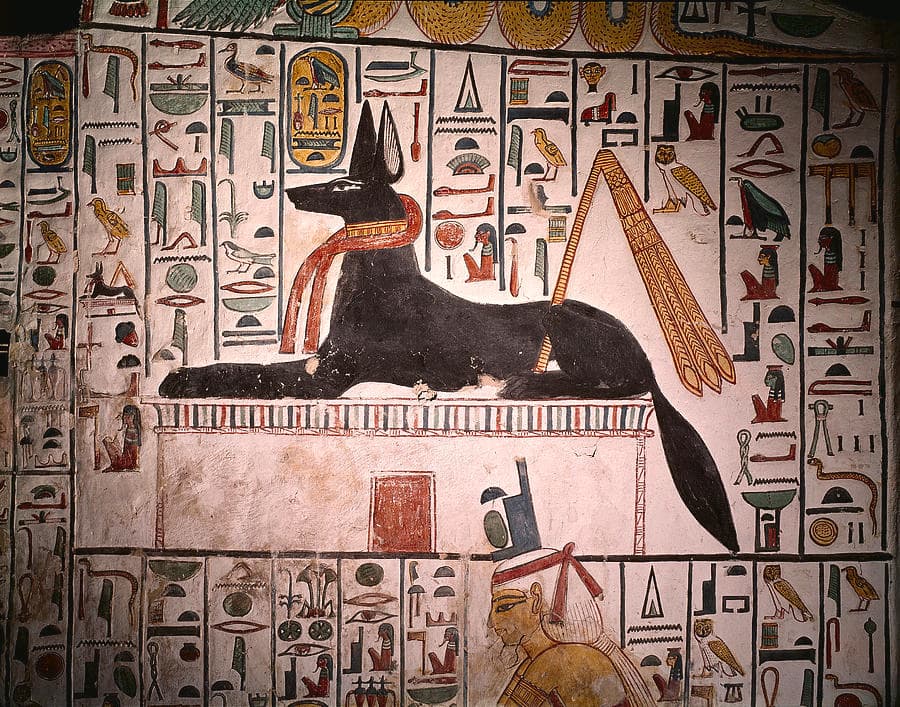
In the heart of ancient Egyptian belief, one figure stands as the eternal sentinel between life and death — Anubis, the guardian of the afterlife. Depicted with the head of a black jackal and the body of a man, Anubis symbolizes both decay and resurrection. Originating between 3100 BCE and 30 BCE, his image adorned tomb walls, sarcophagi, and shrines, serving as a divine protector of souls on their journey beyond the mortal world.
Anubis occupies a unique space in mythology — neither fully god of the dead nor ruler of the underworld, but rather a divine guide ensuring the soul’s safe passage into eternity.
The Origins of Anubis in Ancient Egyptian Religion
The earliest mention of Anubis appears in predynastic and early dynastic periods, where jackals were often seen wandering around grave sites. The ancient Egyptians interpreted this behavior not as predatory but as protective — animals guarding sacred burial grounds. From this observation emerged one of the most revered deities in Egyptian theology.
In the Old Kingdom (c. 2686–2181 BCE), Anubis was considered the primary god of the dead, preceding even Osiris in funerary roles. Later, as Osiris became the ruler of the afterlife, Anubis’s role evolved into that of guide and guardian, overseeing the complex process of embalming and judgment.
Symbolism of the Jackal-Headed Deity
Anubis’s jackal head carries profound symbolism. The color black, often used in his depictions, represents the fertile soil of the Nile and the concept of rebirth. This hue embodies both death and regeneration, making black a sacred symbol of life’s cyclical nature.
The jackal, a nocturnal creature, signifies vigilance and protection against the dangers that threaten the deceased. In art, Anubis often stands poised beside the mummy, ensuring no harm befalls the body or soul. His calm, composed demeanor reflects the balance between destruction and preservation — the eternal duality that fascinated ancient Egyptian philosophers and priests.
Keeper of the Dead: Role in Funerary Rituals
Anubis’s priesthood played a crucial role in ancient Egyptian burial practices. The embalmers who worked to preserve the deceased often wore jackal masks during rituals, symbolically adopting Anubis’s protective presence. These ceremonies represented both a physical and spiritual purification, preparing the individual for their journey through the Duat, the Egyptian underworld.
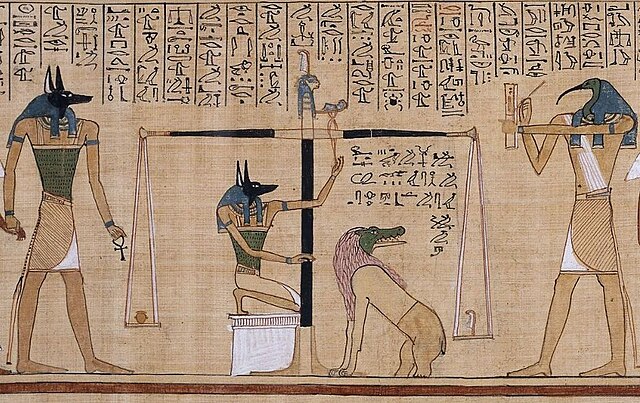
In the Book of the Dead, Anubis is often portrayed beside the “Weighing of the Heart” scene. Here, he carefully measures the heart of the deceased against the feather of Ma’at, the goddess of truth and justice. A heart lighter than the feather denotes purity; a heavier heart condemns the soul to annihilation. Through this act, Anubis embodies moral equilibrium, guiding souls to their rightful fate.
Artistic Representations and Archaeological Legacy
Statues and reliefs of Anubis, discovered across Egypt from Saqqara to Thebes, demonstrate remarkable artistic continuity. The craftsmanship reflects both devotion and aesthetic mastery. Ancient artisans carved the god’s slender form and elongated snout with deliberate precision, emphasizing calm authority and divine strength.
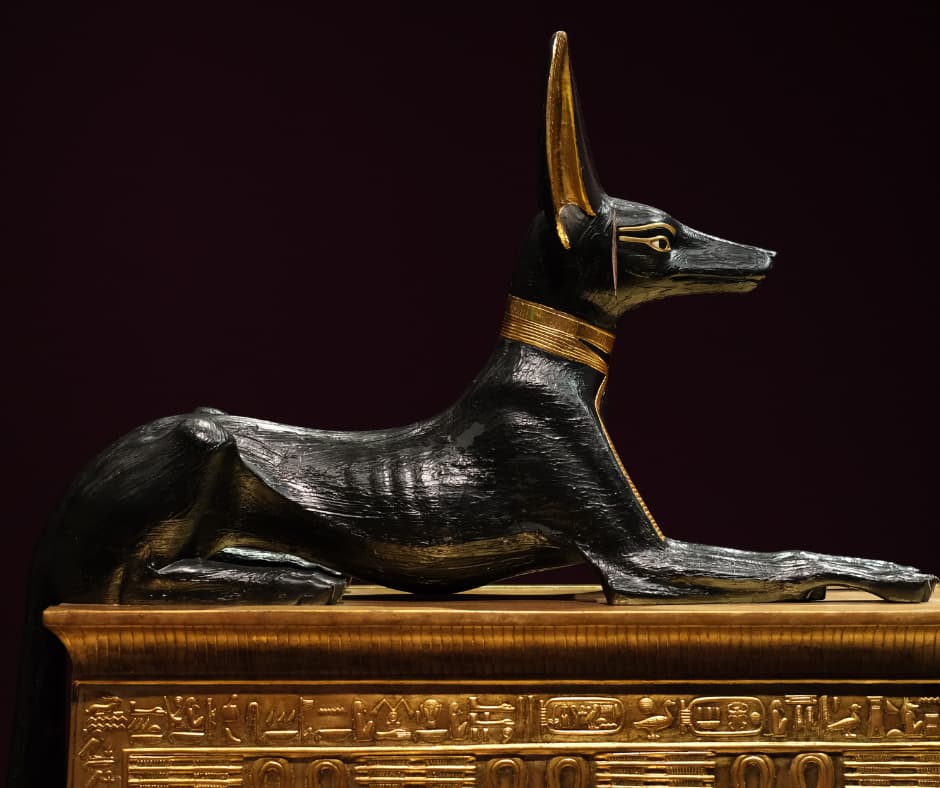
One celebrated example comes from the Tomb of Tutankhamun (KV62), where a life-sized wooden statue of Anubis was found guarding the tomb’s entrance. The piece, covered in black resin and gold leaf, represents not only spiritual guardianship but also artistic perfection achieved in 14th-century BCE Egypt.
Hieroglyphic inscriptions accompanying such figures often contain prayers for protection — whispers across millennia that continue to echo through the corridors of time.
Anubis and Osiris: A Divine Partnership
As Egyptian theology evolved, Osiris emerged as the ruler of the afterlife, yet Anubis’s significance never diminished. Instead, the two deities formed a divine alliance — Osiris as judge, Anubis as guide. This partnership illustrates the Egyptian belief that death was not an end but a transition, navigated through divine guidance and moral integrity.
In several temple inscriptions, Anubis is referred to as “He Who Is Upon His Mountain,” a poetic reference to his watchful guardianship over cemeteries. Standing between mortals and gods, he personified the protective boundary between worlds.
The Enduring Legacy of Anubis in Modern Culture
Even thousands of years after the fall of ancient Egypt, Anubis remains a powerful cultural symbol. His jackal-headed form appears in films, video games, sculptures, and contemporary art, often representing mystery, justice, and the boundary between life and death. Archaeologists and Egyptologists continue to unearth inscriptions and relics depicting him, deepening understanding of his role in Egypt’s spiritual universe.
In modern spirituality, Anubis is sometimes seen as a psychopomp, a being that helps souls transition — an idea resonating across multiple faith traditions worldwide. From Greek Hermes to Tibetan Yama, this guiding archetype echoes through human thought, and Anubis stands among its earliest manifestations.
The Spiritual Meaning of Anubis Today
For many historians and spiritual seekers, Anubis symbolizes awareness of mortality and the continuity of existence. His serene gaze reminds us of humanity’s timeless search for meaning beyond the physical world. As science reconstructs the rituals of mummification and funerary belief, Anubis becomes not just a mythic figure, but a cultural bridge — linking art, religion, and the human experience of mortality.
His image endures not as a relic, but as a representation of balance, protection, and transformation. Standing on the threshold of eternity, Anubis urges reflection on our own journey — the delicate transition from life’s impermanent moments to the infinite horizon of the soul.
Conclusion: An Eternal Sentinel Between Worlds
Anubis’s legacy extends beyond mythology into the collective consciousness of humanity. From the earliest Egyptian dynasties to the present day, his figure commands both reverence and curiosity. As the guardian of the afterlife, Anubis teaches that death is not darkness but passage — a return to cosmic order.
Carved in stone, painted on tomb walls, and whispered through hieroglyphs, Anubis continues his sacred duty. His vigilant eyes remind us that every ending holds a beginning, and that within silence lies eternal presence — the watchful soul of Anubis, guardian of the afterlife.
ALSO READ: El Tigre Pyramid: Majestic Witness of the Maya in Guatemala’s Mirador Basin