Ancient Surgery with Copper Plate Proves Advanced Medical Knowledge in the Past
Rethinking Ancient Medical Practices
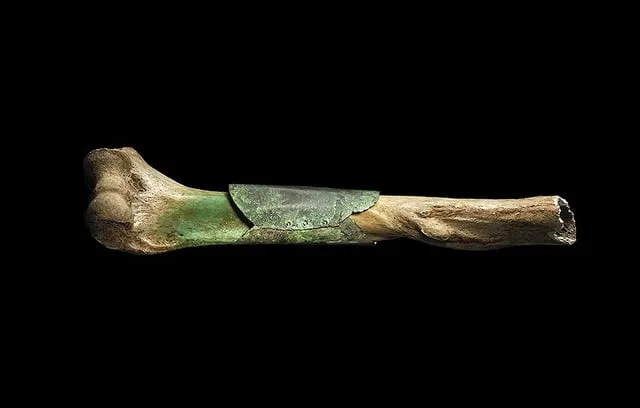
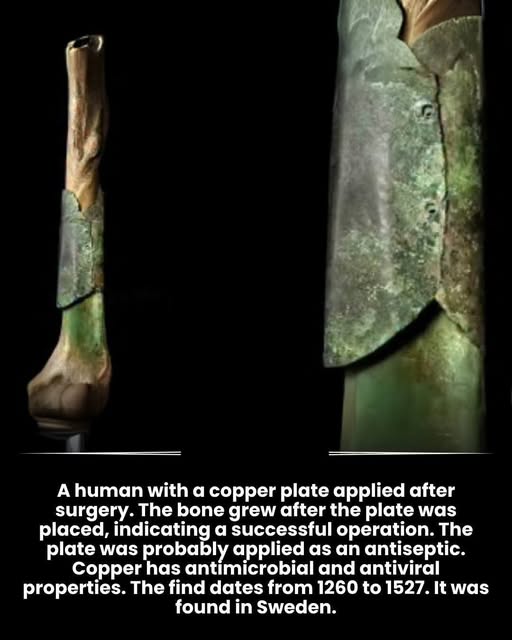
For decades, ancient medicine has often been dismissed as primitive or rudimentary. However, archaeological findings continue to challenge this narrative. One such discovery from Sweden, dating back to between 1260 and 1527, sheds new light on the advanced surgical capabilities of ancient practitioners. A human humerus bone with a copper plate surgically attached indicates not only a successful medical procedure but also a sophisticated understanding of infection control and healing processes.
The Swedish Discovery: Surgery and Healing in the Middle Ages
Archaeologists uncovered a human humerus bone—the long bone in the upper arm—with a copper plate fixed over a surgically treated area. The plate wasn’t just placed over the bone; it had been surgically integrated, and evidence suggests that the bone healed successfully around it. This discovery implies:
-
Skilled surgical intervention
-
Use of tools capable of manipulating both bone and metal
-
Knowledge of post-operative care to ensure healing
The time period of this surgery, in the late Middle Ages, challenges the belief that such techniques only emerged in the modern medical era.
Copper: A Natural Antiseptic in Ancient Medicine
The use of copper in this surgical procedure was likely intentional and medicinal. Even in ancient times, copper’s antimicrobial and antiviral properties were recognized. Historical records from civilizations like Ancient Egypt, Greece, and Rome show copper being used to:
-
Sterilize wounds
-
Purify water
-
Treat skin infections
Copper’s effectiveness in killing bacteria, viruses, and fungi would have made it an ideal material for surgical applications, especially in an era before modern antibiotics. Its use here points to an early understanding of antisepsis, possibly even a proto-germ theory, where infection was linked to contaminated wounds and dirty environments.
Bone Healing Around the Copper Plate: Evidence of Success
What truly astonishes researchers is the healed bone tissue surrounding the copper plate. This proves that:
-
The patient survived the surgery
-
The body did not reject the copper implant
-
Healing occurred naturally, without modern medications
Such a result speaks volumes about surgical precision, material biocompatibility, and effective post-operative care. It also raises questions: how many such surgeries were attempted, and how many were successful? This discovery may just be the tip of the iceberg regarding ancient surgical knowledge.
Beyond Sweden: Other Historical Uses of Copper in Medicine
While this Swedish find is unique in the archaeological record, copper has been used medically across ancient cultures. Examples include:
-
Ancient Egyptians used copper tools and compounds for wound care.
-
Hippocrates, the father of Western medicine, recommended copper for treating leg ulcers.
-
In India’s Ayurveda, copper vessels were used for storing water to maintain health.
These cultures understood that copper prevented infections, even if they lacked today’s scientific explanations. The Swedish surgical case shows that northern European societies may have also tapped into this knowledge.
Implications for the History of Medicine
This discovery redefines ancient medicine in several ways:
-
Skill and Knowledge: Medieval surgeons were not just performing amputations or rudimentary procedures. They possessed skills for bone repair, metal integration, and long-term healing strategies.
-
Materials Science: Choosing copper over other metals suggests an intentional selection based on healing benefits, possibly through centuries of observation and trial.
-
Post-Surgery Care: Healing implies that infection was prevented or minimized, a major challenge before modern hygiene standards. Was this due to copper’s properties alone or also careful wound management?
-
Challenging the Primitive Narrative: Ancient medical practices were not solely based on superstition or guesswork. Instead, they were grounded in empirical knowledge, developed through generations of practice.
Ancient Ingenuity: The Convergence of Medicine and Metalwork
The integration of a copper plate into a human body also highlights the collaboration between surgeons and metalworkers in ancient societies. This would have required:
-
Precise crafting of the copper plate to fit the injury
-
Surgical tools capable of manipulating both bone and metal
-
Possibly, customized implants, made for specific injuries
This suggests a systematic approach to healing, where medicine and technology went hand-in-hand, far earlier than previously acknowledged.
Modern Reflections: What Can We Learn?
This case forces us to reconsider our assumptions about ancient healthcare. It also offers lessons for modern medicine:
-
Biocompatibility of Natural Materials: As modern medicine explores biodegradable implants, this ancient use of copper may inspire natural and sustainable medical solutions.
-
Infection Control: Copper’s role in hospital surfaces today is growing due to its antimicrobial properties—a nod to ancient wisdom.
-
Historical Awareness: Understanding ancient techniques can inform contemporary practices, especially in low-resource settings where natural materials may offer cost-effective healthcare solutions.
Conclusion: Ancient Medicine Was Not Primitive, It Was Innovative
The discovery of a copper plate used in medieval surgery turns the idea of primitive ancient medicine on its head. It reveals early mastery over infection control, surgical precision, and the medicinal use of natural materials. Far from being crude or superstitious, ancient medical practitioners showed remarkable ingenuity, applying practical knowledge and materials science in healing the human body.
This remarkable find is a testament to human curiosity, adaptation, and innovation—qualities that have always driven medical advancement. It’s time to give ancient medicine the respect it deserves, not as a relic of the past, but as the foundation of modern surgical science.
ALSO READ: Ephesus After Rome: Life in a Byzantine City of Pilgrimage and Resilience