Unearthed Secrets: The Ancient Roman Wooden Cellar of Nida
Unearthed from the sands of time, the extraordinary wooden cellar of Nida offers a direct window into the daily life of ancient Romans living nearly 2,000 years ago. Discovered by archaeologists from the Frankfurt Archaeological Museum, this exceptionally preserved cellar reveals architectural ingenuity, domestic craftsmanship, and evidence of everyday habits from an era when Nida was a bustling Roman settlement of around 10,000 inhabitants.
The Rediscovery of Roman Nida
A Forgotten Roman Town Beneath Modern Frankfurt
In antiquity, Nida served as a major settlement on the outskirts of the Roman frontier in Germania Superior—part of the territory encompassing present-day Frankfurt-Heddernheim. Archaeological activity in the region since the 19th century has revealed fragments of Roman streets, temples, baths, and homes, but most discoveries were stone or ceramic remains. The newly uncovered wooden cellar stands out as one of the best-preserved wooden structures from Roman Germany, offering an unparalleled look into daily domestic life.
Archaeological Excavation and Preservation Efforts
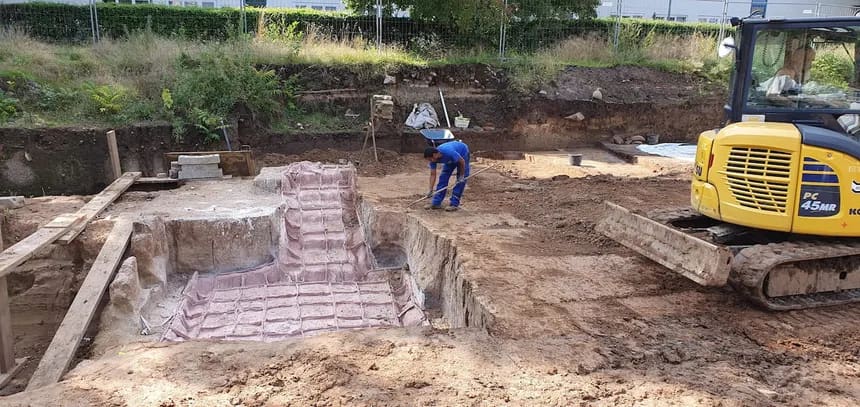
The excavation was conducted during a rescue archaeology project overseen by the Frankfurt Archaeological Museum, prior to modern construction planned in the area. During careful stratigraphic excavation, archaeologists identified dark, compact soil layers indicating organic preservation. As the ground was cleared, a well-constructed rectangular cellar emerged—its timber framework astonishingly intact thanks to waterlogged soil conditions that prevented decay for nearly two millennia.
Dendrochronological analysis of the wood indicated construction around the late first century AD, situating it firmly within the early Imperial Roman period. Conservation specialists quickly began humidity-controlled extraction and stabilization to preserve the fragile wooden remains for further study and eventual museum exhibition.
A Remarkable Glimpse into Roman Domestic Architecture
Structure and Design of the Wooden Cellar
The cellar appears to have been part of a residential building complex, likely belonging to a moderately wealthy Roman family or merchant. Measuring several meters long and featuring neatly joined oak beams, the cellar’s framework illustrates precise Roman carpentry techniques. Archaeologists found evidence of wooden shelves and compartments, suggesting that it served as a cool storage space for food, drink, or household goods.
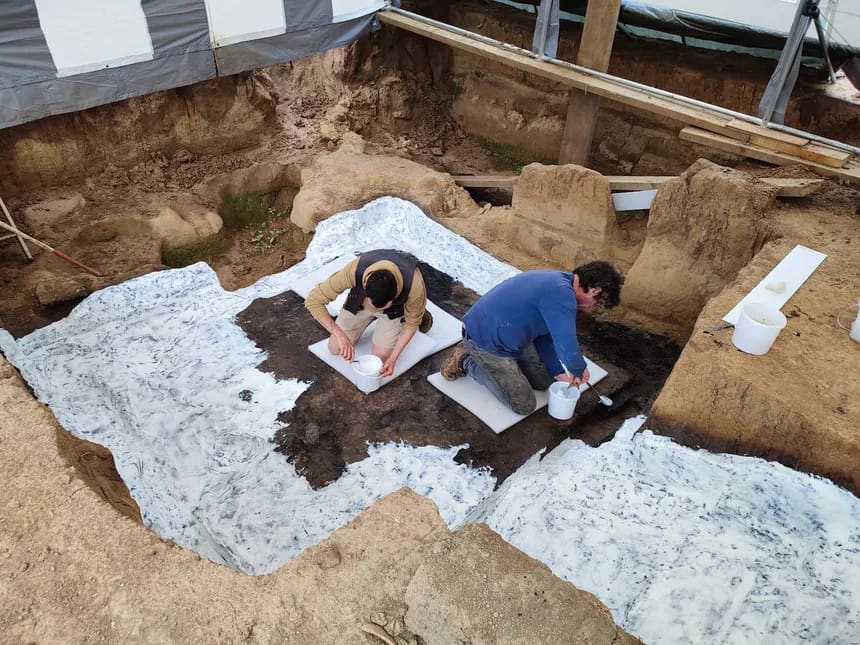
Organic soil samples yielded traces of seeds, fruit pits, and possibly residues of wine or oil, consistent with the typical contents of Roman pantries. The craftsmanship of the joints and mortises demonstrates both technical expertise and adaptation to local materials and climate—a key characteristic of Roman colonial architecture across Germania.
Insights into Everyday Life
Beyond its architectural merit, the cellar offers striking insight into the domestic world of Nida’s inhabitants. The Romans of Nida lived in well-planned settlements with paved roads, bathhouses, and workshops. The presence of this cellar points to a settled community with developed food storage systems and trade networks supplying Mediterranean goods north of the Alps.
Fragments of pottery, glassware, and small metal objects found within the cellar hint at daily routines—food preparation, storage, and household maintenance—similar to contemporary homes across the Roman Empire. Each artifact reinforces how connected this provincial town was to Roman cultural and economic life despite its frontier location.
The Town of Nida: A Roman Outpost Flourishing in Germania
Foundation and Urban Layout
Established around the mid-first century AD, Nida occupied an important position along the Limes, Rome’s fortified border system. The settlement included administrative buildings, sanctuaries, baths, and residential quarters, many constructed in the Roman villa style. Its population of approximately 10,000 reflects a thriving urban center integrated into the wider imperial network, exchanging goods and ideas from the Rhine frontier to the heart of Rome.
Evidence of Commerce and Craftsmanship
Finds from the wider archaeological zone include ceramics, coins, metal tools, and imported goods bearing stamps of Mediterranean workshops. Nida evidently served as both a defensive and economic hub—from which Roman merchants traded with local Germanic communities. The discovery of the wooden cellar further underscores the town’s prosperity and its residents’ adaptability in using local resources within Roman building traditions.
Religious and Cultural Landscape
Archaeologists have previously uncovered temples dedicated to deities such as Mithras and Jupiter Dolichenus, demonstrating a diverse religious presence in Nida. The town embodied the rich cultural synthesis characteristic of Roman provincial life—where Latin urbanity intertwined with indigenous traditions. The wooden cellar, as a domestic structure, complements these public monuments by illuminating life behind closed doors, from storage practices to family subsistence.
Technological and Environmental Insights
Conditions for Exceptional Preservation
Wooden structures seldom survive from Roman times except in waterlogged or anaerobic conditions, making the Nida find extraordinary. The groundwater saturation preserved the timber by preventing microbial decay. Environmental sampling has allowed researchers to reconstruct local vegetation and climate during the first century AD, revealing a landscape of mixed forests and cultivated plots near the Roman settlement.
Advances in Archaeological Science
State-of-the-art digital documentation was employed at the site. Three-dimensional photogrammetry and laser scanning recorded the cellar’s layout before dismantling. This digital reconstruction will allow virtual viewing of the structure within museum displays and online exhibitions. Multidisciplinary collaboration between dendrologists, soil scientists, and conservators. Ensures that every sample contributes to the growing body of data on Roman-era woodcraft and domestic architecture.
The Significance for Roman Archaeology in Germany
A Rare Window into Wooden Architecture
Most surviving Roman buildings in Germany are built of stone or brick; therefore. Wooden elements are largely absent from material reconstructions. The cellar’s discovery fills this gap, revealing construction details otherwise known only from Roman texts or imprints in soil. Specialists consider it among the best-preserved examples of timber architecture north of the Alps. Comparable in significance to the wooden wells and bridges of Waldgirmes or Mainz.
Enriching the Story of Roman Life Beyond the Empire’s Core
Finds like this remind us that Roman culture was not confined to Mediterranean cities. Settlers in provincial towns such as Nida maintained Roman lifestyle standards—using similar building designs, goods, and social customs. The preservation of organic materials makes this discovery invaluable for reconstructing diet, economy, and social identity within the frontier provinces.
Educational and Exhibition Potential
The Frankfurt Archaeological Museum has announced plans to conserve and display the wooden cellar in future exhibitions dedicated to Roman Nida. Combined with other artifacts from the region. It will vividly portray the rhythm of daily life in a small Roman town nearly two thousand years ago. Interactive models and reconstructions will allow visitors to experience how Roman homes once looked. And functioned in the heart of ancient Germania.

Looking Ahead: The Legacy of Nida’s Wooden Cellar
The unearthing of the wooden cellar of Nida transforms our understanding of Roman domestic life in central Europe. It illustrates both technological skill and cultural adaptation within one of the empire’s most dynamic provincial centers. As conservation continues, each plank, seed, and artifact contributes new details to the intricate mosaic of Roman heritage.
In its silent timbers lie stories of merchants, families, and builders who once called Nida home—individuals who. Through this remarkable discovery, continue to speak across millennia.
ALSO READ: The Astonishing Journey of the Titanosaur Dinosaur Egg Fossil in London