The Ancient Egyptian Cat Sarcophagus: A Testament to the Worship of Bastet
Ancient Egypt remains one of the most fascinating civilizations in history, with its rich religious traditions, monumental architecture, and timeless works of art. Among its many remarkable cultural expressions, the cat sarcophagus holds a unique place. Dating to the Late Period (7th–4th centuries BCE), these stone coffins were designed to house mummified cats offered as sacred votives to Bastet, the feline goddess of home, protection, and fertility.
This artifact not only illustrates the Egyptians’ reverence for animals but also highlights their belief in the interconnectedness of humans, gods, and the natural world. The cat sarcophagus serves as a bridge to the spiritual life of the Nile Valley, preserving the memory of a devotion that flourished more than 2,000 years ago.
The Worship of Bastet in Ancient Egypt
Bastet was one of the most beloved deities in Egyptian religion. Originally depicted as a lioness, she later took on the form of a domestic cat. As her cult expanded, Bastet became the protector of households, women, fertility, and children, while also symbolizing grace and elegance.
The Late Period (664–332 BCE) saw an explosion in the worship of Bastet, centered in her cult city of Bubastis (modern-day Tell Basta). Pilgrims traveled great distances to offer votive gifts—often in the form of cat mummies and sarcophagi—in her honor. These offerings reflected not only personal devotion but also a desire for divine blessings and protection.
The Cat Sarcophagus: Craftsmanship and Symbolism
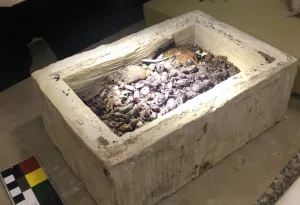
The cat sarcophagus is a small yet significant example of Egyptian craftsmanship. Carved from stone, it often measured less than a meter in length, designed to contain the remains of a mummified feline.
Decorative Features
-
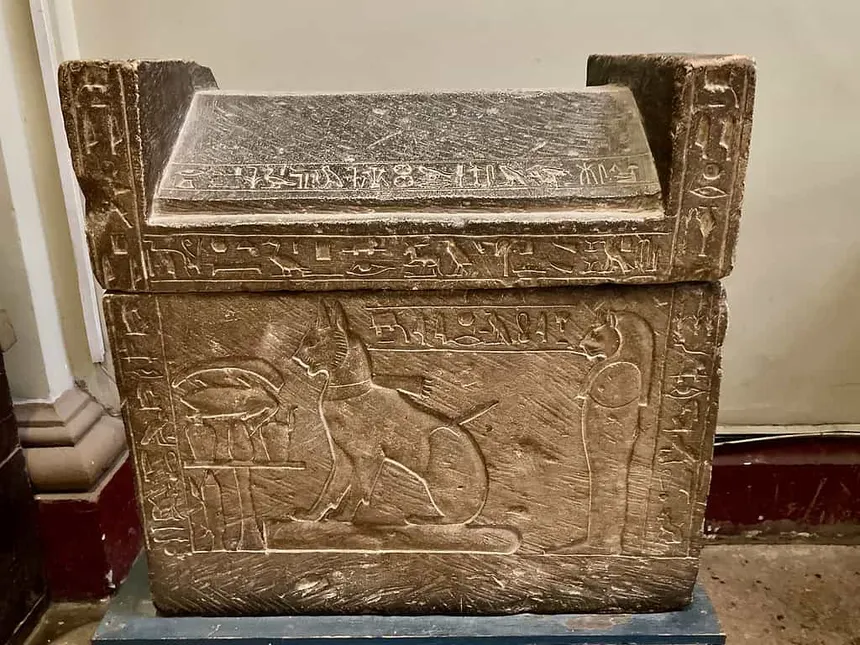
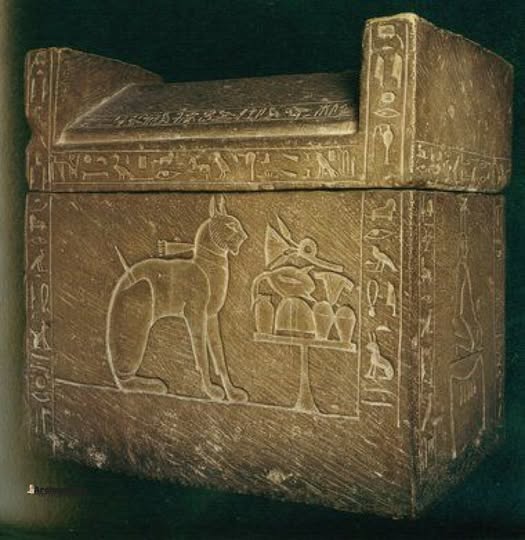
Hieroglyphs: The surface of the sarcophagus is incised with inscriptions that may include prayers, dedications, or references to Bastet’s divine power.
-
Cat Depictions: The carved imagery typically shows a cat in a regal pose, often adorned with a protective collar, emphasizing the sacred role of the animal.
-
Offerings and Ritual Symbols: Surrounding motifs may include food, vessels, and religious emblems, symbolizing abundance and eternal sustenance.
-
Goddess Imagery: Some sarcophagi feature representations of Bastet herself, highlighting the direct connection between the animal and the deity.
Mummified Cats and Votive Practices
The Egyptians practiced the mummification of animals on a massive scale, with millions of mummified cats discovered in temple complexes and necropolises. These were not household pets but rather animals specifically bred and prepared for ritual offerings.
When worshippers visited Bastet’s temples, they would purchase a cat mummy—sometimes already encased in a sarcophagus—and present it as a votive. This act was believed to strengthen their prayers, ensuring that Bastet would hear and respond favorably.
Such practices demonstrate the Egyptians’ deep spiritual connection with animals, where cats were both earthly companions and divine messengers.
The Cat as a Divine Symbol
The prominence of cats in Egyptian culture was no accident. These creatures embodied qualities highly valued in Egyptian life:
-
Protection: Cats guarded homes and granaries by hunting rodents and snakes.
-
Grace and Elegance: Their poise mirrored ideals of beauty and refinement.
-
Divine Connection: Cats served as living embodiments of Bastet, bridging the human and spiritual realms.
The cat sarcophagus immortalizes this sacred symbolism, transforming a simple animal into a powerful religious offering.
Archaeological Significance
The discovery of cat sarcophagi has provided archaeologists with a deeper understanding of Egyptian religion, ritual practices, and daily life. Excavations in Bubastis, Saqqara, and other sites have revealed vast cat cemeteries, complete with thousands of mummified remains and intricately decorated sarcophagi.
These finds illustrate not only the scale of Bastet’s worship but also the thriving industry of animal mummification in ancient Egypt. Priests, embalmers, and artisans all played roles in preparing these offerings, reflecting a complex religious economy.
Cultural and Spiritual Insights
Examining the cat sarcophagus offers profound insights into Egyptian worldview:
-
Eternity and the Afterlife: Just as humans were mummified for eternal life, cats too were preserved for divine purposes.
-
Art and Faith: The detailed engravings show how artistic skill was harnessed to express religious devotion.
-
The Human-Animal Bond: Egyptians recognized animals as participants in the spiritual journey, not merely earthly beings.
Preservation and Modern Display
Today, many cat sarcophagi are preserved in museums around the world, including the Egyptian Museum in Cairo, the British Museum, and the Louvre. These artifacts draw countless visitors who marvel at their craftsmanship and spiritual depth.
Conservation efforts ensure that the delicate carvings and inscriptions remain intact, allowing modern audiences to connect with the beliefs of an ancient civilization.
The Enduring Legacy of Bastet’s Cats
The cat sarcophagus continues to fascinate because it represents more than an object—it is a window into Egyptian spirituality. It embodies the Egyptians’ devotion, their reverence for animals, and their commitment to eternal life.
To stand before such an artifact today is to encounter the echo of a civilization. Where devotion and artistry intertwined, and where even the smallest creatures were granted sacred significance.
Conclusion
The ancient Egyptian cat sarcophagus is not merely a relic. It is a profound testimony to a culture where religion, art, and daily life seamlessly blended. Its inscriptions and depictions immortalize the sacred bond between humans and cats, elevating the ordinary into the divine.
By studying and preserving these artifacts, we gain a richer appreciation of the Egyptian worldview. One that celebrated life, honored death, and sought eternity through devotion to the gods.
ALSO READ: The Stone Spheres of Costa Rica: Mysteries of the Diquís Culture