Hatra Ancient City: The Enigmatic Jewel of the Parthian Empire in Iraq
Hatra, nestled within modern-day northern Iraq, stands as an enduring symbol of the Parthian Empire’s cultural and architectural zenith during the 1st and 2nd centuries AD. This city was more than just a political or military stronghold—it was a vibrant crossroads of civilizations, where the influences of the Roman and Parthian worlds intertwined to create a unique cultural mosaic. Today, the ruins of Hatra evoke the grandeur and spiritual significance that once defined this ancient metropolis.
A Historical Overview of Hatra
Established possibly as early as the 3rd or 2nd century BCE during the Seleucid period, Hatra grew from a modest settlement into a thriving urban center under Parthian rule. Its strategic location on caravan trade routes connecting Mesopotamia to Arabia made it an economic and cultural hub. Hatra was also politically significant as the capital of the first Arab Kingdom, flourishing with semi-autonomy under Parthian suzerainty.
Throughout its peak in the 1st and 2nd centuries AD, Hatra’s fierce fortifications allowed it to resist multiple Roman sieges, notably in AD 116 under Emperor Trajan and again in AD 198 under Emperor Septimius Severus. However, around 241 AD, the city fell to the Sassanian Empire, marking the beginning of its decline. By the 7th century AD, changing trade routes and political upheavals led to its abandonment, leaving behind an archaeological treasure etched in stone and sand.
Architectural and Cultural Significance
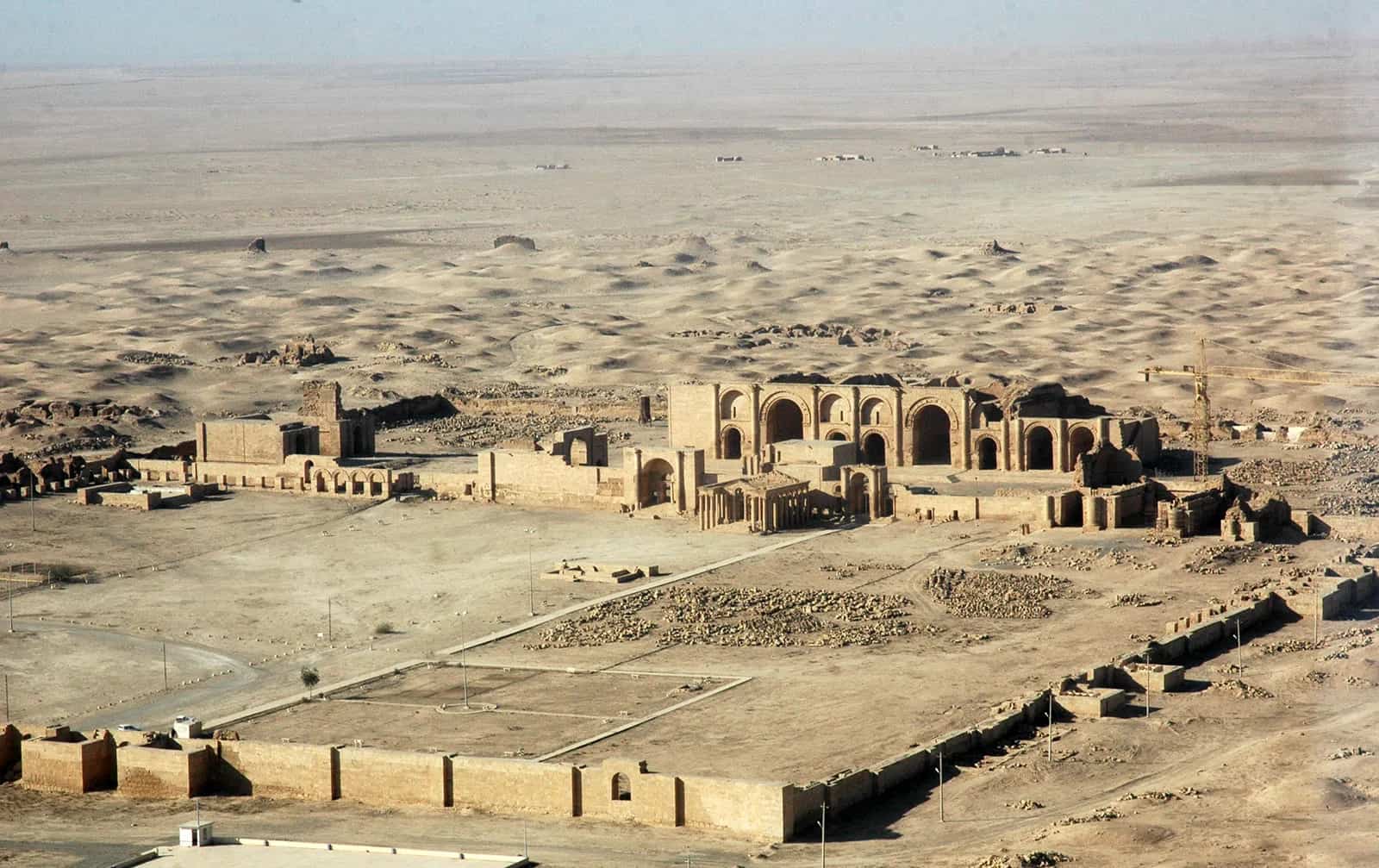
Hatra is distinguished architecturally by its massive stone fortifications, which include a double wall fortified with more than 160 towers. These defensive structures exemplify a military tradition that merged Parthian engineering prowess with local traditions, effectively safeguarding the city from large-scale assaults for centuries.
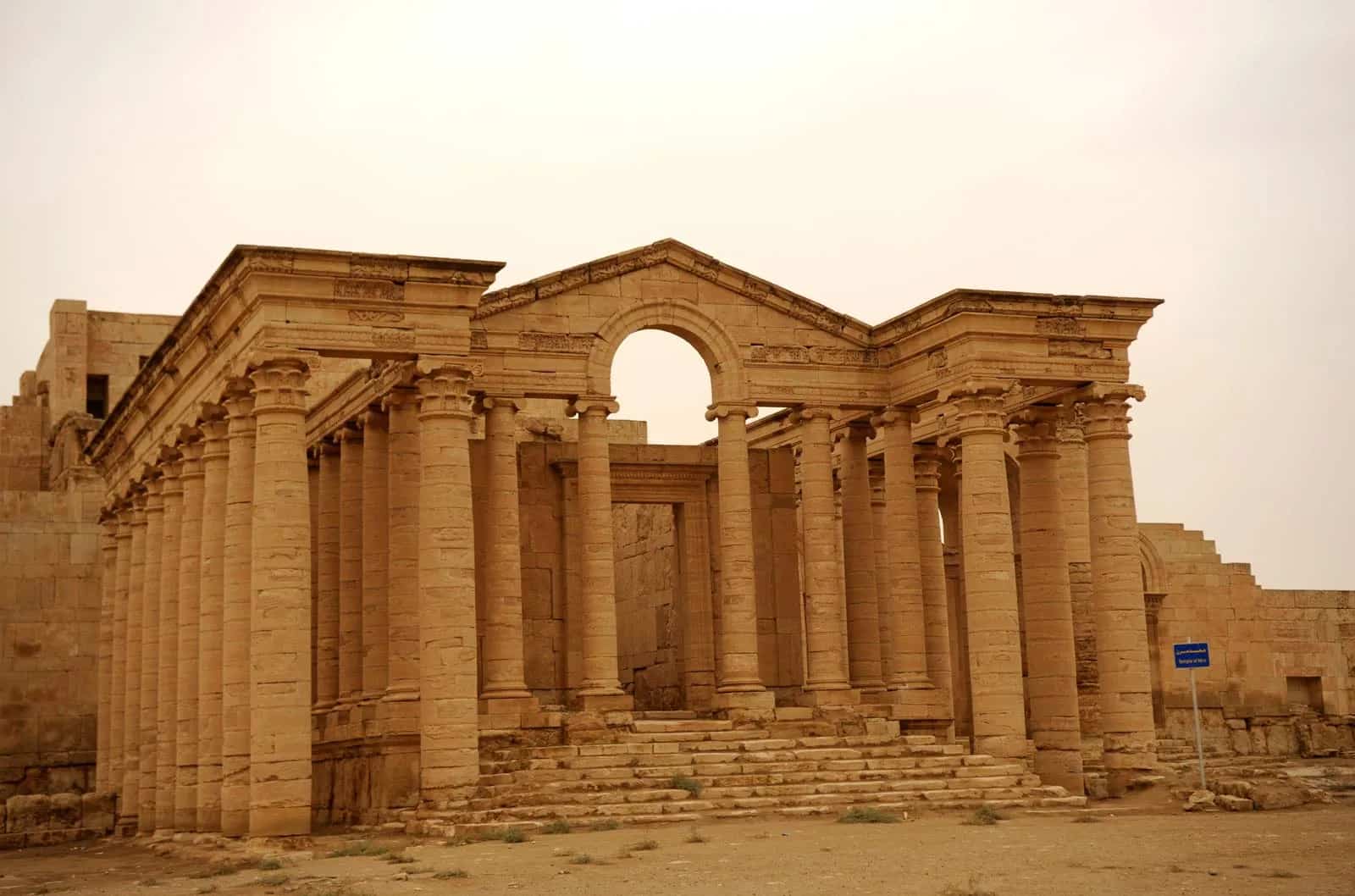
At the city’s heart is the rectangular temenos, a large sacred precinct containing several temples dedicated to a pantheon of gods. Drawn from Greek, Aramaic, Mesopotamian, and Arabian religions. The Great Temple of Hatra, with its vaulted chambers and towering columns reaching up to 30 meters. Exemplifies the harmonious blend of Hellenistic, Roman, and Eastern architectural elements. This fusion reflects the cosmopolitan nature of the city, where cultural and religious practices were deeply interconnected.
The art and inscriptions found at Hatra reveal a syncretic civilization influenced by Greek, Parthian, Roman, and Arabian elements. Statues commonly depict men with curly hair and expressive faces, symbolizing the unique artistic style of the city. The architecture and sculptures collectively testify to Hatra’s role as a spiritual and economic center within the Jazeera region of Iraq.
The Legacy and Modern Significance of Hatra
Today, Hatra is recognized as a UNESCO World Heritage site. Celebrated for being the best-preserved example of a Parthian city and an architectural masterpiece of the ancient Near East. Its well-preserved walls and temples offer invaluable insights into Parthian urban planning, military construction, and religious life.
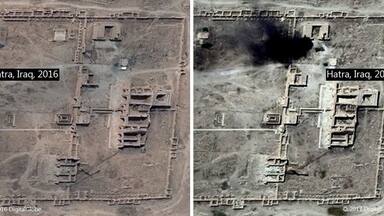
Hatra’s legacy extends beyond archaeology and history; it represents the resilience and cultural fusion that characterized ancient Mesopotamia. Despite suffering damage during recent conflicts, restoration efforts continue to preserve this ancient city as a testament to human ambition, faith, and the enduring spirit of civilizations that dared to defy the desert’s harsh embrace.
Exploring Hatra provides a profound appreciation of the ancient world’s complexities, where beauty and ruin exist in a delicate balance. Offering a timeless narrative of history’s relentless march and the enduring dance between culture and conquest.
ALSO READ: The Hunting House at Castle of Cignolo Po: History, Architecture & Cultural Significance in Lombardy