The Heroon of Sagalassos: Eternal Monument of Roman Pisidia
High in the Taurus Mountains of southwestern Turkey, the ancient city of Sagalassos stands as one of the most remarkable archaeological sites of the Roman Imperial period. Among its most impressive monuments is the Heroon of Sagalassos — a grand marble tomb dedicated to a local hero or dignitary who once held great esteem in this mountainous city. Constructed in the 2nd century AD, this architectural masterpiece not only enshrines the memory of an individual but also the artistry, beliefs, and cultural pride of an entire civilization.
The Setting: Sagalassos and the Pisidian Highlands
Sagalassos, located near present-day Burdur Province, was a prominent city of ancient Pisidia. Nestled at an altitude of over 1,450 meters, the city overlooks valleys and ridges that once connected the inland trade routes of Roman Anatolia. Its isolation in the mountains gave Sagalassos a unique charm—protected, strategic, and spiritually resonant.
Archaeological research reveals that Sagalassos was continuously inhabited from the Hellenistic period through the Byzantine era. Under Roman rule, it evolved into a prosperous urban center adorned with theaters, baths, fountains, and temples, reflecting both economic strength and refined cultural taste. Within this vibrant civic landscape, the Heroon occupied a revered space dedicated to memory and veneration.
What Is a Heroon?
In ancient Greek and Roman culture, a Heroon was a type of shrine or monumental tomb built to honor a hero—sometimes mythological, but often a local ruler, benefactor, or elite citizen. These structures served as both tombs and places of worship, blending political prestige with sacred remembrance. Visitors could pay respects, make offerings, or partake in ceremonies that reinforced civic identity and continuity between generations.
The Heroon at Sagalassos embodies this tradition with Roman grandeur and local artistry, making it a key monument for understanding hero worship in provincial Asia Minor.
Architectural Splendor: Design and Construction
The Heroon of Sagalassos was constructed entirely from fine white marble quarried nearby. Its gleaming façade would have reflected the mountain sun, creating a striking contrast against the rugged terrain. The design followed Roman architectural norms but incorporated regional Pisidian craftsmanship.
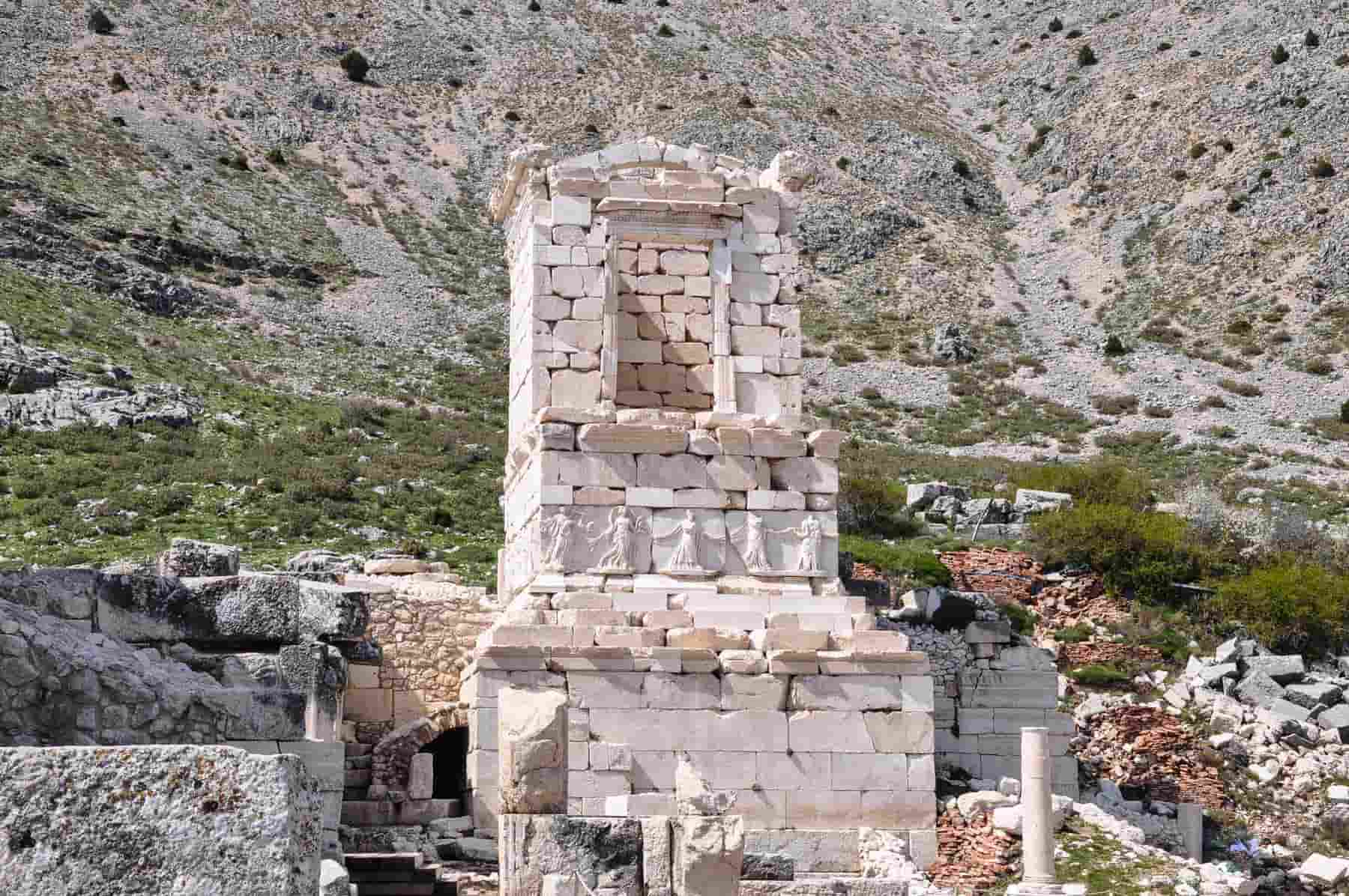
The structure consisted of a stepped podium supporting a richly decorated upper chamber or cella. Corinthian columns framed the façade, lending an air of elegance and proportion characteristic of high Roman architecture. Above these columns, sculpted reliefs depicted mythological and civic scenes celebrating the virtues of the deceased.
The surviving fragments suggest that the Heroon may once have been topped by a sculptural figure, possibly representing the honored individual in heroic form—perhaps mounted on a horse or accompanied by divine symbols, signifying valor, wisdom, and civic contribution.
Artistic Mastery: Reliefs and Symbolism
One of the most fascinating features of the Heroon is its detailed marble relief decoration. Though weathered by centuries of exposure, the figures still convey vitality, precision, and emotional depth. The reliefs feature processional scenes, offerings to deities, and perhaps allegorical figures like Victory (Nike) and personifications of virtues.
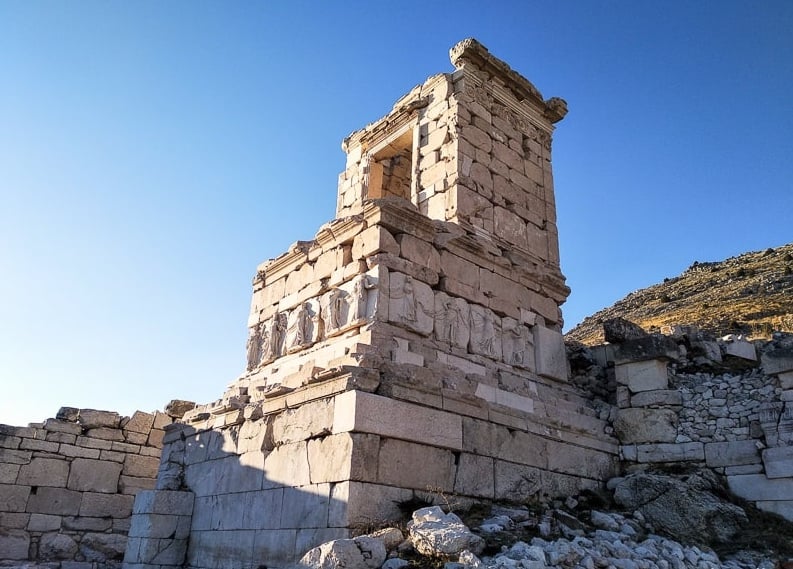
These carvings were more than decoration; they were carefully chosen narratives expressing Roman ideals of honor and immortality. The interplay of realism and symbolism in the reliefs reflects an era where art served both aesthetic and moral functions. Inscriptions or iconographic motifs may have once identified the hero’s name and achievements, but even without text, the visual message remains clear—a life of significance rendered eternal through stone.
The Passage of Time: Weathering and Preservation
For nearly two millennia, the Heroon of Sagalassos has endured fierce mountain weather, earthquakes, and neglect. The city itself was abandoned after a devastating earthquake in the 7th century AD, which marked the decline of Sagalassos. Over time, natural forces fractured the monument, scattering sculptural fragments across the hillside.
Modern archaeological teams, led by international collaborations since the late 20th century, have meticulously excavated and documented the site. Many fragments of the Heroon have been reassembled in part, allowing scholars to reconstruct its form and importance within the city’s urban layout. The monument now stands as both a relic and a reminder—partly ruin, partly reborn through research and restoration.
Cultural Significance: Why the Heroon Matters
The Heroon of Sagalassos holds more than historical value; it is a testament to how Roman provincial cities blended imperial and local identities. For the citizens of Sagalassos, building such a monument was both an act of personal devotion and public message—a visual manifesto of civic excellence and continuity under Rome.
This dual identity—Greek in cultural tradition yet Roman in political form—finds perfect expression in the Heroon. The artistic language speaks to universal themes: the desire for remembrance, the blending of mortal and divine, and the human need to leave a lasting mark against the vastness of time.
Archaeological Discoveries and Modern Research
Recent archaeological work at Sagalassos by the University of Leuven and Turkish authorities has deepened understanding of the site’s layout and context. Using advanced digital scanning and conservation techniques, researchers have recreated virtual models of the Heroon’s original appearance.
Fragments of decorative friezes have been analyzed for pigment traces, revealing that the marble was once brightly painted—transforming what was once thought to be a pure white monument into a vividly colored structure celebrating life and legacy. Such findings remind modern viewers that Roman monuments were alive with color and presence. Unlike the weathered white remains we see today.
Visiting the Heroon Today
Today, visitors to Sagalassos can ascend to the archaeological site and see the surviving remains of the Heroon in the heart of the ancient city. Set against a backdrop of dramatic mountain views, the monument continues to inspire awe and reflection. Its marble blocks and reconstructed columns connect the modern gaze to an ancient worldview. One that saw honor, memory, and beauty as inseparable.
Sagalassos itself has become a model of archaeological preservation, balancing tourism with careful conservation. Interpretive panels, 3D reconstructions, and museum exhibits in Burdur. Offer rich insights into the story of the Heroon and its role within Roman Pisidia.
A Monument Beyond Time
The Heroon of Sagalassos is not simply a relic of stone. It is a meditation on the impermanence of life and the endurance of art. Every crack and worn relief tells a dual story of creation and decay. Echoing the ancient Roman understanding that glory fades, yet memory endures through the monuments we leave behind.
Perched high in the mountains, the Heroon continues to stand as a silent guardian over the ruins of Sagalassos. Embodying the eternal dialogue between human ambition and the passage of time.
ALSO READ: The Skull of Homo naledi: A Glimpse into the Enigma of Early Human Evolution