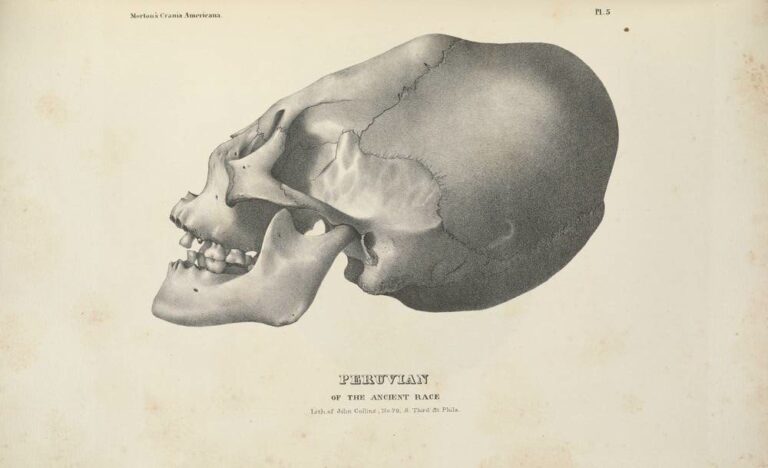
The Skull of Homo naledi: A Glimpse into the Enigma of Early Human Evolution
A Discovery Beneath the Earth
In the shadowed chambers of the Rising Star Cave system, deep within South Africa’s limestone ridges, an extraordinary ancient secret was discovered. From narrow passageways and confined chambers, scientists recovered the remains of a previously unknown hominin species—Homo naledi. Among the collection of skeletal fragments, the skull stands out as both a relic and revelation. Its discovery between 2013 and 2015 reshaped scientific understanding of the human lineage, bridging the gap between the primitive past and the dawn of modern humanity.
The Homo naledi skull, estimated to be between 236,000 and 335,000 years old, tells a story etched in bone and sediment. It speaks not only of anatomy and adaptation but of mystery—how such a primitive species could have lived at the same time as early Homo sapiens.
The Rising Star Cave: An Underground Repository of Life and Death
Located in South Africa’s Cradle of Humankind World Heritage Site, the Rising Star Cave system has become a landmark in paleoanthropology. Its discovery involved a team of cavers and scientists who navigated narrow tunnels barely 18 centimeters wide. The main chamber, named the Dinaledi Chamber, contained more than 1,500 fossil elements belonging to at least 15 individuals.
Unlike most fossil sites, these remains were not scattered by flood or sediment transport. Instead, they appeared deliberately placed—suggesting that Homo naledi may have intentionally deposited their dead. If true, this complex behavior profoundly challenges assumptions about cognitive capacity in early human species far removed from modern intellect.
Anatomy of the Skull: A Mosaic of Primitive and Modern Features
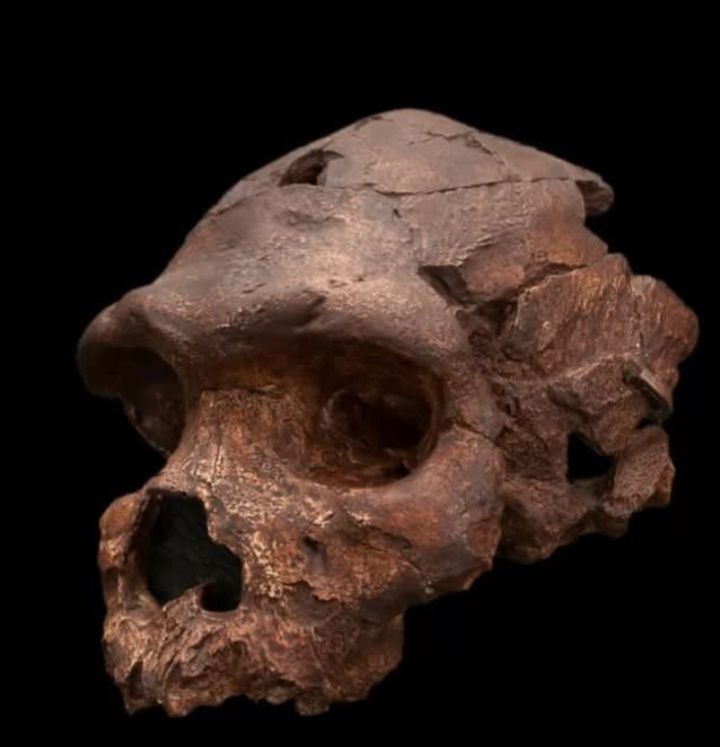
The Homo naledi skull defies conventional classification. With a cranial capacity between 465 and 610 cubic centimeters, it is small—comparable to that of an Australopithecine. Yet the structure of the cranium reveals unexpectedly modern traits, including rounded contours and reduced prognathism (jaw projection).
Paleoanthropologists describe it as a “mosaic” species: part ancient, part advanced. Its small brain size contrasts with its relatively modern dental structure and delicate skull vault. This combination suggests that evolution did not follow a linear or uniform path. Instead, different traits evolved independently, driven by environmental pressures, survival strategies, and genetic diversity across regions of Africa.
Geological Context and Dating: The Embrace of Time
Dating fossils within the Rising Star Cave posed significant challenges due to limited volcanic layers and the isolated nature of the chamber. Scientists relied on uranium-series dating and electron spin resonance analyses, which placed the Homo naledi fossils between 236,000 and 335,000 years ago.
This timespan situates the species in the late Middle Pleistocene—an era once thought dominated by larger-brained species such as Homo heidelbergensis and early Homo sapiens. The presence of Homo naledi in this period overturns the assumption that smaller-brained hominins vanished earlier. Instead, it reinforces the idea that human evolution was a branching network of coexisting lineages, not a simple march toward modernity.

Cognitive Implications: Burial, Behavior, and Symbolism
One of the most striking aspects of the Rising Star site is the apparent deliberate deposition of bodies. No evidence of predator activity or accidental entrapment exists. The chamber’s depth and inaccessibility further suggest purposeful placement of remains—potentially an act of early ritualized behavior.
If Homo naledi indeed engaged in rudimentary burial practices, it indicates a level of intelligence far greater than its brain size suggests. Such behavior implies emotional awareness, cooperation, and even symbolic thought. These cognitive attributes were once believed exclusive to Homo sapiens and Neanderthals, making Homo naledi a species that challenged the boundary between instinct and intention.
Comparative Insights: Homo naledi and Its Evolutionary Neighbors
Comparing Homo naledi to its contemporaries reveals intriguing contrasts. While Homo erectus and Homo heidelbergensis exhibited larger cranial volumes and stone tool technologies, Homo naledi’s anatomy appears simpler. Yet its hands possessed a modern thumb suited for precision grip, and its feet closely resembled those of humans—clearly adapted for upright walking.
This paradox—primitive skull, modern body—demonstrates the mosaic evolution pattern across human history. Evolution did not upgrade all features simultaneously; instead, different traits developed at different rates. Homo naledi, small-brained yet dexterous, forms an essential puzzle piece illustrating how adaptability shaped survival in diverse African environments.
The Environment of Rising Star: Witness to Climate Shifts
The sediments encasing Homo naledi fossils record climatic fluctuations of the Middle Pleistocene. Periods of warmth and humidity alternated with cooler, arid intervals, transforming the Cradle of Humankind from grassland savannas to patchy forests. Such variability likely compelled early humans to evolve flexible survival strategies—resource sharing, cooperation, and shelter seeking within caves.
The skull’s weathered texture tells this environmental story through mineral deposits and micro-erosion patterns formed over millennia. Each layer of sediment acts as geological handwriting, preserving the dance between climate, landscape, and life.
Scientific Impact and Ongoing Research
The discovery of Homo naledi reshaped anthropology’s perception of complexity in human ancestry. Announced in 2015 by paleoanthropologist Lee Berger and his team from the University of the Witwatersrand, the find quickly gained global attention. Further studies between 2017 and 2023, including brain reconstruction using 3D modeling, revealed that even with a small brain, Homo naledi possessed an expanded prefrontal cortex—responsible for planning and decision-making.
Ongoing research continues to explore whether Homo naledi used fire within the caves, as soot residues and possible hearth fragments have been reported. If confirmed, such evidence would position the species as one of the earliest known cave users with controlled use of fire—an extraordinary leap for a hominin of its size and era.
Reflections on Evolution and Identity
Standing before the skull of Homo naledi evokes contemplation beyond science—it touches the essence of our shared humanity. Every ridge, seam, and hollow captures the continuum of existence connecting ancient ancestors with modern descendants. Though separated by hundreds of thousands of years, the spark of adaptation that guided Homo naledi still burns within us.
Its discovery serves as a mirror for humanity: intelligence arises not solely from brain volume but from imagination, cooperation, and resilience. The skull thus becomes both fossil and philosopher, whispering, “Evolution is not a ladder but a web—woven through time, memory, and earth.”
Conclusion: A Legacy Carved in Stone
The Homo naledi skull represents far more than an anatomical specimen. It embodies the enigma of human evolution—how diverse species once shared the continent, each experimenting with survival, cognition, and expression. Thousands of years later, its preserved remains remind us that humanity’s story is neither straightforward nor singular.
In the dim caverns of the Rising Star, bones once cradled by darkness now illuminate our understanding of what it means to be human. Beneath the layers of sediment and silence, Homo naledi continues to speak—across ages, beyond species, through the eternal language of discovery.
ALSO READ: The Leaf Mantis: Nature’s Living Illusion