Jeanne d’Arc Gilded Bronze Equestrian Statue at Place des Pyramides, Paris
One of Paris’s most iconic monuments, the Jeanne d’Arc gilded bronze equestrian statue, was sculpted by Emmanuel Frémiet and erected in 1874 at the Place des Pyramides. This majestic statue honors Joan of Arc (Jeanne d’Arc), the revered French national heroine and martyr, commemorating her pivotal role in the Hundred Years’ War and symbolizing French courage and resilience.
Historical Background and Commission
This statue was commissioned by the French government shortly after the humiliating defeat of France in the Franco-Prussian War of 1870. The loss devastated the nation and shattered its national pride. To rekindle patriotism and strength, the government sought to immortalize Joan of Arc, a figure embodying French valor and national unity during the 15th century. The monument was unveiled in 1874, making it the only public sculpture commission by the French state during the so-called “Golden Age of statuary” in Paris (1870-1914), when most public art was funded privately.
Artistic Composition and Symbolism
Emmanuel Frémiet, a renowned French sculptor known especially for his skill in depicting animals. Crafted this statue in gilded bronze. Portraying Joan of Arc mounted on a horse, holding aloft a banner as she charges into battle. His approach combined realism and symbolic elements, emphasizing both Joan’s martial prowess and spiritual devotion.
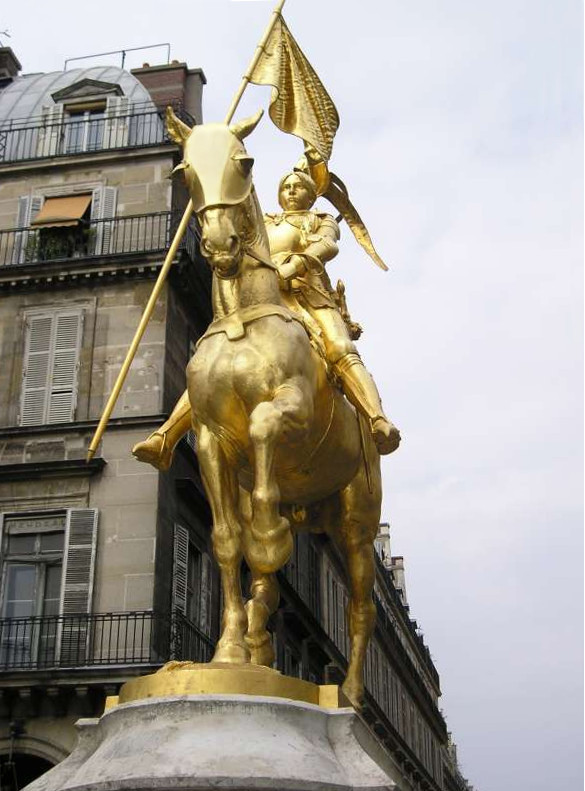
The statue’s pose evokes notions of medieval chivalry and religious piety, with Joan depicted in armor but softened by feminine contours beneath her gear. Notably, Frémiet modeled Joan’s face on Aimée Girod, a young woman from Domrémy. The actual birthplace of Joan of Arc—to underscore authenticity and historical connection.
Location Significance: Place des Pyramides
The statue’s location at Place des Pyramides is symbolic. Closely situated near the historic site where Joan was injured during one of her military engagements. This placement reinforces the monument’s function as a memorial not just to Joan as a historic figure. But also as a protector and martyr of France’s heritage.
Changes and Controversies
After its initial unveiling, Frémiet was dissatisfied with certain aspects, particularly the horse’s proportions compared to Joan’s figure. In 1889, he created a slightly smaller horse for a replica made for the city of Nancy, and in 1899 he used this modified version to replace the original horse in the Paris statue. During these modifications, Joan was made 20 centimeters taller, and the horse’s neck was thinned while some harnesses were removed for a more balanced aesthetic.
These alterations sparked criticism because altering a public monument was viewed controversially at the time. Still, they highlight Frémiet’s dedication to perfection in historical and artistic accuracy.
Cultural and Political Impact
With Joan of Arc’s canonization in 1920, the statue became a significant pilgrimage site. Especially among royalist and traditionalist circles in France. It stands as a symbol of national identity, courage, and the enduring spirit of the French people. The gilded statue continues to draw tourists, historians, and art enthusiasts. Celebrated for both its artistic merit and powerful cultural symbolism.
Artistic Style and Details
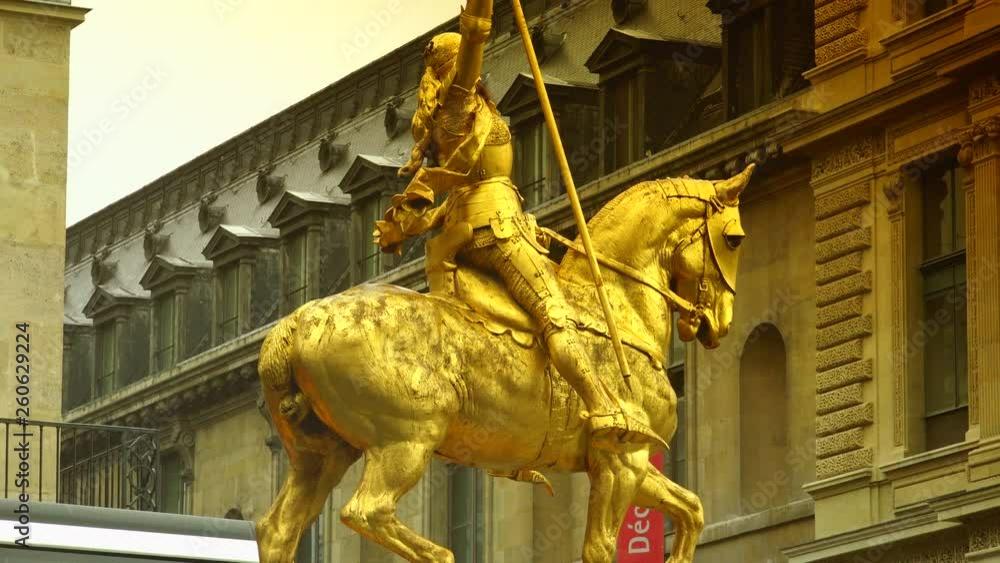
Frémiet’s mastery is evident in the statue’s meticulous attention to proportion, detail, and archaeological accuracy of Joan’s armor and medieval costume. The gilding enhances its visibility and symbolism as a radiant beacon of French history. The pedestal, designed by architect Paul Abadie, grounds the statue in classical monumentality, blending architecture and sculpture harmoniously.
Conclusion
The Jeanne d’Arc gilded bronze equestrian statue by Emmanuel Frémiet at Place des Pyramides is far more than a historical monument. It is a testament to France’s complex history, its artistic heritage, and its collective memory. From its origins after a national crisis to its present-day status as a cherished landmark. This sculpture beautifully encapsulates the spirit of a nation through the iconic figure of Joan of Arc.
ALSO READ: 2,100 Years Ago: The Forgotten Battle That Ended in a Terrible Massacre