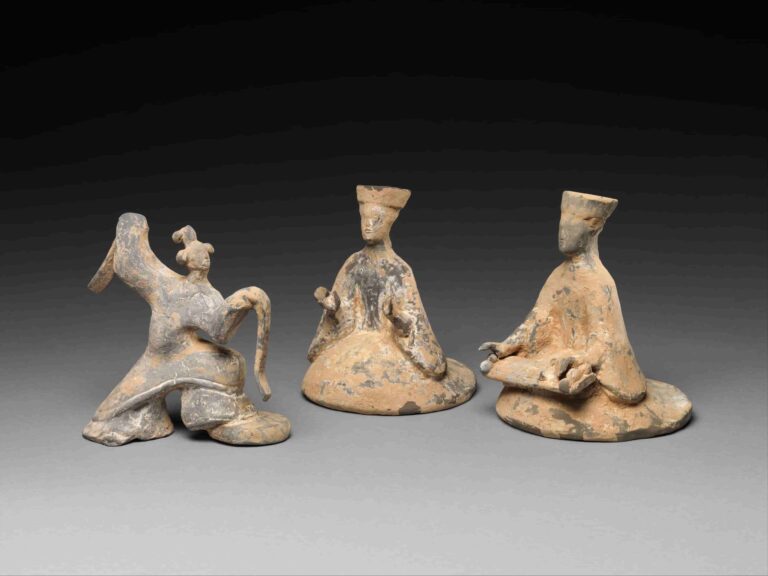
Xi’an Terracotta Army – The Eternal Guardians of China’s First Emperor
A Timeless Discovery Beneath the Earth
In 1974, a group of farmers digging a well near Xi’an in Shaanxi Province uncovered fragments of life-sized clay figures. What they found would soon captivate the world — the legendary Terracotta Army, an immense subterranean force created to protect Emperor Qin Shi Huang, China’s first emperor, in the afterlife. Hidden for more than two millennia, this archaeological wonder represents a profound statement of imperial ambition, divine belief, and artistic mastery that continues to inspire awe today.
The Vision of Emperor Qin Shi Huang
Qin Shi Huang (259–210 BCE) was the visionary monarch who unified China in 221 BCE, founding the Qin Dynasty and laying the foundations of imperial rule that lasted over 2,000 years. Known for monumental achievements such as the early construction of the Great Wall and sweeping administrative reforms, the emperor sought immortality both in life and death.
His mausoleum complex, stretching across nearly 56 square kilometers, was designed to mirror his earthly empire — a miniature universe governed by his eternal spirit. At its heart lay the Terracotta Army, an unparalleled assembly crafted to defend him in the next world and ensure his everlasting dominion.
Discovery and Excavation
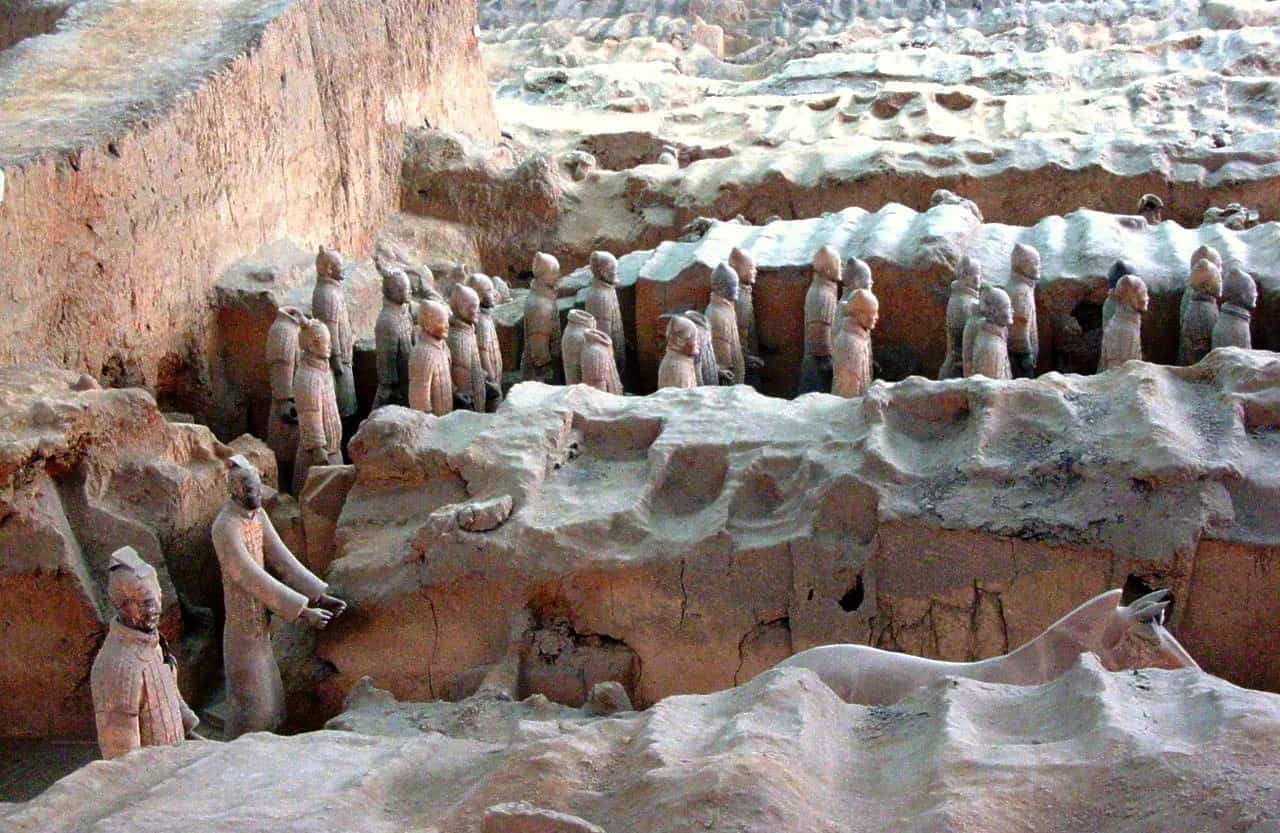
The discovery of the Terracotta Warriors marked one of the defining moments in modern archaeology. Initial excavations revealed a vast network of underground chambers, now referred to as Pits 1, 2, and 3. Archaeologists were astonished to find ranks of detailed clay soldiers, each with individualized features, hairstyles, and expressions.
-
Pit 1 is the largest, containing around 6,000 infantry and chariots arranged in battle formation.
-
Pit 2 holds cavalry units, archers, and war chariots — a tactical complement to the main force.
-
Pit 3 appears to be the command post, housing officers and generals that likely coordinated the army’s defenses.
To this day, less than half of the total site has been excavated, as modern preservation techniques continue to develop to protect the figures’ delicate pigments and clay structures.
Masterpieces of Ancient Craftsmanship
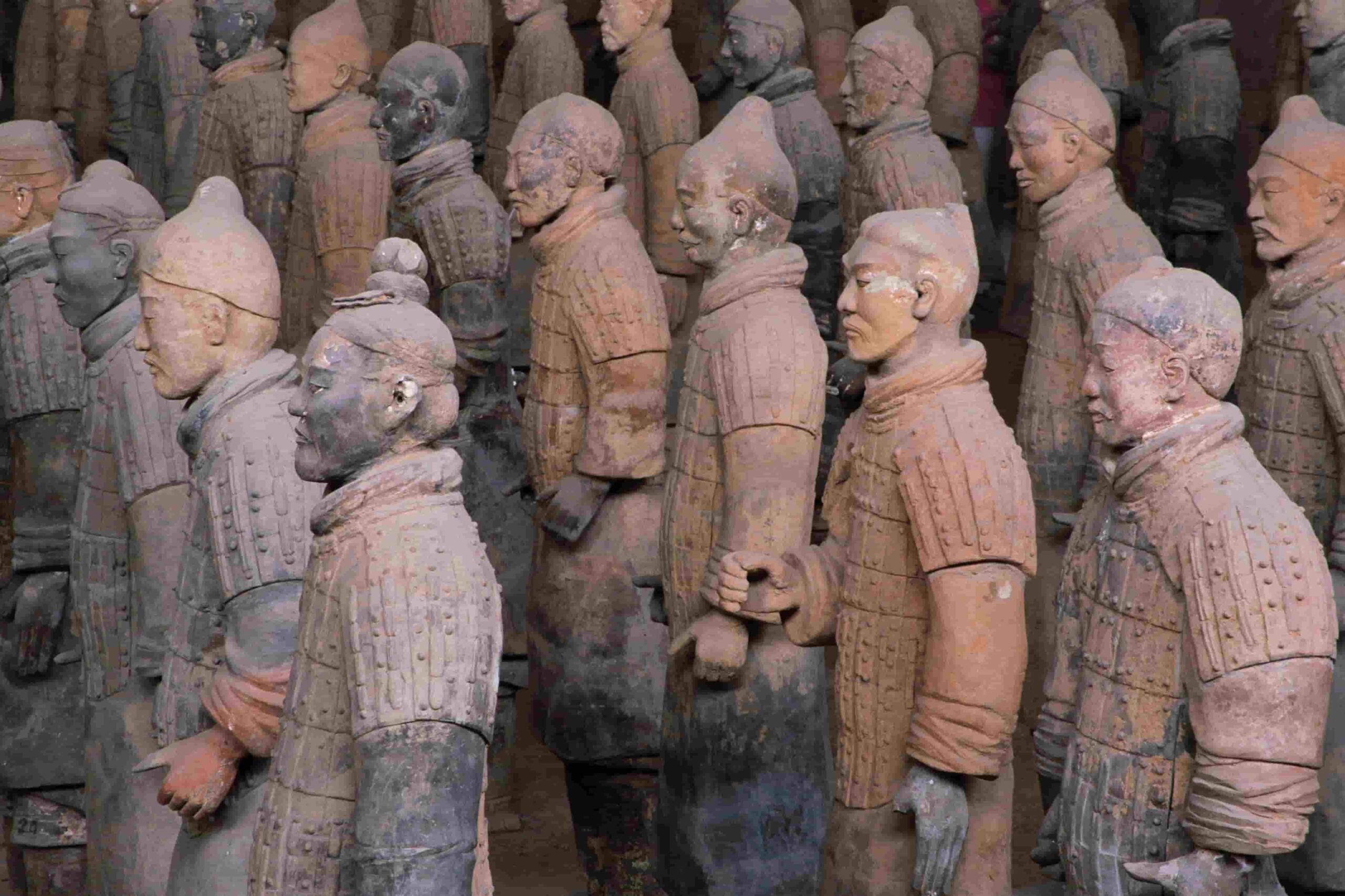
Each terracotta figure, standing about 1.8 meters tall, was modeled with extraordinary realism. No two faces are identical, suggesting a combination of standardized molds and personalized hand-carving. Artisans sculpted soldiers with varying ranks and gestures — from armored generals to kneeling archers and horse handlers — creating a display of individuality within regimental unity.
The figures were originally painted in vivid colors such as vermilion, green, blue, and purple. Though most pigments faded rapidly after exposure to air, traces of these hues still hint at their former brilliance. Bronze weapons found among the warriors, such as spears and swords, display sophisticated metallurgy and chromium-based treatments that prevented corrosion — a technique unmatched elsewhere in the ancient world.
The Mausoleum Complex of Emperor Qin
The Terracotta Army forms only a fraction of the grand burial complex of Qin Shi Huang, which remains largely unexcavated. Historical records, including the writings of the Han historian Sima Qian, describe a subterranean palace lined with jewels, rivers of liquid mercury, and miniature landscapes representing the emperor’s empire.
Modern surveys using remote sensing and ground-penetrating radar confirm that the central tomb mound, standing 76 meters high, conceals vast inner chambers. However, concerns about preservation and potential contamination by mercury vapors have delayed any attempt to open the emperor’s actual tomb.
Symbolism and Belief in the Afterlife
The Terracotta Army embodies ancient Chinese beliefs about life after death — not as a departure from existence, but as a continuation in another realm. For the emperor, who viewed himself as the ruler ordained by Heaven, creating an army of immortal guardians ensured that his cosmic authority would persist beyond mortality.
This concept of immortality also aligned with the emperor’s lifelong quest for eternal life. Qin Shi Huang’s obsession with elixirs and mythical islands of immortals is well known, yet ironically, his enduring legacy comes from this army of clay, not from the alchemical potions he pursued.
From Ruins to World Heritage
Since its opening to the public in 1979, the Terracotta Army Museum in Xi’an has become one of the world’s most visited archaeological sites, drawing millions of visitors annually. In 1987, UNESCO recognized the Mausoleum of the First Qin Emperor, including the Terracotta Warriors, as a World Heritage Site — honoring it as a masterpiece of human creative genius and a monumental testimony to imperial China’s early statecraft.
Conservation remains an ongoing challenge. Scientists employ cutting-edge techniques such as 3D scanning, photogrammetry, and pigment stabilization to reconstruct and preserve the original appearance of the figures. Each restored warrior adds to the narrative of ancient craftsmanship and the technological sophistication of the Qin period.
The Legacy of the Terracotta Soldiers
The Terracotta Army stands not merely as a relic of the past. But as a living dialogue between history and modern identity. It symbolizes the enduring power of Chinese civilization — its organization, artistry, and philosophical depth. The figures also reveal insights into ancient military hierarchy, fashion, and culture. Serving as invaluable resources for historians and archaeologists worldwide.
Beyond their historical role, the warriors continue to inspire contemporary art, film, and literature. Replicas and traveling exhibitions have introduced this underground army to global audiences. Bridging the divide between ancient China and the modern world.
Visiting the Terracotta Army Today
Travelers to Xi’an can explore the excavation pits within the Museum of the Terracotta Army. Located about 40 kilometers from the city center. The site features multiple exhibition halls showcasing the main pits, bronze chariots, and unearthed weapons. Interactive displays and digital reconstructions allow visitors to visualize how the warriors once appeared in their full, colorful splendor.
Nearby, the Qin Shi Huang Mausoleum Site Park provides walking trails and exhibitions that explore the broader imperial necropolis. Together, these attractions form one of China’s most extraordinary archaeological experiences — a journey through the legacy of its first emperor.
Eternal Guardians of an Ancient Empire
Over 2,000 years after their creation, the Terracotta Warriors remain silent. Yet powerful witnesses to the ambitions of a ruler who sought eternity. They represent the union of art, technology, and belief in the service of absolute power. Beneath the soil of Xi’an lies not only a testament to human creativity but also a haunting reminder of the cost of immortality. The eternal guardians of a man who desired to rule forever.
ALSO READ: Strike It Lucky! Amateur Detectorist Unearths 10,000 Roman Coins on First Hunt