Mortuary Temple of Hatshepsut: Architectural Marvel of Ancient Egypt
Introduction to the Mortuary Temple of Hatshepsut
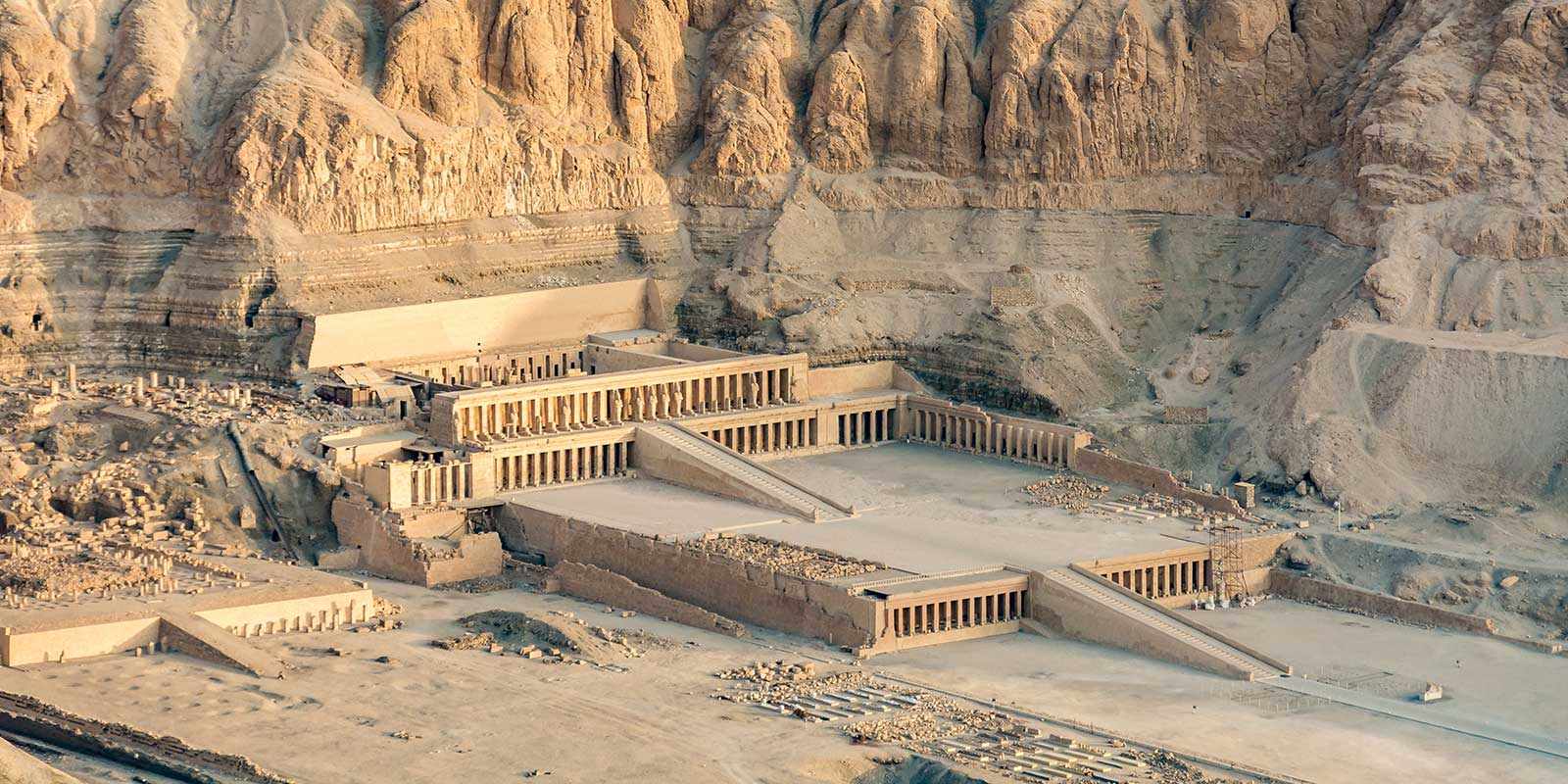
The Mortuary Temple of Hatshepsut, located at Deir el-Bahri on the west bank of the Nile near Luxor, is a stunning example of ancient Egyptian architecture and royal propaganda. Built during the reign of Pharaoh Hatshepsut (circa 1479–1458 BCE) of the Eighteenth Dynasty, this temple stands out for its unique design, terraced structure, and spectacular reliefs that narrate her divine birth and reign. It is one of the best-preserved and most fascinating ancient Egyptian temples, reflecting the power and legacy of one of Egypt’s few female pharaohs.
Historical Background
Constructed between Hatshepsut’s seventh and twentieth regnal years, the temple was designed to legitimize her reign. It was inspired by the architectural style of the earlier Temple of Mentuhotep II, built six centuries prior, but it features a wholly unique arrangement of chambers and sanctuaries. The temple served as a mortuary cult site dedicated primarily to Amun-Re, the chief deity of the Theban triad. As well as Hathor and Anubis, with shrines dedicated to these gods incorporated into the temple complex.
Architectural Design and Layout
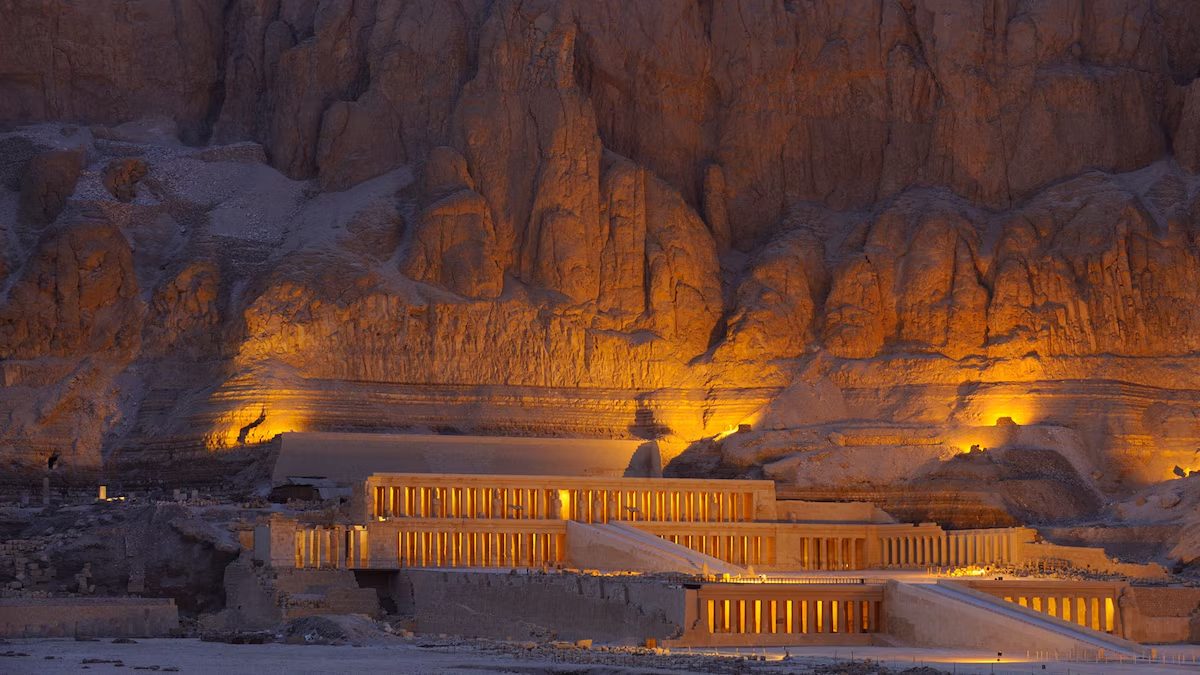
Hatshepsut’s temple is a three-tiered terraced structure built into the cliffs of Deir el-Bahri, crowned by colonnaded porticoes. The design is symbolic, aiming to harmonize natural landscape with monumental architecture. The terraces are connected by long ramps flanked by sphinxes, guiding worshippers through various sanctuaries:
-
Lower Terrace: The access point leading to the valley temple, adorned with sphinx statues.
-
Middle Terrace: Contains shrines dedicated to Hathor, the goddess of beauty and women, and Anubis, god of embalming and the afterlife. This terrace features the Hathor shrine with hypostyle halls and elaborate relief scenes.
-
Upper Terrace: The most sacred level houses the main sanctuary dedicated to Amun-Re. It contains the Royal Cult Chapel and the Solar Cult Court. Where rituals and offerings were performed to honor the gods and the deceased queen.
Notable Reliefs and Artistic Highlights
Rich and detailed reliefs cover the temple’s walls and serve both religious and political purposes. Among the most famous are:
-
Divine Birth of Hatshepsut Reliefs: These scenes establish Hatshepsut’s divine right to rule by portraying the god Amun as her father, legitimizing her reign through divine lineage.
-
Expedition to the Land of Punt: Depicted on the temple’s walls is Hatshepsut’s famous expedition to Punt, a distant land that brought exotic goods like myrrh, incense, and animals to Egypt—a symbol of her prosperous reign.
-
Festivals Depicted: The reliefs also illustrate the Beautiful Festival of the Valley and Opet Festival, important religious celebrations attended by the royal family.
Religious and Cultural Significance
The temple was more than a tomb or monument—it was a functional religious complex. It housed cults for Hatshepsut and her predecessor Thutmose I, who was also her father. The mortuary cult complex included offering halls where priests performed rituals to sustain the spirit or ka of the deceased queen. The temple reflected ancient Egyptian beliefs about death and the afterlife, emphasizing the continuity between the living and the dead.
Legacy and Preservation
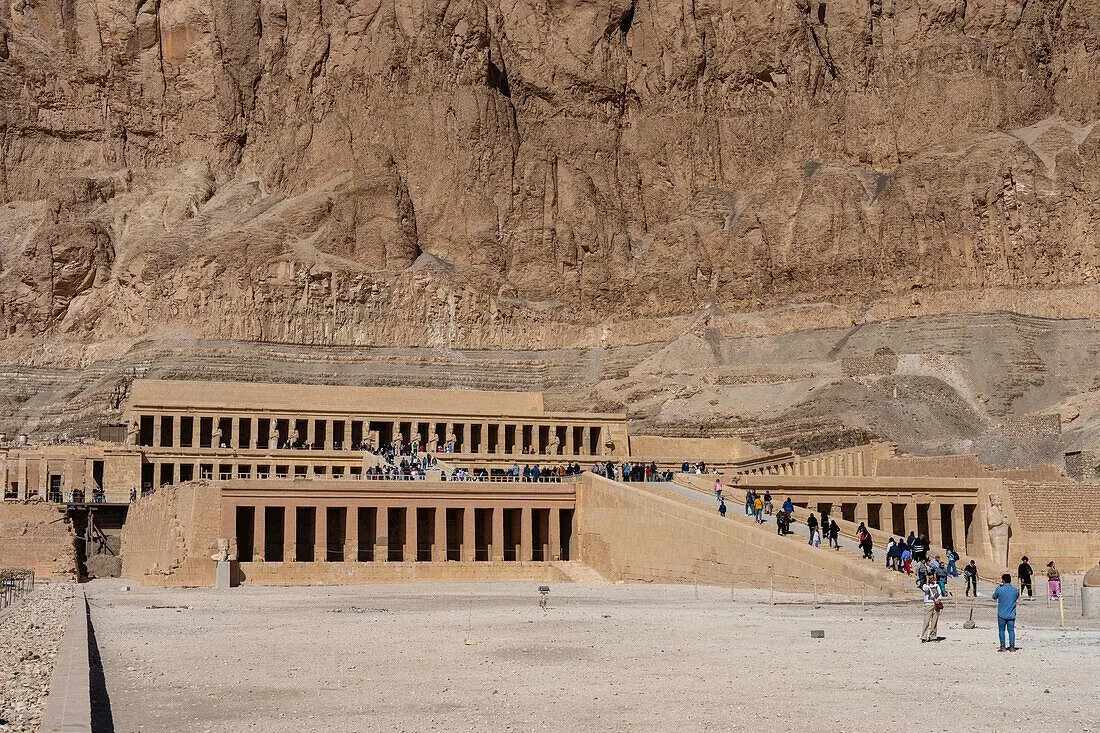
Officials erased Hatshepsut from the records for a long time after her death. Her temple endured as a significant historical and cultural landmark. It suffered damage from an earthquake in the 9th century BCE. But was used later as a burial site for priests. Today, it is a major tourist attraction and an architectural masterpiece representing Ancient Egypt’s New Kingdom. The temple offers scholars valuable insight into Egyptian politics, religion, art, and society during Hatshepsut’s reign.
ALSO READ: The Ghostly Shipwreck Tableau: A Maritime Mystery Frozen in Time