Calakmul: The Hidden Maya Metropolis of the Jungle
Deep in the heart of the tropical forests of Campeche, Mexico, lies the awe-inspiring archaeological site of Calakmul, one of the most powerful and enduring Maya city-states of the Classic Period. Once a thriving hub of political authority, commerce, and cosmic wisdom, Calakmul now stands as a monumental testament to human ambition and the inevitable reclamation of nature.
The city’s weathered limestone temples, silent plazas, and towering pyramids emerge from the dense canopy like ghosts of a once-mighty civilization, reflecting both grandeur and decay. Here, history breathes softly through the rustle of leaves and the call of howler monkeys, echoing the rhythm of a civilization long gone yet never forgotten.
The Heart of the Snake Kingdom
Calakmul—its name derived from the Maya words ca (two), lak (adjacent), and mul (mound)—translates roughly to “City of the Two Adjacent Pyramids.” This name captures the essence of its monumental architecture that dominated the jungle skyline more than a millennium ago.
At its zenith, between 250 and 900 AD, Calakmul was the political heart of what scholars call the Kaan or “Snake” dynasty. This powerful kingdom rivaled the influence of other prominent Maya centers such as Tikal and Palenque. Calakmul’s rulers wielded influence over vast territories across the lowlands, commanding alliances, staging wars, and establishing dynastic marriages to consolidate power.
The emblem glyph of Calakmul—the snake head—symbolized dominance and transformation, making it both a political and spiritual emblem of authority. This iconography reveals how deeply intertwined governance, cosmology, and identity were in Maya city-states.
Rise and Decline of a Maya Powerhouse
Calakmul’s rise to prominence was not sudden. Archaeological evidence indicates early settlement during the Preclassic period (as early as 500 BC), though it reached its political and architectural height during the Classic era. During this time, the city sprawled across several square kilometers, boasting immense plazas, over 6,000 structures, and grand pyramids rising more than 45 meters above the forest floor.
The power of the Snake Kingdom expanded through strategic warfare and diplomacy. Rivalries with Tikal—a major Maya capital located in modern-day Guatemala—defined much of the Classic Maya geopolitical landscape. Inscriptions and glyphic texts recount centuries of conflict, alliances, and betrayals, illustrating how Calakmul exerted considerable influence across the lowlands.
Yet, as with much of the Maya world, the city’s dominance waned around the 9th century AD. Environmental pressures, overexploitation of resources, prolonged warfare, and social upheaval likely contributed to Calakmul’s decline. By the Postclassic period, dense vegetation had begun its slow reclamation, shrouding the once-mighty city in silence.
Architecture and Urban Design of Calakmul
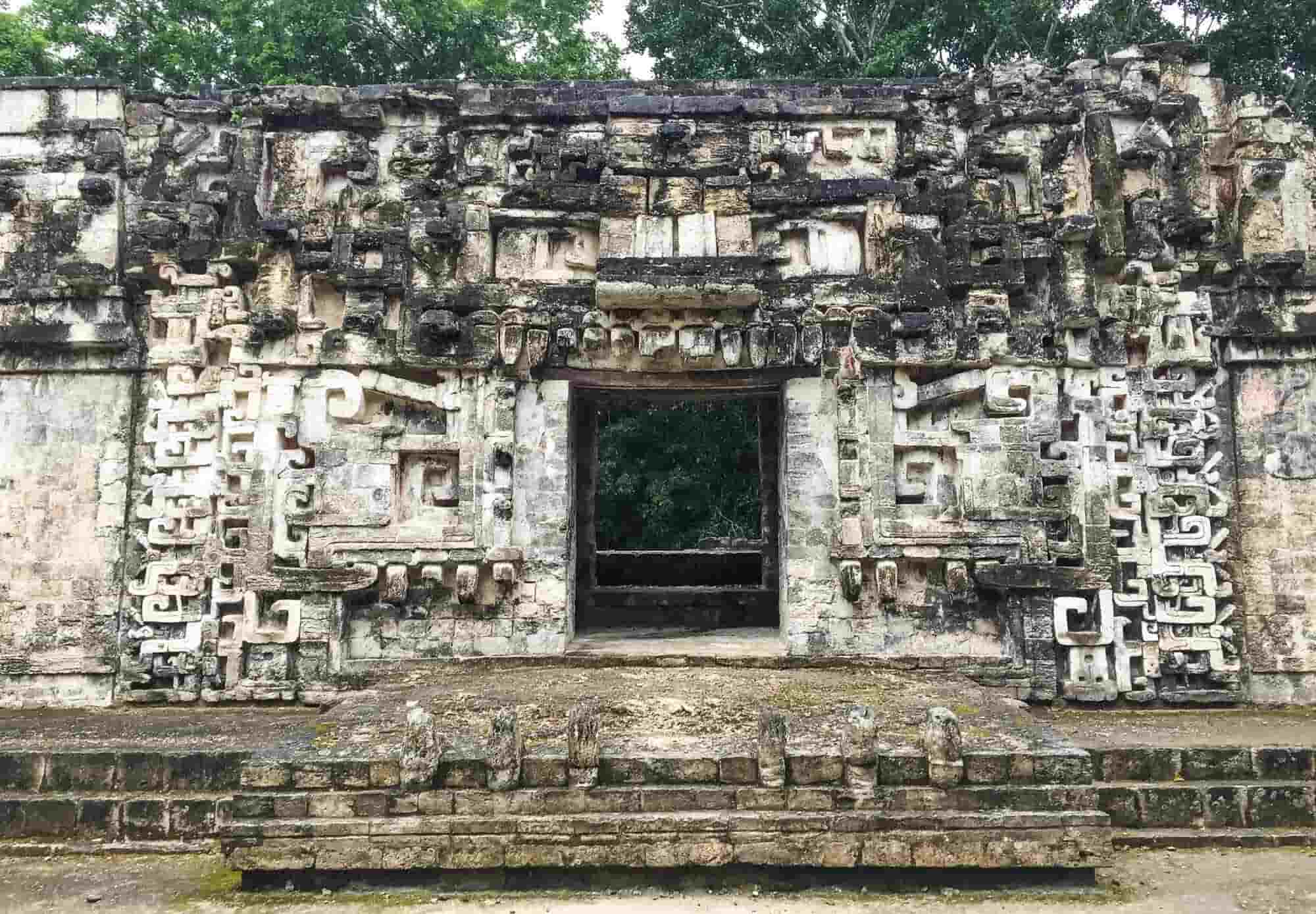
Calakmul is a masterpiece of Maya urban planning, embodying both sacred cosmology and practical governance. The site contains thousands of residential structures, palaces, stelae, and temples, interlaced with sacbeob—raised white roads—that connected the central ceremonial core to outlying settlements.
The Great Pyramids
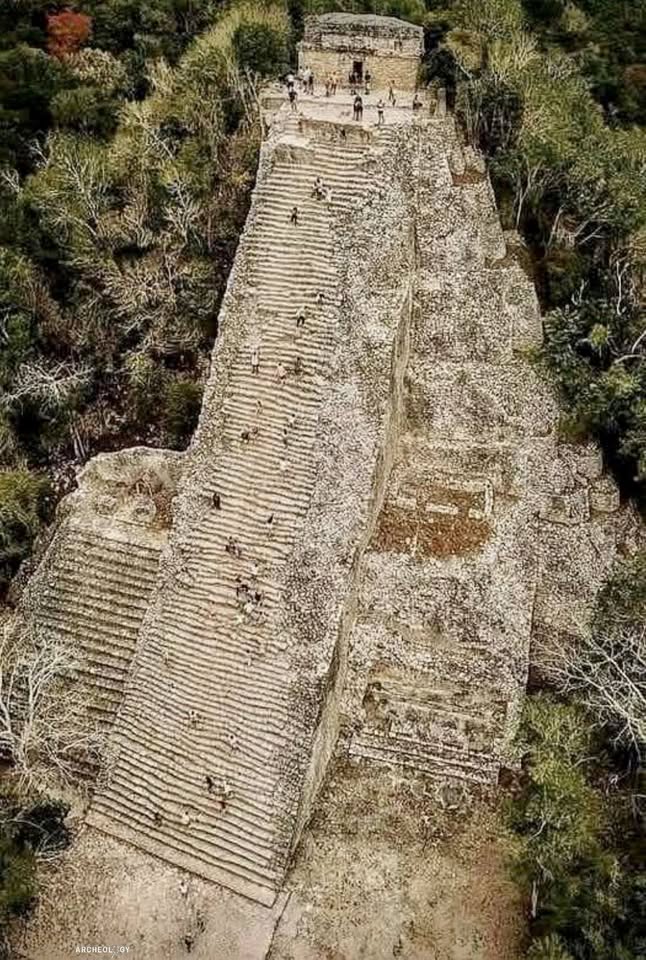
The two massive pyramids that define Calakmul’s silhouette are among the largest in the Maya world. Structure II—the tallest—stands approximately 55 meters high and was built in multiple phases. Its summit once hosted important ritual and astronomical ceremonies, symbolically aligning the ruler with celestial order.
Climbing these steps today, one witnesses the same expanse of jungle that once framed a thriving metropolis, a sweeping view unchanged for more than a thousand years.
Temples and Stelae
Calakmul’s stelae—carved limestone monuments—depict rulers, deities, and hieroglyphic narratives that chronicle victories, calendrical events, and sacred rituals. These intricate carvings form a historical archive etched in stone, revealing the lineage of Calakmul’s kings and queens.
Temples and palaces often follow astronomical alignments, synchronizing architecture with solar and lunar cycles. This celestial connection allowed the Maya to integrate cosmic order into governance and daily life, making their cities both political capitals and observatories of the heavens.
The Jungle Reclaims Its Kingdom
Today, Calakmul is enveloped by one of the largest tropical forest reserves in Mexico—the Calakmul Biosphere Reserve, a UNESCO World Heritage site that safeguards both ancient ruins and remarkable biodiversity. Jaguars, toucans, and spider monkeys roam amid ceiba trees and strangler figs that twist around crumbling stairways.
This harmonious fusion of archaeology and ecology makes Calakmul a rare example of how cultural heritage and natural heritage coexist. The ruins’ slow surrender to vegetation does not diminish their majesty—it enhances it. Lichen-covered walls and vine-entwined temples symbolize nature’s patient reclamation of human grandeur.
Each moss-fringed stair and fractured stela tells a story of balance between civilization and wilderness, ambition and impermanence.
Astronomical and Spiritual Significance
Maya cosmology infused Calakmul’s urban design with celestial meaning. Temples were oriented to mark solstices, equinoxes, and planetary movements. The city’s rulers claimed divine legitimacy by interpreting cosmic cycles and enacting rituals that mirrored celestial order.
Astronomical calculations recorded in Maya codices and depicted in carvings show a profound understanding of the universe. Calakmul’s architecture acted as a living map of the cosmos, linking human destiny to the stars.
During the Classic Period, ceremonies at dawn or dusk lit temple summits with golden light, symbolizing communion between heaven and earth. For the Maya, such moments transcended temporal politics—they reaffirmed the enduring rhythm of the universe.
Rediscovery and Modern Exploration
Though known to local communities for centuries, Calakmul remained hidden from the wider world until the early 20th century. In 1931, American biologist Cyrus Lundell documented the site while conducting botanical work, bringing it to archaeological attention.
Modern excavations, largely led by Mexican archaeologists since the 1980s, have uncovered elaborate frescoes, jade ornaments, masks, and burial chambers. These discoveries offer insight into the sociopolitical structure and daily life of Calakmul’s inhabitants, revealing a complex civilization rich in symbolism and ceremony.
Continued research, aided by LiDAR technology, has revealed extensive networks of causeways and reservoirs surrounding the central city, suggesting a highly organized urban model that sustained tens of thousands of people.
Visiting Calakmul Today
Reaching Calakmul remains an adventure into the wild heart of the Yucatán Peninsula. The journey through the dense Selva Maya adds mystique to the experience, offering glimpses of modern isolation juxtaposed with the echoes of the ancient world.
Visitors can explore the monumental structures, climb the Great Pyramid, and gaze across a jungle horizon that stretches seemingly without end—a view nearly identical to what Maya astronomers and kings once beheld.
Because of its remote location, Calakmul receives far fewer visitors than more accessible sites like Chichen Itzá or Tulum. Lending it an atmosphere of solitude and timelessness. It is a place to feel history not through crowds or noise, but through silence, wind, and the pulse of the forest.

The Enduring Legacy of Calakmul
Calakmul embodies the eternal dialogue between civilization and nature. It is both ruin and revelation, a monument to human creativity and its inevitable impermanence. Where stone and vine intertwine, one perceives the resilience of culture and the transience of power.
The city reminds us that humanity’s greatest achievements—when left untended—become part of the organic world once more. In this transformation lies the deeper beauty of Calakmul: the transition from empire to ecosystem, from dominion to harmony.
As the sun sets over its towering pyramids, shadows merge with trees, and Calakmul returns each night to the jungle’s quiet embrace. A sleeping giant of stone, dreaming of the cosmos it once sought to reach.
ALSO READ: The Atacama Giant: Chile’s Colossal Desert Sentinel