Gilded European Earrings: Echoes of 18th and 19th Century Artistry
The glittering allure of gilded European earrings from the 18th and 19th centuries carries more than mere beauty—it embodies the fusion of art, history, and mythology. Crafted with meticulous skill and steeped in classical symbolism, these adornments reveal the enduring fascination with elegance and divine imagery that characterized early modern European culture.
The Age of Ornamentation in European Jewelry
The 18th and 19th centuries marked a flourishing era for European decorative arts. With the rise of affluent classes and expanding trade networks, jewelry became a medium for both artistic innovation and social expression. Gilded metalwork emerged as a prevalent trend, offering the splendor of gold without the prohibitive cost, allowing more people to embrace the aesthetics of nobility.
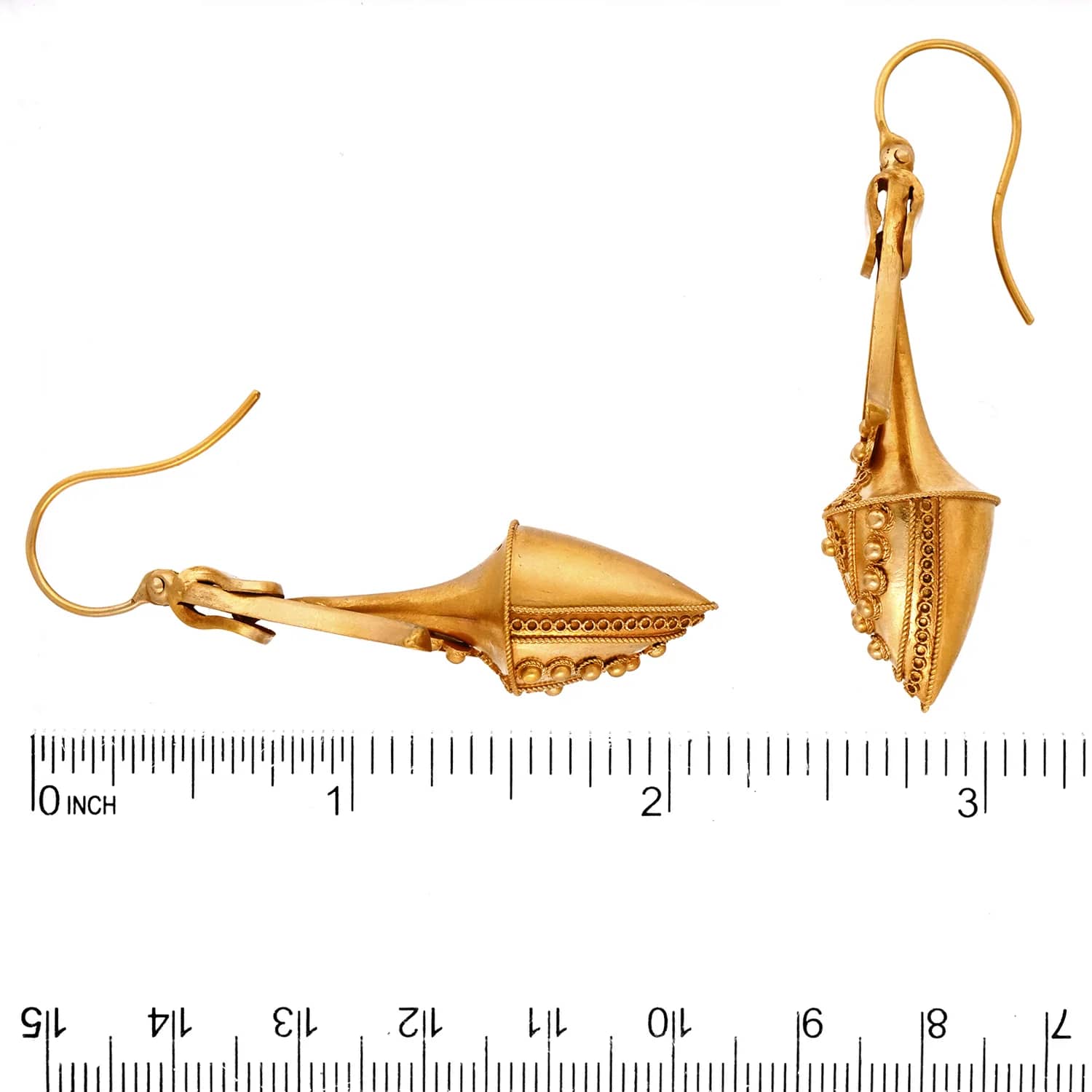
Goldsmiths and artisans developed intricate techniques to coat copper or silver with a thin layer of gold, resulting in a lasting sheen. The process, known as gilding, transformed everyday metal into a surface of radiance, symbolizing wealth, refinement, and divine favor.
The Artistic Vision Behind Winged Figures
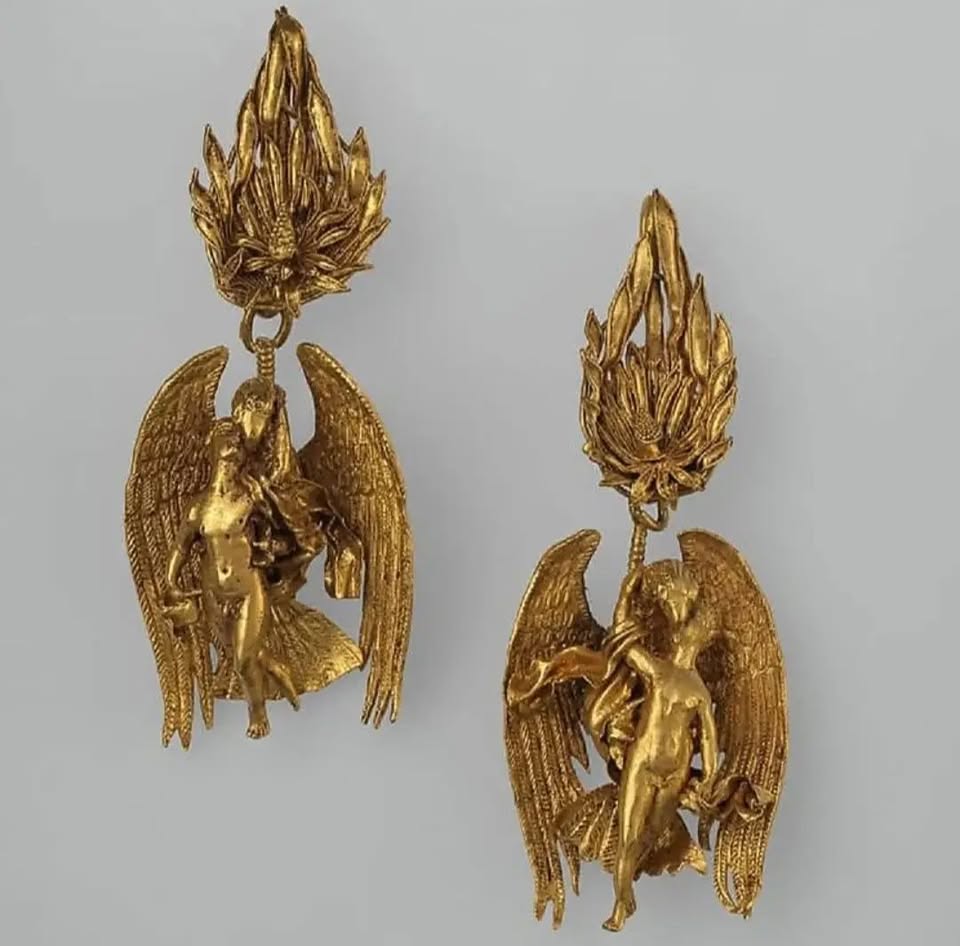
Among the most striking motifs adorning earrings of this period are winged figures—cherubs, nymphs, or mythological beings drawn from ancient Greco-Roman tradition. Their presence on small-scale jewelry reflects the enduring classical revival that swept through Europe, especially during the neoclassical period of the late 18th century.
These figures were not mere decoration; they carried layered meanings. Wings symbolized transcendence and freedom, linking the human soul to the celestial realm. Draped garments, rendered with flowing lines and delicate folds, echoed ancient sculpture, particularly the Hellenistic aesthetic that inspired countless artists and designers of the time.
Materials and Mastery: The Craft of Gilded Metalwork
While pure gold ornaments were reserved for the elite, gilded earrings achieved similar visual grandeur through technical mastery. Artisans applied thin gold leaf or used mercury gilding to coat the base metal. The result was a warm golden hue that captured light as elegantly as solid gold.
Close inspection of surviving pairs reveals impressive attention to detail. Every feather in the wings is individually defined, and the contours of the figures’ bodies reflect the sculptural precision favored by 18th- and early 19th-century goldsmiths. These earrings often feature repoussé or chased designs—methods that allowed sculptural reliefs to emerge from thin sheets of metal through fine hammering and engraving.
Europe’s Cultural Influences on Design
Design trends in jewelry mirrored Europe’s shifting cultural and artistic landscapes:
-
France: The Rococo style of the early 18th century favored ornate curves, floral motifs, and lightness, often incorporating mythological subjects like winged cupids. Later, during the Napoleonic era, neoclassicism dominated, reintroducing Greco-Roman symmetry and disciplined design.
-
Italy: Italian jewelers often incorporated Renaissance revival motifs, reviving ancient mythic themes with renewed vigor, particularly in gilded bronze and enamel.
-
England and Central Europe: Georgian and early Victorian artisans embraced sentimental and allegorical pieces, with gilded accessories reflecting both romanticism and restraint.
Each of these traditions contributed to the creation of earrings that captured timeless ideals—beauty, divinity, and emotional expression—through the shimmer of gilded metal.
Symbolism and the Classical Revival
The winged figures often featured on these earrings could represent Eros, Nike, or unnamed spirits of beauty and transformation. The symbolism resonated deeply in an age fascinated by both antiquity and enlightenment. Jewelry was not merely ornamental—it conveyed intellectual and aesthetic ideals.
In aristocratic circles, wearing such pieces reflected one’s refinement and education, a subtle declaration of taste rooted in the rediscovery of ancient civilizations. The feathers, draping, and postures of the figures often echoed sculptures in European museums, linking personal adornment to the grandeur of historical art.
Jewelry as a Bridge Between Art and Life
These gilded earrings reflect an enduring dialogue between material craftsmanship and artistic imagination. They were miniature sculptures designed for motion, catching light and attention as their wearer moved. Each curve or wingbeat translated centuries-old myths into wearable art.
For historians and collectors today, such objects offer a glimpse into a society that wove mythology into its daily life. The figures—whether angels, muses, or personifications of virtues—merged divine symbolism with human artistry.
Preservation and Patina: The Beauty of Aging
Despite their delicate structure, many gilded earrings from this period survive in remarkable condition. The passage of time has softened their luster but heightened their historical charm. Gentle tarnishing or fading gilding adds character, testifying to centuries of wear and preservation.
Restorers often face the challenge of maintaining these pieces without erasing their age. Modern conservation typically prioritizes stabilizing gilded surfaces rather than overpolishing them, preserving the authentic appearance that speaks of history’s passage.
The Role of Mythology in Adornment
Mythological motifs in jewelry carried spiritual associations as well as aesthetic appeal. The winged figure, for instance, could protect the wearer, serve as a talisman of hope, or simply represent the aspiration toward beauty and transcendence. Such symbolism resonated deeply in post-Enlightenment Europe, where classical knowledge was both intellectual heritage and fashion inspiration.
These earrings thus functioned as intimate storytellers—objects through which wearers could connect with ideals of immortality, virtue, and divine grace.
Discovering the Stories They Whisper
Beyond their material value, gilded European earrings embody the intersection of memory and art. Each pair has witnessed generations of change—from candlelit salons of the Enlightenment to Victorian parlors and present-day museum displays. In the faint gilding and graceful forms, one can imagine the artisans’ devotion and the wearers’ aspirations.
To behold them is to stand at the threshold of history—where craftsmanship immortalized emotion and creativity in enduring metal. Their presence serves as a reminder that beauty, though fleeting in time, achieves a kind of eternity through art.
Conclusion: Eternal Elegance of Gilded Heritage
The gilded earrings of 18th- and 19th-century Europe are more than forgotten ornaments; they are echoes of an age that revered balance, mythology, and refinement. Each pair captures a moment when human hands gave form to celestial ideals. Through meticulous craftsmanship, cultural interplay, and mythic imagination, these earrings remain potent symbols of the timeless bond between beauty and belief.
Their legacy endures not just in museums or private collections, but in the broader story of how humanity seeks to immortalize its spirit through artistry. In every graceful curve and feathered wing, the ancient dialogue between heaven and earth continues—reflected in the shimmer of gilded gold.
ALSO READ: The Ancient Roman Relief with a Musical Instrument: An Artistic Echo Through Time