The Oseberg Wagon: A Masterpiece of Viking Age Art and Craftsmanship
The Oseberg Wagon is one of the most remarkable artifacts excavated from the Viking Age, dating back to the early 9th century. Found within the prestigious Oseberg burial mound near Oslo Fjord in Norway, this wagon remains in pristine condition, showcasing richly detailed carvings that reflect the high artistic and craft standards of the Viking era. Alongside a well-preserved Viking longship, the wagon was part of a royal burial dated to around 834 AD, providing invaluable insights into Viking material culture and burial practices.
Discovery and Archaeological Context
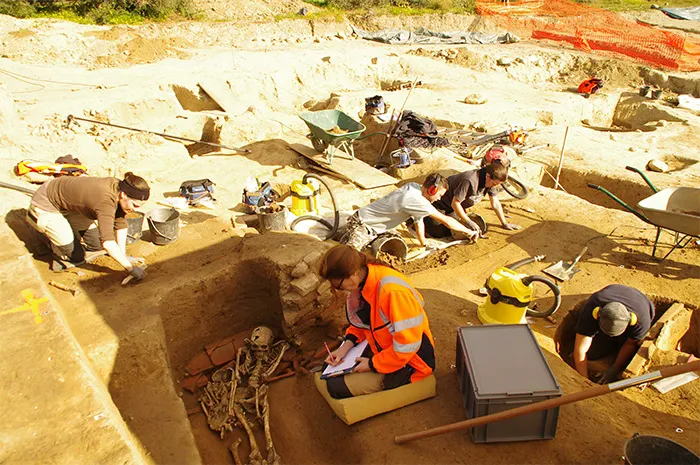
Discovered in 1903 during an excavation led by archaeologists Gabriel Gustafson and Haakon Shetelig, the Oseberg Wagon was housed within a large burial mound on the Oseberg farm near Tønsberg, Norway. The mound contained a ship burial that included the remains of two women and a trove of artifacts such as wooden sledges, textiles, jewelry, and the wagon itself. Scientific dating and dendrochronological studies reveal the wagon and ship date from the early 9th century, around 834 AD, placing the finds squarely within the Viking Age.
Description and Craftsmanship
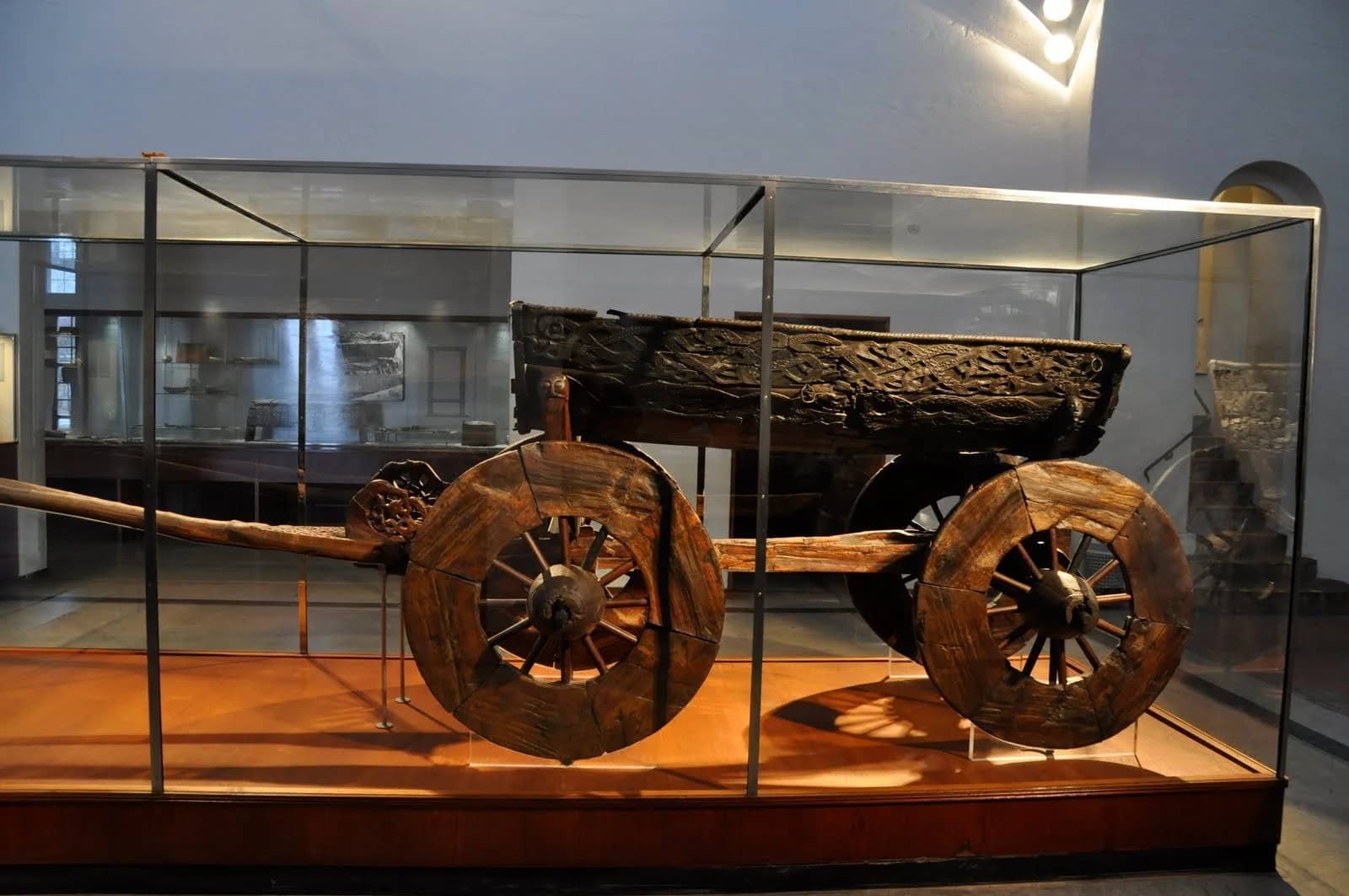
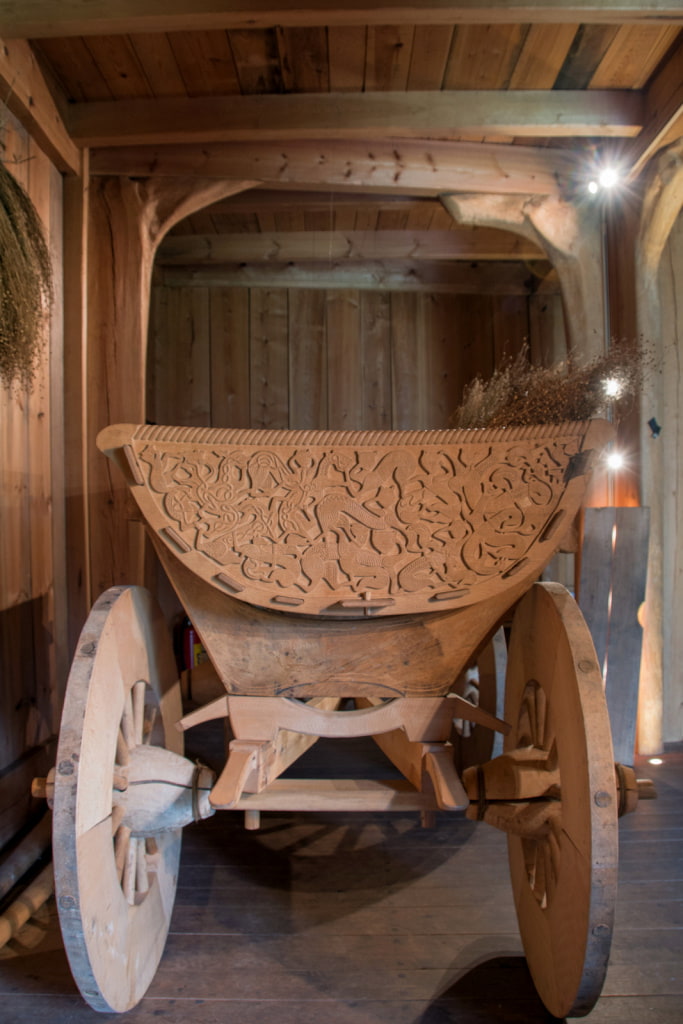
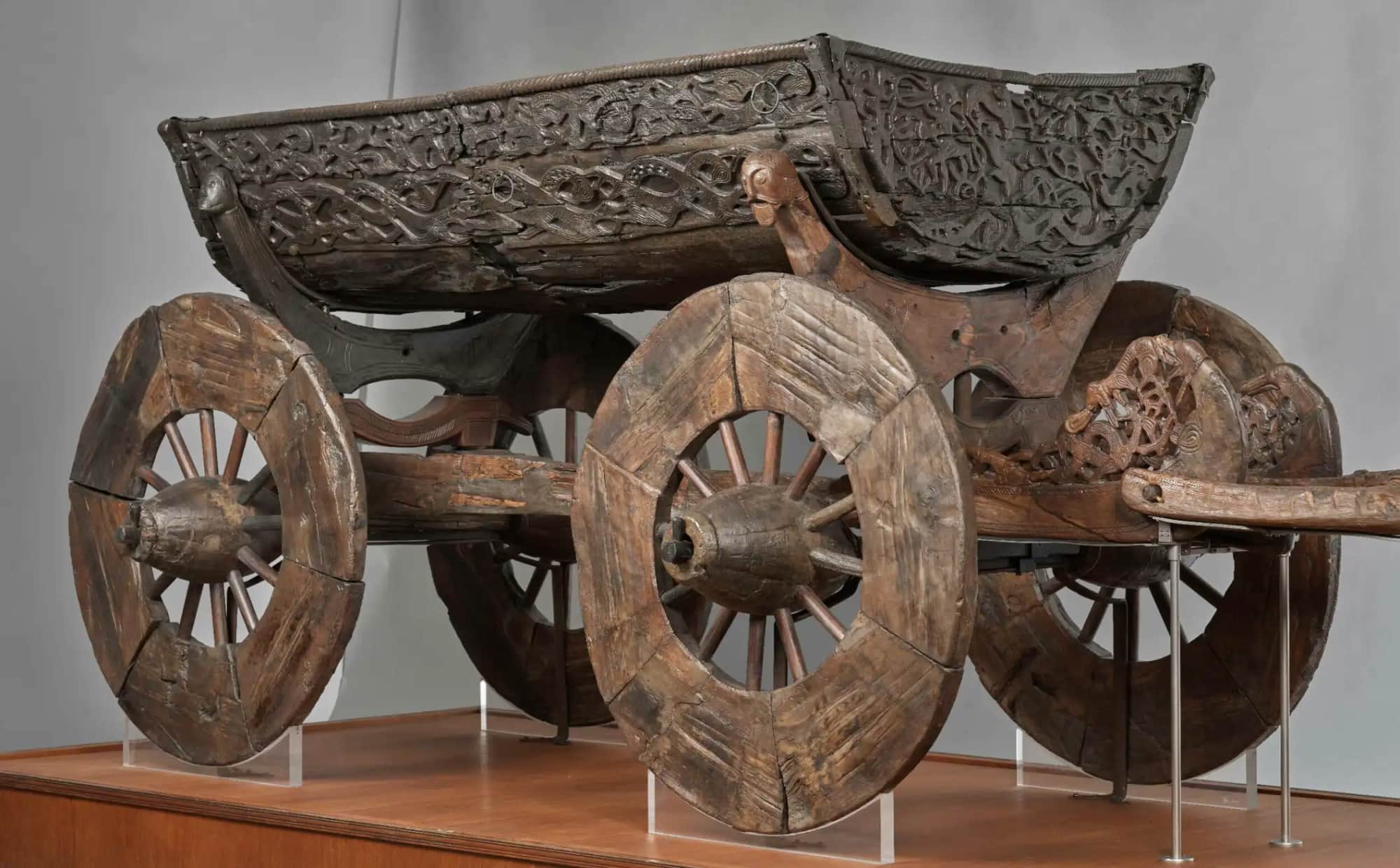
The wagon measures approximately 2 meters by 1 meter and is constructed from several types of wood, including beech, oak, and ash. Its structure is exceptional in both quality and design, with intricately carved wooden panels that depict complex patterns, mythological figures, warriors, horned beings, and possible representations of cats associated with the Norse goddess Freya. These detailed carvings are believed to carry symbolic and religious significance, with some scholars positing the wagon could have been used ceremonially, possibly for transporting idols or during ritual processions.
The precision of the carving and the choice of durable wood species highlight the sophisticated woodworking skills of Viking craftsmen. The wagon’s preservation is extraordinary, maintaining vivid and richly detailed decorations after more than eleven centuries underground, which testifies to both the craftsmanship and excellent burial conditions.
Function and Symbolism
While the exact function of the Oseberg Wagon remains debated, scholarly interpretations range from practical transport to ritualistic or symbolic use. Germanic pagan traditions mention processional wagons used to carry wooden idols of deities during sacred ceremonies. The motifs on the wagon, especially the felines linked to Freya, reinforce the possibility of a religious purpose.
The wagon’s presence alongside elite burial goods suggests. It belonged to a person of high status—likely a queen or noblewoman. As indicated by the double female burial in the mound. The combination of everyday objects with ornate items. Offers a glimpse into Viking beliefs about the afterlife and the social status of the deceased.
The Oseberg Burial Mound’s Significance
The Oseberg grave mound remains one of the richest Viking Age archaeological sites. Offering unmatched insights into Viking culture, social hierarchy, and artisanal capabilities. The ship and its contents, including the Oseberg Wagon, are not only artistic treasures. But also historical documents revealing Viking maritime technology, burial rites, and symbolic communication.
The burial chamber within the ship housed the two women’s remains. Surrounded by vibrant textiles, household items, and animal remains. Reflecting the wealth and complexity of Viking social structures.
Preservation and Display
Today, the Oseberg Wagon, along with the Viking ship and other artifacts from the burial. Are displayed at the Viking Ship Museum in Oslo, Norway. The museum exhibition allows visitors to appreciate the intricate woodwork and cultural richness of the Viking Age. The Oseberg ship and wagon continue to be critical objects of study for archaeologists, historians, and art historians. Interested in Scandinavian Viking heritage.
Replicas of the Oseberg ship have been attempted to test its seaworthiness. With modern findings suggesting it was indeed a seaworthy vessel. Though the wagon itself was likely for ceremonial or display purposes rather than everyday transport..
Conclusion
The Oseberg Wagon stands as a testament to the artistry, religious beliefs, and social hierarchies of the Viking Age. Its exquisite carvings and exceptional preservation. Make it a centerpiece of Viking archaeology and a symbol of Norway’s rich cultural history. As part of the Oseberg burial. The wagon enriches our understanding of Viking craftsmanship and the spiritual life of one of Europe’s most fascinating historical periods.
ALSO READ: Grianán of Aileach: The Ancient Stone Fortress of Ulster