The Pyramidion of Amenemhat III: The Capstone of the Black Pyramid (1860 BC-1814 BC)
The Pyramidion of Amenemhat III is a remarkable artifact from ancient Egypt that once crowned the Black Pyramid at Dahshur. Crafted around 1860 BC to 1814 BC during the late 12th Dynasty of the Middle Kingdom, this capstone embodies the religious, cultural, and architectural achievements of the period. Its discovery and preservation have provided significant insights into the beliefs and artistry of Ancient Egypt.
Historical Context and Construction
Amenemhat III reigned during one of Egypt’s most prosperous and stable periods. The Black Pyramid, his funerary monument located at Dahshur, was constructed as a grand royal tomb designed to ensure the king’s journey to the afterlife. The pyramidion, or capstone,, served as the apex of the pyramid, symbolizing the pharaoh’s ascension to the divine.
Made from a single piece of polished black basalt (often referred to as black granite), the pyramidion measures approximately 1.85 meters at the base and 1.4 meters high, weighing about 4.5 tonnes. This size and material suggest a deliberate choice to reflect both durability and the theological symbolism of the dark fertile Nile silt combined with the gleaming sun rays reflecting off its polished surfaces. The capstone’s bottom edges were expertly undercut to fit securely atop the pyramid’s summit, underscoring advanced engineering.
Religious Symbolism and Inscriptions
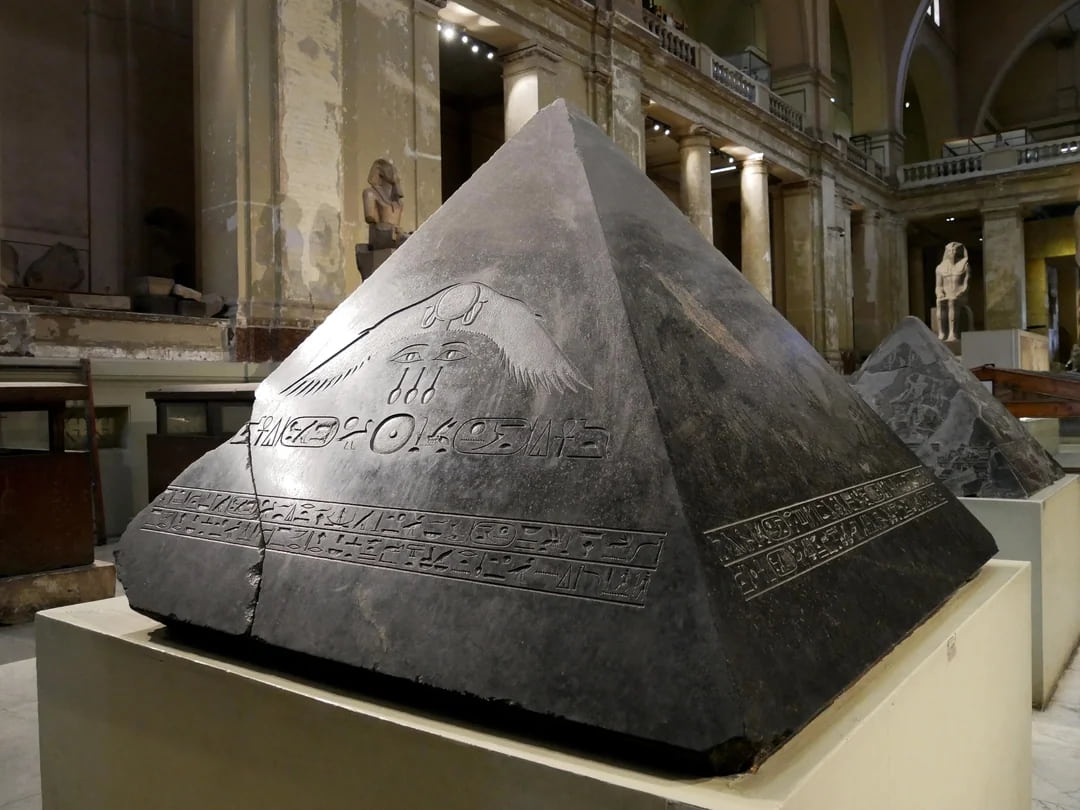
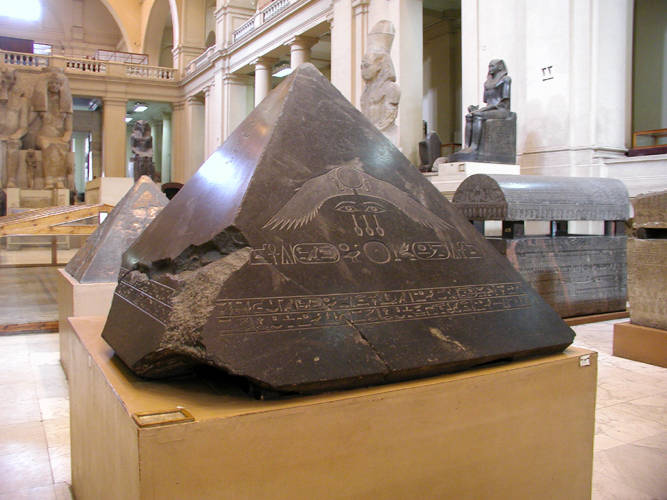
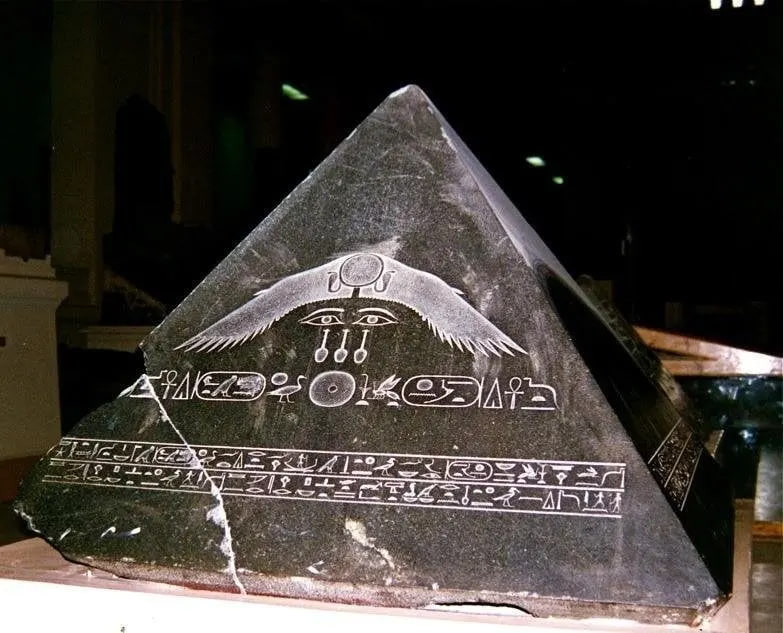
The pyramidion of Amenemhat III is richly inscribed on its four upper faces. These inscriptions and symbols serve as powerful religious declarations linking the pharaoh to solar deities and divine protection:
-
The eastern face displays a winged sun disk flanked by two uraei (rearing cobras), symbols of protection.
-
Below, two wedjat eyes represent the all-seeing eyes of the king, a motif of vigilance and divine vision.
-
Further down, three “nefer” hieroglyphs stand for beauty, perfection, and goodness.
-
At the base of the eastern face is a sun disk symbolizing the god Ra, the supreme solar deity, with inscriptions reading “Amenemhat beholds the perfection of Ra.”
Each face includes lines of texts invoking blessings and eternal life for the king. The inscriptions describe Amenemhat III as the “lord of the two lands” and “Son of Ra,” emphasizing his divine kingship and his destined transformation into a god after death. The northern face highlights his exalted status, the southern refers to his connection with Anubis and the western desert, and the western face features Sokar-Osiris and Ptah, gods associated with resurrection and power.
These inscriptions not only served decorative purposes but played a crucial role in the pharaoh’s funerary cult and the ancient Egyptian belief in rebirth and immortality. The pyramidion was conceived as a magical object symbolizing the sacred benben stone. The mythical primordial mound where creation began and the first rays of the sun touched the earth.
Rediscovery and Preservation
The pyramidion was rediscovered in 1900 by French Egyptologist Gaston Maspero during an inspection at Dahshur. It was found partially buried in sand on the eastern side of the Black Pyramid. Remarkably well-preserved and intact except for a broken corner. The pyramidion’s excellent condition and intricate inscription detail. Have made it one of the most important surviving relics of Middle Kingdom pyramid building.
Today, the Egyptian Museum in Cairo houses the pyramidion, where visitors can admire it as a testament to Egypt’s ancient architectural and religious genius. Some scholars speculate that workers might never have actually placed the pyramidion atop.
The pyramid due to damage or political changes in later periods. Notably, traces of erasure on the god Amun’s name on the capstone. May suggest alterations linked to Akhenaten’s religious reforms in the 18th Dynasty.
Significance and Legacy
The Pyramidion of Amenemhat III serves multiple layers of significance:
-
Architectural Apex: It was the literal pinnacle of the Black Pyramid, symbolizing the pharaoh’s link between earth and sky.
-
Religious Symbol: Its solar motifs and hieroglyphic texts reinforce ancient Egyptian theology centered on the sun god Ra and the eternal rebirth of kings.
-
Artistic Masterpiece: The precision in carving, polishing, and inscription exemplifies the skilled craftsmanship of Middle Kingdom artisans.
-
Cultural Insight: The pyramidion offers modern scholars valuable information about funerary practices, royal ideology, and the political-religious landscape of 12th Dynasty Egypt.
This capstone not only crowned a pyramid but also encapsulated the spiritual aspirations of an era. Where death was but a gateway to eternity. It remains a powerful symbol of the divine nature of kingship and the civilization’s enduring quest for immortality.
ALSO READ: The Remarkable Painted Limestone Potsherd of an Ancient Egyptian Acrobat (1200 BC)