Obruk Kızören Obruk Han: A 13th Century Seljuk Caravanserai in Karatay, Türkiye
The Historical Significance of Obruk Kızören Obruk Han
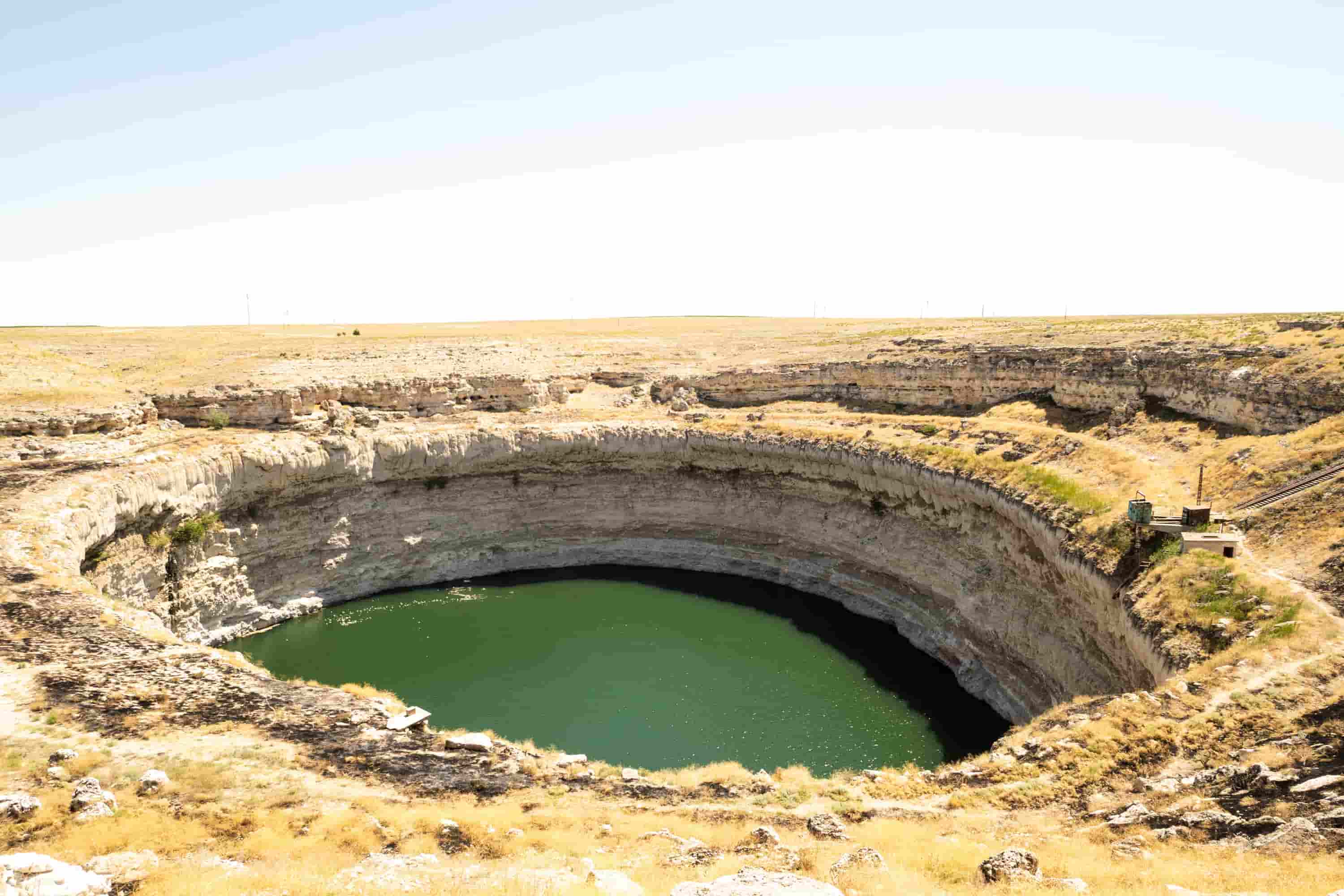
Obruk Kızören Obruk Han was constructed during the height of the Seljuk Sultanate of Rum, most likely between 1220 and 1250 CE. Its strategic location near the Kızören sinkhole, a dramatic geological feature, made it a notable stop for travelers journeying along the Silk Road. The han’s name is derived from the nearby sinkhole, which is known locally as “Obruk”. Historical sources, including references by Mevlana and Ibn Bibi, confirm its existence and importance during the Seljuk period.
Seljuk Caravanserais: Hubs of Trade and Culture
Caravanserais were more than just inns; they were fortified complexes that provided lodging, stables, water, and sometimes even baths, markets, and infirmaries for travelers and their animals. Seljuk caravanserais were typically built every 30 kilometers along major trade routes, ensuring that travelers could rest safely after a day’s journey. These structures were funded by foundations and wealthy patrons, and their services were often free of charge.
Unique Architectural Features of Obruk Han
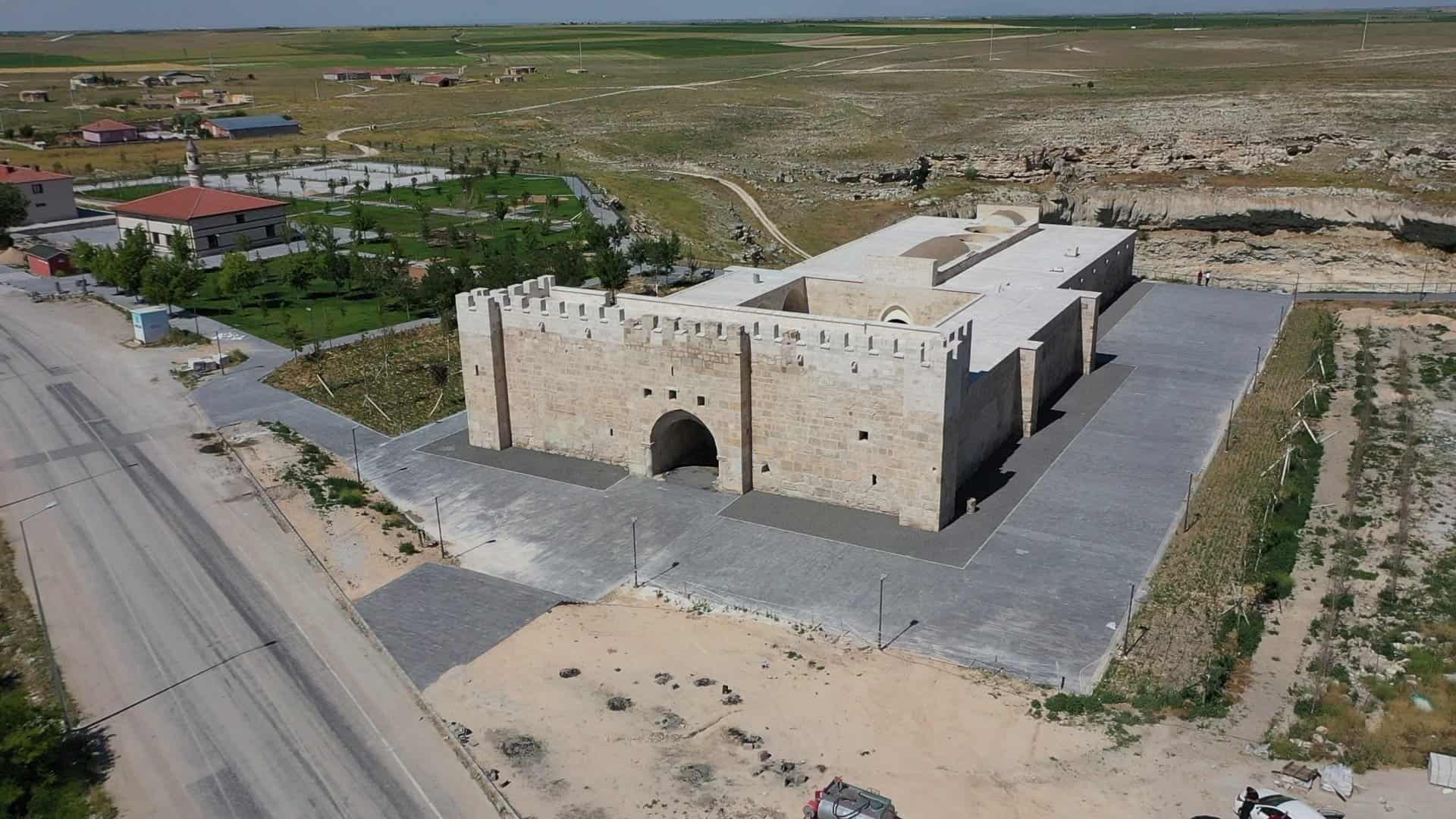
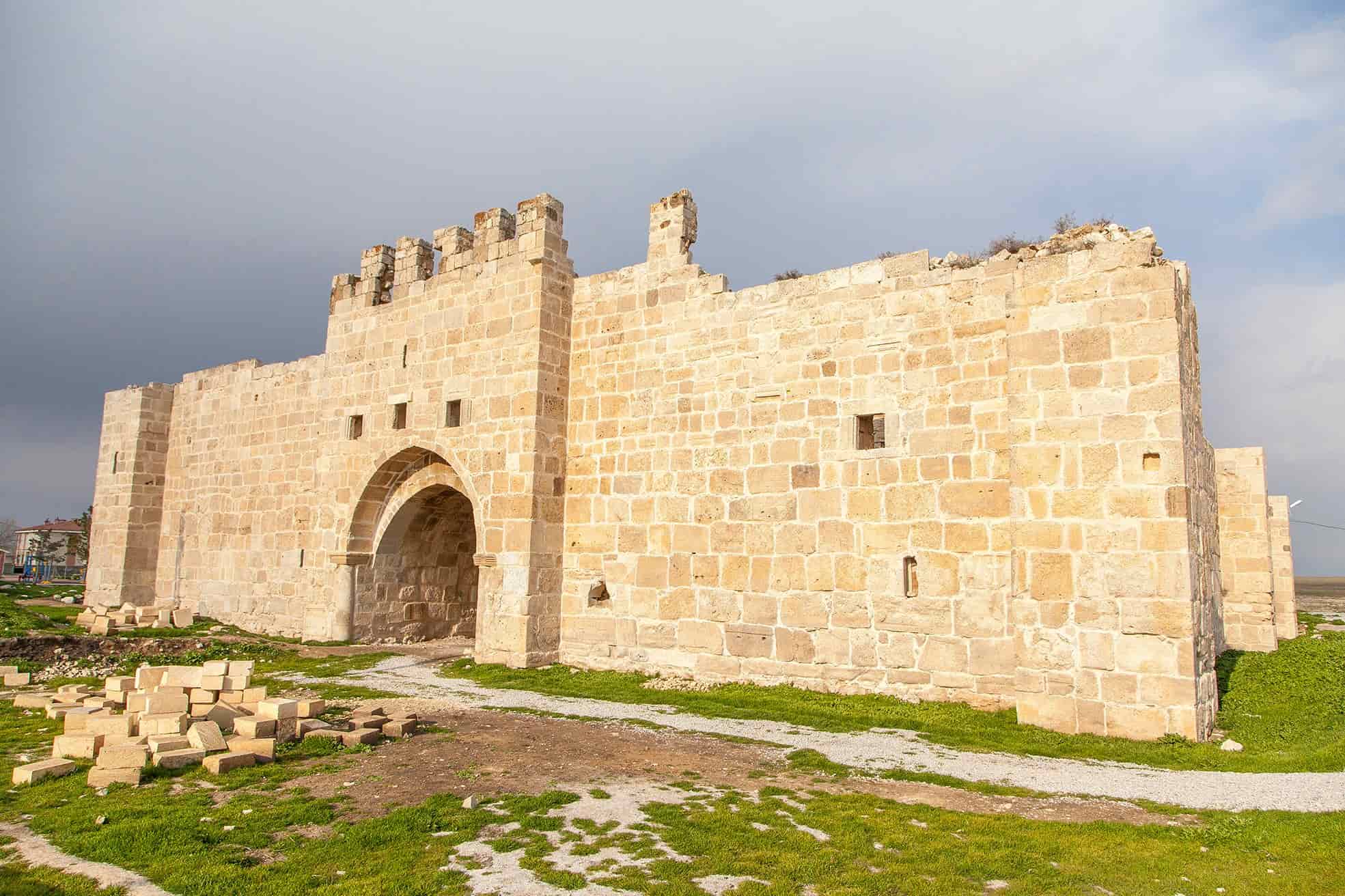
Obruk Han stands out for its distinctive architectural features. The building follows the typical Seljuk caravanserai layout. With a large open courtyard leading to a covered section at the rear. The main entrance is two-storeyed and fortified, reflecting the need for defense in a remote and sometimes dangerous region. The facade is severe, with minimal decoration, and features a unique set of six turrets with dentils, giving it a castle-like appearance.
The han’s construction incorporates a variety of spolia stones—reused materials from earlier buildings—which contribute to its unique aesthetic and historical value. The covered section of the han is supported by square piers and features a central nave with a dome. Providing lighting and ventilation for the interior spaces. Support towers of different dimensions reinforce the courtyard, and traces of a canal system suggest it likely provided water for travelers and animals.
The Role of Obruk Han on the Silk Road
Obruk Han stood on a heavily traveled caravan route that connected Konya with Aksaray and other important cities in the region.
Its location near the Kızören sinkhole made it a memorable stop for travelers. Who could rest and replenish their supplies before continuing their journey. The han’s proximity to other Seljuk caravanserais, such as Sultanhanı and Zazadin Han. Highlights its importance as part of a network of waystations that facilitated trade and cultural exchange along the Silk Road.
Restoration and Current State
Obruk Han has undergone several restoration efforts in recent years, with the most recent work beginning in 2007. Despite these efforts, scavengers and careless restorations have destroyed much of the original material, and restorers have replaced many of the spolia stones with tufa stones.
However, the han remains a significant historical site and is open to visitors. Offering a glimpse into the architectural and cultural heritage of the Seljuk period.
Visiting Obruk Kızören Obruk Han
Obruk Han is located approximately 74 kilometers from Konya, in the village of Obruk, off the main Konya-Aksaray road. The site is easily accessible by car and is a popular destination for those interested in Seljuk history and architecture. Visitors can explore the han’s unique features. Including its two-storeyed entrance, fortified facade, and the dramatic backdrop of the Kızören sinkhole.
Conclusion
Obruk Kızören Obruk Han is a remarkable example of Seljuk caravanserai architecture. Reflecting the ingenuity and cultural significance of the Seljuk Sultanate of Rum. Its strategic location, unique design, and historical importance make it a must-visit site for anyone interested in the history of the Silk Road and Anatolian architecture.
ALSO READ: The Skidi Pawnee Star Map: Ancient Plains Astronomy and Cultural Legacy