Silent Echoes of the Altai: Iron Age Leather Shoes and Burials Preserved in Permafrost
Silent Echoes of the Altai: Iron Age Leather Shoes and Burials Preserved in Permafrost
High in the rugged heart of Central Asia, the Altai Mountains cradle secrets of the distant past beneath their frozen surface. Within layers of permafrost, archaeologists recently unearthed a burial site dating to the early Iron Age, around the 8th century BCE. Among the finds were remarkably preserved leather shoes and delicate skeletal remains—testimonies to human perseverance and artistry in an unforgiving land.
The Frozen Tapestry of Time
The Altai Mountains, straddling modern-day Russia, Mongolia, Kazakhstan, and China, form a crossroads of ancient civilizations. For millennia, nomadic groups traversed these highlands, forging paths of trade, conquest, and survival. Their lives were shaped by the tundra winds, their customs bound to the rhythms of the steppe. In this landscape, permafrost became nature’s vault—a cold archive that guards relics untouched by decay.
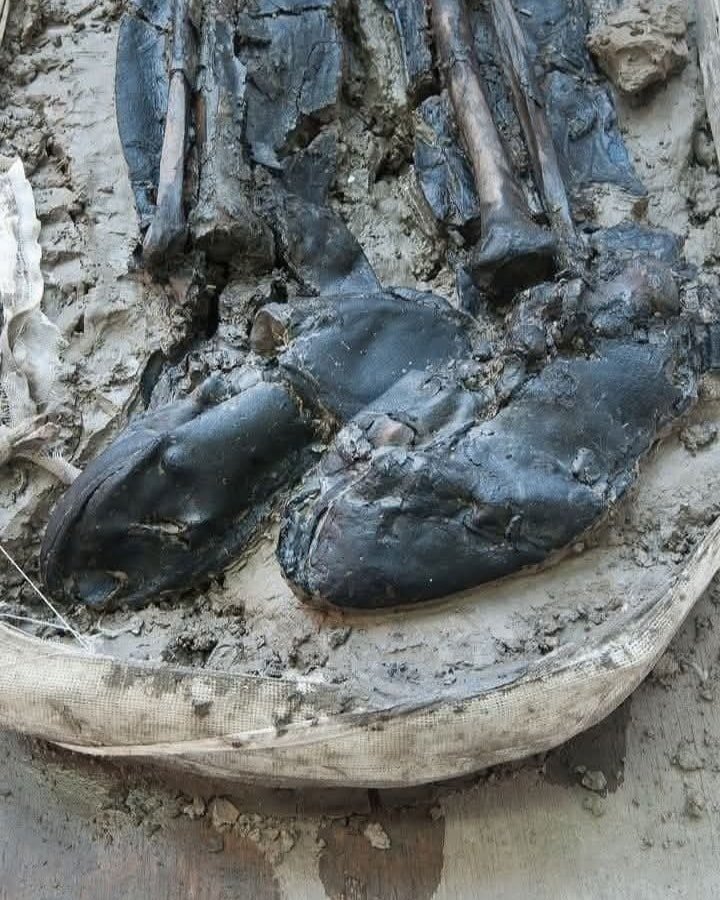
It was within this icy soil that archaeologists discovered a small burial pit, sealed by centuries of frost. Inside lay the skeletal remains of an adult, carefully positioned, still wearing leather shoes whose fine stitching defied time itself.
Craftsmanship Frozen in Detail
Despite being nearly 2,800 years old, the shoes retained remarkable integrity. The leather was softened by oils once drawn from animal fat, and the seams were neatly stitched using sinew thread. Traces of wear along the soles indicated their use in life before being repurposed for the grave. Such attention to detail points to both functional design and ritual significance.
Close examination under microscopy revealed patchwork reinforcement on the toe caps, suggesting repairs—evidence of a practical mindset typical of early Iron Age nomads. These shoes were not simply accessories but essential gear for mobility across rough steppe terrain.
In comparison to other Eurasian artifacts of the same era—such as Scythian boots found in the Pazyryk burials—these Altai shoes reflect shared regional techniques yet exhibit unique stylistic traits, possibly linked to a smaller tribal community adapting inherited designs to local conditions.
Whispers of a Ceremony Beneath the Frost
Around the skeletal remains were fragments of textile fibers, faint residues of red pigment, and traces of ochre-stained soil. Scholars interpret these as indicators of a ceremonial burial. The individual may have been a hunter, herder, or traveler whose life ended far from his dwellings. The deliberate positioning of the body and care invested in the footwear suggest respect and ritual, hallmarks of early spiritual belief systems.
The ochre and textile remnants point toward funerary traditions centered on purification and protection for the journey into the afterlife. These rituals align closely with early steppe cultures preceding the Scythian horizon, where burials symbolized passage rather than finality.
Insights into Early Iron Age Life
Finds such as this extend far beyond the objects themselves—they reveal glimpses of life in one of prehistory’s most dynamic regions. The Altai during the early Iron Age was a melting pot where horse domestication, metal use, and cross-continental exchange were transforming societies.
Analysis of leather fibers and tanning methods indicates that animal hides, likely from cattle and goats, were skillfully processed using organic compounds derived from tree bark. This demonstrates not only a keen understanding of material properties but also resource management suited to a mobile lifestyle.
Accompanying soil samples revealed microscopic grains of millet and traces of animal dung, hinting at nearby camps or seasonal dwellings. Every fragment contributes to reconstructing the economic rhythm of these ancient nomads: moving with herds, crafting tools, and honoring their dead with humble precision.
The Power of Permafrost Preservation
One of the most extraordinary aspects of the Altai discovery lies in its state of preservation. Permafrost, with its subzero stability, halts bacterial decomposition and prevents oxygen exposure. As the planet warms, these natural time capsules are beginning to thaw, releasing not only ancient pathogens but also invaluable archaeological insights.
The Altai burials thus stand as both a scientific treasure and a cautionary reminder. Future generations may lose these frozen archives if climatic shifts continue unabated. Each melt season threatens to dissolve materials that have endured nearly three millennia.
Reconstructing Ancient Footsteps
Digital modeling has enabled researchers to reconstruct the shoes and study their ergonomics. Using 3D imaging, scientists determined the original size, curvature, and construction sequence, revealing a surprisingly modern approach to comfort and function. The shoes’ symmetrical pattern and layered soles offered stability—qualities essential for traversing mountainous terrain.
Such reconstructions bridge gaps between archaeological study and experimental archaeology. They allow modern researchers, and even shoemakers, to replicate early designs that could influence present-day sustainable leather crafting.
A Museum of Silence
Standing at the excavation site, where icy winds sweep across the tundra, one feels the quiet dignity of a life once lived. The grave, modest and solitary, has become a museum of silence. The brittle bones and weathered leather are not just artifacts; they are voices from a time when endurance was the measure of every breath.
Each stitch in the leather speaks of human ingenuity. Each grain of ochred soil recalls the love, fear, and faith that bound communities together in a harsh, unpredictable world. In the stillness of permafrost, such stories persist—neither myth nor memory, but fragments of truth suspended in ice.
The Broader Legacy of Altai Archaeology
The Altai region has yielded some of the most remarkable finds in Central Asian archaeology, from the tattooed mummies of Pazyryk to Bronze Age petroglyphs etched along rocky cliffs. These discoveries form a continuous narrative of adaptation, artistry, and cultural exchange.
The burial with its preserved shoes now joins this lineage. It highlights how innovation, even in prehistory, was born from necessity—the need to survive, travel, and express belonging. The craftsmanship evident in that simple footwear echoes through time, linking ancient tribes to human creativity across ages and continents.
Conclusion: Echoes Beneath the Ice
The Iron Age burial in the Altai Mountains is more than an archaeological curiosity; it is a story of endurance, devotion, and remembrance. Frozen beneath centuries of silence, the shoes and remains invite reflection on humanity’s shared past—the instinct to create, to honor, and to persist even against the coldest odds.
As scientists continue to uncover and preserve these relics, the Altai whispers its ancient truths. Beneath the frost lies a universal message: every mark of human craftsmanship, however small, leaves an echo in the earth.