The Tragic Wedding Tombstone of Noratus Cemetery: A 10th-Century Armenian Love Story Carved in Stone
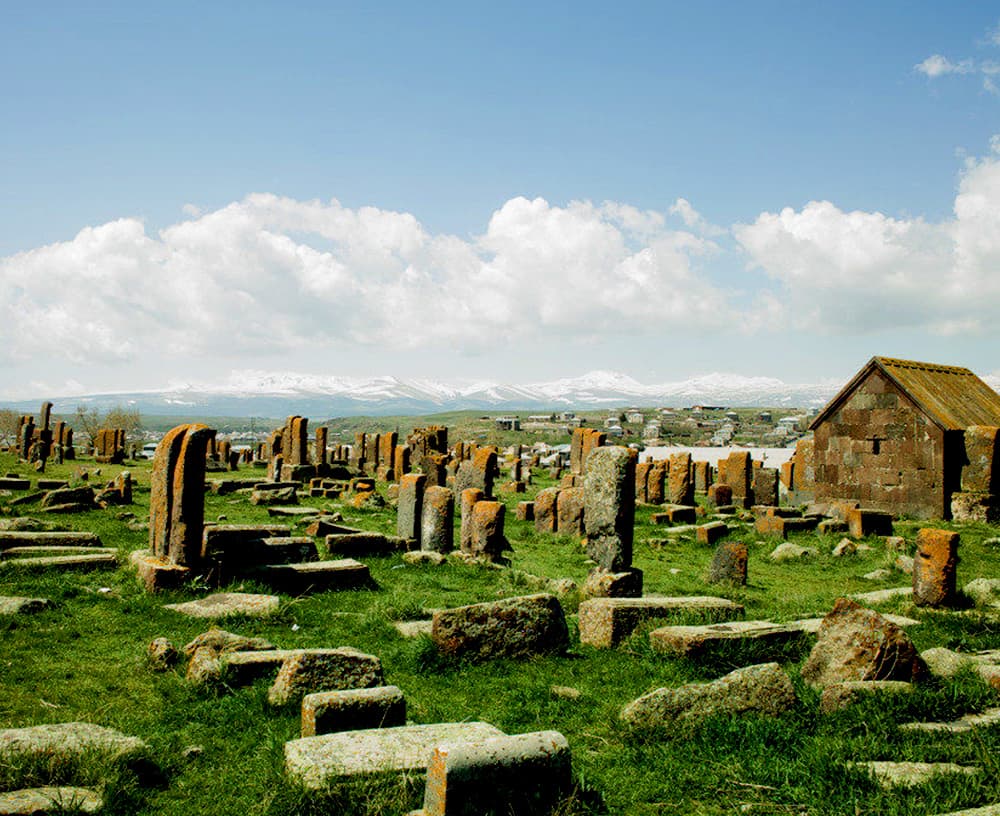
Amid the windswept highlands of Gegharkunik Province in Armenia stands the Noratus Cemetery, one of the oldest and largest medieval cemeteries in the Caucasus. Among its hundreds of khachkars—beautifully carved Armenian cross-stones—lies a tombstone unlike any other. Dating back to the 10th century, this stone tells a story that transcends time: the joyful celebration of a wedding turned into an unspeakable tragedy.
The tombstone depicts a wedding feast, complete with musicians, dancers, and the radiant bride and groom sitting side by side. Yet, beneath the artistry lies heartbreak. The same stone marks the grave of the couple and their entire wedding party, all of whom were reportedly murdered on their wedding day.
Noratus Cemetery: Armenia’s Stone Memory
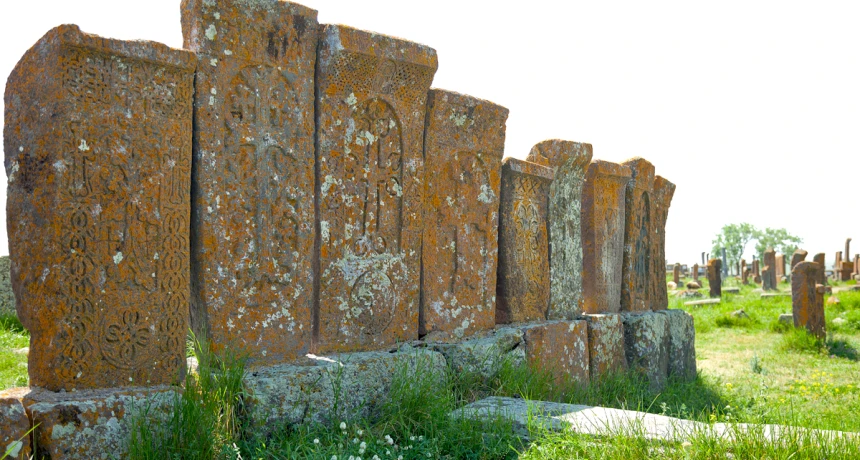
Noratus Cemetery stretches across a quiet field near Lake Sevan, its expanse dotted with hundreds of khachkars carved between the 9th and 17th centuries. Each stone embodies a piece of Armenian heritage—faith, family, and the endurance of a people who have maintained their identity through centuries of turbulence.
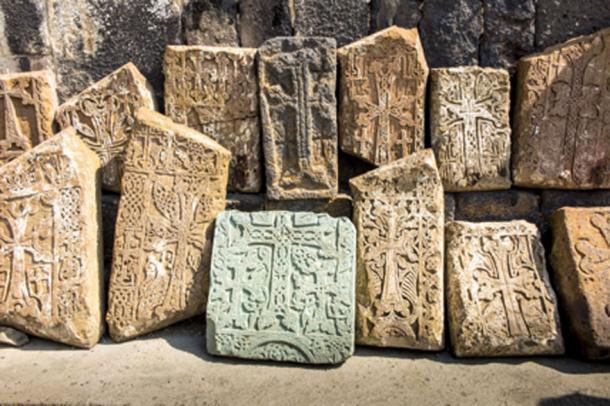
Khachkars are more than tombstones; they are spiritual artworks symbolizing salvation and the eternity of the soul. However, not all stones in Noratus follow the conventional cross motif. A few capture scenes from daily or ceremonial life—shepherds tending flocks, warriors in battle, or, in this unforgettable case, a wedding feast cut short.
The Wedding Scene: Celebration Etched in Stone
The 10th-century tombstone stands out because of its rare narrative composition. The figures carved on the slab show a moment of life and joy: a groom raising his cup, musicians playing stringed instruments, and smiling guests gathered around a communal table.
Armenian artisans of the medieval period were skilled at combining symbolic and realistic elements. The harmony of the figures, the balance in their gestures, and the detailed tableware suggest both technical mastery and a deep reverence for the human moment captured.
This artistic choice was meant to immortalize happiness—the brief, shining instant before tragedy descended. Even a thousand years later, the figures seem alive, frozen mid-celebration.
The Tragic Legend Behind the Tombstone
No written record from the 10th century explicitly tells the story of the slain wedding party, yet local tradition and historical analysis have preserved fragments of the tale. Scholars believe the massacre could have been the result of a violent tribal raid or a longstanding blood feud.
At the time, Armenia was caught between the shifting powers of Arab emirates and Byzantine rulers. Remote villages often suffered violent incursions, and feuds between families could last generations. Whether political or personal, the act that wiped out the newlyweds and their guests turned their moment of joy into a tragedy resonating through the ages.
The stone, therefore, became both a memorial and a silent testimony to the fragility of human happiness in a turbulent era.
The Art of Emotional Expression in Medieval Armenia
Medieval Armenian carving is renowned for blending faith with emotion. In a world where literacy was rare, stone served as a language—its motifs speaking of devotion, virtue, and memory. What makes the wedding tombstone of Noratus exceptional is its human focus.
Here, the symbols of divine eternity are replaced—or perhaps complemented—by the fleeting beauty of earthly love. The feast scene reflects not only artistic skill but also empathy. It reveals how medieval Armenians viewed life’s joys as sacred, deserving to be preserved even when tragedy struck.
This duality—between joy and grief, celebration and sorrow—gives the tombstone its enduring emotional power.
Noratus Cemetery in Cultural Context
The khachkars of Noratus are collectively recognized as masterpieces of Armenian art and identity. Many stones were carved between the 9th and 17th centuries, during which Armenian stonemasons achieved unparalleled symbolic eloquence.
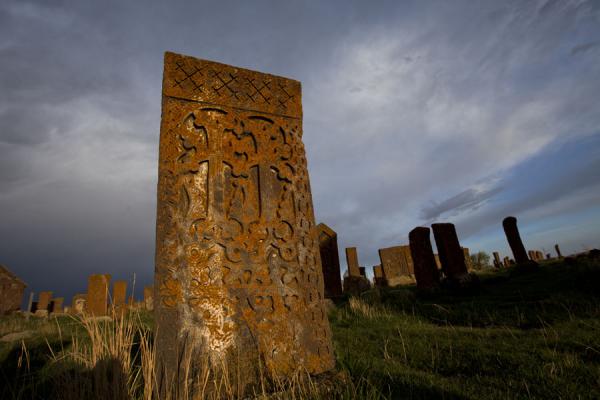
In the 2010s, efforts began to document and preserve these khachkars through digital archiving and tourism initiatives. Noratus became a symbol of Armenia’s continuity—a place where the past still speaks in the language of stone.
The wedding tombstone, often visited by historians and travelers, captures one of the most profound human themes: love’s endurance beyond death. It represents the universal desire to remember, to carve meaning from suffering.
Interpreting the Symbolism
Every element in the wedding scene may hold symbolic value. The communal table represents unity; the raised cup evokes blessing; and the music denotes life and celebration. Even the composition itself—an ordered, harmonious layout—can be seen as a prayer for peace.
When viewed through a spiritual lens, the carving is not merely a lament for lost lives but a meditation on the eternal bond between the couple. In Armenian Christian belief, marriage is a sacred covenant extending beyond the mortal realm. Depicting the newlyweds in their happiest moment ensures that their spirits are remembered not for their deaths but for the love that defined them.
A Universal Story of Love and Loss
Though rooted in medieval Armenia, the tale told by this tombstone speaks to a universal truth—the fragility of life and the endurance of memory. Across cultures, love and tragedy intertwine, and monuments often stand as witnesses to that union of joy and sorrow.
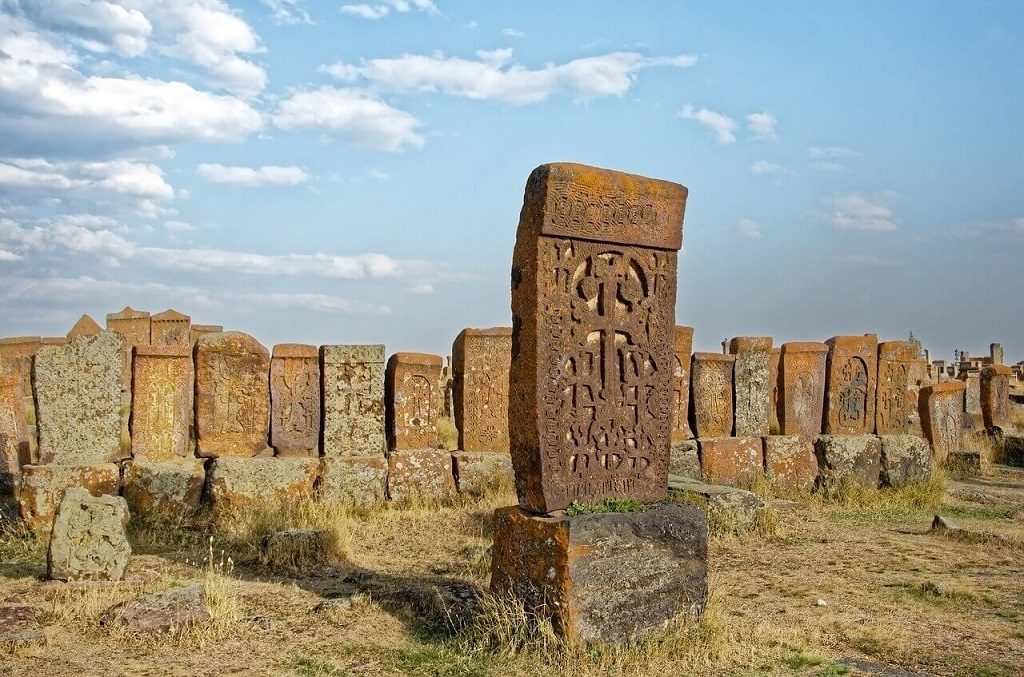
Visitors to the site often report a sense of quiet reverence. The stone’s weathered surface, softened by centuries of wind and snow, seems to whisper the same question that haunts all human history: how can something so beautiful end so abruptly?
Yet perhaps that is the message the carver intended—to remind future generations that love. Even when silenced, leaves traces that no violence can erase.
Preservation and Modern Reflection
Today, preservationists and local historians continue to protect Noratus Cemetery from erosion and vandalism. The 10th-century wedding tombstone remains one of the most frequently photographed and studied artifacts in the region.
For Armenians, it is a potent reminder of cultural resilience and emotional expression. For visitors, it is a chance to connect with the universal themes of memory and mourning. At a time when digital images and fleeting media define memory. This stone endures—a tangible link to human empathy carved a millennium ago.
Conclusion: The Eternal Echoes of a Stone Wedding
The tragic wedding tombstone of Noratus Cemetery stands as a timeless synthesis of love, loss, and artistry. In a single slab of volcanic tuff. A medieval sculptor captured both the joy of union and the pain of its destruction.
Centuries later, the stone remains a silent witness. Its carved figures, though fixed in place, continue to speak—to remind us that behind every artifact lies a human story. That beauty can arise from sorrow, and that memory carved in stone can outlast even the deepest wounds.
ALSO READ: The Sunken City of Thonis-Heracleion: Rediscovering Egypt’s Legendary Port