The Tudor Wedding Bed of Sir John Radclyffe and Lady Anne Asshawe: A Masterpiece of 16th-Century England
A Glimpse into Tudor Splendor
The Tudor wedding bed of Sir John Radclyffe and Lady Anne Asshawe stands as one of the most remarkable relics from the 16th century. Crafted during a time of great cultural and artistic transformation, this magnificent bed transcends its function as mere furniture — it embodies the power, prestige, and elegance of Tudor England. Beyond its carved wooden frame and intricate designs lies a symbol of love, lineage, and legacy, offering a fascinating insight into how aristocracy showcased status and identity through material culture.
The Historical Context: England’s Renaissance Revival
The 16th century marked a golden age for English art and craftsmanship. The Tudor dynasty (1485–1603) ushered in prosperity, exploration, and renewed interest in the arts, deeply influenced by the European Renaissance. For noble families like the Radclyffes, this era represented both political opportunity and social competition. Lavish furnishings became visible tokens of power — and none were more intimate or meaningful than a marital bed.
In Tudor households, wedding beds symbolized not just conjugal unions but also alliances between powerful families. Such unions often involved vast estates and political advantage, strengthened by the opulent trappings of marriage. Against this backdrop, the Radclyffe wedding bed emerges as both artwork and social document, reflecting the traditions and ambitions of Tudor nobility.
The Commission: A Marriage Worthy of Grandeur
Sir John Radclyffe of Ordsall Hall and Lady Anne Asshawe hailed from two influential families in Lancashire. Their marriage united land, wealth, and heritage — a bond that demanded a tangible expression of their prominence. Skilled craftsmen were likely commissioned to create a wedding bed that symbolized this union, using the finest oak or walnut, hand-picked for its durability and beauty.
From the moment of its commissioning, the bed was designed to impress. Every carving, motif, and panel reflected the couple’s standing, making it a central fixture in the marital chamber — a private yet profoundly symbolic space that represented domestic harmony and social prestige.
Exquisite Craftsmanship and Symbolism
Examining the Radclyffe wedding bed reveals the artistry characteristic of Tudor design — intricate carvings, heraldic emblems, and decorative motifs drawn from both Gothic and Renaissance traditions. The headboard and posts are adorned with finely carved figures, perhaps angels, cherubs, or mythological creatures, evoking both religious devotion and humanistic ideals.
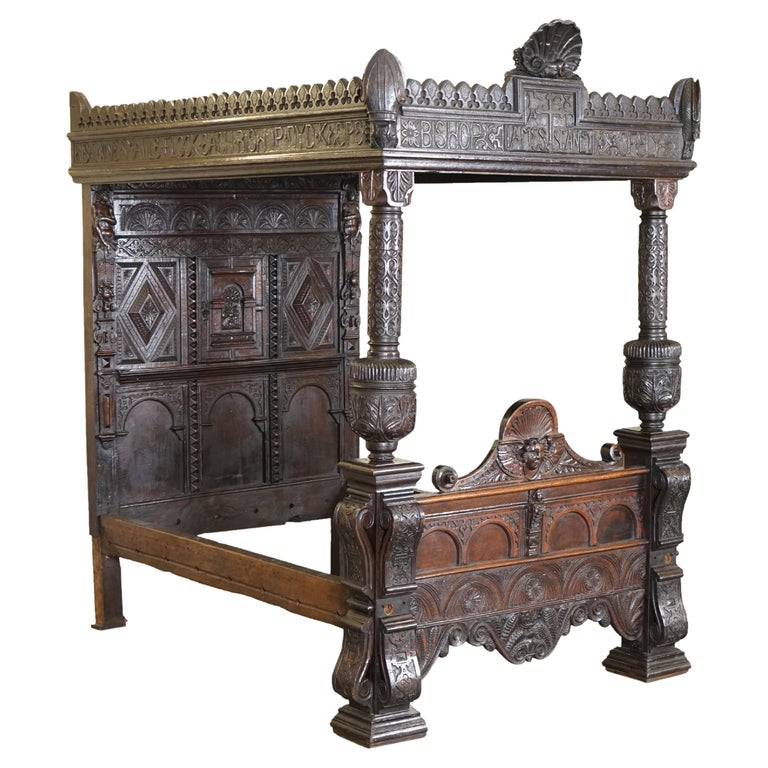
The craftsmanship demonstrates technical mastery: deep relief carving, balanced paneling, and ornamental flourishes suggest the hand of a highly skilled artisan. The detailed iconography — possibly including family coats of arms or marriage symbolism like intertwined vines or clasped hands — reinforces the bed’s function as a celebration of union and continuity.
In Tudor society, such imagery was not mere ornamentation. Every emblem carried meaning — loyalty, faith, fertility, and prosperity — serving as both decoration and declaration.
Material Luxury and Domestic Grandeur
Beds of this scale were made from the finest English oak, a timber celebrated for its strength and rich grain. The wood’s longevity is a testament to the enduring quality of Tudor furniture-making. In aristocratic homes, such beds were often draped with sumptuous textiles — velvet, silk, and embroidered linens — transforming them into visual spectacles that impressed visiting guests.
During the 16th century, a bed was far more than a sleeping place. It was a statement piece, sometimes used for ceremonial occasions, childbirth, or even conducting important business discussions. The Radclyffe wedding bed, therefore, was both functional and emblematic — a fusion of artistry and social identity that reflected the grandeur of Tudor domestic life.
The Bed Through Time: Survival and Legacy
Remarkably, this remarkable Tudor bed has survived five centuries, offering historians and art lovers a tangible link to the Renaissance past. Few pieces of furniture from this era remain in such condition, making it an invaluable artifact for understanding English domestic interiors.
Its preservation provides insights into woodworking techniques, decorative styles, and symbolic language of the Tudor period. Today, it stands as an interdisciplinary treasure — uniting art history, archaeology, and cultural studies. Each carved panel and joint tells a story not only of craftsmanship but of love, lineage, and legacy across time.
Tudor Marriage Customs and Symbolism
Marriage in Tudor England was a binding contract affecting property, inheritance, and family alliances. Aristocratic marriages were carefully negotiated affairs. Often witnessed and celebrated through tangible symbols of unity — like wedding chests, embroidery, and most distinctively, the wedding bed.
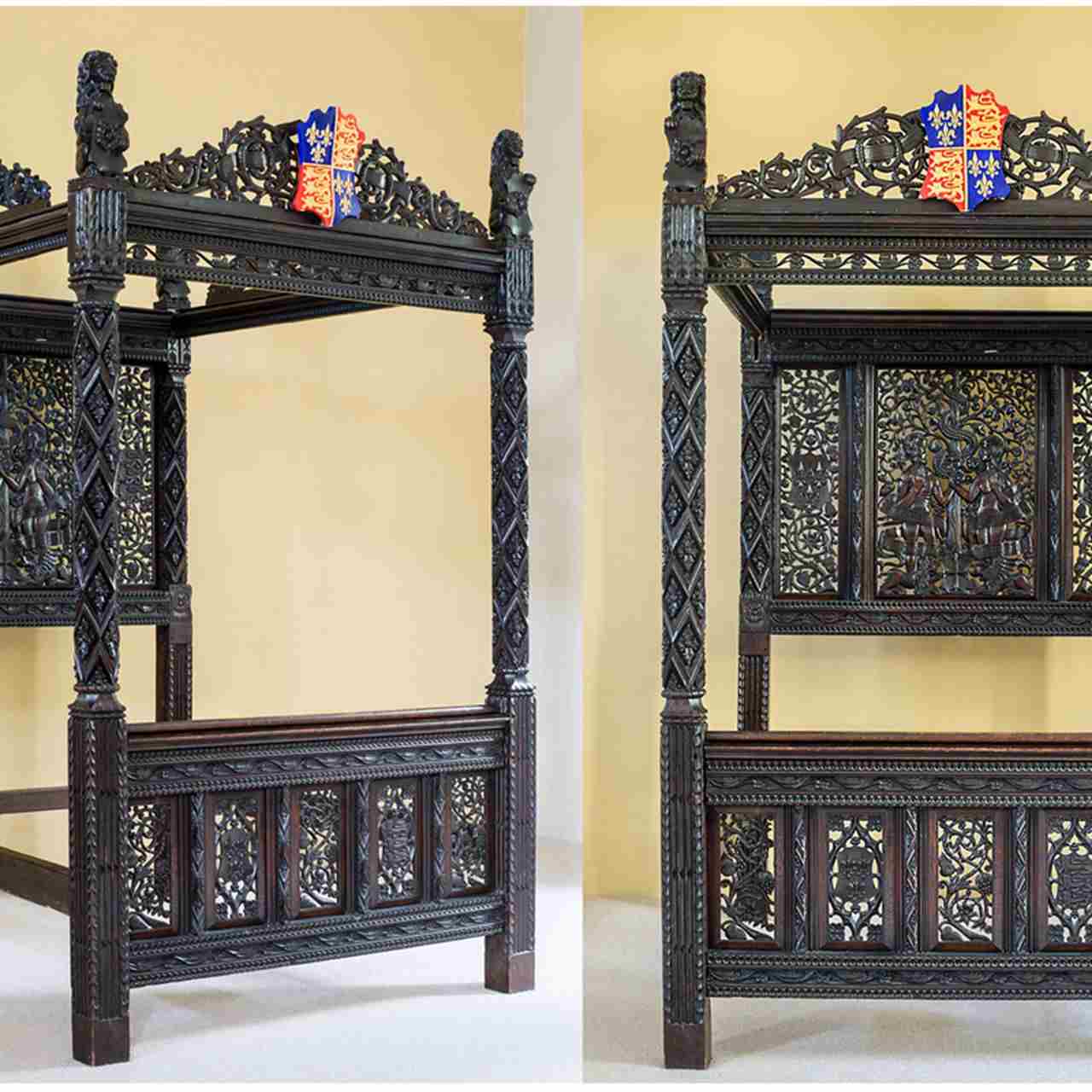
The Radclyffe bed thus must be seen within this cultural tapestry. The grandeur of the marriage bed mirrored the importance of the alliance itself. Wealthy aristocrats showcased their status by commissioning elaborate marital furniture. Often inscribed with initials or family crests that reinforced the merging of two bloodlines.
Influence of Renaissance Design
The 16th century marked the spread of Renaissance artistry throughout England. Brought by craftsmen from Europe who blended classical motifs with native Gothic traditions. Beds became canvases for experimentation in symmetry, proportion, and ornamentation.
The Radclyffe bed exemplifies this stylistic evolution. Where the medieval robustness of English oak carving merges with Renaissance flair — lyrical figures, mythological patterns, and architectural framing. Such synthesis reflects England’s growing engagement with continental ideas while preserving deep-rooted local craftsmanship.
The Bed’s Cultural and Artistic Value Today
Today, the Tudor wedding bed of Sir John Radclyffe and Lady Anne Asshawe is recognized not merely as an artifact. But as a cultural narrative carved in wood. It stands as a reminder of the artistic ingenuity of the Tudor era and the role of material culture in expressing identity, love, and power.
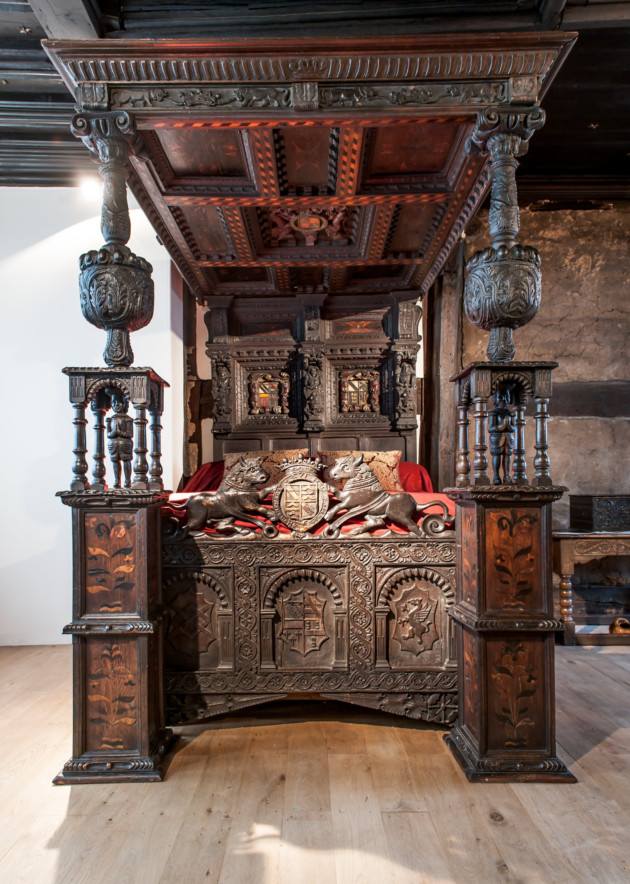
For historians and enthusiasts, it opens a window into 16th-century domestic life. How people lived, what they valued, and how artistry shaped daily experiences. For contemporary craftsmen, it continues to inspire admiration for the precision, symbolism, and enduring beauty that defined Tudor design.
A Testament to Enduring Love and Legacy
More than an heirloom, the Radclyffe wedding bed carries a story that transcends time. It immortalizes not only a marriage but the spirit of an age when furniture was a form of storytelling. Each carving a chapter, each motif a message of hope, devotion, and heritage.
Its survival into the modern age is a triumph of durability and reverence. It reminds us that even the most private objects can hold profound cultural meaning. Preserving, within their artistry, the heartbeat of an entire era.
ALSO READ: 7,000-Year-Old Archery Set Reveals Neolithic Engineering Masterpiece