7,000-Year-Old Archery Set Reveals Neolithic Engineering Masterpiece
The Time Capsule: A Discovery Deep in a Spanish Cave
Archaeological discoveries often provide small pieces of a historical puzzle. Occasionally, however, an find emerges that is so complete, so perfectly preserved, it forces a wholesale re-evaluation of established narratives. Such is the case with a recent excavation deep within a cave system near Granada, Spain, where researchers have unearthed an archery set dating back over 7,000 years.
This find is more than just another ancient artifact; it is a meticulously preserved ‘time capsule of technology’ from the Neolithic period, around 5000 BCE. The sheer completeness of the equipment is unprecedented. Hidden away from the ravages of time and decay, the cache includes fragments of a bow, multiple arrow shafts, and, most astonishingly, the oldest known preserved bowstrings in Europe. This remarkable discovery is fundamentally transforming our understanding of Neolithic archery technology and the engineering prowess of our Stone Age ancestors.
The Heart of the Find: Perfectly Preserved Bowstrings
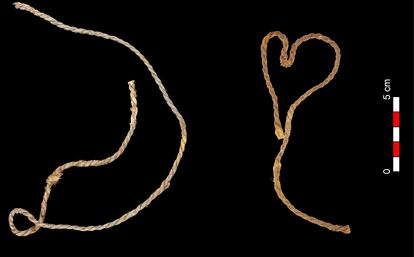
The single most significant element of the Spanish cave discovery is the two perfectly preserved bowstrings. In archaeology, organic materials—especially those as fragile as twisted animal sinew—rarely survive millennia. Yet, thanks to the cave’s stable, cold, and arid microclimate, these ancient cords remain intact, offering an invaluable, tangible link to the past.
These weren’t simple lengths of string. Analysis revealed they were expertly crafted from the dried and processed tendons of wild animals common to the region, including goats, wild boars, and roe deer. The process of turning tough, fibrous tendons into a flexible, high-tensile cord is a craft requiring immense skill and knowledge. The sinew was not merely bundled; it was meticulously twisted, applying a sophisticated understanding of tension and material properties.
This engineering choice speaks volumes. A bowstring must be flexible enough to allow the bow to be drawn, yet immensely strong to withstand the sudden, explosive release of kinetic energy required to launch an arrow at speed. The Neolithic hunters were essentially practicing composite material science—combining organic fibers in a specific structure—to create a cord that could endure the strain of hunting large, robust animals.
The preservation of these bowstrings is critical because it moves the discussion away from theoretical speculation to verifiable evidence. It shows that by 5000 BCE, early Europeans had mastered a complex, multi-stage manufacturing process for crucial hunting tools. It unequivocally establishes the advanced nature of Neolithic Archery Technology.
The Arrow: An Aerodynamic Marvel of Adhesion and Fletching
The sophistication didn’t end with the bowstrings. The arrows unearthed alongside them are equally revealing, showcasing a blend of functionality, materials science, and surprising artistry.
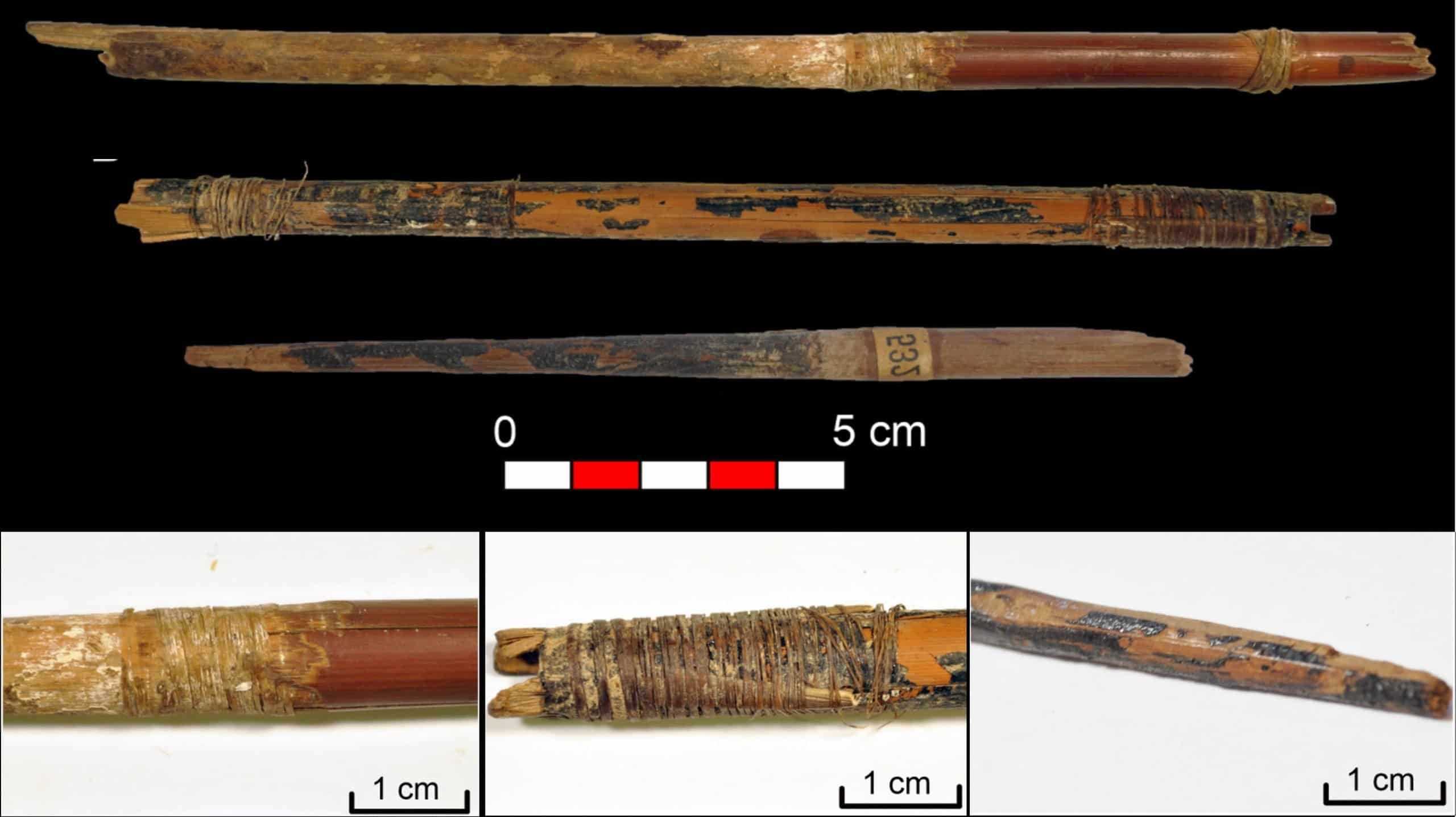
The arrow shafts themselves were treated with a dark, tar-like substance: birch pitch. This was not a random coating. Birch pitch, derived through a complex process of heating birch bark in an air-tight environment, served multiple, critical functions. First, it acted as a potent preservative, protecting the wooden shafts from moisture and rot. Second, it provided waterproofing, crucial for a reliable weapon in diverse weather conditions. Most importantly, it may have also served as an adhesive, securing the arrowhead (though the text focuses on fletching) and potentially acting as a decorative element, signifying ownership or prestige. The use of advanced adhesives like pitch is another hallmark of Stone Age innovation often underestimated.
Perhaps the most visually stunning detail is the presence of original fletching. Fletching—the addition of stabilizing bird feathers to the rear of the arrow—is what turns a simple projectile into an accurate, aerodynamic weapon. Without fletching, an arrow tumbles end-over-end, drastically reducing its range and accuracy.
The archaeologists noted that the feathers were “carefully tied,” revealing a level of precision engineering that belies the common, simplistic view of the “primitive” Stone Age hunter. The placement, size, and securing method of the fletching are all factors that influence flight stability and, thus, the hunter’s success. This is an application of early aerodynamic design—a profound demonstration that these ancient artisans understood the physics of flight and stability.
Challenging the Narrative of Primitive Improvisers
Before this discovery, it was often assumed that Stone Age technology, while functional, was fundamentally crude—the result of improvisation with readily available materials. The Granada archery set forces a complete revision of this perspective.
The evidence points to a society that possessed specialized knowledge, meticulous planning, and an intergenerational transmission of complex skills. The hunters of 5000 BCE were not merely improvising survival tools; they were innovators who understood:
- Material Science: Selecting the ideal organic fibers (sinew, wood, feathers) and understanding their properties.
- Chemical Engineering: Mastering the complex process to create and utilize advanced adhesives and preservatives like birch pitch.
- Mechanical and Aerodynamic Engineering: Calibrate every component — bow, string, arrow, and fletching — to create a system that achieves maximum efficiency, speed, and accuracy.
The combination of different materials—wood, pitch, sinew, and feathers—into a single, high-performance weapon represents a mastery of composite materials technology far earlier than previously documented. The bow, as a system, is a machine for storing and releasing energy. Designing a system robust enough to operate reliably and consistently is a testament to the cognitive capabilities of Neolithic humans.
A Legacy That Still Flies: The Enduring Principles of Archery
The importance of the Granada find extends beyond technical history. It provides a humanizing context for the Neolithic period. These tools were not simply utilitarian; they were “extensions of the human hand. The human mind, and the human imagination,” as one archaeologist eloquently stated.

The principles embedded in this 7,000-year-old equipment—the twisted sinew for strength. The lightweight shaft for speed, and the fletching for stability—are precisely the same principles that govern modern archery. While materials have changed from sinew to synthetic polymers and wood to carbon fiber. The underlying physics and engineering concepts remain constant.
The preservation of this complete, functional, and highly sophisticated hunting kit. Provides irrefutable proof that the Stone Age was an era of profound intellectual and technological advancement. The Neolithic hunter was an applied scientist and engineer. The next time we consider the vast sweep of human history. The narrative must include the master crafters of Spain, whose 7,000-year-old Neolithic Archery Technology has finally returned to the light. Challenging us all to acknowledge the brilliance of our earliest ancestors.
ALSO READ: The Enigmatic Skull of Mary Magdalene: History, Legend, and Legacy of a Sacred Relic