The Silent Eye in the Sky: The Story of a WWII Ball Turret Gunner
A Cold November Sky Over Germany
On November 2, 1943, the skies above Schweinfurt, Germany, became a storm of flame, flak, and metal. Within that chaos, nineteen-year-old Private Harold “Red” McKinney was curled inside the glass belly of a B-17 Flying Fortress—the iconic American bomber that carried the war deep into enemy territory. To many, the B-17 symbolized power and precision; to those who flew within it, it represented both duty and mortal peril.
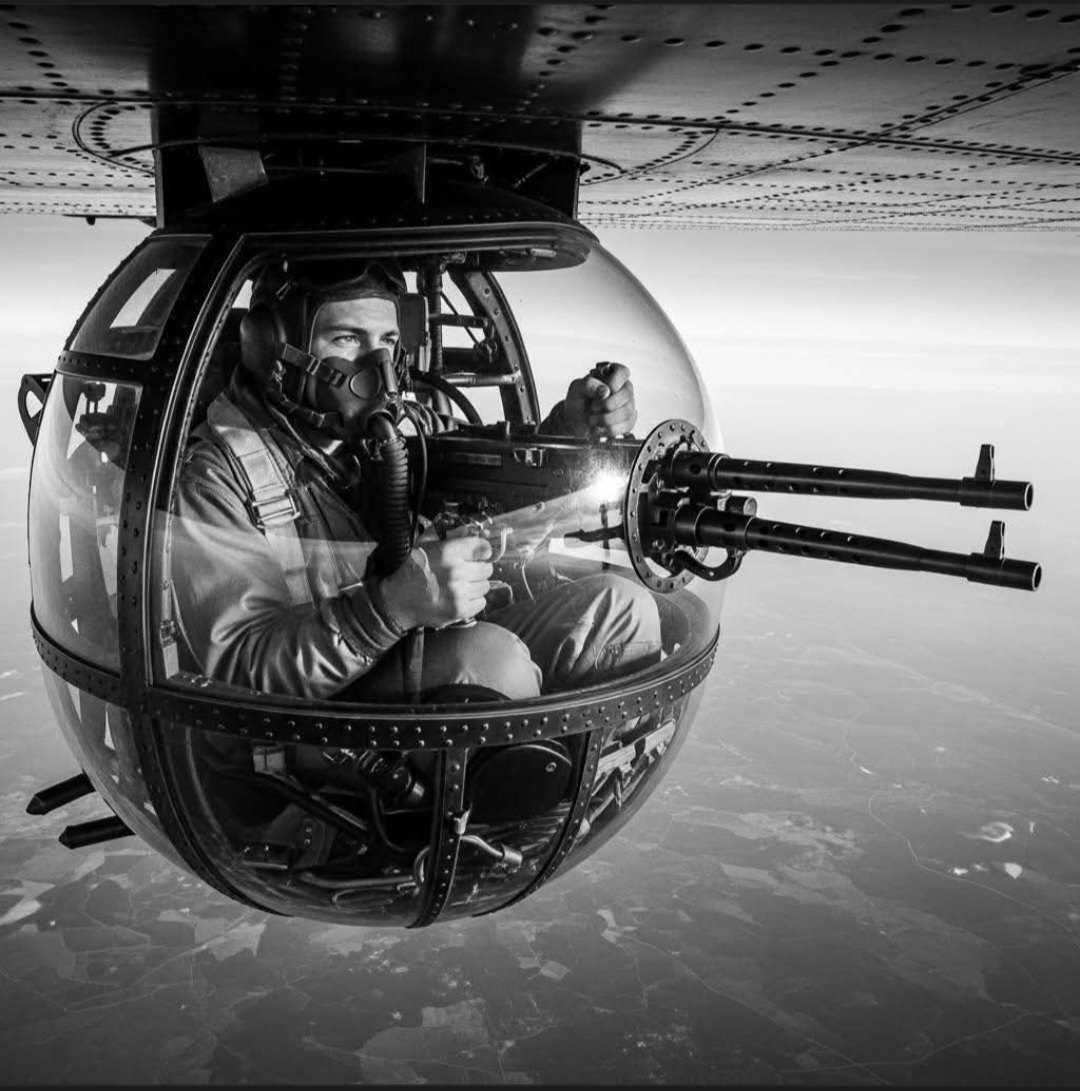
Beneath the bomber’s fuselage hung the ball turret: a rotating sphere of steel and glass that resembled a watchful eye peering down at a world in ruins. For Red, this tiny prison in the sky was his battlefield. From that cramped vantage, he faced the enemy alone, his every heartbeat echoing with the thunder of his twin .50 caliber machine guns.
The Young Men of the Air
The average age of bomber crews in the Eighth Air Force was just 20 years old. Barely out of adolescence, these men carried not just bombs, but the hopes of nations. Training had taken Red far from Kentucky to the sun-scorched deserts of Arizona, where he learned to twist and aim within the tight constraints of the turret.
The ball turret offered no escape hatch and no luxury of movement. Once inside, Red was locked in—a curled fetal position with knees bent, hands gripping cold handles, eyes pressed to the sights. His job: defend the B-17’s vulnerable underside from German fighters. His odds: bleak.
Mission Schweinfurt: Into the Iron Storm
The mission to Schweinfurt, codenamed “Operation Double Strike,” targeted Germany’s critical ball bearing factories, essential to the Nazi war machine. The objective was clear, but so was the danger. Previous raids had already earned the city a chilling reputation among airmen—it was a death trap.
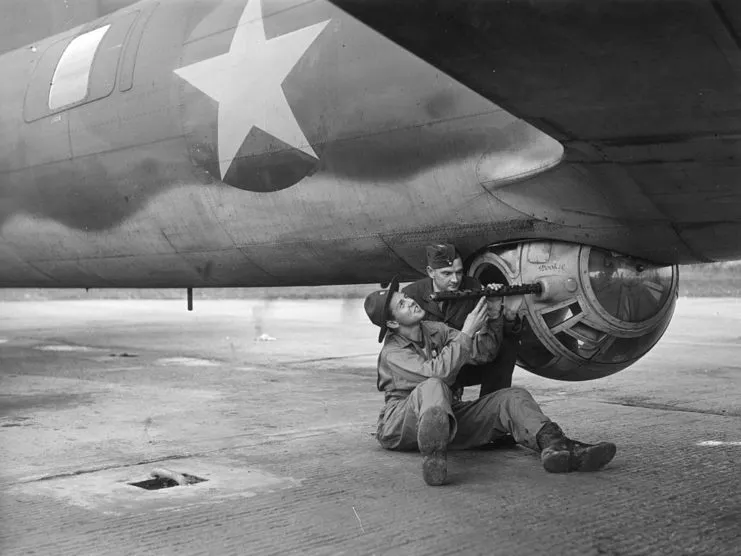
As formation after formation of B-17s thundered through the flak-filled sky, black bursts erupted like malignant flowers. Each explosion shook the aircraft, peppering the aluminum skin with shrapnel. Red’s turret rattled violently, the world spinning in fragments of smoke and light.
Then came the Messerschmitts. The Luftwaffe swooped down in disciplined waves—gray shapes flashing past as Red squeezed the triggers, tracers streaking upward like fiery threads. Time collapsed into instinct. He saw nothing but motion, fire, and fate.
Five of the squadron’s planes didn’t return. In each, ten souls vanished into the smoke. Red’s bomber limped home on two engines, riddled but alive.
The Prison of the Ball Turret
The ball turret gunner’s role stands among the most dangerous of World War II aviation. Suspended below the bomber, it left the occupant exposed to flak, freezing temperatures, and gunfire. The position offered little armor and no comfort. Some called it “a glass coffin.”
Once inside, the gunner was locked in until the plane landed—or until disaster struck. If the landing gear jammed, the turret had to be retracted, or else the gunner risked being crushed on impact. Many died before they could be freed.
Physically and mentally, the turret extracted a toll. Red’s back would never fully recover; nor would his sleep. The vibrations of the engine and rhythmic clatter of the machine guns would echo in his mind long after the guns fell silent.
Surviving the Flight, Losing the Silence
Red McKinney returned home after the war, but not the same young man who had left. Like many veterans, he brought back an unspoken burden. The silence of postwar years became his armor—steady, unbroken. Photographs in the attic captured what words could not: the too-young face behind the glass dome, staring into infinity.
Historians and psychologists later recognized this “quiet return” as part of the lasting trauma of combat airmen. Unlike infantry, who fought on the ground and often shared their experiences openly with comrades, bomber crews faced the sky’s unique isolation. Each man was sealed in his own station, fighting his own small war. For many, silence was easier than memory.
Schweinfurt and the Cost of Air Victory
The Schweinfurt raids marked a turning point in the Allied air campaign. The cost was staggering—over 60 B-17s and hundreds of airmen lost in one mission. Despite the losses, Germany’s ball-bearing production slowed, revealing the strategic and human price of strategic bombing.
Red’s survival was both rare and remarkable. In 1943, the chances of completing 25 missions were slim. Aircrews knew the statistics but flew anyway. Bravery, duty, and perhaps fatalism fueled their courage. For them, every takeoff felt like rolling dice with destiny.
Remembering the Forgotten Airmen
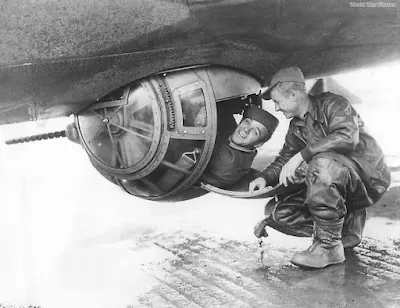
The image of the ball turret gunner has become one of the enduring symbols of WWII air warfare—equal parts heroism and horror. Modern visitors to air museums often marvel at the tiny turret on display, unable to imagine a young man willingly climbing inside.
Preserving stories like Red McKinney’s ensures those who flew beneath the belly of the bombers are never forgotten. Their role was small in space but immense in sacrifice. They looked at the earth from an angle few ever see and carried the memory silently through decades.
Legacy of the Flying Fortress
The Boeing B-17 Flying Fortress remains a marvel of engineering. Designed for endurance, it could take extraordinary punishment and still fly. Crews loved it for that resilience—it was their fortress indeed.
But inside that metal shell, human fragility persisted. Each turret, radio room, and cockpit held stories of courage under pressure. Red’s place in the bomber—the most confined and vulnerable—embodied the paradox of the B-17: a fortress that demanded constant exposure.
The airmen of the Eighth Air Force helped break the industrial backbone of Nazi Germany. Their missions paved the way for D-Day, liberation, and victory. Yet, for many, the cost was personal and permanent.
The Man Behind the Glass
Red lived out his days quietly in the American Midwest, working simple jobs, raising a family, and rarely mentioning the war. His children would find his service photo decades later, tucked into an old shoebox. It showed a boy’s face in a man’s helmet, his eyes intense yet uncertain—an image caught forever between fear and duty.
When asked why he never talked about it, relatives said he’d smile faintly and change the subject. Some stories, after all, are too heavy for words.
Why His Story Matters Today
Eighty years on, the story of Harold “Red” McKinney reminds us that history lives not just in archives, but in attics and family lore. The young men who climbed into those glass spheres carried the weight of the free world on their shoulders.
Through Red’s silence, we hear the echo of countless others who fought and returned—haunted, humble, and human. Their courage endures in every restored B-17 that takes to the skies today, a flying monument to the eyes that once watched eternity from its belly.
ALSO READ: The Enigmatic Artifact of Lake Titicaca