The Crescent Moon Samurai Armor: An Icon of Warrior Prestige
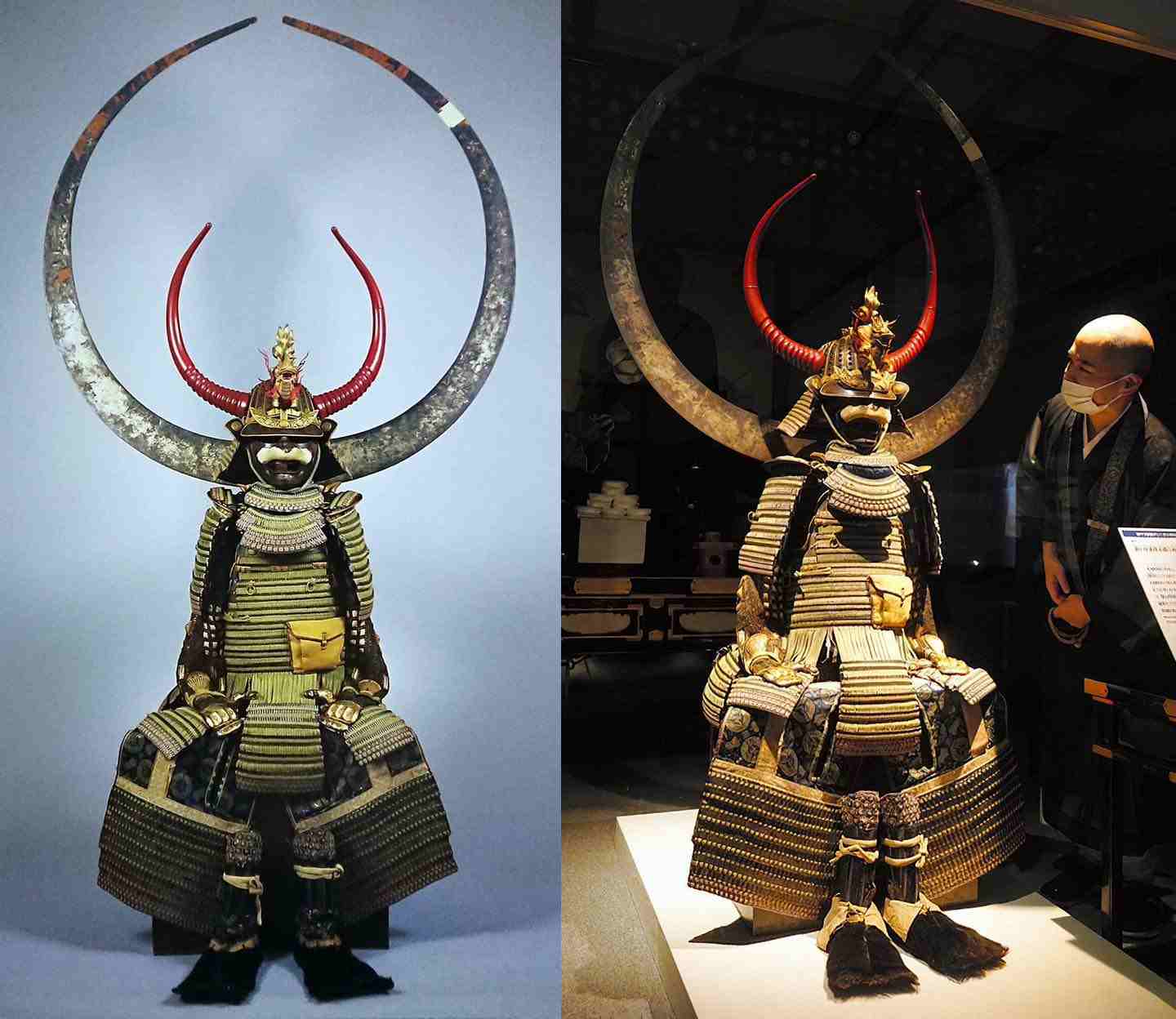
Standing in solemn splendor, the suit of samurai armor depicted above—dominated by an immense crescent moon crest—remains one of the most easily recognized and revered images from Japan’s complex warrior history. This extraordinary set, displayed in both controlled museum lighting and a period-accurate setting, features a massive iron or gilded crescent arching over the helmet, making it instantly identifiable even among the rich spectrum of kabuto (samurai helmets). The combination of the moon and dramatic red horns is not merely decorative, but a bold declaration of status, personality, and martial prowess.
Unveiling the Kabuto: Structure and Symbolism
At the heart of this armor’s spectacle is the kabuto, the traditional helmet of the samurai. The immense crescent, or “maedate,” attached to the front is a classic motif employed by some of Japan’s most celebrated and ambitious warlords.
The helmet’s exaggerated crescent, curving menacingly above, does more than announce the wearer in battle. Throughout Japanese history, the moon symbolized spirituality, the passage of time, cycles of life and death, and the mysterious power connected to the night. For samurai, choosing such a crest communicated not only an embrace of these philosophical ideals but also a demonstration of supernatural favor and strategic cunning—adopting the subtle strength of the moon to confound enemies and inspire followers.
Material Mastery: Craftsmanship in Samurai Armor
Creating a suit of samurai armor required immense skill, time, and resources. This armor, composed of lacquered iron, leather, silk, and sometimes gilded elements, was both practical and ceremonial. The intricate lamellar construction allowed for flexibility and protection, while the gold, crimson, and midnight hues conveyed opulence.
The kabuto’s dramatic maedate centerpiece—a giant crescent layered with additional crimson horns—was crafted from iron or wood, sometimes covered with gold leaf or lacquer. Artisans shaped these crests not only for visual impact but also for symbolic magic, believed to attract good fortune or ward off evil spirits.
A Wearer for the Ages: Date Masamune and the Lunar Crest
No discussion of crescent-moon kabuto is complete without mentioning Date Masamune (1567–1636), a fiercely independent daimyo from the Sengoku period. Masamune, known as the “One-Eyed Dragon,” chose the crescent moon for his helmet, amplifying his legend and making it an enduring symbol of bold leadership.
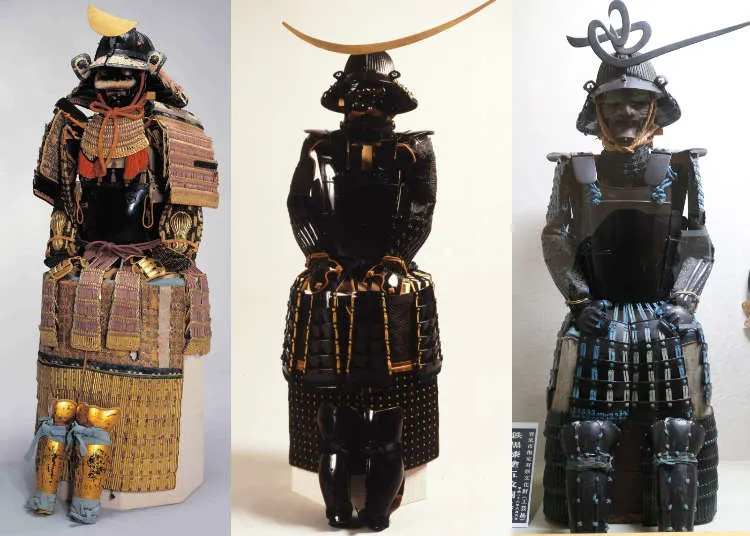
This armor style is now heavily associated with Masamune and his lineage, appearing in period art, Noh theater, video games, and even international pop culture. The sweeping crescent continues to embody the idea of an individual, unconstrained by conventions, blazing a unique path through history.
The Psychological Impact of the Crescent
In battle, appearance could be as crucial as armor strength. The towering crescent and horns turned the wearer into a near-mythical figure on the battlefield, intimidating adversaries and rallying allied troops. The design’s scale was carefully chosen to make the samurai visible—even iconic—through the chaos of combat.
It also indicated the wearer’s elite status: only high-ranking daimyo or their closest retainers could afford or justify the extravagance of such ostentatious armor. Through these visual cues, feudal Japanese armies communicated internal hierarchy, the presence of commanders, and their approach to warfare itself.
Function and Ceremony: Armor Beyond Combat
While functional protection remained paramount, ornate armor sets like this were often reserved for parade, formal inspection, or religious ceremonies. Daimyo would don their most extravagant gear for New Year rituals, to welcome an envoy, or in theater to dramatize their family’s power and heritage.
The combination of symbolic motifs—dragons, flames, the crescent moon—played to both sacred and social expectations. Samurai armor thus transcended mere utility; it became an essential component of personal and political performance in pre-modern Japan.
Preservation and Display: Samurai Armor in Modern Japan
Today, crescent-moon samurai armors are carefully preserved in major museums across Japan and around the world. Detailed restoration maintains not just the physical structure but also the patina and vibrancy of the original lacquer, silk, and metalwork.
Enthusiasts, historians, and travelers flock to see these suits in person. Often finding themselves drawn to the dramatic interplay of shadow, light, and history that they evoke. The image of the lone samurai beneath a crescent moon endures as a metaphor for resilience. Individuality, and the storied legacy of bushido (the way of the warrior).
Legacy in Popular Culture and Modern Japan
The crescent moon kabuto continues to inspire artists, designers, and storytellers worldwide. It appears in manga, anime, film, and digital media as a shorthand for strength with distinction. Its influence is evident in everything from samurai-themed festivals in northern Japan to contemporary fashion and even architectural motifs.
Collectors and martial artists recreate these designs in armor workshops, keeping traditional crafting methods alive. The enduring popularity of crescent-moon samurai armor testifies to its ability. To transcend eras and speak to universal themes of leadership and aspiration.
Conclusion: The Timeless Allure of the Crescent Moon Samurai
Among all Japanese arms and armor, the crescent-moon samurai stands apart. A perfect blend of martial might, artistic mastery, and spiritual symbolism. Whether seen under glass in a museum or evoked in pop culture. It captures the essence of the samurai: disciplined, devoted, and always dramatic. The lunar crest’s curve, undimmed by centuries. Remains a beacon to those who seek light in darkness. And to all who honor the legacies of courage and creativity.