Kuelap: The Fortress Above the Clouds
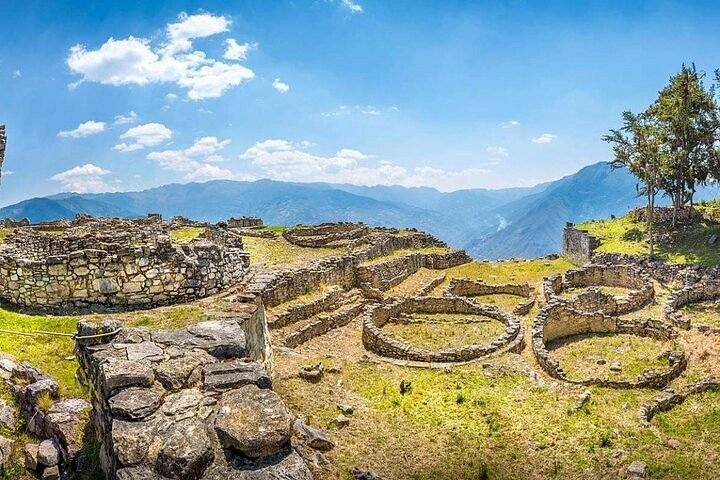
Perched majestically on a mountaintop deep in the Andes of northern Peru, the fortress of Kuelap remains one of the most formidable yet enigmatic monuments of pre-Columbian America. Constructed around the 6th century CE by the Chachapoya civilization, known as the “Warriors of the Clouds,” Kuelap was both a fortified citadel and a ceremonial sanctuary. Its lofty elevation, reaching nearly 3,000 meters above sea level, provided both a vantage point and an air of sanctity, separating it from the surrounding valleys below.
Among its many architectural marvels, the most fascinating and symbolic are its ancient staircases—narrow, steep, and funnel-like passages that penetrate the fortress’s massive 20-meter-high limestone walls. These stairways are not merely routes between terraces; they embody the intersection of defense, ritual, and social order that defined Chachapoya life.
The Chachapoya: Guardians of the Cloud Forest
The Chachapoya people, whose name translates roughly to “Cloud People,” inhabited the mist-covered mountains and cloud forests of the Amazonas region. Flourishing between the 6th and 15th centuries, they developed a distinct culture characterized by advanced stone architecture, circular dwellings, and elaborate burial structures built into cliff sides.
Though later conquered by the Inca Empire, the Chachapoya retained their unique cultural identity for centuries. Kuelap stood as their pinnacle accomplishment—a monumental citadel enclosing more than 400 stone structures, including homes, temples, and administrative buildings. Archaeological evidence suggests it was home to several thousand inhabitants and functioned as both a fortified town and a spiritual center.
The staircases of Kuelap, threading through the fortress like veins of stone, reflect the ingenuity and spiritual depth of a civilization finely attuned to its mountainous landscape.
Architectural Genius: The Design of the Staircases
The staircases at Kuelap serve as an architectural key to understanding the site’s complexity. Unlike wide or ornamental stairways found in other Andean civilizations, the Kuelap stairways were intentionally narrow and steep, with some passages narrowing to less than half a meter in width.
This unique design created funnel-like corridors, forcing anyone who entered to advance in single file—a deliberate defensive strategy. Enemy forces would be unable to breach the fortress en masse; instead, they would face bottlenecked entry points guarded from above by defenders stationed along the walls.
From an engineering standpoint, these stairways reveal the Chachapoya mastery of limestone masonry. Each step was carefully quarried and positioned to fit seamlessly with adjacent blocks, ensuring both durability and stability across centuries. The inclined grades and precise alignment through multiple terraces also highlight their deep understanding of structural geometry and terrain adaptation.
The primary staircase, often referred to as the Main Entrance, ascends directly through a tall, enclosed passageway between the fortress walls. Two other access stairways exist on different sides of the fortress, each designed with similar restrictions, reinforcing the sense of controlled access and ceremonial formality.
Defense and Symbolism Intertwined
To the Chachapoya, architecture was more than utilitarian—it was symbolic expression materialized in stone. The staircases exemplify this dual role. While they clearly fulfilled a defensive purpose, guiding movement along controlled, narrow routes, their spatial rhythm also reflected deeper socio-religious meaning.
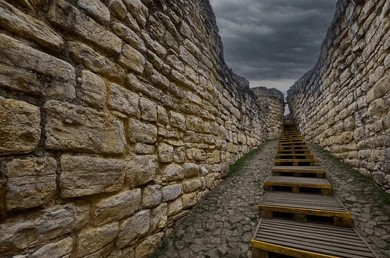
Archaeologists have theorized that ascending the narrow stairways could have mirrored spiritual ascent—a journey from the earthly plane to the sacred realm at the fortress’s summit. In many Andean cultures, elevation symbolized closeness to the divine; thus, the act of climbing a steep staircase may have represented both physical access and spiritual elevation.
The restricted width may have also been associated with ritual purification—allowing only individuals deemed worthy to pass through, one by one, in humble procession. The passage through stone, from darkness to light, evokes ceremonial rebirth imagery still prevalent in Andean cosmology.
Integration with Urban Layout and Function
Kuelap’s internal organization reflects a society structured around hierarchy and sacred space. The staircases connect distinct terraces, each serving different functions:
-
Lower levels: Contained residential areas, communal storage spaces, and workshops.
-
Middle terraces: Hosted ceremonial plazas and meeting areas.
-
Upper levels: Reserved for elite residences, temples, and possibly astronomical observatories.
The staircases linking these levels reinforced spatial stratification—access to the uppermost precincts was likely restricted to priests, nobles, or designated participants in ceremonies. Their placement dictated movement within the fortress, shaping both social interaction and ritual performance.
Each stairs’ orientation and gradient also mirrored the terrain’s natural contours, demonstrating how the Chachapoya harmonized construction with the mountain’s form rather than imposing upon it. The integration of architecture with landscape—a signature feature of Andean design—ensured both aesthetic unity and ecological resilience.
Defensive Strategy: The Fortress Within a Mountain
Beyond symbolism, the Kuelap staircases showcase military foresight. The Chachapoya inhabited a region frequently embroiled in conflict, both among neighboring chiefdoms and, later, with expanding Inca forces. Their fortress design reflects centuries of tactical adaptation.
Defenders could control entry points from elevated positions, raining projectiles on intruders trapped in narrow channels. Once attackers entered, sharp turns and enclosed angles within the stair corridors made maneuvering weapons difficult. The narrowness also prevented cavalry or large groups from advancing.
Archaeologists have found projectile stones and fortified watchtowers adjacent to the stairways, confirming their critical role in Kuelap’s defensive network. Even the winding path leading up the mountain was designed with choke points, ensuring that any approach would be visible and easily thwarted.
Ritual Journey: Ascending Toward the Sacred
Many Andean traditions associate ascent with spiritual transformation. Just as Inca pilgrims climbed to Cuzco’s sacred sites or ascended mountain shrines to commune with deities, the Chachapoya likely imbued stair-climbing at Kuelap with ceremonial importance.
Anthropologists suggest these ascents may have marked transitions—from ordinary space to sacred territory. The tightly enclosed stairways, flanked by towering limestone walls, would have induced both a psychological and spiritual effect of entering a liminal space—a threshold between worlds.
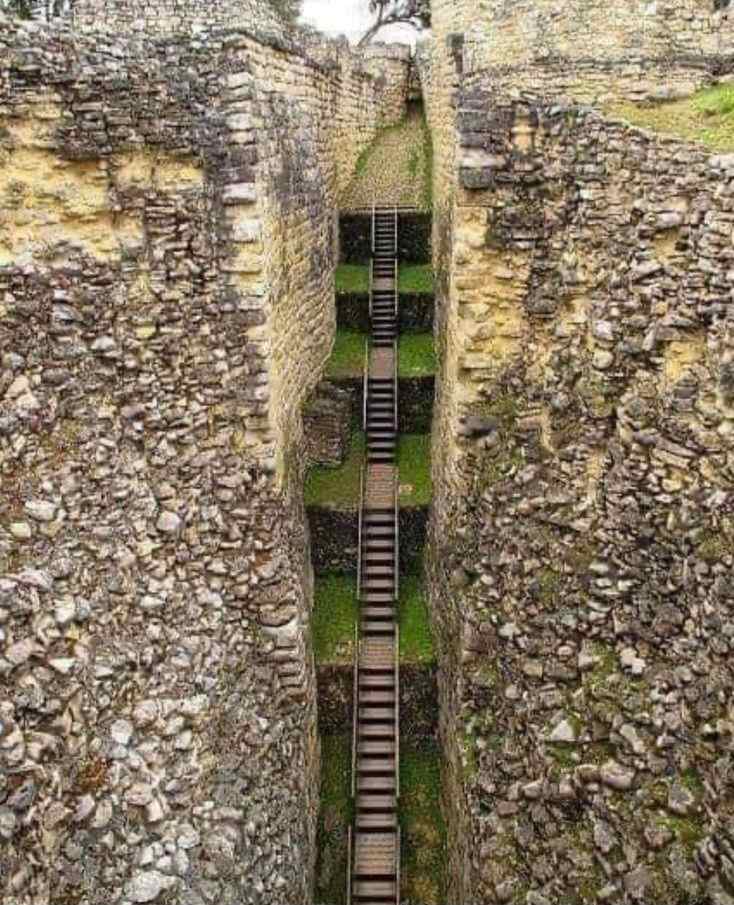
At the top, open courtyards and round ceremonial halls awaited climbers. Here, rituals possibly dedicated to ancestral worship, agricultural fertility, and celestial cycles took place. The monumental effort of the ascent might thus have symbolized human endurance and devotion, a profound physical ritual of access to sacred authority.
Kuelap Under Inca and Spanish Influence
By the late 15th century, the expanding Inca Empire absorbed the Chachapoya region. Though the Inca dominated politically, they respected Kuelap’s ceremonial importance and maintained many of its structures. The fortress continued to serve as both a military post and a ritual site, with modifications reflecting Inca architectural influence—smooth stonework, trapezoidal niches, and symbolic alignments.
However, with the arrival of the Spanish conquistadors in the 16th century, Kuelap was gradually abandoned. Over time, the stairways and terraces were overtaken by dense vegetation and forgotten by the outside world.
It wasn’t until the 19th century, when explorers and archaeologists rediscovered the ruins, that Kuelap reemerged as a subject of fascination. Today, restoration efforts continue to preserve the stairways and walls, protecting them from erosion while revealing the full grandeur of their original design.
Rediscovery and Modern Preservation
Excavations since the 1980s have shed light on Kuelap’s structural sophistication. Laser mapping and drone surveys reveal intricate alignments between stairways, walls, and terraces—evidence of planning comparable to Inca urban centers like Machu Picchu.
Conservation teams face challenges from heavy rainfall, seismic activity, and vegetation growth, all of which threaten the limestone architecture. Still, UNESCO and Peru’s Ministry of Culture have invested in protective projects, including controlled tourism pathways that allow visitors to experience Kuelap without damaging its fragile surfaces.
Modern access systems—such as the Kuelap cable car, launched in 2017—now transport visitors up the steep terrain that once hosted arduous ascents. Yet for many travelers, the climb along the original stairways remains a spiritual journey in itself, echoing footsteps that resound across centuries.
Legacy of the Ancient Staircase
The ancient staircases of Kuelap encapsulate more than architectural brilliance; they are metaphors of perseverance and devotion. Each step, carved and fitted with precision, embodies the Chachapoya’s ability to merge security, spirituality, and landscape into a single design language.
They remind us that in ancient Andean culture, architecture was not passive—it guided human experience, enforced social order, and mirrored cosmic beliefs. The act of ascending these narrow stone passages remains one of the most evocative encounters with the past available in the Andes.
As Kuelap endures amid the cloud forests of northern Peru, its staircases continue to symbolize the resilience of a people who carved eternity into stone—their legacy rising skyward, step by step.
ALSO READ: Ancient Roman Temple-Theater Complex in Caserta: Rediscovery of a 2nd-Century BC Site