The Genius of Roman Engineering and the Rio Tinto Mines
Among the most impressive demonstrations of ancient Roman engineering prowess stands the hydropowered scoopwheel system at the Rio Tinto mines in southwestern Spain. These mines, located in the heart of modern-day Andalusia, have been a source of copper, silver, and gold for over 5,000 years. However, it was during the Roman era that mining operations reached a level of sophistication never seen before, owing to ingenious mechanical solutions that allowed miners to extract ore from unprecedented depths.
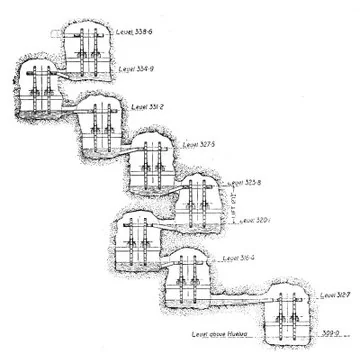
At the center of this technological marvel was a complex arrangement of scoopwheels powered by water—a multilayered system that efficiently lifted water from the deep shafts. The Romans employed a sequence of no fewer than sixteen scoopwheels, working in pairs and stacked vertically, to drain mine levels as deep as 80 meters below ground. This design not only solved one of ancient mining’s greatest challenges—flooding—but also anticipated mechanical engineering principles still relevant today.
The Rio Tinto scoopwheel system, discovered through archaeological excavations in the late 19th and 20th centuries, remains a testament to Roman mechanical intuition, hydraulic mastery, and organizational efficiency.
Understanding the Scoopwheel Mechanism
The Roman scoopwheel operated on a principle similar to that of the modern waterwheel, but reversed. Instead of harnessing water to generate power, these wheels were used to lift water upward, bucket by bucket, out of flooded tunnels. The design consisted of a wooden wheel fitted with a series of small compartments or scoops around its circumference.
As the wheel rotated, each scoop dipped into a sump of accumulated water, collecting a small volume of liquid. When lifted, the water emptied into a trough positioned above, which carried it to the next higher level. The process was then repeated by the next wheel in the sequence, until the water was discharged at the surface.
Historians estimate that each wheel could raise water by around 5 meters, which explains why multiple wheels were required to reach the surface from deep mining levels. The coordination of 16 paired wheels ensured a continuous, efficient flow—a remarkable feat of synchronization in an age without electricity or mechanized pumps.
The wheels were operated manually, often by mine laborers walking on treadmills or pushing horizontal beams connected to the axle. Some larger systems integrated hydropowered components, where descending watercourses or channels were used to supplement human effort in turning the wheels, especially during high-output operations.
The Rio Tinto Mines: Ancient Industrial Hubs
The Rio Tinto mines are among the oldest known mining sites in the world. Their rich deposits of copper sulfide and precious metals attracted successive civilizations including the Tartessians, Phoenicians, and Carthaginians. However, it was under Roman control, beginning in the 1st century BCE, that the mines became a cornerstone of imperial resource extraction.
Roman engineers recognized that to expand mining operations deeper underground, they needed to solve the persistent problem of flooding caused by groundwater infiltration. The scoopwheel system represented a scalable, low-cost solution that allowed continuous operation and minimized downtime in an era when every moment of labor counted.
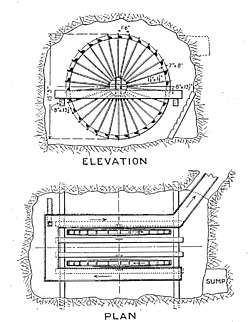
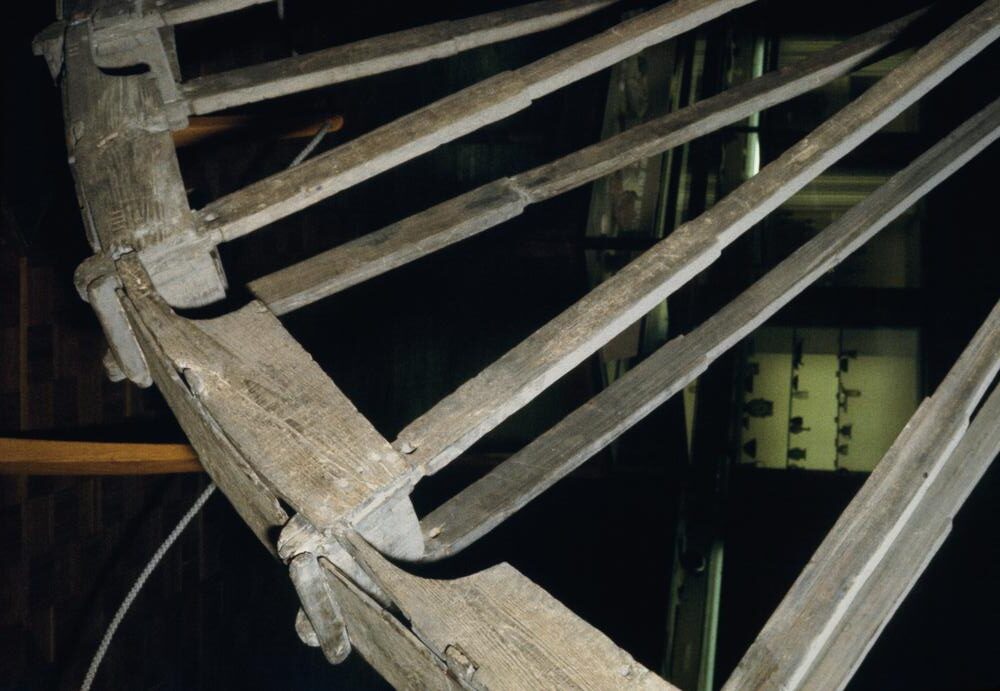
Excavations have uncovered wooden fragments of scoopwheels, troughs, tools, and remnants of shafts lined with stone and brick. Carbon dating places these structures between the 1st and 3rd centuries CE. The elaborate use of engineering technology at Rio Tinto places it among the earliest and largest examples of mechanized water management in mining.
Hydraulic Power in the Roman World
Water served as a defining force in Roman engineering, powering mills, irrigation systems, baths, and aqueducts across the empire. The adaptation of hydraulic technology for mining reflected the same ingenuity seen in urban water delivery and agricultural infrastructure.
While most scoopwheel systems at Rio Tinto were manually driven, some might have utilized gravity-assisted hydropower, where water from higher elevations turned auxiliary wheels that transferred mechanical energy downward. This would have reduced human labor and increased pumping speed.
The Romans also developed a comprehensive understanding of geological and hydro-mechanical principles. Channels, collection basins, and overflow conduits were precisely engineered to manage the flow and reuse of water, ensuring both efficiency and sustainability in resource extraction.
Archaeological discoveries elsewhere in Europe—such as the Dolaucothi gold mines in Wales—show similar use of water-lifting devices, suggesting that this technology was widespread across the Roman Empire. The Rio Tinto example, however, remains unparalleled in scale and complexity.
The Role of Roman Innovation and Labor Organization
One of the hallmarks of Roman engineering success was their ability to integrate technology with human organization. The Rio Tinto scoopwheel system required not just construction expertise but also a coordinated workforce. Teams of engineers, miners, carpenters, and laborers worked in harmony to maintain continuous operation.
The wooden frames of the wheels had to be durable yet flexible enough to withstand constant moisture and mechanical wear. Workers regularly replaced buckets and axles made from oak or pine, while lubricating the moving parts with animal fat. The shafts were well-ventilated, using vertical chimneys to draw air into the tunnels and reduce toxic fumes.
Historical estimates suggest that the Roman mining workforce at Rio Tinto may have exceeded 10,000 people, including both free laborers and enslaved workers. Despite the harsh conditions, their collective effort transformed the site into a center of imperial metallurgy feeding vast networks of coin mints, foundries, and weapon forges across the Roman world.
Archaeological Evidence and Rediscovery
Interest in the Rio Tinto mines revived during the Industrial Revolution, when modern mining resumed in the 19th century. Archaeologists investigating abandoned shafts stumbled upon well-preserved examples of ancient Roman scoopwheels, some still intact in situ. Several of these wheels, remarkably, were found stacked along narrow shafts, confirming ancient accounts of multi-tiered drainage systems.
The conditions of the underground passages—waterlogged, oxygen-poor, and mineral-rich. Created an environment that helped preserve wood, ropes, and even metal fittings. Today, these artifacts are housed in Spanish museums and remain invaluable for understanding the evolution of hydraulic technology.
Detailed examination has revealed advanced joinery techniques, iron nails, and symmetrical design patterns consistent with Roman craftsmanship. The effective use of simple geometric principles—particularly leverage, torque, and fluid transfer. Underscores the Romans’ practical understanding of physics, centuries before the formal development of mechanical science.
Legacy of Roman Industrial Engineering
The Roman scoopwheel system at Rio Tinto influenced mining practices well into the medieval period. Its fundamental concepts—modular lifting, sequential pumping, and water-driven machinery—were adopted and refined by later civilizations. Including the Byzantines and early Islamic engineers.
More broadly, this technology embodies the Roman philosophy of “utility through innovation”: the application of precise, practical design to solve real-world problems. The scoopwheel mechanism can be seen as a precursor to the modern centrifugal pump and bucket chain elevator. Both of which operate on similar mechanical principles of cyclic lifting.
In the 21st century, as we explore sustainable methods for resource extraction and water management. The ingenuity of ancient engineers offers valuable lessons. Their understanding of renewable kinetic energy and hydrodynamic systems. Reflects an early form of eco-conscious industrial design—a concept that feels strikingly modern.
Visiting the Rio Tinto Mining Heritage
Today, the Rio Tinto region is open to visitors as part of Spain’s industrial and archaeological heritage. The Rio Tinto Mining Park, near Huelva. Features guided tours through ancient Roman tunnels, reconstructed scoopwheel models. And exhibits explaining the evolution of mining technology from antiquity to modern times.
The surrounding Martian-like landscape—colored by the mineral-rich waters of the Rio Tinto River—offers a surreal backdrop. Scientists even study the region to understand extraterrestrial geology. As the local environment mirrors conditions on Mars, where traces of ancient water suggest similar ore-depositing processes.
Visiting this site not only provides historical insight but also connects modern observers. With the timeless human drive to harness nature’s power through intellect and innovation.
Conclusion: A Testament to Human Ingenuity
The hydropowered scoopwheel system of the ancient Roman Rio Tinto mines. Remains one of history’s most striking examples of early mechanical engineering. By mastering the challenge of water drainage in deep mines. Roman engineers unlocked new levels of production capability that shaped their empire’s economy.
Their work speaks to a universal truth—that technological advancement is not merely the product of modernity. But a continuum of creativity stretching back thousands of years. The silent remains of the scoopwheels, buried in Spanish soil, still echo with the rhythm of progress. The rotation of wood and water that once sustained a civilization.
ALSO READ: The Loving Graves of Roermond: A 19th-Century Love That Defied Religious Boundaries