The Mask of Xiuhtecuhtli: A 600-Year-Old Aztec Masterpiece of Fire and Divinity
Jewel from the Heart of the Aztec Empire
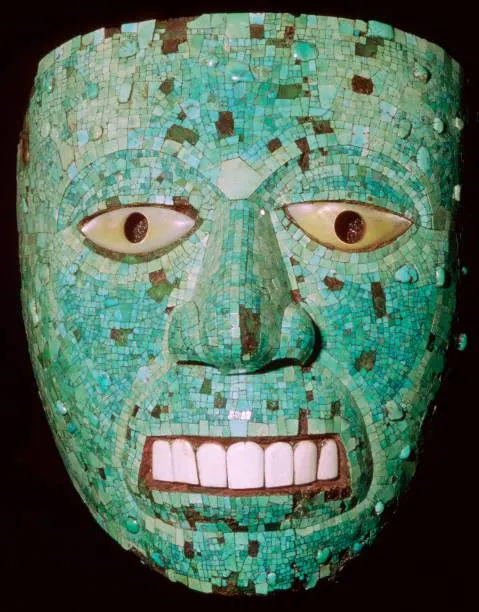
Among the most mesmerizing artifacts from the Aztec Empire is the Mask of Xiuhtecuhtli, an exquisite example of Mesoamerican craftsmanship, spirituality, and artistry. Displayed today in the British Museum, this 600-year-old mask embodies the Aztecs’ mastery of materials, their profound religious beliefs, and their enduring fascination with fire, renewal, and divine power.
Crafted from wood and adorned with a delicate turquoise mosaic, mother-of-pearl, and conch shell, the mask’s vibrant blue-green hues shimmer with symbolic meaning. The inside, coated in red cinnabar, evokes the fire and lifeblood of the gods — a powerful contrast to the cool tones of the mosaic.
While the mask is commonly associated with Xiuhtecuhtli, the Aztec fire god, its exact purpose remains a mystery. Was it worn during sacred rituals, displayed in temples, or used as a funerary offering? Its enigmatic beauty continues to inspire curiosity and awe, offering a window into the spiritual heart of the Aztec world.
The Aztec World and the Power of Fire
To understand the Mask of Xiuhtecuhtli, one must first understand the god it may have represented. In Aztec cosmology, Xiuhtecuhtli — whose name means “Turquoise Lord” — was the god of fire, time, and the hearth, and one of the most ancient and revered deities in Mesoamerican religion.
He embodied both creation and destruction — fire as a source of warmth and renewal, yet also a force of purification and death. In Aztec belief, Xiuhtecuhtli occupied the center of the cosmos, representing the eternal flame that sustained both gods and humans. Every household hearth, every sacrificial flame, and every New Fire Ceremony was an offering to him.
The mask, therefore, may not have been a mere decorative object but a sacred instrument — a face of the divine through which priests or rulers channeled cosmic energy during rituals of renewal and rebirth.
Craftsmanship and Materials: Art in Motion
The Mask of Xiuhtecuhtli is a masterpiece of Mesoamerican mosaic work. Measuring roughly 18 centimeters high, it was carefully carved from wood and covered with thousands of tiny turquoise tesserae, each individually shaped and polished.
The turquoise mosaic, a hallmark of Aztec elite art, was sourced from trade networks stretching as far as New Mexico and northern Mexico, reflecting the vast economic and cultural connections of the empire. The artisans combined these turquoise stones with mother-of-pearl, pink conch shell, and black lignite to create expressive details — luminous eyes, defined brows, and an otherworldly presence.
The interior of the mask, coated in red cinnabar, may symbolize the inner flame of life. Cinnabar (mercury sulfide) was a costly pigment associated with blood, sacrifice, and divine vitality. Its use inside the mask, unseen to viewers, suggests that the Aztec artisans imbued even hidden parts with spiritual significance — honoring the gods through unseen perfection.
Ritual Use and Symbolism
Though the Mask of Xiuhtecuhtli’s precise function is uncertain, scholars propose several possibilities based on Aztec ritual traditions:
-
Ceremonial Mask of the Fire God
The mask may have been worn by a priest or ceremonial performer impersonating Xiuhtecuhtli during fire rituals or the New Fire Ceremony, a major event held every 52 years to renew the world and prevent cosmic destruction. -
Offering in Temple or Tomb
Like many sacred masks, it could have been a ritual offering, placed within a temple or tomb to honor the gods or a deceased noble associated with fire and time. -
Symbol of Royal or Divine Authority
The intricate craftsmanship and expensive materials suggest it may have belonged to the Aztec elite or priesthood, representing divine legitimacy and cosmic balance.
The mask’s aesthetic harmony — blending earth, water, fire, and sky through its materials and colors — mirrors Aztec cosmology, where balance among the natural elements was crucial to sustaining the universe.
From Tenochtitlán to the British Museum
The Mask of Xiuhtecuhtli’s journey from the temples of the Aztec capital Tenochtitlán to the British Museum. Reflects the turbulent history of colonial conquest and cultural displacement.
After Hernán Cortés and his conquistadors invaded the Aztec Empire in the early 16th century. Countless treasures were seized, melted down, or shipped to Europe as trophies of conquest. It is widely believed that this mask was among the artifacts taken. During that time, either presented to Spanish royalty or later acquired by collectors.
By the 19th century, it had entered the collection of the British Museum. Where it remains one of the most celebrated examples of Aztec art and spirituality. While its removal from Mexico remains a topic of ethical debate. The museum’s display of the mask continues to attract global audiences. Inviting reflection on both its artistic brilliance and the complex history of colonial acquisition.
Xiuhtecuhtli or Nanahuatzin? The Debate Over Identity
While the mask is widely referred to as the Mask of Xiuhtecuhtli. Some scholars argue that it may instead represent another deity — Nanahuatzin. The humble god who sacrificed himself in fire to become the sun in Aztec mythology.
This interpretation stems from the mask’s fiery symbolism and its possible link to solar renewal ceremonies. Both Xiuhtecuhtli and Nanahuatzin embody the themes of sacrifice, transformation, and cosmic rebirth, making definitive identification difficult.
Whichever deity it represents, the mask remains a testament to the Aztecs’ profound understanding of the cycles of life, death, and regeneration. An artistic expression of a civilization that saw divinity in every flame and stone.
The Mask’s Legacy and Modern Relevance
Today, the Mask of Xiuhtecuhtli continues to captivate scholars, artists, and visitors alike. It stands as a symbol of Aztec genius, showcasing the civilization’s intricate aesthetic sensibilities and spiritual depth.
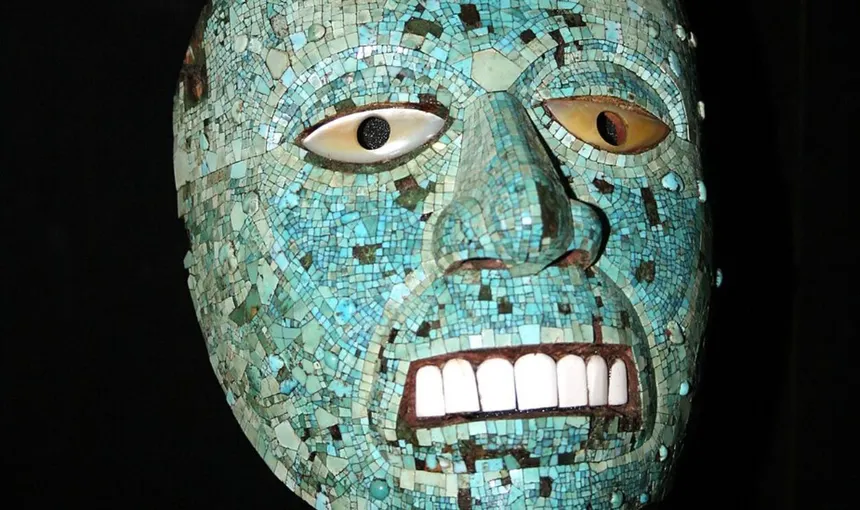
Modern artists and historians often draw inspiration from the mask’s craftsmanship and symbolism. It serves as a reminder that art was not merely decorative in Aztec culture. It was a sacred language through which humanity communicated with the gods.
At the same time, the mask also invites critical conversations about cultural heritage and repatriation. Many Mexican institutions have called for the return of Aztec artifacts held in European museums. Arguing that these sacred objects belong to the descendants of their creators. The debate continues, balancing preservation, education, and cultural justice.
Conclusion: Fire That Never Dies
The Mask of Xiuhtecuhtli is more than an archaeological artifact. It actively symbolizes the Aztec worldview, intertwining fire, life, and divinity for eternity.
Whether it adorned a priest, served as a ritual offering, or represented a god. Its luminous mosaic still glows with the spiritual fire of a lost empire. Over six centuries later, it continues to illuminate our understanding of Aztec art, belief, and the human desire to reach the divine.
As visitors gaze upon it in the British Museum, they are not merely looking at a mask. They are witnessing the enduring flame of an ancient civilization that refused to be extinguished.
ALSO READ: Shamash, Judge of Heaven and Earth: Ancient Fired Clay Statue from Ur (2000–1750 BC)