Ancient Roman Temple-Theater Complex in Caserta: Rediscovery of a 2nd-Century BC Site
Hidden Treasure of Roman Architecture
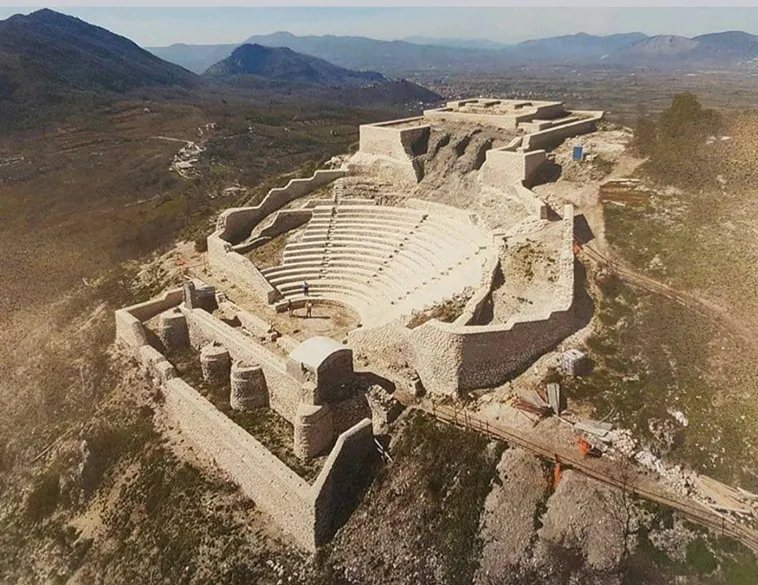
Nestled 450 meters above sea level in the scenic hills of Caserta, Italy, lies a remarkable Roman temple-theater complex dating back to the 2nd century BC. This site, hidden beneath centuries of vegetation, remained unknown until 2000, when a local pilot accidentally discovered it while flying his ultralight helicopter. After a recent fire cleared the surrounding vegetation, the temple-theater’s unusual layout became visible from the air, revealing a sophisticated structure that has captivated archaeologists and historians alike.
The discovery not only sheds light on Roman architectural ingenuity but also provides valuable insight into religious, cultural, and social practices in southern Italy during the Republican period.
Historical Context: Roman Temples and Theaters
Temples in Roman Culture
Temples were central to Roman religious and civic life, serving as sacred spaces for worshiping gods, performing rituals, and asserting communal identity. Typically located on elevated sites, temples were designed to dominate the landscape, reflecting both spiritual and social significance.
In the 2nd century BC, Roman temple architecture had evolved to include:
-
Elaborate podiums for elevated placement
-
Columned façades demonstrating Greek influence
-
Integration with natural landscapes to enhance visibility and sacredness
The Caserta temple, perched high above the surrounding valleys, follows this architectural logic, making it both practical for worship and symbolically commanding.
Theaters in Roman Society
Roman theaters were central to entertainment, social interaction, and religious festivals. Often located near temples, theaters served multiple functions:
-
Cultural and religious performances, such as dramas honoring gods
-
Civic gatherings for public announcements or political events
-
Demonstration of urban sophistication through monumental architecture
The combination of a temple and theater in one complex suggests that Caserta was a significant religious and cultural hub, blending sacred and social activities seamlessly.
The Accidental Rediscovery
How the Site Was Found
In 2000, a local pilot flying his ultralight helicopter noticed something unusual in the landscape of Caserta. After a recent fire cleared overgrown vegetation, the linear and geometric arrangement of the ruins became visible from above. The pilot’s keen eye and the unique aerial perspective revealed a structure unlike anything previously documented in the region.
This accidental discovery underscores the importance of modern technology and serendipity in archaeological research, showing how remote sensing and aerial observation can uncover long-lost historical treasures.
Initial Archaeological Response
Following the pilot’s report, archaeologists conducted preliminary surveys and found that the complex consisted of:
-
A temple structure perched on a high terrace
-
An adjoining semi-circular theater, partially carved into the hillside
-
Traces of stone foundations, staircases, and platforms suggesting advanced Roman engineering
The initial analysis confirmed that the site dated back to the 2nd century BC, placing it in the Roman Republican period, a time of expansion and cultural assimilation in southern Italy.
Architectural Features
Temple Layout
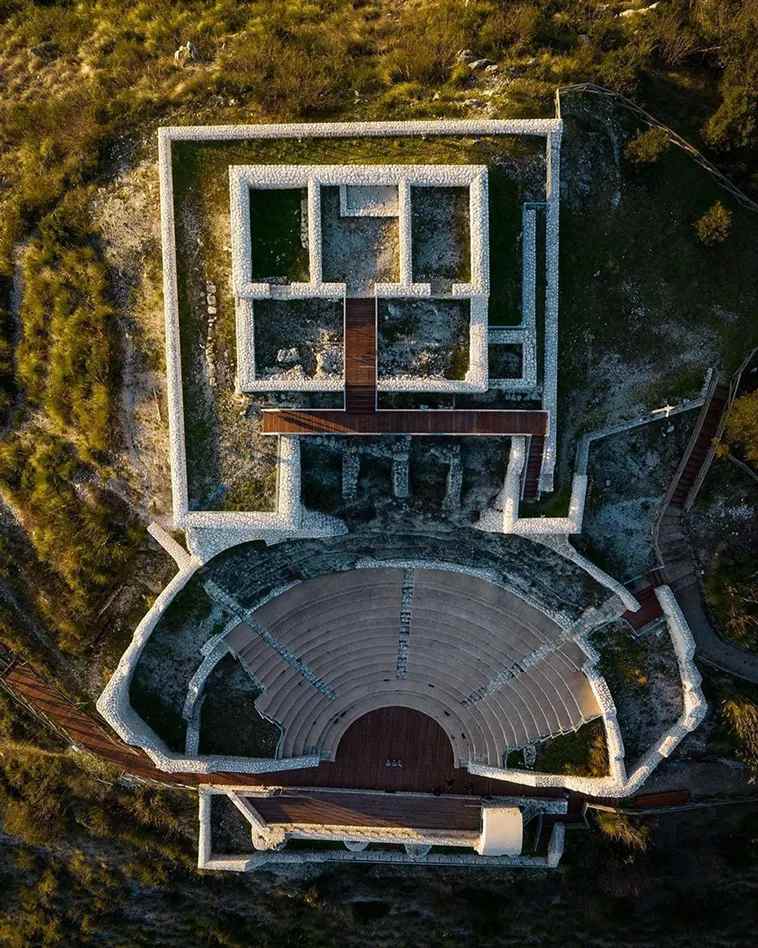
The temple occupies the highest point of the complex, emphasizing its sacred function. Key features include:
-
Elevated podiums, typical of Republican Roman temples
-
Rectangular cella (inner chamber) where the deity’s cult image likely stood
-
Stone staircases and terraces, designed to impress visitors and facilitate ritual access
The temple’s position not only allowed it to oversee the surrounding landscape but also created a visual connection with the theater, integrating religious and cultural experiences.
Theater Design
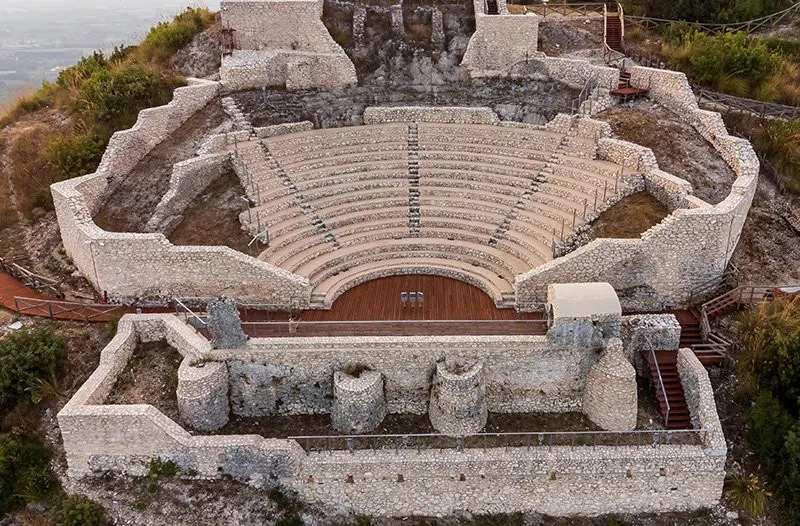
The theater, located just below the temple, features:
-
A semi-circular cavea for spectators
-
Orchestra and stage areas for performances
-
Terracing carved into the natural slope, maximizing acoustic and visual quality
The theater’s alignment with the temple suggests that performances may have been ritually significant, possibly honoring the deity or celebrating local festivals.
Integration with the Landscape
The site exemplifies Roman skill in harmonizing architecture with natural topography. The elevated temple, descending terraces, and theater carved into the hillside demonstrate an understanding of:
-
Visual impact: The complex dominates the view from the valley below
-
Practical access: Terraces and stairways guide movement
-
Acoustics: Natural slope enhances sound projection in the theater
Cultural and Religious Significance
Religious Practices
The temple-theater complex likely hosted:
-
Sacrificial rituals and offerings to the Roman gods
-
Festivals and theatrical performances, linking religion with entertainment
-
Community gatherings, strengthening civic cohesion and cultural identity
The dual-purpose nature of the complex illustrates the integration of spirituality and social life in Roman society, where sacred and secular activities often overlapped.
Regional Importance
Located in Caserta, the site reflects the expansion of Roman culture into southern Italy. The construction of monumental temple-theater complexes indicates:
-
The presence of a prosperous community capable of sponsoring large-scale architecture
-
Active participation in Roman religious, political, and social networks
-
The strategic and symbolic importance of elevated locations for sacred architecture
Preservation and Future Research
Current Condition
After its discovery, the Caserta temple-theater complex faced challenges of preservation, including:
-
Exposure to natural erosion due to its hillside location
-
Damage from vegetation and fire prior to rediscovery
-
Fragmented stone structures requiring careful archaeological stabilization
Conservation efforts are ongoing to protect the site, map its features, and make it accessible for study and tourism.
Opportunities for Archaeological Study
The rediscovery opens avenues for research into:
-
Roman Republican architecture and urban planning in southern Italy
-
Cultural and religious practices, particularly the intersection of theater and temple rituals
-
Construction techniques, including terracing and hillside theater design
Further excavation and study may also clarify the specific deity worshiped at the temple and the types of performances conducted in the theater.
Conclusion: A Roman Discovery Rewritten
The Roman temple-theater complex in Caserta stands as a testament to the ingenuity, religious devotion, and cultural sophistication of the 2nd-century BC Roman world. Its accidental discovery in 2000 highlights the role of modern observation and serendipity in uncovering long-hidden historical treasures.
This complex not only showcases architectural brilliance but also provides a window into the intertwined nature of religion, entertainment, and civic life in ancient Rome. Preserving and studying this site allows us to reconnect with the past, appreciating the enduring legacy of Roman culture in southern Italy.
As archaeologists continue to explore its terraces, temple podiums, and theater cavea, the Caserta complex promises to reveal new insights into the daily life, spirituality, and artistic vision of ancient Roman communities.
ALSO READ: Explore the Ancient Inca Ruins at Isla del Sol, Bolivia