Gorgona Medusa Pediment from the Temple of Artemis, Corfu: Myth, Art, and Archaeology (580 BC)
A Masterpiece of Archaic Greek Sculpture
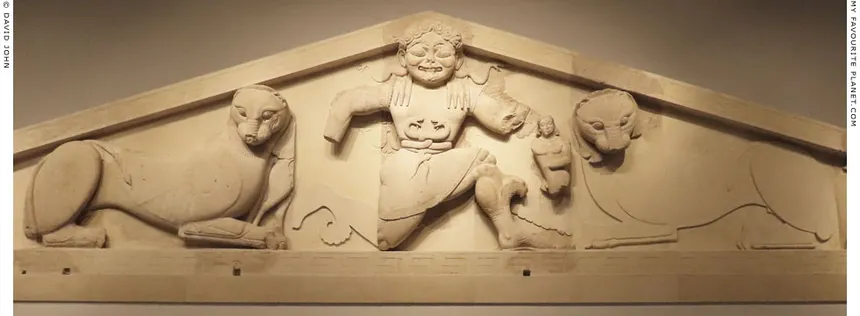
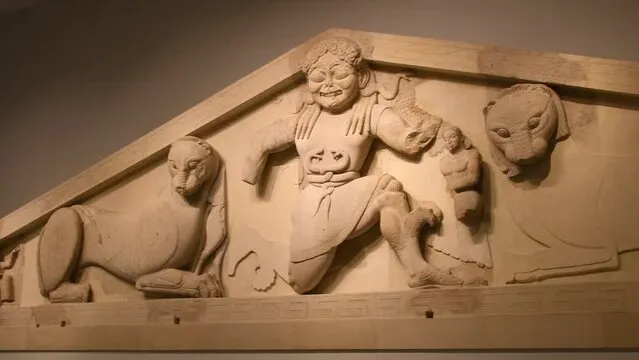
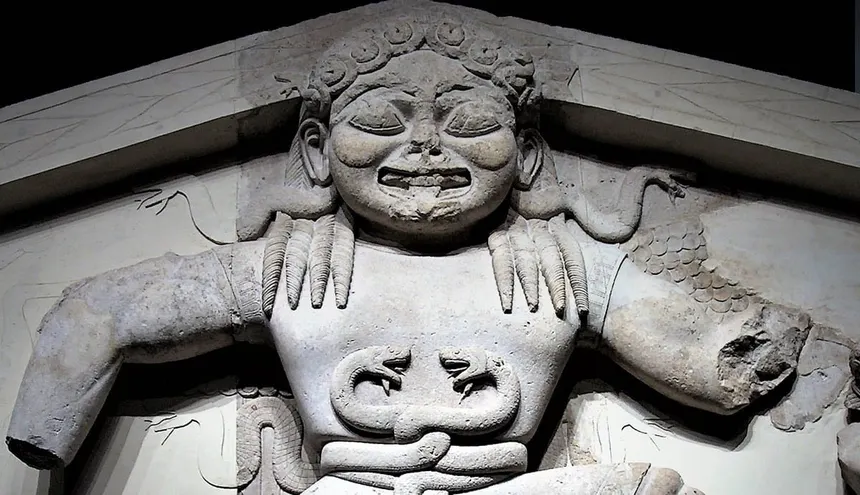
Among the earliest examples of monumental Greek pediment sculpture is the Gorgona Medusa pediment from the Temple of Artemis on Corfu, dating to 580 BC. This intricate sculpture depicts Medusa flanked by her son Chrysaor and two predatory animals, often identified as lionesses or panthers.
The pediment, now housed in the Archaeological Museum of Corfu, Greece, is a vivid testament to Archaic Greek artistry, religious devotion, and mythological storytelling. It combines naturalistic detail, stylized motifs, and symbolic power, illustrating the enduring fascination with Medusa in ancient Greek culture.
Historical Context: The Temple of Artemis and Its Pediment
The Temple of Artemis on Corfu
The Temple of Artemis, one of the earliest Doric temples in Greece, was constructed around 590–580 BC on the island of Corfu. It was dedicated to Artemis, goddess of the hunt, wilderness, and protector of women and children.
The temple’s pediments were among the first to feature sculptural groups integrated into architectural design, serving both decorative and symbolic purposes. The east pediment, where the Gorgona Medusa is positioned, was particularly significant in communicating divine protection and mythological themes to visitors and worshippers.
The Role of Pediment Sculptures
Pediment sculptures in Greek temples were designed to:
-
Depict mythological narratives, often involving gods, heroes, or monsters
-
Convey moral or protective messages to the community
-
Demonstrate artistic skill and innovation, especially in rendering human and animal forms in low relief
The Gorgona pediment exemplifies all these functions, presenting a dynamic scene with Medusa at its center.
The Sculpture: Medusa, Chrysaor, and the Lionesses
Medusa at the Center
Medusa, one of the Gorgons of Greek mythology, is depicted with:
-
A terrifying, wide-eyed expression, designed to repel evil
-
Snakes intertwined in her hair, symbolizing her power and curse
-
A frontal, almost rigid pose, characteristic of Archaic Greek sculpture
The sculptor balances the need for symbolic menace with naturalistic detail, making Medusa both a fearsome figure and a work of aesthetic harmony.
Chrysaor: Medusa’s Son
On one side of Medusa is Chrysaor, her mortal child by Poseidon. Chrysaor, often depicted as a young warrior, represents:
-
Lineage and divine heritage
-
Strength and protective power, complementing Medusa’s terrifying presence
-
Mythological continuity, linking the Gorgons to heroic narratives in Greek mythology
His presence highlights how pediment sculptures communicated complex familial and mythological relationships within a single composition.
Lionesses or Panthers
Flanking Medusa and Chrysaor are two predatory animals, interpreted as lionesses or panthers. These creatures serve multiple symbolic purposes:
-
Guardianship, emphasizing the protective function of Medusa on the temple
-
Ferocity, reinforcing the monstrous and awe-inspiring nature of the Gorgon
-
Composition balance, framing the central figures and guiding the viewer’s gaze
The inclusion of these animals demonstrates the sculptor’s skill in blending myth, nature, and narrative composition.
Pegasus: The Missing Winged Horse
Medusa’s Other Child
Greek mythology tells us that Medusa had another child, the winged horse Pegasus, who sprang from her neck after Perseus decapitated her. Scholars have long debated whether Pegasus was originally part of the pediment composition.
Possible Reasons for Pegasus’ Absence
-
Spatial limitations: The pediment’s triangular shape may have restricted additional figures.
-
Sculptural damage: Portions of the pediment have not survived, leaving gaps where Pegasus may have been.
-
Narrative focus: The sculptor may have chosen to emphasize Chrysaor and the protective imagery rather than the winged horse.
While Pegasus is not visible in the surviving pediment, literary and mythological references suggest that the horse was intimately connected to Medusa’s story and may have influenced the overall thematic intent.
Artistic Style: Archaic Greek Sculpture
Archaic Features
The Gorgona pediment exemplifies key Archaic Greek artistic conventions:
-
Frontal, rigid central figures with patterned hair and stylized anatomy
-
Geometric arrangements, particularly in framing Medusa with animals and children
-
Emphasis on symmetry and balance, creating a harmonious composition despite the chaotic subject matter
Naturalistic Details
Despite its stylization, the pediment exhibits careful attention to realism:
-
Musculature and stance of Chrysaor suggest movement and vitality
-
Facial expressions convey emotion and narrative intent
-
The lions/panthers show anatomical accuracy and dynamic posture
The work demonstrates how early Greek sculptors were experimenting with both stylization and naturalism, setting the stage for Classical sculpture.
Mythological and Cultural Significance
Medusa as a Protective Symbol
In the context of the Temple of Artemis, Medusa served as a guardian figure, protecting the sacred space from evil. Her monstrous visage was intended to ward off intruders or malevolent spirits, a common practice in archaic Greek religious architecture.
Chrysaor and Continuity
By including Chrysaor, the sculptor linked divine power with human-like lineage, suggesting that heroic and semi-divine figures were active participants in the moral and cosmic order.
Integration of Myth into Daily Life
The pediment exemplifies how Greek mythology was embedded into religious and civic spaces, turning temple architecture into a medium for storytelling and moral instruction.
Preservation and Archaeological Context
Discovery and Excavation
The pediment fragments were excavated from the Temple of Artemis site on Corfu. Archaeologists meticulously documented and restored the surviving pieces, now displayed at the Archaeological Museum of Corfu.
Conservation Challenges
-
Fragility of limestone material over 2,500+ years
-
Missing sections, complicating reconstruction
-
Environmental exposure prior to excavation
Despite these challenges, the pediment remains one of the most complete and informative examples of early Greek temple sculpture.
Legacy: Influence on Greek Art and Beyond
The Gorgona pediment influenced subsequent Greek art, particularly:
-
Classical temple pediments, where central figures became more dynamic and realistic
-
Mythological storytelling, inspiring artists to incorporate narrative complexity into sculpture
-
Protective symbolism, continued in other temples and civic monuments across Greece
By bridging myth, art, and religion, the pediment remains a key reference point for understanding Archaic Greek aesthetics.
Conclusion: A Timeless Testament to Myth and Art
The Gorgona Medusa pediment from the Temple of Artemis on Corfu (580 BC) is a masterful integration of myth, artistry, and religious symbolism. Medusa, Chrysaor, and the lionesses/panthers exemplify how Greek sculptors conveyed power, protection, and narrative within the architectural space of a temple.
While the question of Pegasus’ original depiction remains unresolved, the pediment continues to captivate archaeologists, art historians, and museum visitors, illustrating the enduring power of Greek mythology in shaping visual culture.
As a cornerstone of Archaic Greek sculpture, the pediment invites reflection on how ancient societies used art to communicate values, protect sacred spaces, and immortalize mythological narratives — lessons that resonate across millennia.
ALSO READ: The Giant Hand in Chile: A Mysterious Monument of the Desert