1,900-Year-Old Roman Gold Ring with Holographic Image Found in Tomb of Aebutia Quarta
Jewel from the Depths of History
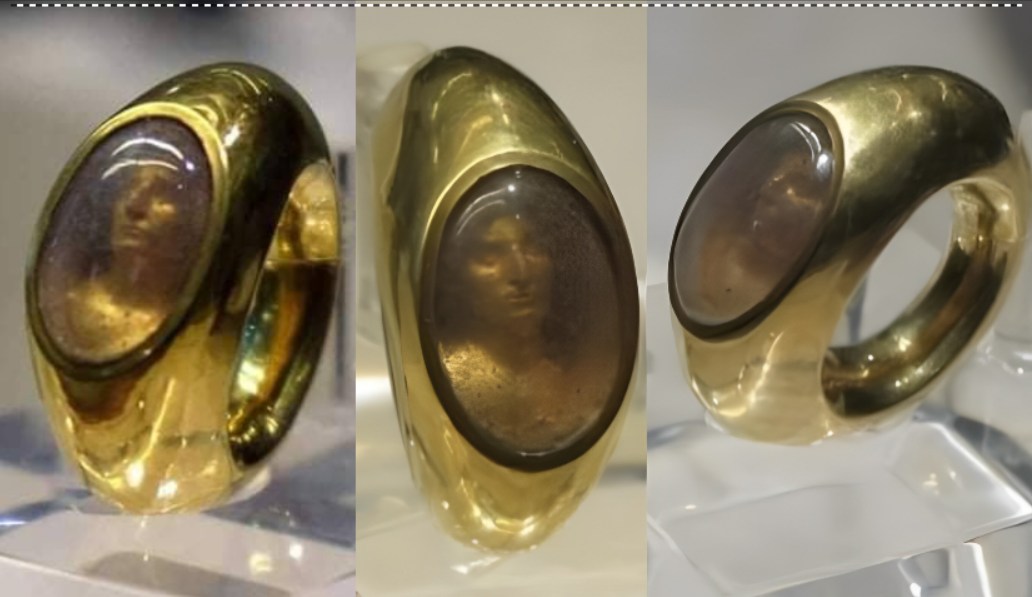
In 2000, archaeologists excavating the Grottaferrata necropolis, just outside Rome, made a breathtaking discovery — the tomb of Aebutia Quarta, a Roman noblewoman laid to rest nearly 1,900 years ago. Among the luxurious items buried with her, one artifact stood out: a gold ring set with an intaglio gemstone that displays a holographic-like image when viewed under certain light.
This extraordinary piece, now known as the Roman gold ring with a holographic image, captures the imagination of historians and art enthusiasts alike. It not only testifies to the technical sophistication of Roman gem engravers but also offers a window into the aesthetic tastes, spiritual beliefs, and status symbols of Rome’s elite during the height of the Empire.
The Discovery: Unearthing the Tomb of Aebutia Quarta
The tomb, located within the Hypogeum of the Garland (Ipogeo della Corona) at Grottaferrata, dates to the 1st–2nd century CE, during the Roman Imperial period. Aebutia Quarta, the woman interred within, is believed to have belonged to a wealthy patrician family, as indicated by the exquisite craftsmanship and opulent materials found in her burial chamber.
Archaeological Context
The Hypogeum was a sealed subterranean tomb, remarkably well-preserved. Inside, archaeologists found fine jewelry, glass vessels, ivory ornaments, and gold adornments, alongside the skeletal remains of Aebutia Quarta, wrapped in delicate linen and adorned with a garland of flowers — hence the name “Hypogeum of the Garland.”
The gold ring was among her most striking possessions, discovered near her right hand. Its preservation was exceptional, allowing researchers to study both the metallurgy and gemstone technology in detail.
The Ring’s Design: Mastery in Miniature
The Roman gold ring features a bezel set with a finely carved intaglio gemstone, likely made of nicolo (a type of banded agate) or glass paste, materials prized for their ability to create layered optical effects.
A Holographic Image Before Its Time
What makes this ring extraordinary is its holographic illusion — when light strikes the gem from different angles, the carved figure seems to shift and move, producing a lifelike three-dimensional image. This optical phenomenon results from the precise carving of microscopic layers within the stone, demonstrating the advanced craftsmanship and scientific understanding of Roman lapidaries nearly two millennia ago.
Iconography and Meaning
The engraved image is thought to depict a mythological or divine figure — possibly Venus, Fortuna, or a protective deity, reflecting Aebutia Quarta’s faith and social identity. In Roman culture, such rings often served as personal amulets, believed to provide protection, favor, or fortune in the afterlife.
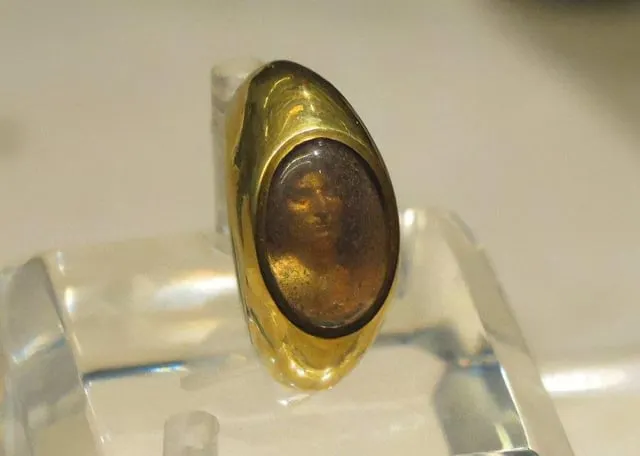
The fusion of art and technology in this small object highlights the Romans’ deep understanding of light, texture, and perception, long before the modern concept of holography was even imagined.
Roman Jewelry: Symbol of Status, Wealth, and Identity
Jewelry in ancient Rome was far more than personal decoration — it was a marker of social rank, family heritage, and religious devotion. A Gold rings like the one found in Aebutia Quarta’s tomb were typically worn by the elite classes, whose wealth afforded access to luxury materials from across the empire.
Gold and Power
Gold symbolized imperishable wealth and divine favor. Its use in funerary contexts reflected the Roman belief in continuity between life and death — the dead carried their social identity into the afterlife.
Intaglios and Signet Rings
Intaglios — gemstones engraved with recessed images — served both aesthetic and practical purposes. Many Romans used such rings as signets, pressing them into wax or clay to seal documents and authenticate correspondence. The imagery carved into the gems often conveyed personal or family symbolism.
In Aebutia Quarta’s case, however, the ring likely served a purely ornamental or spiritual role, intended to accompany her spirit through eternity.
The Technology Behind the Art
The holographic effect of the gemstone demonstrates a remarkable understanding of optics and gemstone layering. Roman gem cutters achieved this by exploiting the natural bands of stones like agate or onyx, carving reliefs at precise depths and angles so that light refraction produced a sense of depth and motion.
Techniques Used
-
Intaglio engraving: The artisan carved recessed designs using fine iron tools and abrasives such as emery.
-
Polishing: The surface was polished to enhance translucency and contrast.
-
Light manipulation: By aligning the carved layers with the stone’s natural bands, the engraver created the illusion of movement — a proto-optical effect unique to Roman lapidary art.
This technique reflects both technical mastery and aesthetic sophistication, combining science, art, and spirituality in a single artifact.
The Hypogeum of the Garland: A Window into Roman Funerary Culture
The Hypogeum of the Garland stands as one of the most important Roman funerary discoveries in the region around Rome. Unlike typical cremation burials of the era, Aebutia Quarta’s tomb followed the inhumation tradition, suggesting either a personal or regional variation in funerary customs.
Funerary Offerings and Beliefs
Items buried with her — jewelry, cosmetics, and household goods — represent not only wealth but also preparations for the afterlife. Romans believed that such objects would accompany the soul and provide comfort in eternity.
The ring’s presence reinforces the notion of eternal identity and divine protection, bridging life and death through art.
The Legacy of Aebutia Quarta’s Ring
Today, the Roman gold ring with a holographic image stands as a testament to ancient innovation and beauty. Scholars continue to study its optical properties, exploring how ancient artisans achieved such effects with primitive tools.
Cultural Significance
-
Technological insight: The ring demonstrates that Roman artisans possessed a profound understanding of materials and light manipulation.
-
Artistic mastery: It represents the high point of Roman jewelry craftsmanship during the Imperial period.
-
Historical continuity: Similar techniques later influenced Byzantine and Renaissance gem engraving.
The artifact reminds us that technological creativity is not a modern invention, but a timeless expression of the human desire to transform raw materials into symbols of identity and immortality.
Visiting the Discovery
While the original artifacts from the Hypogeum of the Garland are conserved under controlled conditions in Italy, reproductions and photographs are often displayed in Roman art exhibitions. Visitors to Rome can explore nearby sites like the National Roman Museum or Villa Adriana to experience the grandeur of the era that produced such marvels.
For archaeologists, historians, and admirers of ancient craftsmanship. The ring continues to illuminate the refined artistry of Imperial Rome. A civilization where beauty, science, and symbolism intertwined seamlessly.
Conclusion: A Timeless Masterpiece of Roman Ingenuity
The 1,900-year-old Roman gold ring with a holographic image is far more than a piece of jewelry. It is a technological marvel, a symbol of status, and a window into the soul of Roman civilization.
From the tomb of Aebutia Quarta at Grottaferrata emerges not just a relic of the past. But a story of innovation, identity, and immortality. Its shimmering image, captured in gold and stone, continues to fascinate the modern world. A reminder that art and science have always been intertwined in humanity’s quest for beauty and meaning.
ALSO READ: Tlaloc: The Aztec Rain God and His Ancient Mesoamerican Legacy