Stela Yomop: The Divine Authority of Lady Ix Ook Ayiin in Classic Maya Civilization
A Window into the Sacred Power of the Maya
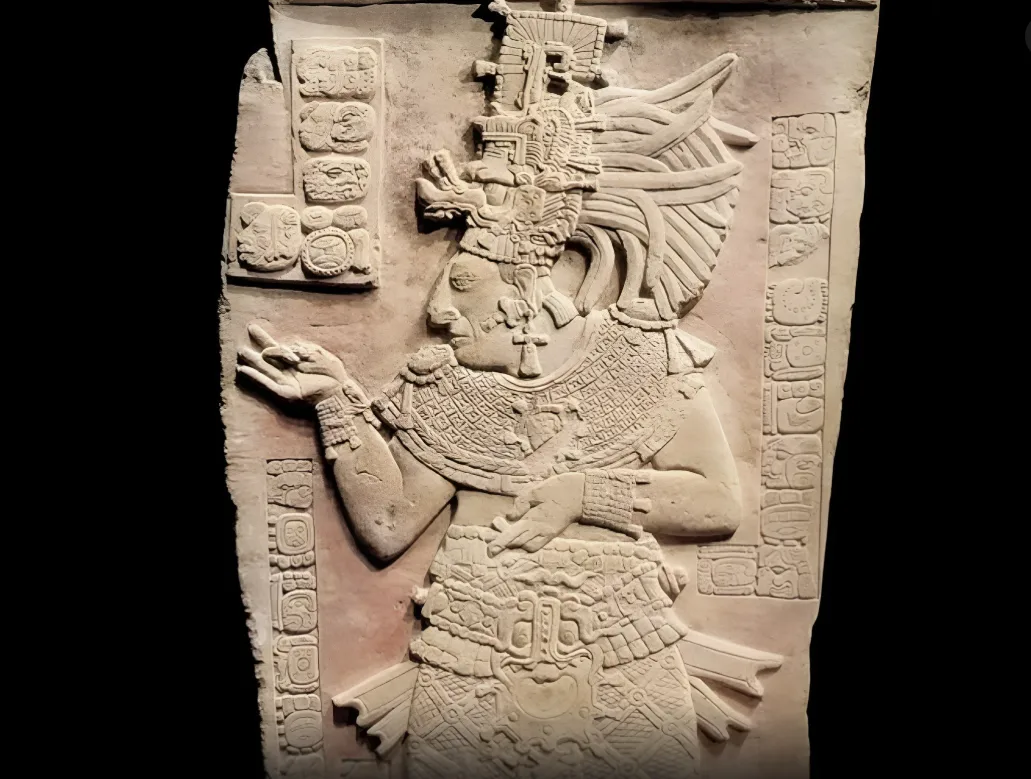
Among the many breathtaking artifacts of the Classic Maya world, few are as evocative or enigmatic as the Stela Yomop, a finely carved limestone relief dating to around 700 CE. Its intricately detailed depiction of Lady Ix Ook Ayiin, a noblewoman or queen rendered in the guise of a goddess, opens a remarkable window into the spiritual and political life of the ancient Maya elite.
Although currently held in a private collection, the relief has garnered scholarly attention for its artistic excellence, symbolic depth, and historical importance. Through its delicate lines and hieroglyphic inscriptions, Stela Yomop bridges the earthly and celestial realms, revealing how divine imagery legitimized human rule in the Maya world.
The Discovery and Name of the Stela
The Stela Yomop takes its name from the region or archaeological site where it was reportedly unearthed, though its exact provenance remains uncertain due to its movement through private hands. Like many Maya monuments, it likely stood as part of a temple or palace complex, where it would have been prominently displayed to commemorate royal ceremonies and divine rites.
Such stelae—tall, flat stone slabs carved in relief—served as public monuments, inscribed with both imagery and hieroglyphic texts to mark significant events, including royal accessions, rituals, or cosmic alignments. The Yomop example distinguishes itself by focusing on a female figure, suggesting a moment of unique prominence for women within the Classic Maya social and religious order.
Lady Ix Ook Ayiin: The Moon, Creation, and Power
At the heart of the composition is Lady Ix Ook Ayiin, her name recorded in glyphic form on the upper register of the stela. She is depicted in elaborate ceremonial regalia, her body adorned with intricate jewelry, textiles, and headdresses representing the goddess of creation or the moon — one of the most revered deities in the Maya pantheon.
The moon goddess was a symbol of fertility, rebirth, and cyclical time, attributes essential to both agricultural success and royal legitimacy. By aligning herself with this divine persona, Lady Ix Ook Ayiin asserted her cosmic authority, claiming not only temporal power but also a direct connection to celestial cycles that governed the Maya worldview.
Her pose — upright, composed, and commanding — conveys both grace and strength, reinforcing her status as an intermediary between the human and divine realms. The stela captures a moment of transformation, as the queen becomes divine through ritual performance.
Artistic Mastery: The Hallmarks of Classic Maya Sculpture
The craftsmanship of Stela Yomop reflects the artistic zenith of the Classic Maya period (250–900 CE). Carved from fine-grained limestone, the relief demonstrates exceptional attention to anatomical detail and texture.
Carving Technique and Composition
The sculptor employed a combination of low and high relief, creating a dynamic interplay of light and shadow that emphasizes the figure’s jewelry, headdress, and flowing garments. The background glyphs and decorative motifs are rendered in shallower relief, ensuring the central figure remains the visual and symbolic focus.
Iconographic Details
Close examination reveals a wealth of iconographic symbols — crescent motifs representing lunar cycles, serpent imagery denoting divine wisdom, and maize iconography associated with fertility and life renewal. Each element operates as part of a complex visual language, communicating ideas about lineage, sanctity, and the eternal return of cosmic order.
The Role of Women in Maya Religion and Politics
One of the most striking aspects of Stela Yomop is its focus on a female protagonist. In the patriarchal landscape of ancient Mesoamerica. Women of noble birth held important yet often under-documented roles in governance and religion.
Archaeological and epigraphic evidence from sites such as Yaxchilán, Naranjo, and Palenque. Reveals that Maya queens not only participated in but often led public rituals. Serving as priestesses and dynastic anchors. Lady Ix Ook Ayiin appears to have been such a figure. A sacred consort whose spiritual authority reinforced her family’s claim to power.
By portraying her as the moon goddess, the carver of Stela Yomop immortalized her dual identity. As both earthly queen and divine embodiment. Ensuring her presence endured in the cyclical rhythms of time itself.
Hieroglyphic Inscriptions: Voices from the Past
Though portions of Stela Yomop’s inscription are damaged or eroded. Epigraphers have identified several key glyph blocks referencing dates, divine titles, and ritual acts.
The stela’s Long Count date corresponds roughly to 700 CE. Placing it within the Late Classic Period, when Maya art and political expression reached their peak sophistication. The inscriptions mention ritual phrases such as “ch’ahb” (to do penance or bloodletting) and “k’uhul ajaw” (holy lord). Implying that Lady Ix Ook Ayiin was either performing or being commemorated for a sacred bloodletting rite. A central act of renewal in Maya religion.
These texts help confirm that Stela Yomop was more than a decorative object. It was a living monument through which the sacred history of a dynasty was proclaimed and preserved.
Symbolism and Sacred Identity
Every component of Stela Yomop reinforces the cosmic legitimacy of its subject. The moon goddess association reflects both the rhythms of agriculture. And the cycles of birth and death, core themes in Maya thought.
Her elaborate costume, likely composed of jade ornaments, shell inlays, and woven textiles, symbolizes wealth and divine favor. The feathers and serpentine motifs often found in similar stelae evoke transformation and communication with the gods. Implying that Lady Ix Ook Ayiin’s ritual attire served as a vehicle for transcendence.
In essence, Stela Yomop is a visual hymn — celebrating the convergence of womanhood, divinity, and rulership in the sacred theater of Maya kingship.
Cultural and Historical Significance
The significance of Stela Yomop extends far beyond its aesthetic beauty. It contributes valuable insight into:
-
Gender roles in Maya society, emphasizing the political and ritual importance of women.
-
Maya cosmology and religion, especially lunar symbolism and divine embodiment.
-
Artistic conventions of the Late Classic Period, reflecting the regional style and technical innovation of Maya sculptors.
-
The relationship between power and divinity, illustrating how rulers legitimized their authority through cosmic identification.
Moreover, its presence in a private collection raises important questions. About cultural heritage preservation, access, and the global circulation of Mesoamerican artifacts — themes central to modern archaeological ethics.
Legacy: The Eternal Power of Lady Ix Ook Ayiin
Although time and circumstance have separated Stela Yomop from its original context, its power endures. Today, it stands as a silent witness to the grandeur of Maya civilization. And to the enduring role of women as both creators and conduits of sacred order.
The artistry of Stela Yomop continues to inspire admiration among historians, archaeologists, and art lovers alike. It encapsulates a vision of the universe in which humanity and divinity intertwined. Where ritual performance and artistic mastery combined to express eternal truths about life, death, and cosmic renewal.
Conclusion: A Monument of Moonlight and Majesty
Stela Yomop is more than an artifact — it is a story carved in stone, a poetic testament to how the Maya saw their rulers as reflections of celestial order. Through the figure of Lady Ix Ook Ayiin, the relief preserves the memory of a civilization that fused art, faith, and power. Into one seamless expression of cosmic beauty.
As we gaze upon her serene, commanding visage. We are reminded that the divine still whispers through the ancient stones of the Maya world. Inviting us to rediscover their eternal dance of gods and mortals.
ALSO READ: The Face in the Ash – A Whisper from Pompeii