The Sandstone Doorway of Karnak – A Portal to the Divine
Standing at the Threshold of Eternity
Amid the sprawling ruins of Karnak Temple in Luxor, a single sandstone doorway rises quietly, weathered by millennia yet imbued with enduring significance. Once a grand passage between sacred chambers, it stands today as a portal through time, inviting visitors to imagine the ancient rituals, the prayers whispered, and the solemn footsteps that passed beneath its lintel.
Karnak itself is not a single structure but a vast complex, developed over more than two millennia, beginning around 2000 BCE. Pharaohs, priests, and artisans each added to its halls, pylons, and sanctuaries, leaving behind a layered narrative carved in stone. Within this monumental story, the sandstone doorway represents both architectural mastery and spiritual symbolism, a quiet sentinel in a world of gods and kings.
The Role of the Doorway in Karnak’s Sacred Architecture
In Egyptian temples, doorways were more than practical structures — they were ritual thresholds, separating the profane from the sacred. This particular sandstone portal led into a series of chambers devoted to Amun-Ra, the chief deity of the Theban Triad, alongside Mut and Khonsu.
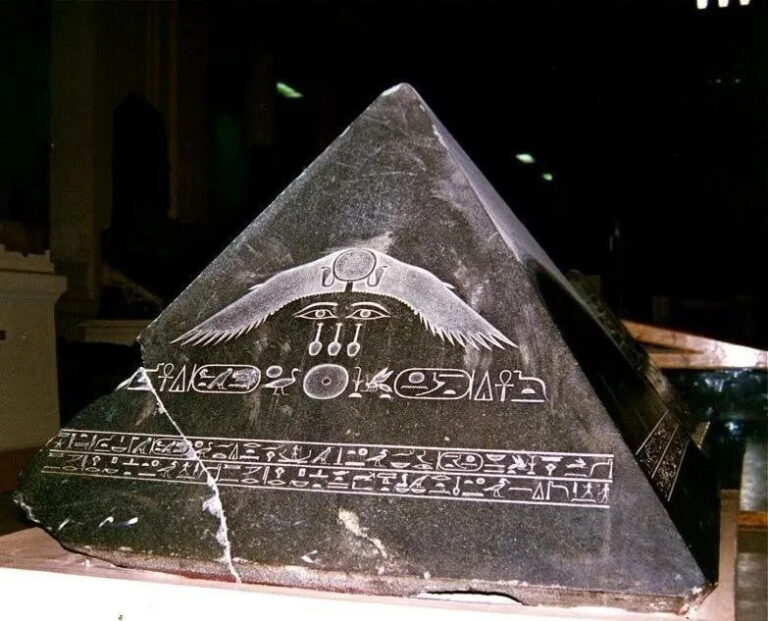
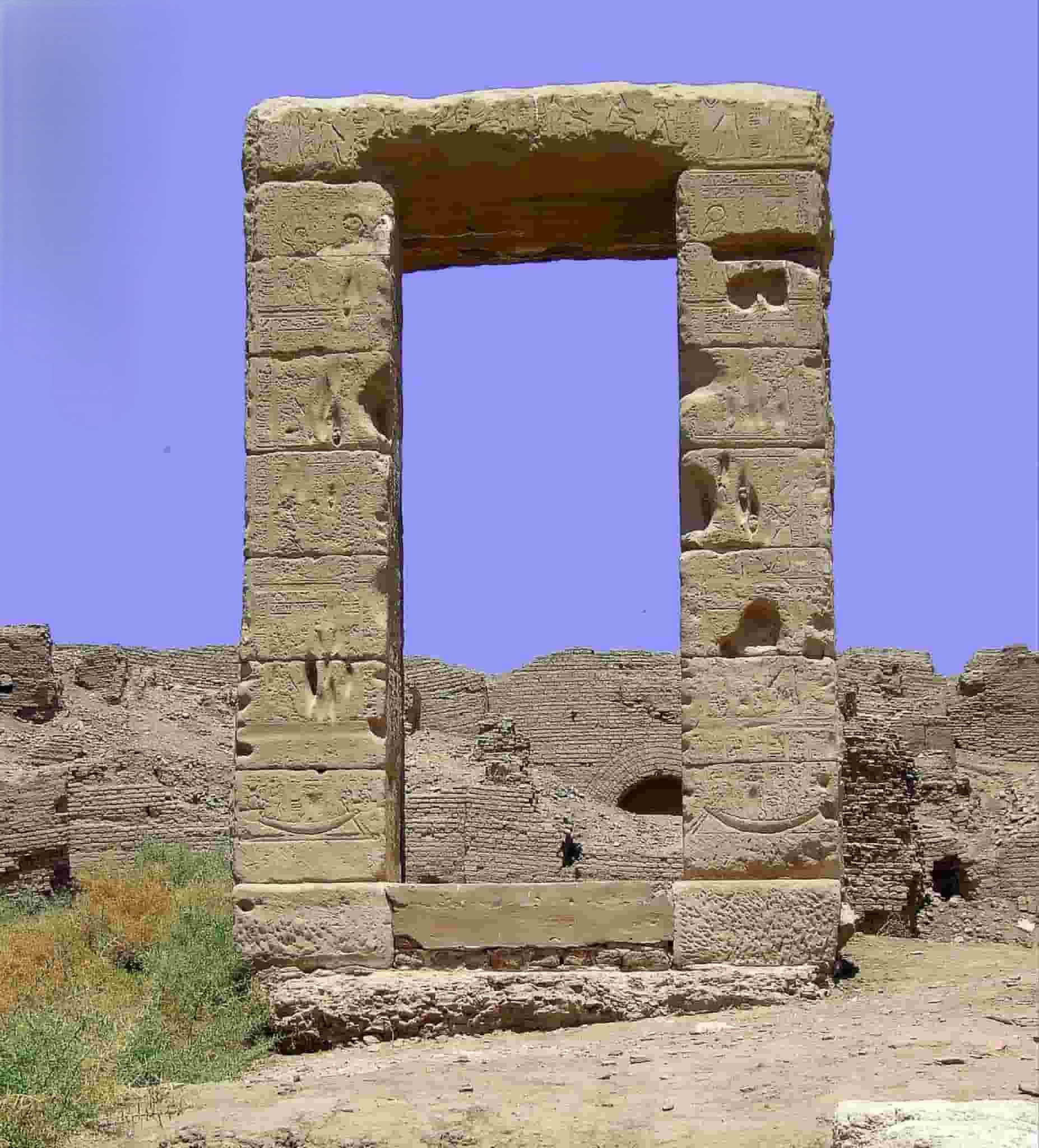
Hieroglyphic inscriptions adorn its surface, honoring Amun-Ra and recording the deeds of pharaohs who sought divine approval for their rule. The carvings often depict:
-
Pharaohs making offerings to gods
-
Celestial boats symbolizing the journey of the sun
-
Scenes of ritual and divine interaction
The doorway was thus a medium of connection — a physical and symbolic passage that framed the divine, guiding worshippers from the outer world into a sanctified interior. It embodies the precision and geometry of Egyptian sacred architecture, where proportion, alignment, and symbolism intertwined.
The Artistry of Hieroglyphs and Reliefs
Although centuries of wind, sand, and sun have softened the carvings, traces of the original hieroglyphs remain legible. Each line speaks of ancient craftsmanship, created with both aesthetic care and spiritual intent.
The doorway features:
-
Carved offerings and gods, often rendered in profile, consistent with Egyptian artistic conventions.
-
Registers of kings who dedicated portions of the temple, demonstrating the link between divine favor and royal authority.
-
Celestial motifs, including boats that carried gods across the sky and the underworld.
The erosion has given the carvings a dreamlike quality, turning sharp detail into gentle outlines that hint at what once was. This patina of time does not diminish the doorway’s presence; rather, it enhances its aura as a monument to endurance, devotion, and memory.
A Timeline of Kings and Devotion
The Temple of Karnak was a site of continuous construction, with contributions from pharaohs including Senusret I, Thutmose III, Hatshepsut, Ramesses II, and later rulers. Each sought to assert their authority by linking themselves to Amun-Ra and the temple’s sacred energy.
The doorway records these acts, serving as both a political statement and a spiritual testament. It reminds us that in ancient Egypt, religion and rulership were inseparable. To pass through the doorway was not only to approach the deity but also to witness the authority and piety of the kings who carved their legacy in stone.
The Material: Sandstone as Eternal Medium
The choice of sandstone was deliberate. Abundant along the Nile and in Luxor, it provided a workable yet durable medium for both carving and construction. Over millennia, sandstone’s natural resilience allowed the doorway to withstand erosion, flooding, and human activity, even as softer details faded.
The surface of the doorway carries the marks of time and use. Smooth areas hint at centuries of ritual contact — hands touching stone, priests brushing past in ceremonial garb, sunlight tracing patterns across the hieroglyphs. Each mark adds to the story of endurance, showing how sacred spaces are not only built but lived in and remembered.
Geometry, Alignment, and Sacred Design
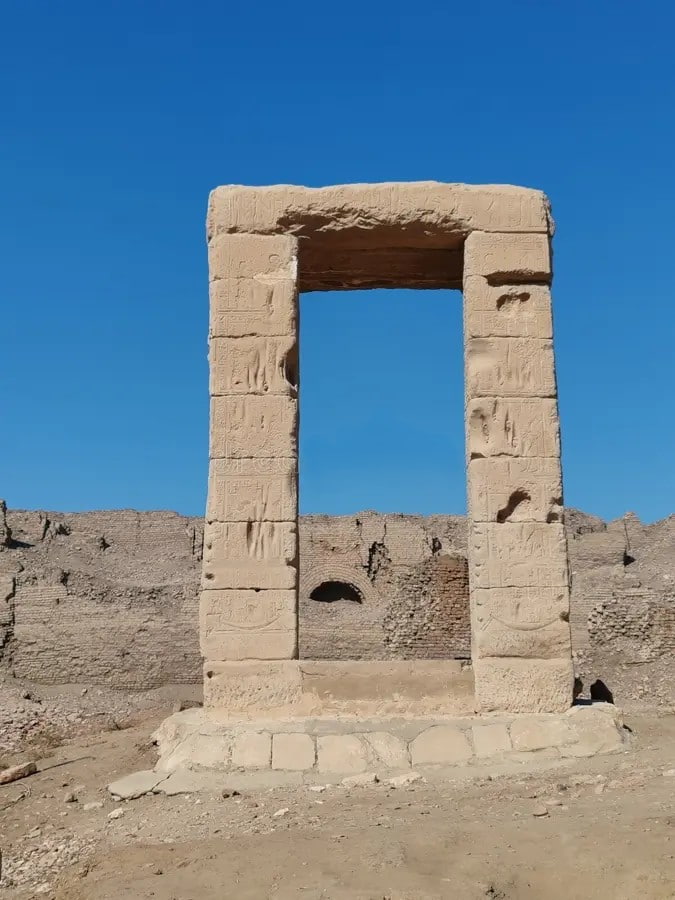
Egyptian temple architecture relied on mathematical precision and symbolic alignment. Doorways were carefully proportioned, with height, width, and relief spacing reflecting cosmic and ritual principles.
This sandstone portal exemplifies that careful design:
-
Symmetry reinforces balance and order, essential to Ma’at, the Egyptian concept of cosmic harmony.
-
Orientation may align with the sun’s path, echoing the celestial journeys of Amun-Ra and his boats.
-
Proportions emphasize the doorway as a liminal space — larger than life, yet inviting, guiding visitors from the ordinary to the divine.
Even in its weathered state, the doorway retains the visual rhythm and harmony that define Karnak’s architectural genius.
Standing Beneath the Doorway Today
To stand beneath this sandstone doorway is to experience time in layers. One sees not only the carvings but also the millennia of desert light and shadow that have danced across them.
The doorway frames the sky as much as the temple interior, creating a sense of threshold between earth and eternity. It evokes questions that transcend history:
-
What prayers passed through this portal?
-
Which kings felt the weight of divine expectation?
-
How did ordinary worshippers perceive this threshold?
Even in ruin, the doorway maintains its aura of sacred passage, reminding us that architecture can embody both faith and philosophy, materiality and metaphysics.
Preservation and Modern Appreciation
Today, the Temple of Karnak is one of Egypt’s most visited archaeological sites. Preservation efforts focus on stabilizing structures, preventing further erosion, and documenting inscriptions for study and education.
The sandstone doorway stands as a centerpiece of these efforts, a physical and symbolic reminder of Egypt’s enduring cultural legacy. Photographers, historians, and visitors alike are drawn to its quiet majesty — a tangible connection to the faith, artistry, and ambition of a civilization that defined an era.
The Doorway as Metaphor
Beyond its physicality, the doorway serves as a metaphor for passage and transcendence. Once it opened into sacred chambers, now it opens into history, imagination, and memory.
Its erosion reflects the impermanence of human endeavor, yet its presence affirms that faith, like stone, can outlast time. Standing beneath its frame is an invitation to reflect on continuity, devotion, and the universal human desire to reach for the divine.
Conclusion: A Portal Through Time
The sandstone doorway of Karnak Temple is more than a remnant of ancient construction. It is a portal through time, a silent witness to worship, kingship, and the enduring human pursuit of order, meaning, and connection with the cosmos.
Its hieroglyphs may be worn, and its carvings softened, but the doorway’s essence remains: a testament to endurance, sacred geometry, and the interplay of human hands with divine intent.
To walk beneath it is to enter a dialogue with the past, standing at the threshold where history meets eternity — a place where faith, artistry, and memory converge in stone.
ALSO READ: Yangshuo Moon Hill: The Iconic Natural Arch of China