Cliff Palace of Mesa Verde – The Ancestral Puebloans’ Stone Sanctuary
A City Carved into Stone and Time
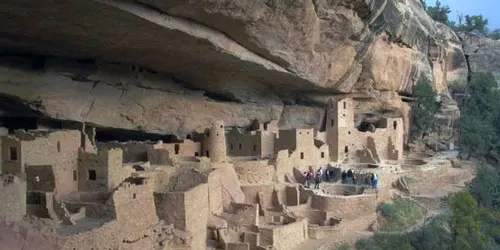
Hidden high in the cliffs of southwestern Colorado, where canyons cut through mesas and the desert air carries echoes of ancient footsteps, stands one of North America’s most extraordinary archaeological sites — the Cliff Palace of Mesa Verde.
Built by the Ancestral Puebloans in the late 12th century, this intricate dwelling of stone and adobe nestles beneath an immense sandstone overhang, shielded from centuries of sun, rain, and snow. Its enduring walls, towers, and ceremonial chambers testify to a people whose artistry and adaptation turned a rugged wilderness into a place of beauty, community, and spirit.
To stand within the Cliff Palace is to step into a living memory — a sanctuary suspended between earth and sky, where architecture becomes prayer and stone becomes story.
The Discovery of Mesa Verde’s Hidden City
Though the cliffs of Mesa Verde (“Green Table” in Spanish) had been known to local Ute and Navajo tribes for centuries, the world first learned of the Cliff Palace in 1888, when ranchers Richard Wetherill and Charlie Mason stumbled upon its towering ruins while herding cattle.
What they found astonished them: a multi-storied complex tucked beneath a massive alcove, built with an elegance and precision rarely seen outside the ancient civilizations of Mesoamerica. The discovery sparked decades of archaeological exploration, leading to the establishment of Mesa Verde National Park in 1906 — the first U.S. national park created to preserve cultural heritage rather than natural scenery.
Today, the Cliff Palace remains its most iconic and awe-inspiring feature — a monument to ingenuity, resilience, and reverence for the natural world.
Architectural Mastery in Stone, Wood, and Adobe
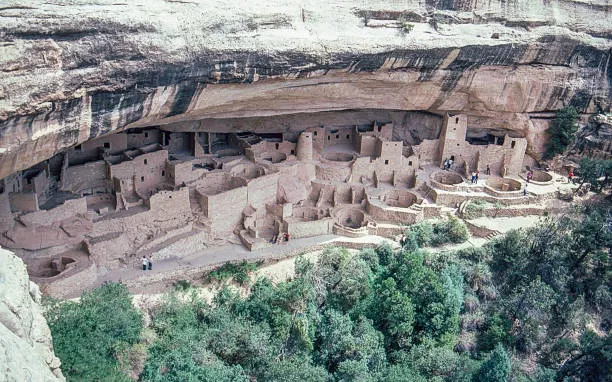
The Cliff Palace contains approximately 150 rooms and 23 kivas, making it the largest cliff dwelling in North America. Constructed primarily from sandstone blocks, mortar, and wooden beams, its design reflects a deep understanding of both function and environment.
The overhanging cliff provides natural protection from the elements, while the placement of walls and windows suggests intentional solar alignment — allowing sunlight to warm the rooms during winter and shade them in summer.
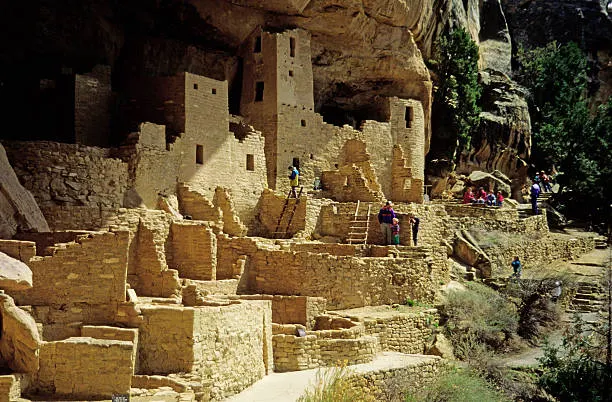
Each stone was hand-carved and fitted with care, bound together by mud plaster that still bears the fingerprints of its builders. Circular kivas — subterranean ceremonial chambers — form the heart of the complex, featuring ventilation shafts, fire pits, and sipapus (symbolic openings representing the connection to the spirit world).
Rising above these sacred spaces are multi-story towers, thought to have served as observation points, storage rooms, or communal dwellings. Together, they form a harmonious balance between utility and spirituality — a city built not against nature, but within it.
Life Among the Cliffs: A Self-Sustaining Community
The Ancestral Puebloans (once called the Anasazi) were farmers, potters, and builders who thrived in the Mesa Verde region for over seven centuries. By the time they constructed the Cliff Palace, their society had developed complex agricultural systems based on maize, beans, and squash, irrigated by seasonal rainfall and runoff.
Families lived in the interconnected rooms, cooking over hearths, storing food in sealed granaries, and crafting tools, baskets, and ceramics. The kivas served as places of worship, storytelling, and governance — the spiritual heart of Puebloan community life.
Trade networks extended hundreds of miles, linking Mesa Verde to other cultures across the Southwest and Mesoamerica, bringing shells, turquoise, and obsidian into this cliffside sanctuary.
In every wall and courtyard, we see the marks of a people who built their world with purpose and respect, guided by the cycles of the sun and the seasons.
Mystery and Migration: The Departure from Mesa Verde
By the late 13th century, the people of Mesa Verde began to migrate southward, abandoning their cliff dwellings after more than 700 years of habitation. Archaeologists have long debated the reasons for this departure:
-
Droughts and changing climate may have reduced crop yields and strained resources.
-
Social and cultural transformations could have encouraged migration toward larger, more connected communities.
-
Spiritual renewal may have played a role — a collective decision to move closer to the sacred landscapes of the Rio Grande Valley and beyond.
Whatever the cause, the departure was not an end but a continuation. The descendants of the Ancestral Puebloans live on today among the Hopi, Zuni, and modern Pueblo peoples of New Mexico and Arizona, who still honor their Mesa Verde ancestors in ceremony and tradition.
The cliffs they left behind remain empty yet alive, echoing with memory and reverence.
Mesa Verde National Park: Preserving the Past
In 1906, U.S. President Theodore Roosevelt signed legislation creating Mesa Verde National Park, recognizing the need to protect these extraordinary ruins from looting and decay. It became the first national park dedicated to human history — a model for cultural preservation worldwide.
Today, the park covers over 52,000 acres, housing nearly 600 cliff dwellings and more than 4,000 archaeological sites. The Cliff Palace, meticulously stabilized and preserved, can be visited through guided tours led by National Park Service rangers.
Visitors can explore winding paths, gaze upon the ancient masonry, and experience the remarkable silence of the canyon, broken only by the wind — the same sound that has whispered here for centuries.
In 1978, UNESCO designated Mesa Verde a World Heritage Site, honoring its global importance as a symbol of humanity’s creativity and endurance.
Spiritual Resonance: A Dwelling and a Prayer
Standing before the Cliff Palace, one feels both awe and humility. The structure is more than an ancient dwelling. It is a spiritual landscape, an embodiment of balance between people and place.
For the Ancestral Puebloans, architecture was not separate from belief. Every stone carried meaning, every kiva connected the physical world to the spiritual one. The cliffs themselves were living beings, protectors and witnesses to life’s sacred rhythm.
Even now, the site feels charged with presence. A space where human hands met divine inspiration, and where silence speaks louder than words. The Cliff Palace reminds us that architecture is memory made tangible. And that to build in harmony with nature is to honor the source of all life.
The Legacy of Mesa Verde: Lessons from the Ancestors
The legacy of the Cliff Palace extends far beyond its canyon walls. It invites reflection on sustainability, resilience, and community, lessons that resonate as deeply today as they did seven centuries ago.
The Ancestral Puebloans showed that humans could thrive in balance with their environment. Using local materials, respecting natural limits, and building not to conquer the land but to belong to it.
In an age of ecological uncertainty, Mesa Verde stands as both a warning and a guide. A reminder that civilizations flourish not through dominance, but through connection, adaptability, and reverence for the earth.
Conclusion: Where Stone Speaks and Spirit Endures
In the shelter of Colorado’s sandstone cliffs. The Cliff Palace of Mesa Verde endures as a monument to human creativity and spirit. Every carved block, every soot-darkened wall. Tells the story of a people who turned stone into sanctuary and life into legacy.
To walk through its silent chambers is to feel the heartbeat of time. To hear the whispers of ancestors whose prayers were written in the language of earth and sky.
Here, among the shadows of the cliffs, the past is not gone — it breathes. The Cliff Palace remains both dwelling and dream, a testament to the enduring dialogue between humanity and the land.
ALSO READ: The Gorilla Rock – A Mythic Vision of the Mediterranean